
Sorry, nothing in cart.

Rising healthcare costs are threatening the well-being of people everywhere. The U. S. alone spent $4 9 trillion in 2023, with the rise of costs exceeding the inflation rate. Brand-name drugs are a major factor in the high costs.
This undesirable situation causes patients and health systems to be under a great deal of pressure in terms of affordability.
Generic medicines guarantee the same safety and effectiveness as the brand at a fraction of the cost.
Doctors, pharmacists, and patients are becoming more confident in them.
Generics now make up over 90% of all prescriptions in the U.S. As they gain acceptance, more people can access healthcare, and families face less financial strain.
What Are Generic Medicines?
Generic medications are viable alternatives to brand name drugs that are less costly. They have the same active ingredients and yield the same effects, but are available at a lesser price.
Such inexpensive alternatives enable you to obtain standard medical care without the need to make heavy sacrifices in your budget.
This is especially helpful for patients who rely on medicines like Sildenafil or Tadalafil for sexual health, analgesic medicines for pain relief, and topical treatments for long-term skin conditions. The worldwide generic drugs market is growing.
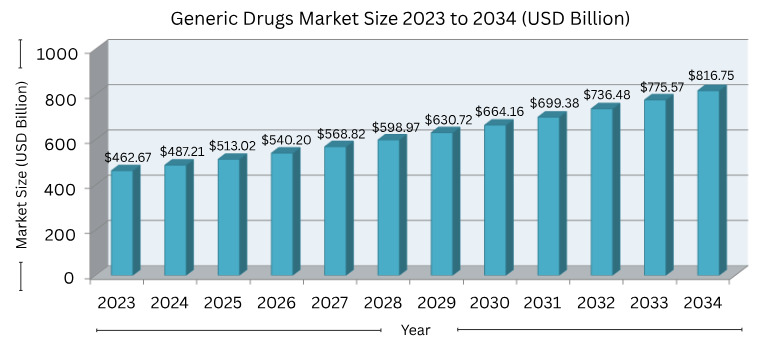
It is expected to increase from USD 462. 67 billion in 2023 to USD 513. 02 billion in 2025. This rise shows more people are choosing affordable options.
The market is on a steady path of growth. By 2028, it is projected to reach USD 598.97 billion. Then, it is expected to grow to USD 699.38 billion by 2031.
By 2034, it could hit a significant USD 816.75 billion. Generic and branded drugs are mostly different only in terms of their names and prices. Yet, bioequivalence assures that generics work in a similar way and yield the same therapeutic effects.
Why Generic Medicines Are Important in Modern Healthcare
Generic medicines have become indispensable in modern healthcare. They extend the reach of medicines to a larger number of people, decrease prices, and contribute to the global health systems’ viability.
Better Access
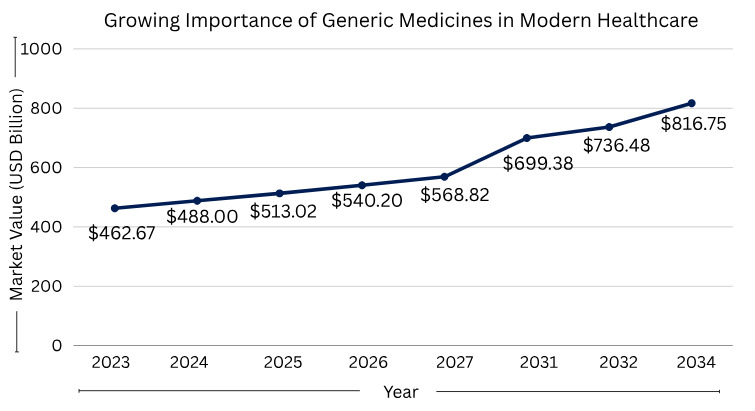
Generic medicines are turning into lifelines for the most essential treatments as the worldwide market is projected to expand from $462. 67 billion in 2023 to $540. 20 billion in 2026. This trend benefits patients by providing affordable care and therapies.
Lower Costs
Generics are a significant element of cost containment by reducing drug spending. The market will increase from USD 568. 82 billion in 2027 to USD 699. 38 billion in 2031. The increase is a kind of relief for healthcare systems with limited budgets.
Public Support
Generics have a positive impact on insurance and public health programs since the market value is going up from USD 736. 48 billion in 2032 to USD 816. 75 billion in 2034, thus, it is an effective way of securing long-term affordability and stability of the system.
Amazing Benefits of Generic Medicines
Generic medicines provide safe and effective care. They also help patients and health systems control rising treatment costs.
Cost-Effective Treatment Option
Generic medicines are a cost effective choice for patients. These medications do not need to go through the lengthy and expensive process of formula development, clinical trials, and marketing, as they are copies of already existing drugs.
Thus, their prices are generally 80-85% lower than those of branded drugs. Patients using generic alternatives of medicines such as Tadalafil and Sildenafil for erectile dysfunction, pain-relieving medicines for chronic discomfort, and skin care generics can significantly reduce their monthly treatment costs.
A brand that costs $100 a month can be a lot cheaper as a generic, sometimes under $20.
In the U.S., copays for generics are generally pretty low. More than 90% of them are less than $20. On average, generics cost $6, but brand names cost a lot more, typically $56.
Same Quality, Safety, and Efficacy
Generic medicines meet the same quality, safety, and efficacy standards as brand-name drugs.
To get approved, they go through rigorous testing by regulatory bodies like the FDA in the US and the EMA in Europe.
This includes reviews of ANDA submissions to make sure they meet the mark. Generics need to match brand-name drugs in terms of active ingredient, dosage, and strength.
They also have to prove bioequivalence and be made in facilities that meet GMP standards. This way, we can be confident they will deliver the same clinical results.
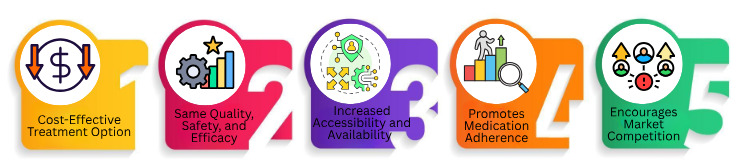
Increased Accessibility and Availability
Rural and underserved areas depend to a great extent on generic medicines that contribute to making treatments affordable and manageable.
As access is expanded, patients become more likely to follow their treatment plans.
This, however, is particularly significant in the case of long-term health issues such as diabetes and heart disease since it guarantees better care and raises the quality of health.
Promotes Medication Adherence
Generic medicines are one of the main factors allowing people to comply with their treatment plans.
They drastically reduce the total costs, thus the use of medication for long-term diseases becomes more affordable.
This, in turn, enables customers to purchase refills more easily. When medications are within the reach of family budgets, patients adhere to their schedules.
They continue therapy for chronic conditions and, consequently, their health improves gradually.
Encourages Market Competition
Generic medications serve as a catalyst for healthy market competition by removing brand monopolies. As patents expire and several generics become available, it is common for drug prices to drop by 80-85%.
Competition acts as a barrier against a single company that could otherwise have charged high prices for a long time. The absence of generics would have resulted in monopoly pricing.
However, when generics are introduced into the market, they play a role in keeping the prices at a lower level. This, in turn, is good for patients, insurers, and healthcare systems.
Generic Medicines vs Branded Medicines
Generic and branded medicines work the same way, but their cost, name, and appearance are what differ. This influences the decisions patients make and how affordable the medicine is.
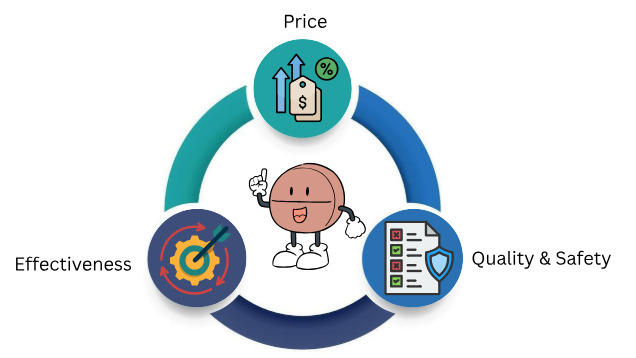
Price
Branded medicines carry research and marketing costs that can be quite high. Generics do not have these expenses, so they are much cheaper. A brand treatment that costs $100 may only cost $10 to $20 as a generic.
Quality & Safety
Generics have to meet the same requirements as brand names. The active ingredient in generics is the same as the brand, and they’re just as strong. Several studies have been done, and it has been found that safety and effectiveness are where a choice between the two makes no significant difference.
Effectiveness
Generics have the same dose, usage, and performance as brand names and, therefore, they are just as effective.
Also, they get the green light from regulatory authorities, which ensures that the treatment will be equally beneficial.Generics can differ in look, but their effectiveness remains the same.
Many people mistakenly think that lower-priced products mean that the quality is inferior. Actually, generics often provide the same benefits at a lower cost.
Role of Generic Medicines in Developing Countries
Generic medicines help improve health access by lowering costs, strengthening public systems, and ensuring a steady medicine supply worldwide.
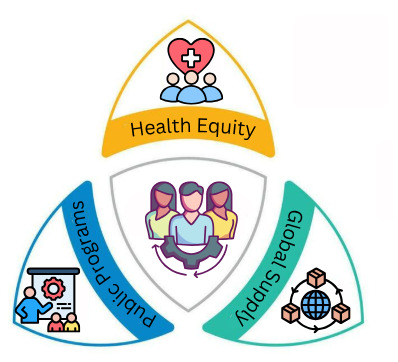
Health Equity
Affordable generics reduce healthcare inequality by helping low-income families access essential treatments, especially where patients pay most of their medical costs from their own pockets.
Public Programs
Generics support national healthcare schemes by saving government funds, allowing wider coverage, free medicine distribution, and better investment in hospitals and healthcare workers.
Global Supply
Developing countries produce a lot of generics for the world. This strengthens global medicine supply chains and ensures people can reliably access essential drugs in various regions.
Are Generic Medicines Safe and Reliable?
Generic drugs are definitely safe and effective as the original brand-name drugs.
This is because international regulatory agencies such as the FDA, WHO, and EMA put them under very strict supervision.
They must meet the same strict safety, quality, and efficacy standards as brand-name drugs.
Producers need to stick to clear instructions, manage the production process carefully, and face regular inspections. This ensures the drugs are of high quality, free from contamination, and effective for patients.
Common Myths About Generic Medicines
Many people still doubt generic medicines because of their low price and different look. These myths can cause fear, even though strong science and strict rules prove generics are safe and effective.
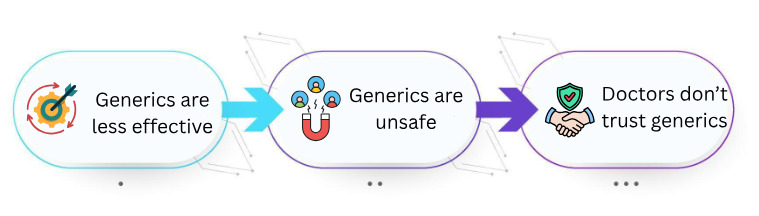
Generics are less effective
This is false. Generics contain the same active ingredient, strength, and dose as branded drugs. They work the same way in the body and provide equal treatment results.
Generics are unsafe
Generics are not unsafe. They are approved by authorities like the FDA and WHO and made under strict quality rules. Safety checks and inspections are the same as for branded medicines.
Doctors don’t trust generics
Most doctors and pharmacists trust and prescribe generics daily. They know generics meet the same standards as brands and help patients continue treatment by lowering medicine costs.
How to Identify a Quality Generic Medicine
Finding a good generic medicine is simple if you know what to look for on the packaging.
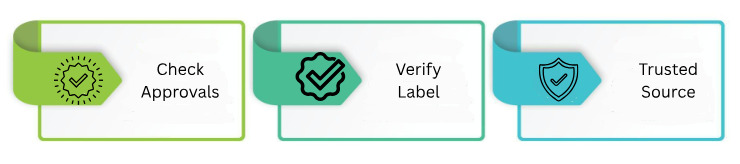
Check Approvals
For a generic drug to be valid, it needs approval from leading organizations like the FDA, WHO, and GMP. This key approval guarantees that the drug is safe, effective, and meets high-quality standards.
Verify Label
Start by checking the label for the active ingredient. Verify that its name and concentration align with the brand’s recommended dosage and usage. Different packaging may be there, but the essential details should always be present.
Trusted Source
Get generics from good manufacturers and licensed pharmacies. Reliable companies will be following production standards strictly, and pharmacists will be able to confirm the medicine’s authenticity and trustworthiness.
This is crucial when purchasing medicines for erectile dysfunction, pain relief, or skin care, as quality and safety directly affect treatment results.
Future of Generic Medicines
Generic medicines have a strong future. Healthcare systems need affordable and trustworthy treatments. This effort supports global public health needs over the long term.
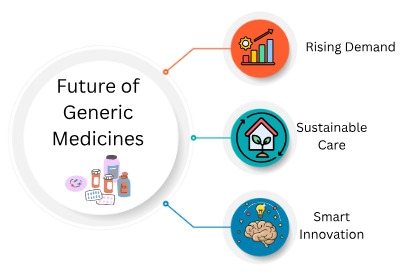
Rising Demand
Generic medications are gaining popularity fast because prescription prices are rising and patents are expiring.
As more people look for affordable options, generic meds are becoming the go-to choice.
In many developing countries and places with a lot of aging people, affordable generic medicines are vital for ongoing and long-term care.
Sustainable Care
Generic medicines can greatly impact healthcare. They lower treatment costs, easing the financial burden on governments.
This allows more funds for key areas like prevention, research, and expanding access to quality healthcare.
Smart Innovation
New technologies are giving generic drug manufacturing a big boost. Automation, improved formulations, and digital tools are all key players here.
These innovations boost quality, increase production speed, and enhance global medicine supply chains.
Conclusion
Generic medicines are essential in lowering healthcare costs around the world. They achieve this by cutting down on the expenses of treatments, which in turn opens up access to healthcare for a larger number of people.
Whether it involves erectile dysfunction medicines like Tadalafil and Sildenafil, pain relief treatments, or skin care solutions, generic medicines offer a safe, effective, and affordable option for long-term care.
They support public health systems to make sure their quality is as good as branded drugs.
In the fight for health, generics help make care possible for everyone. Patients can manage their chronic conditions on their own by choosing generics.
This way, they don’t need to worry about costs. Realizing the benefits of generics leads to wiser choices and better care.
It also builds a healthcare system that is fair, sustainable, and helps everyone.