Angiotensin H Tablet (Lisinopril/Hydrochlorothiazide) Medically reviewed by Sanjay Gangani, B.Pharm, CMO & Pharmacist
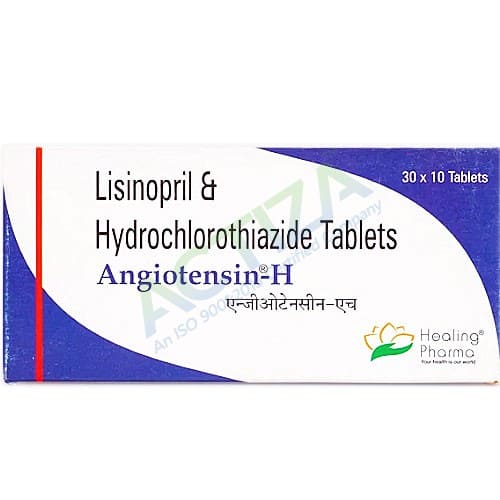
Active Ingredient Lisinopril/Hydrochlorothiazide Indication High blood pressure, Heart failure Manufacturer Healing Pharma, India Strength:- 5mg/12.5mg Packaging 10 tablets in 1 strip
INQUIRE ABOUT Angiotensin H Tablet (Lisinopril/Hydrochlorothiazide)
What is Angiotensin H Tablet? Angiotensin H is a prescription blood pressure tablet.
Each tablet contains lisinopril 5 mg.
Each tablet also contains hydrochlorothiazide Angiotensin 5 mg .
Lisinopril is an angiotensin converting enzyme inhibitor.
Hydrochlorothiazide is a thiazide diuretic, or water tablet.
It is made by Healing Pharma India Pvt. Ltd. in Mumbai.
Treatment of hypertension, to lower blood pressure.
That is the only indication the label states.
One listing adds reducing future heart attack and stroke risk.
Lowering blood pressure is what achieves that.
Angiotensin 20 mg is the name of a hormone in the body.
This medicine works by blocking the enzyme that makes it.
So the brand is named after what the drug acts against.
That can confuse patients searching for information.
How the Two Medicines Work Each ingredient lowers blood pressure differently:
An enzyme called ACE converts angiotensin I into angiotensin II.
Angiotensin II narrows blood vessels and raises pressure.
Lisinopril inhibits that enzyme, so less is formed.
Blood vessels relax and pressure falls.
Hydrochlorothiazide helps the kidneys remove salt and water.
That reduces the volume of fluid in the circulation.
The label says the diuretic increases plasma renin activity.
It increases aldosterone and lowers blood potassium.
Lisinopril blocks that axis and tends to reverse the potassium loss.
So each partly offsets an effect of the other.
The label describes switching patients onto the combination.
That applies where one medicine alone has not controlled pressure.
It is not usually the first treatment tried.
Dosage Guide The approved label describes combination doses abroad.
Item What the Label Says Who Decides Key Note Combination strengths abroad 10 and 12.5 milligrams Not applicable Higher than this product Also available abroad 20 and 12.5; 20 and 25 Not applicable Higher again This Indian product 5 and 12.5 milligrams Not applicable Below all three Switching onto it Where one medicine alone has failed The prescriber Per the label Response Rises with the dose of either component Not applicable Observed in trials Absolute maximum Lisinopril 80 mg; hydrochlorothiazide 50 mg The prescriber Do not exceed Pregnancy Stop as soon as it is detected Immediately The boxed warning With a neprilysin inhibitor Contraindicated Not applicable Such as sacubitril With aliskiren in diabetes Do not give together Not applicable Stated in the label Monitoring Blood salts and kidney function The prescriber Because of the diuretic
What that strength comparison means:
The label lists three combination strengths.
The lowest contains 10 mg of lisinopril.
This Indian product contains 5 mg.
So it sits below the lowest combination described there.
That may suit a lower starting dose.
Your prescriber decides the dose and any increase.
How to Take It Take the tablet exactly as your doctor prescribes.
Take it at the same time each day.
Swallow it with a glass of water.
Do not stop it without consulting your doctor.
Do not miss doses, even when you feel well.
Attend appointments for blood tests.
Those tests check blood salts and kidney function.
Stand up slowly, especially in the first days.
It says alcohol should be avoided during treatment.
It can cause a drop in blood pressure.
It can cause dizziness, or sometimes unconsciousness.
That advice was given for a related combination brand.
You may feel dizzy or tired, especially at first.
A dry cough is a recognised effect of this drug class.
Report a persistent cough to your doctor.
Precautions Do Not Use It If You Are: Pregnant, or trying to become pregnant.
Taking a neprilysin inhibitor such as sacubitril.
Allergic to lisinopril or hydrochlorothiazide.
Allergic to any other ingredient in the tablet.
Aliskiren must not be given alongside it in diabetes.
That restriction is stated directly in the label.
Tell Your Doctor Before Use If You Have: Kidney disease, or narrowing of a kidney artery.
Liver disease .
Diabetes.
Gout, or a raised uric acid level.
Any problem with blood salts, especially potassium.
A previous swelling reaction to any medicine.
Heart valve disease or heart failure.
Plans for surgery or anaesthesia.
Every other medicine you take.
Points Specific to This Combination The diuretic can lower blood potassium.
Lisinopril tends to counteract that loss.
Blood tests check where the balance settles.
Potassium supplements need medical advice first.
So do salt substitutes, which often contain potassium.
One listing says it is not for patients under 18.
Blood pressure may fall sharply after the first dose.
Before-Use Checklist Does your pack say Angiotensin H, not a similar name?
Does the strength read 5 mg and 12.5 mg?
Could you be pregnant, or might you become pregnant?
Do you know to stop at once if pregnancy is detected?
Do you take any other blood pressure medicine?
Do you take potassium supplements or salt substitutes?
Are blood tests arranged for salts and kidney function?
Do you know a dry cough can be an effect of this class?
Side Effects Effects reported in the label and one Indian listing:
Side Effect Category What It Feels Like What to Do Headache Common Head pain Report if persistent Dizziness Common Light-headedness Stand up slowly Dry cough Common A persistent tickly cough Report to your doctor Fatigue Common Tiredness Report if marked Raised uric acid Common Often no symptoms May trigger gout Low blood pressure Reported Faintness on standing Report to your doctor Low blood potassium From the diuretic Weakness, cramps Blood tests monitor this Raised blood sugar From the diuretic Thirst, more urine Diabetics need monitoring Reduced kidney function Serious Often no symptoms Blood tests monitor this High blood potassium Serious Weakness, irregular heartbeat Blood tests monitor this Swelling of face or throat Serious Angioedema; breathing trouble Emergency – stop and seek care Fetal injury or death In pregnancy Harm to the developing baby Stop at once; see the warning
Why swelling is singled out:
ACE inhibitors can cause sudden swelling of the face or throat.
That reaction can obstruct breathing.
It requires stopping the medicine and urgent medical care.
One Indian listing names five common effects.
It gives no percentages for any of them.
Check the pack insert for the full frequency table.
Warning Signs – Seek Medical Help Seek urgent medical care if you have:
Swelling of the face, lips, tongue or throat.
Difficulty breathing or swallowing.
Fainting, or a collapse.
An irregular or very slow heartbeat.
Severe muscle weakness.
Passing much less urine than usual.
You think you may be pregnant.
A dry cough persists.
You feel dizzy whenever you stand.
A gout attack develops.
You develop severe or prolonged diarrhoea or vomiting.
The boxed warning requires stopping as soon as possible.
Waiting for the next appointment is not appropriate.
An Honest Assessment for the Retailer Where this combination has a clear place:
It combines two well-established blood pressure medicines.
Each partly offsets a drawback of the other.
One tablet is easier than two separate ones.
Lowering blood pressure reduces heart attack and stroke risk.
This strength is lower than the combinations sold abroad.
That may suit careful dose building.
What a buyer must be told plainly:
The approved label carries a fetal toxicity boxed warning.
Treatment must stop as soon as pregnancy is detected.
Blood tests for salts and kidney function are needed.
Sudden swelling of the face or throat is an emergency.
A dry cough is common with this drug class.
Three other brands begin with the same four letters.
No Indian listing found mentions the boxed warning.
Storage Instructions Store below 30°C, per one Indian listing.
Keep the tablets in their strip until use.
Protect them from direct sunlight, moisture and heat.
Keep out of the sight and reach of children.
Check the expiry date before use.
Do not keep leftover tablets after treatment changes.
Return unused tablets to a pharmacy take-back scheme.
Sanjay Gangani
B.Pharm, CMO & Pharmacist
Licensed pharmacist (B.Pharm) with 12+ years in clinical pharmacy and patient care. Reviews every article for evidence-based accuracy before it is published on ACTIZA Store.



Reviews
There are no reviews yet.