It clears the infection and relieves associated itching, redness and inflammation.
How It Works (Mechanism of Action)
Fungal cells need a substance called ergosterol to build and maintain their cell membranes.
Ketoconazole blocks an enzyme the fungus uses to make ergosterol.
Without ergosterol, the membrane becomes leaky and unstable.
The fungus stops growing, and eventually dies.
As the fungal load falls, the itching, redness and inflammation settle.
Why it Acts locally:
applied to the skin, ketoconazole concentrates where the infection is. Plasma concentrations were not detectable after topical application in adults, which is why it does not carry the liver warnings associated with oral ketoconazole.
Why Symptoms Improve Before the Infection clears:
much of the itching and redness comes from the inflammatory response, which settles quickly once the fungal load drops. The fungus itself takes the full course. That gap is why people stop too early and the infection returns.
How to Use It
Point
Guidance
Frequency
Once or twice daily, as directed
Area to cover
The affected area and the immediate surrounding skin
Extent
Apply about 1 inch beyond the visible edge of the infection
Duration
Depends on the infection – see the table above
Continuing after clearance
A few days after symptoms have gone
Age
Adults only
Route
External use only
No improvement after 4 weeks
Tell your doctor
Missed application
Apply it as soon as you remember, then continue as normal
Stopping
Do not stop without consulting your doctor
Why to treat beyond the visible edge: fungal infection extends further than the visible rash. Applying about an inch past the edge treats areas that are infected but not yet visible, which reduces the chance of recurrence.
How to Apply It
Clean and dry the affected area before applying.
Wash your hands.
Apply a thin layer to the affected area and the skin immediately around it.
Extend about 1 inch beyond the visible edge of the rash.
Rub it in gently.
Wash your hands afterwards unless you are treating your hands to avoid spreading the infection.
Wait 20 to 30 minutes before applying moisturiser or sunscreen to the same area.
Do not use it on open wounds, deep cuts or severely oozing skin unless your doctor advises.
Avoid contact with the eyes.
Wear loose, breathable clothing to keep the area dry.
Do not share towels, clothes or personal items fungal infections spread easily.
If you have athlete’s foot, wash socks or tights thoroughly and change shoes daily where possible.
Complete the full course, even after the skin looks normal.
Precautions
Tell Your Doctor Before Using If You
Have recently used a steroid cream, ointment or lotion on the area.
Have had an allergic reaction to an antifungal medicine before.
Have sensitive skin, or a known reaction to propylene glycol.
Are pregnant, might be, or are breastfeeding.
Are treating a child or adolescent not recommended under 18.
Have open wounds, deep cuts or severely oozing skin at the site.
Have diabetes and a foot infection.
Practical Precautions
Item
Consideration
External use only
Do not swallow; avoid the eyes
Steroid creams
Tell your doctor; a gap may be needed before switching
Propylene glycol
200 mg per gram; may irritate sensitive skin
Under 18
Not recommended
Open or oozing skin
Avoid unless advised
Moisturiser or sunscreen
Wait 20 to 30 minutes after applying
Hand hygiene
Wash after applying, to avoid spread
Shared items
Do not share towels or clothing
Other medicines
Oral medicines are unlikely to affect how this cream works
Driving
Unlikely to affect your ability to drive or use machinery
Pregnancy and Breastfeeding
Sources differ on pregnancy. One Indian listing states it may not be safe in pregnancy; another says it can be used in pregnancy, but consult your doctor first.
Given that conflict, ask your doctor or pharmacist before using it if you are pregnant.
For breastfeeding, one source notes it may be safe, as no amounts are thought to pass into breast milk, while advising that you consult your doctor.
Do not apply it to the breast area if breastfeeding, and wash your hands before handling your baby.
Before-Use Checklist
I have a fungal skin infection, confirmed or discussed with a pharmacist.
I am 18 or over.
I have no allergy to ketoconazole.
I have told my doctor about any steroid cream I have used.
I am not pregnant, or have checked with my doctor.
The skin is not badly broken or oozing.
I know how long my particular infection takes to treat.
I will apply about an inch beyond the visible edge.
I will complete the full course.
I know to see a doctor if there is no improvement after 4 weeks.
Side Effects
This cream is usually well tolerated.
Side Effect
Notes
Burning sensation at the site
Most commonly reported
Skin redness
Common; usually settles
Itching or stinging at the site
Common early in treatment
Dryness
Common as infected skin heals
Peeling of the skin
Common; part of healing
Irritation at the application site
May reflect propylene glycol sensitivity
Cracked or dry scaly skin
Reported
Blistering of the skin
Stop and seek advice
Acne at the site
Reported
Contact dermatitis
Stop and seek advice
Allergic reaction
Stop immediately and seek help
These side effects are usually temporary. If any persists for a longer duration, speak to your doctor or pharmacist.
Safety Data:
the safety of ketoconazole cream was evaluated in 1,079 subjects across 30 clinical trials.
When to Seek Medical Advice
Stop using the cream and seek medical advice if you develop:
Severe burning, stinging or pain at the site.
Marked swelling or blistering.
A widespread rash or hives.
Swelling of the face, lips, tongue or throat.
Difficulty breathing.
Skin that becomes raw, weeping or clearly worse.
Your condition has not improved after 4 weeks of treatment.
The infection returns soon after finishing the course.
The infection spreads to a large area.
Your nails become thickened, discoloured or crumbly nail infections need different treatment.
The skin becomes hot, swollen or produces pus, which may indicate bacterial infection.
You have diabetes and a foot infection.
Why Ketoconazole Cream Is Used
Genuine advantages:
Broad activity against the fungi and yeasts that cause common skin infections.
Effective across ringworm, athlete’s foot, jock itch, skin candidiasis and pityriasis versicolor.
Useful on the face, chest, scalp, back and groin.
Not detectable in the blood after topical use in adults, so systemic effects are not expected.
Unlikely to be affected by oral medicines you take.
No effect on driving or machinery use.
A safety profile based on 1,079 subjects across 30 clinical trials.
A 30 g tube is enough for a substantial course.
Honest limitations:
Courses are longer than with some alternatives up to six weeks for athlete’s foot, against one week for terbinafine.
It is for adults only.
It contains propylene glycol, which can irritate sensitive skin.
It will not treat nail or scalp fungal infections, which need oral treatment.
It does not treat bacterial infections, which can look similar.
Pregnancy guidance across sources is inconsistent.
Storage Instructions
Store below 30°C in a cool, dry place.
Keep the tube tightly closed.
Protect from direct sunlight.
Do not store in a hot car or a steamy bathroom.
Keep the cap on to prevent contamination.
Keep out of the sight and reach of children.
Check the expiry date before use.
Do not use after the expiry date.
Note any in-use shelf life stated on the pack after first opening.
Licensed pharmacist (B.Pharm) with 12+ years in clinical pharmacy and patient care. Reviews every article for evidence-based accuracy before it is published on ACTIZA Store.
Reviews
There are no reviews yet.
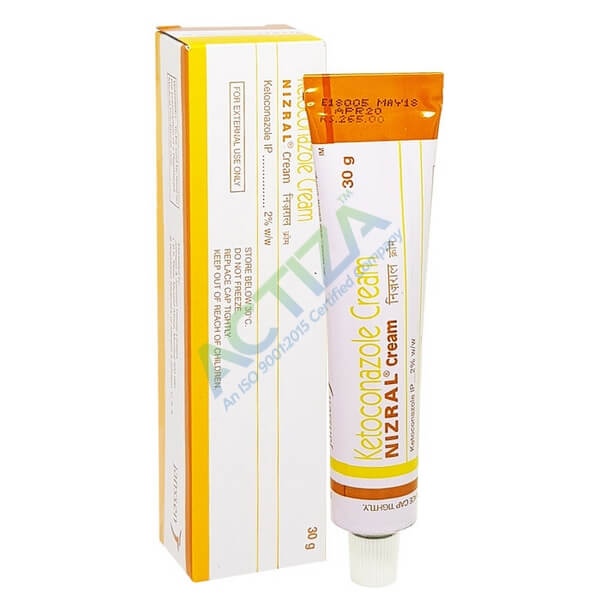
Be the first to review “Nizral 30 gm Cream (Ketoconazole)” Cancel reply



Reviews
There are no reviews yet.