


Seeing a rash or redness on the penis can be a real concern. Many men fear they’ve caught a serious infection or STD.
Penile rashes are more common than many people think. The good news is that they can usually be treated once we identify the cause.
Balanitis affects roughly 1 in 25 boys and about 1 in 30 uncircumcised men[1] at some stage in their lifetime. Balanitis alone accounts for approximately 11%[1] of all male patients treated by urologists in the United States.
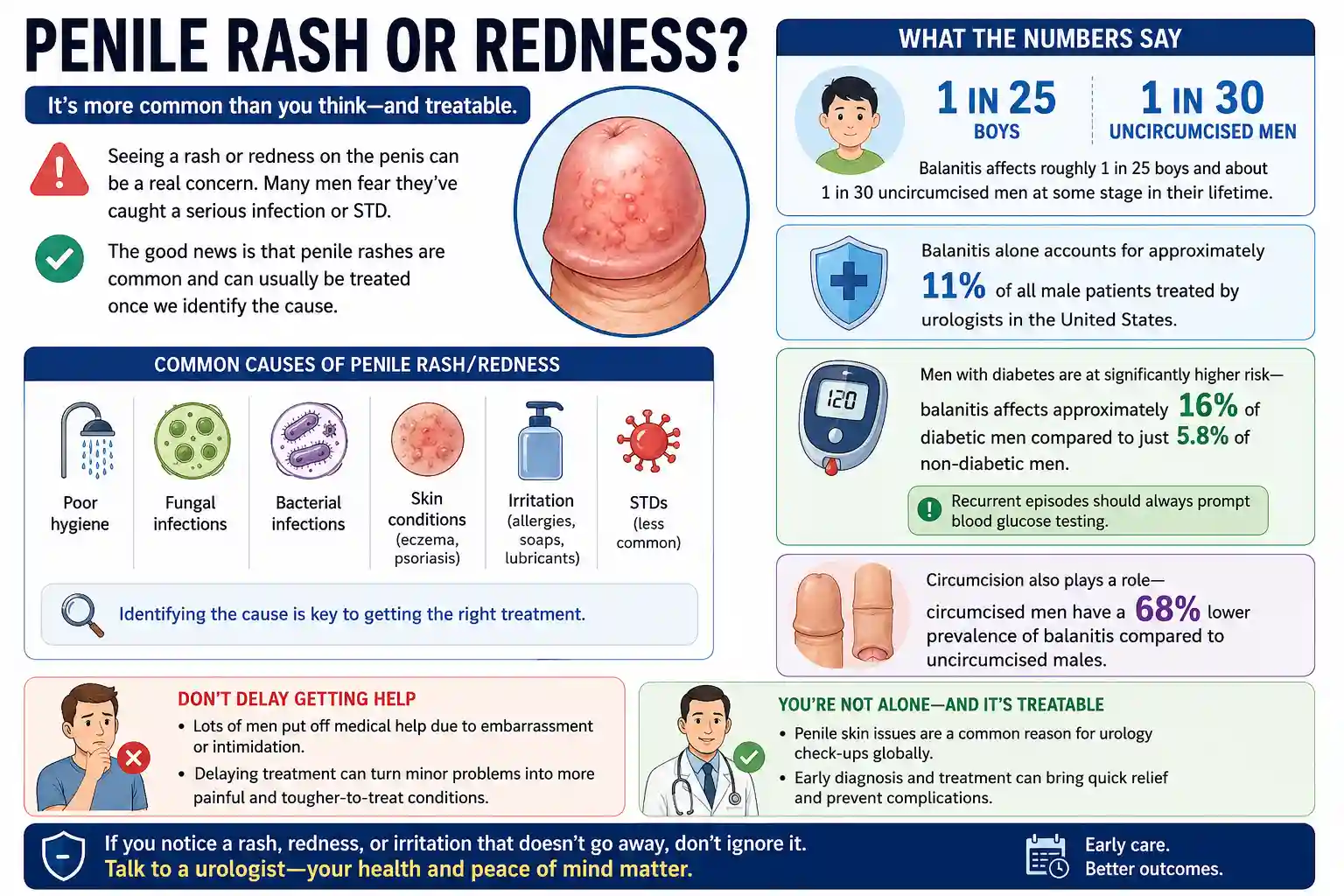
Men with diabetes are at significantly higher risk balanitis affects approximately 16%[2] of diabetic men compared to just 5.8% of non-diabetic men. Recurrent episodes should always prompt blood glucose testing
Circumcision also plays a role circumcised men have a 68% lower prevalence[1] of balanitis compared to uncircumcised males.
Lots of men put off getting medical help, despite these conditions being pretty common. They can feel embarrassed or intimidated by the thought of it.
Penile skin issues are a common reason for urology check-ups globally. Delaying treatment can turn minor problems into more painful and tougher-to-treat conditions.
What Is a Penile Rash?

A rash on the penis is any redness, irritation, or skin change in the genital area. It might appear as bumps, blisters, sores, swelling, or discoloration.
These symptoms can affect the glans (head of the penis), foreskin, or surrounding skin. They may cause discomfort, itching, pain, or difficulties with urination and sexual activity.
Most penile skin conditions are treatable, but getting the right diagnosis is essential. Diagnosis typically involves two steps: a clinical history review followed by a physical examination.
This process helps identify the cause, shapes the treatment plan, and critically checks for any precancerous or cancerous lesions that may require urgent attention.

Early diagnosis matters more than many men realize. Research shows that 1 in 5 men[3] with penile carcinoma are first referred to the wrong specialist delaying proper treatment due to embarrassment or lack of awareness.
Common Causes of Penile Rash
Penile rashes can show up for lots of reasons. Knowing what’s causing it helps doctors pick the best treatment.
Cause 1: Fungal Infection – Yeast (Candida Balanitis)
Candida balanitis is a fungal infection caused by the overgrowth of Candida yeast most commonly Candida albicans, which is normally present on the skin of the glans penis but can become infectious under certain conditions.
Risk factors include diabetes mellitus, poor genital hygiene, recent antibiotic use, and being uncircumcised particularly in men with phimosis.
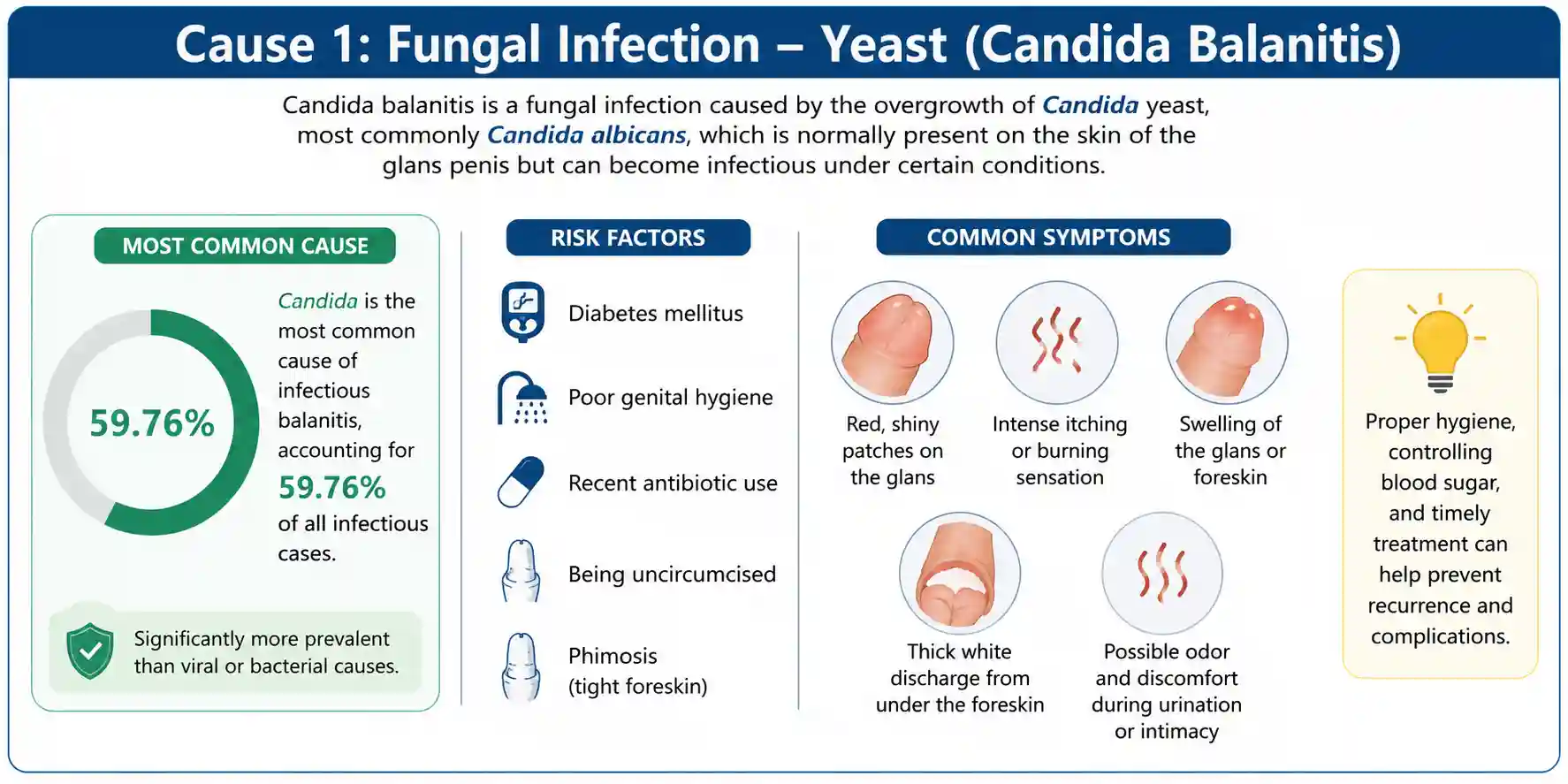
Research confirms that Candida is the most common cause of infectious balanitis, accounting for approximately 59.76% of all infectious cases[7]making it significantly more prevalent than viral or bacterial causes.
Symptoms typically include red, shiny patches on the glans, intense itching or burning sensation, swelling, and a thick white discharge from under the foreskin.
Medicines/Treatment:
Cause 2: Jock Itch (Tinea Cruris) – Fungal Infection
Tinea cruris, commonly known as jock itch, is a dermatophyte fungal infection caused primarily by Trichophyton rubrum and Epidermophyton floccosum. These fungi thrive in warm, moist, and occlusive environments making the groin, inner thighs, and genital area particularly susceptible.
Tinea cruris affects an estimated 20-25% of the global population[5], making it one of the most prevalent superficial fungal infections worldwide.
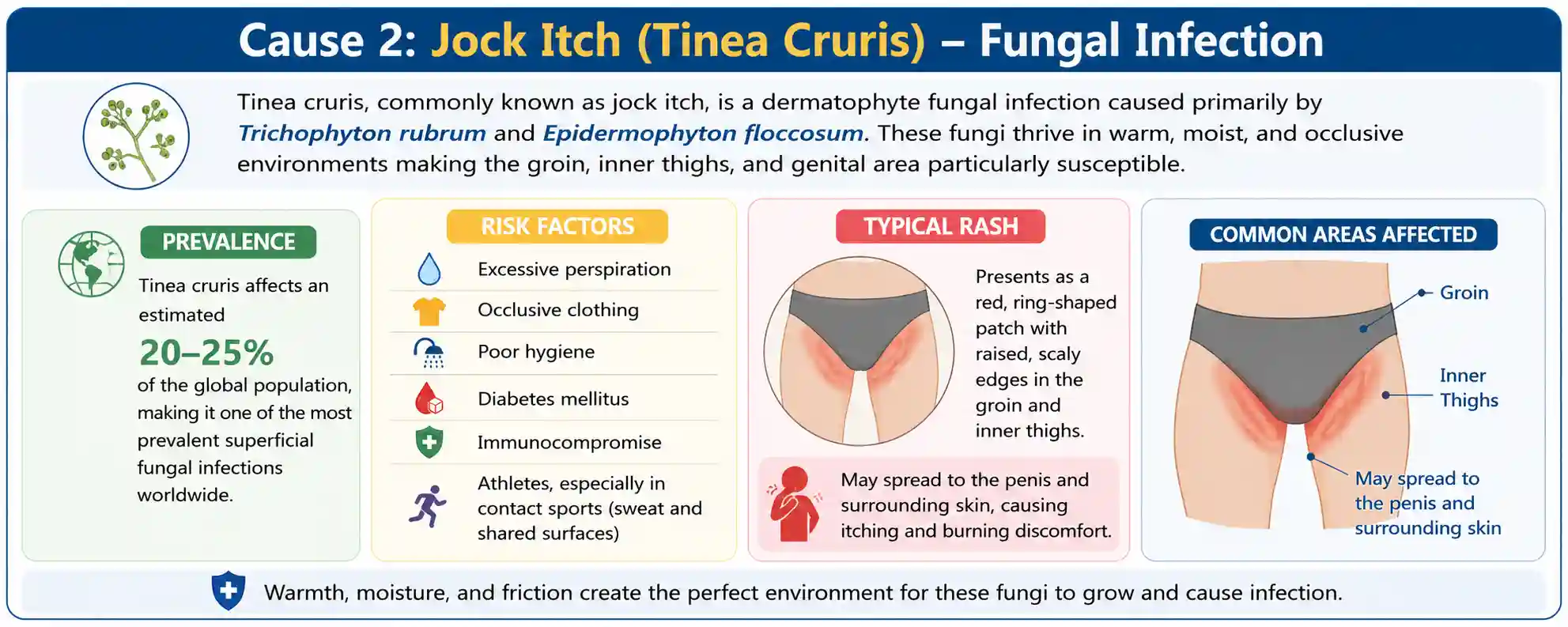
Risk factors include excessive perspiration, occlusive clothing, poor hygiene, diabetes mellitus, and immunocompromise. Athletes particularly those involved in contact sports are at significantly higher risk due to sweat and shared surfaces.
The rash typically presents as a red, ring-shaped patch with raised, scaly edges in the groin and inner thighs. It may spread to the penis and surrounding skin, causing itching and burning discomfort.
Cause 3: Bacterial Infection – Poor Hygiene / Balanoposthitis
Balanoposthitis — inflammation of both the glans penis and foreskin occurs when moisture, urine, or smegma accumulates under the foreskin in uncircumcised men. Poor hygiene is the most common underlying cause, creating a warm, moist environment that allows bacterial overgrowth.
After Candida infections, aerobic bacteria are the second most common infectious cause primarily Streptococcus groups B and D, and Staphylococcus aureus. Bacterial infections account for approximately 10.98% of all infectious balanoposthitis cases[4].
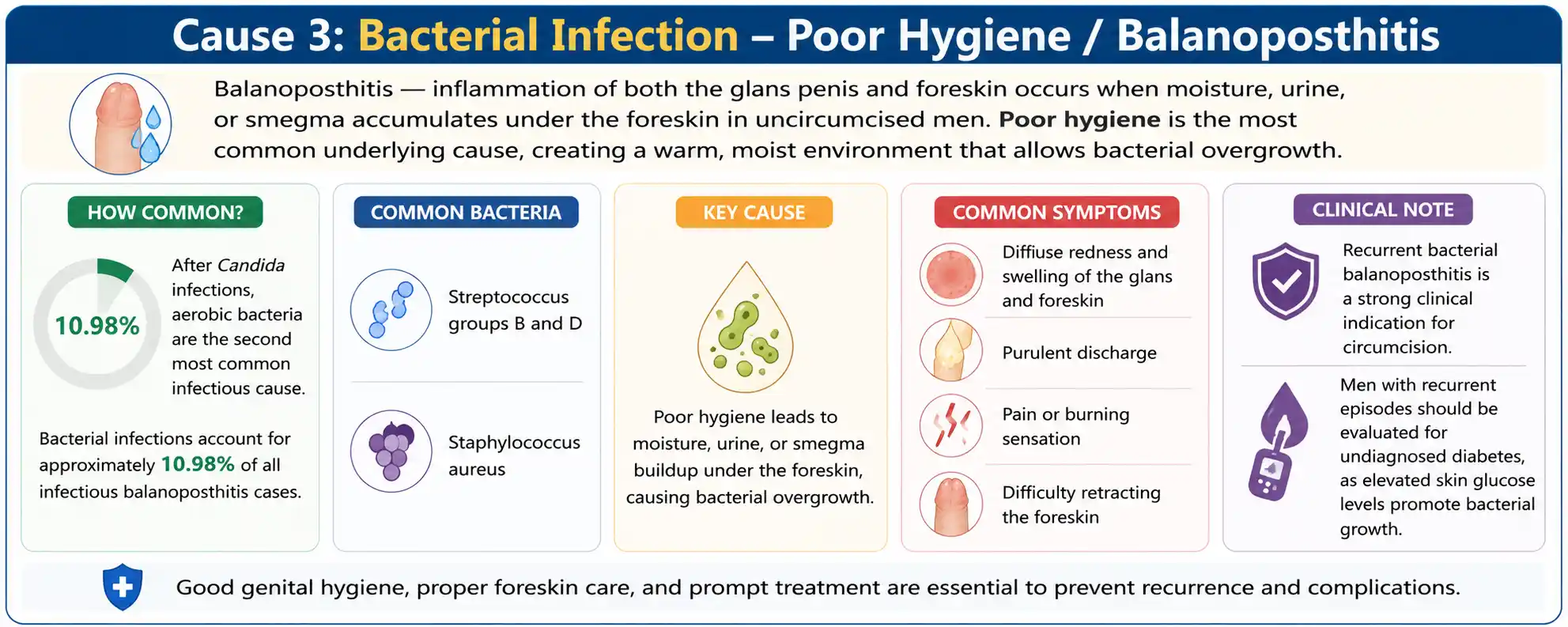
Symptoms typically include diffuse redness and swelling of the glans and foreskin, purulent discharge, pain or burning sensation, and difficulty retracting the foreskin.
Recurrent bacterial balanoposthitis is a strong clinical indication for circumcision. Men with recurrent episodes should also be evaluated for undiagnosed diabetes, as elevated skin glucose levels strongly promote bacterial growth.
Common signs include:
Some men might struggle with pulling back the foreskin. Balanoposthitis can happen for a few reasons. Not washing right is one of them. It can also happen due to infections, allergies, or STIs.
Medicines/Treatment:
Cause 4: Sexually Transmitted Infections (STIs)
Sexually transmitted infections (STIs) are a significant and growing global public health concern. In 2024, more than 2.2 million[6] STI cases were reported in the United States alone 13% higher than a decade ago.
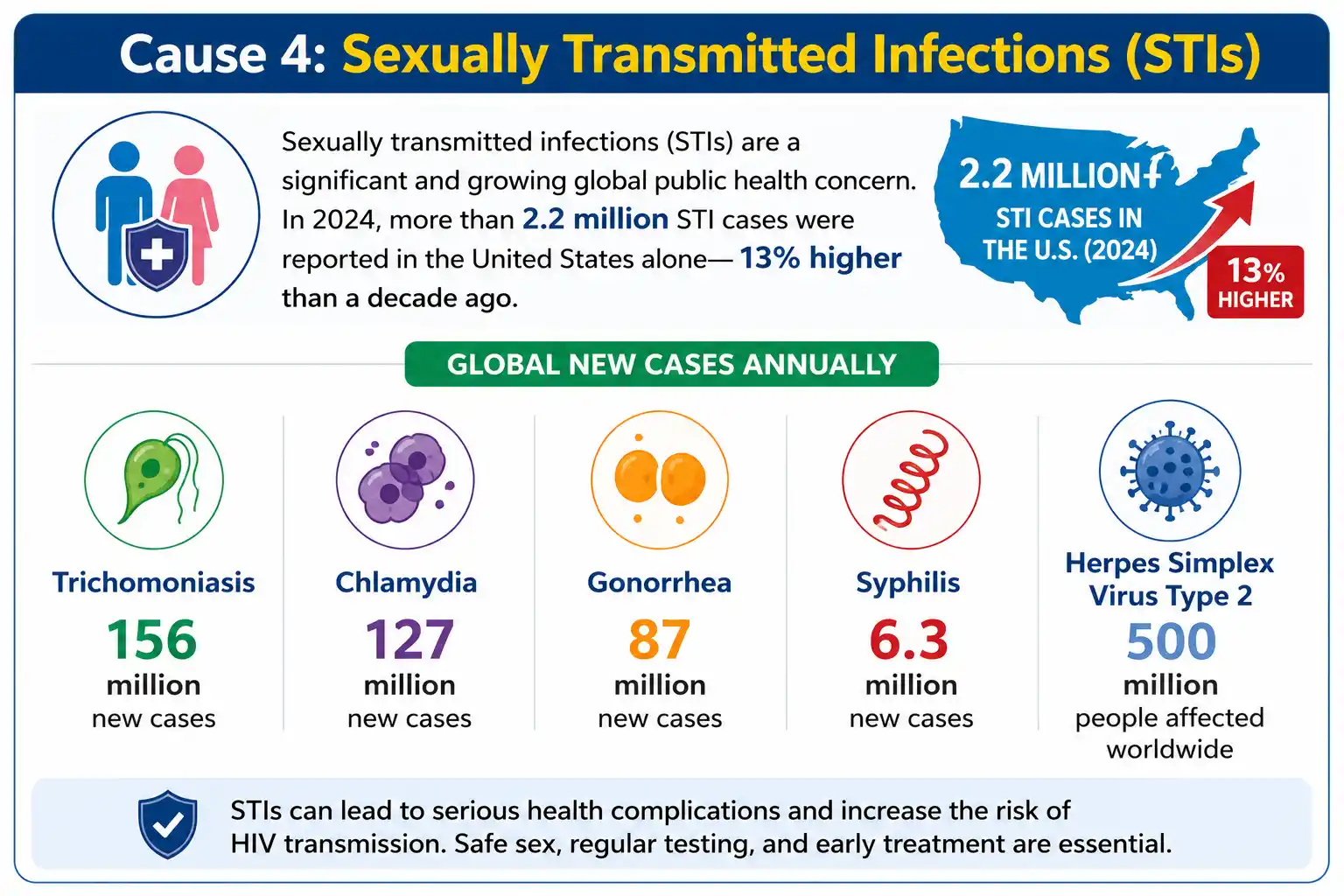
Globally, trichomoniasis accounts for 156 million new cases annually, followed by chlamydia (127 million)[7], gonorrhea (87 million), and syphilis (6.3 million). Herpes simplex virus type 2 affects an estimated 500 million people worldwide.
Medicines/Treatment:
Early diagnosis is critical untreated STIs can lead to infertility, pelvic inflammatory disease, increased cancer risk, and complications during pregnancy.
Cause 5: Contact Dermatitis – Allergic or Irritant Reaction
The skin on a penis is pretty sensitive so that it can react to everyday things like soap or lotion.
Common triggers include:
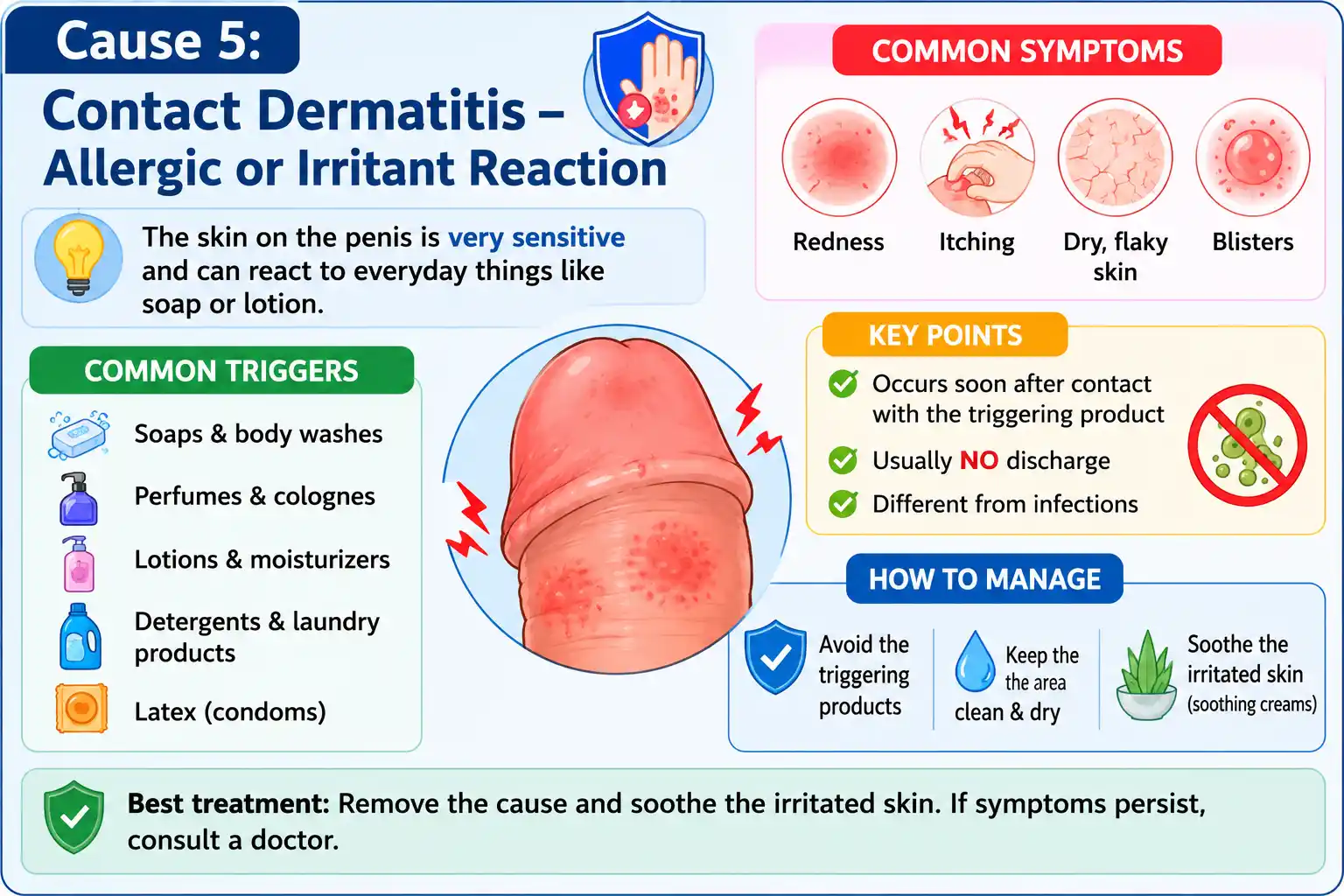
These products can irritate the skin. They may also cause allergies. This condition usually shows up as red, itchy, dry, or even blistered skin soon after contact with the triggering product.
This condition is different from many infections. You usually won’t see discharge. Research shows that the best way to treat it is to soothe the irritation with the right creams. Also, find out what’s causing the reaction and avoid it.
Medicines/Treatment:
Cause 6: Psoriasis (Genital)
Genital psoriasis is a chronic autoimmune skin condition in which the immune system accelerates skin cell turnover causing cells to accumulate rapidly on the skin surface. Psoriasis affects approximately 2–3% of the global population[10], and globally an estimated 60 million people[9] are affected.
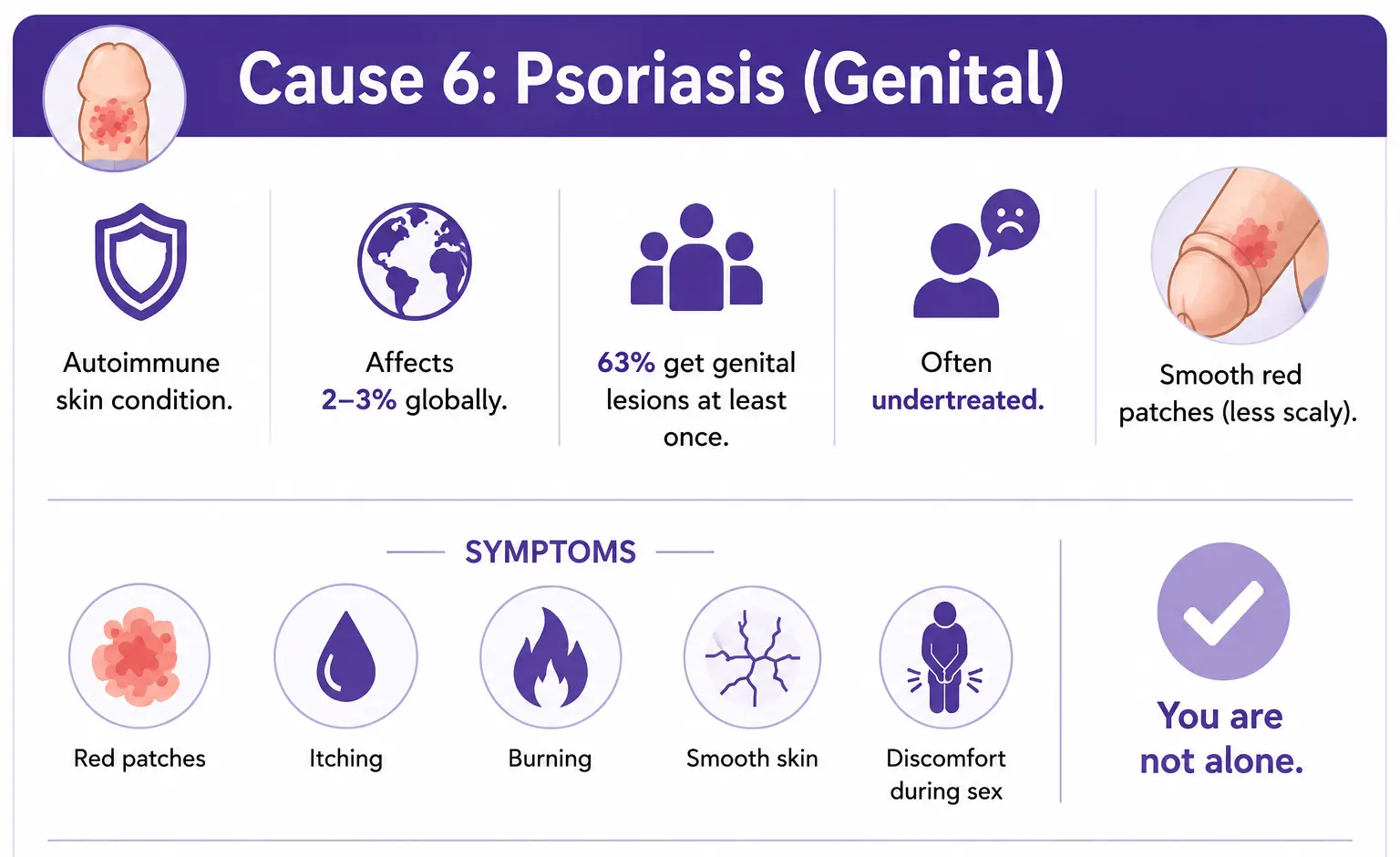
Research confirms that 63% of adults with psoriasis[8] develop psoriatic lesions in the genital area at least once during their lifetime. In patients with inverse psoriasis, this figure rises to approximately 79%[8]. In 2–5% of psoriasis patients, lesions occur exclusively in the genital region.
Genital psoriasis typically presents as smooth, well-defined red patches on the penis or foreskin notably less scaly than psoriasis on elbows or knees due to the moist, occluded nature of the genital environment.
Despite being common, genital psoriasis remains significantly undertreated. Research shows that up to two-thirds of patients have never used treatment for their genital lesions, and almost half have never discussed it with their physician largely due to embarrassment or stigmatization.
Symptoms might include:
Genital psoriasis is pretty common. You can keep it under control with the right treatment and by taking good care of your skin.
Medicines/Treatment:
Cause 7: Lichen Sclerosus
Lichen sclerosus (LS) is a chronic inflammatory autoimmune skin condition that primarily affects the anogenital area. In men, it most commonly involves the glans penis and foreskin presenting as atrophic ivory-white patches, progressive scarring, and gradual tightening of the foreskin (phimosis).
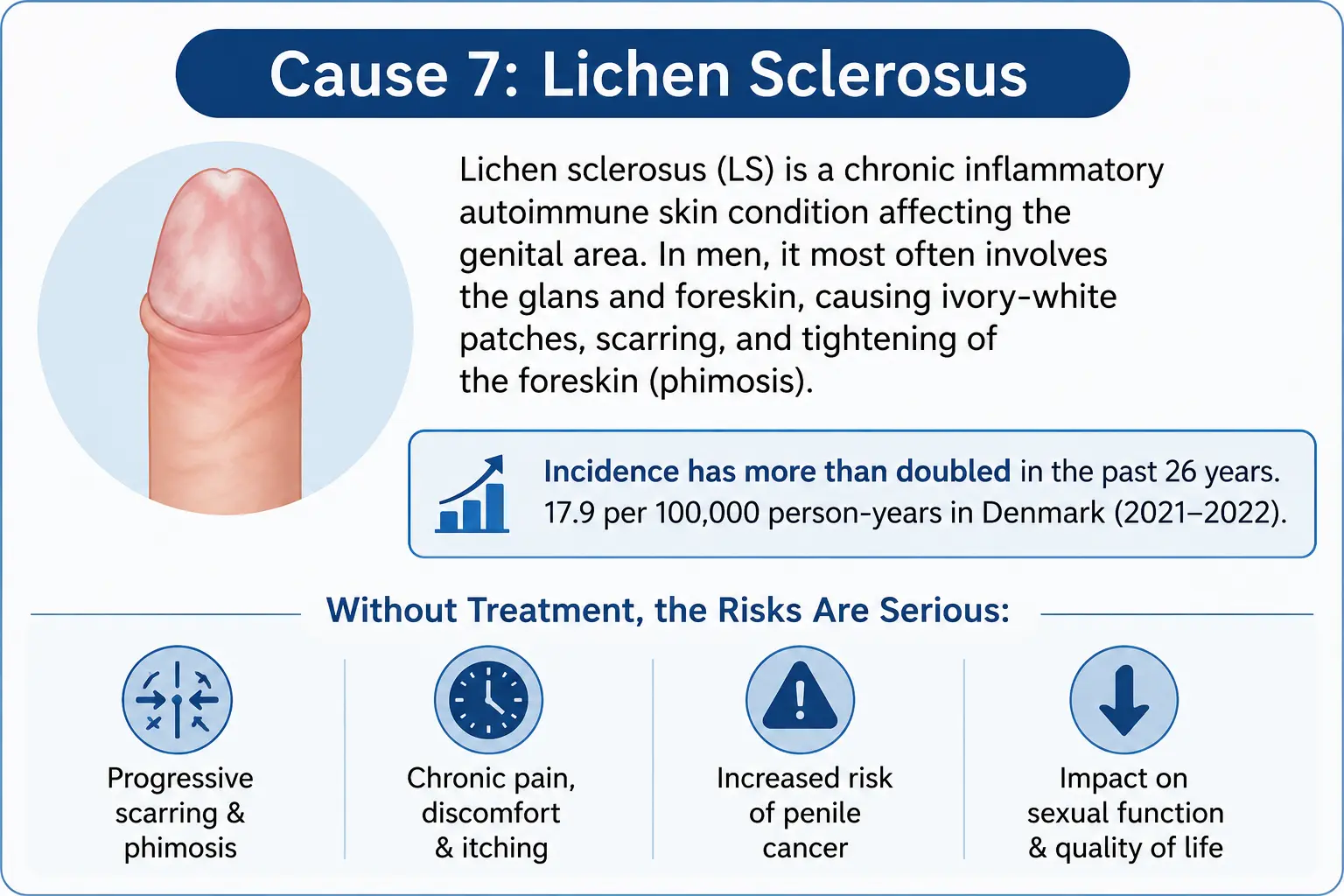
The incidence of penile lichen sclerosus has more than doubled over the past 26 years, with rates of 17.9 per 100,000 person-years recorded in Denmark (2021–2022).
Without treatment, the risks are serious:
Common symptoms are:
Severe cases can cause big scars. This can alter the usual look and shape of the penis. Research backs this up.
Cause 8: Eczema / Atopic Dermatitis
Eczema, clinically known as atopic dermatitis (AD), is a chronic inflammatory skin condition affecting an estimated 171 million people worldwide approximately 2.23%[14] of the global population. It does not affect only children; adults can develop or experience persistent AD throughout their lives.
AD is part of the atopic triad – frequently occurring alongside allergic asthma and allergic rhinitis (hay fever). The condition is often linked to impaired skin barrier function caused by filaggrin gene (FLG) mutations, which disrupt the skin’s ability to retain moisture and resist irritants.
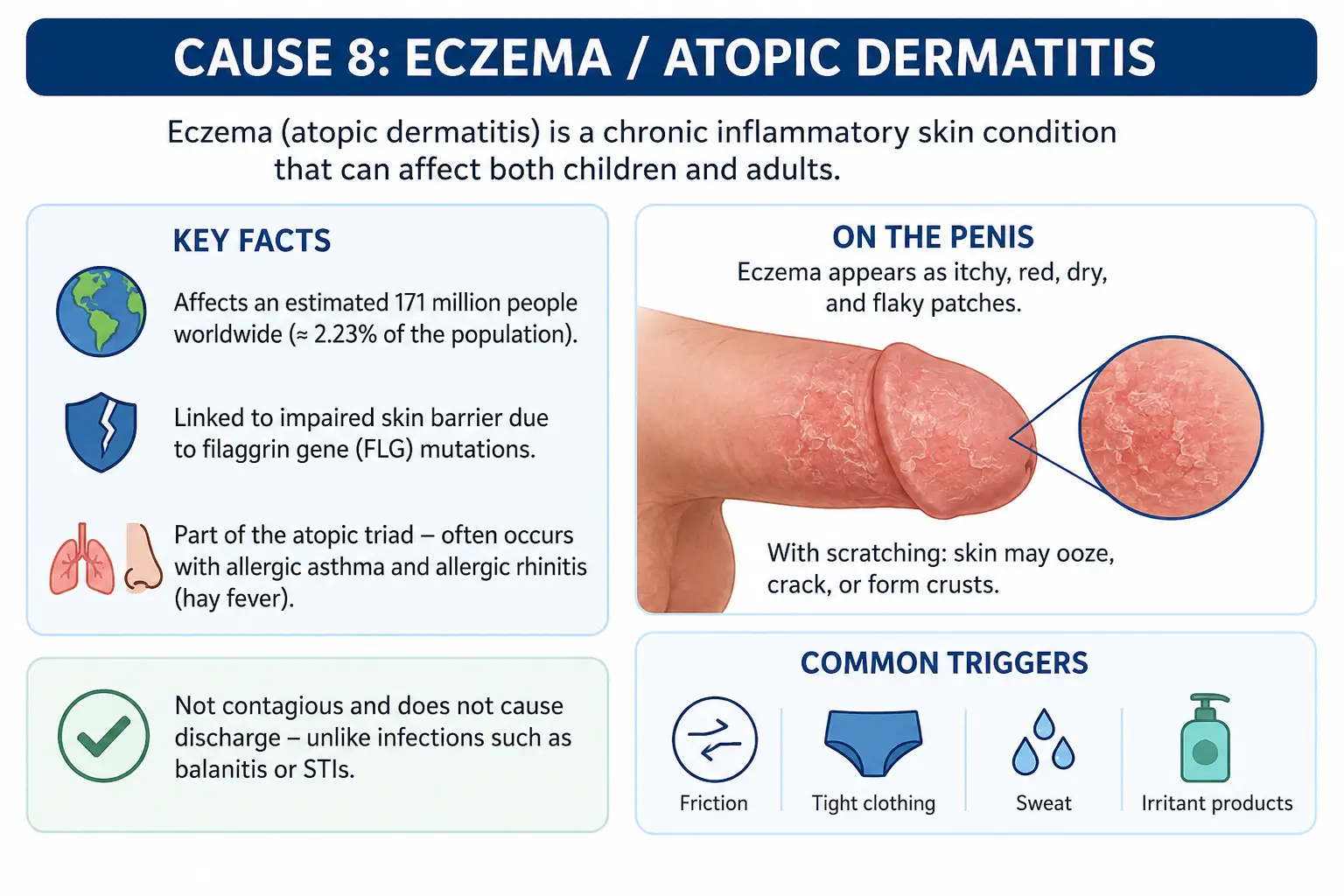
On the penis, eczema typically presents as itchy, red, dry, and flaky patches. With repeated scratching, the skin may begin oozing, cracking, or developing crusts. In men, genital eczema is often triggered or worsened by friction, tight clothing, sweat, or contact with irritant products.
Unlike infections, atopic dermatitis is not contagious and does not cause discharge – distinguishing it from balanitis or STIs.
Medicines/Treatment:
STI Rash Appearance
Sexually transmitted infections can lead to a range of penile rashes. You might also get sores, bumps, or discharge as a result. Noticing common patterns can help decide when medical tests are necessary.
Common STI Signs and Symptoms
| STI / Condition | Appearance on Penis | Key Symptom |
| Herpes (HSV-2) | Clusters of small painful fluid-filled blisters | Burning, fever, swollen lymph nodes |
| Syphilis (Primary) | Single painless sore (chancre) | Usually painless – easy to miss |
| Gonorrhea | Redness at tip; thick yellow-green discharge | Burning on urination |
| Chlamydia | Redness; clear or white discharge | Often NO symptoms – silent |
| Genital Warts (HPV) | Flesh-colored cauliflower-like bumps | Usually painless |
| Scabies | Tiny red burrow lines; intense night itching | Worse at night |
| Pubic Lice | Tiny specks (lice/eggs) in pubic hair | Intense itching |
When to Seek Medical Attention Immediately
If you notice any symptoms of a penile rash, it might be a sign of a more serious condition. It’s smart to see a healthcare professional quickly for the right advice.
Warning Signs Requiring Prompt Medical Care
If the rash spreads quickly or seems to get worse in a short time.
If pulling back the foreskin becomes painful, this sudden issue is called phimosis.
If a rash does not go away after two weeks, it’s important. This is true even if you use over-the-counter treatment.
If you have severe pain, daily activities can be tough. Also, watch for swelling or worsening symptoms.
Self-Care Remedies at Home
Home care can make a big impact. It provides relief from irritation and promotes healing. It can also help stop the rash from getting worse while you’re waiting for treatment.
Safe Home Care Steps
Gentle Washing
Clean the genital area daily, morning and night. Stick to plain water or a gentle soap that’s fragrance-free. It takes away sweat, dirt, and irritants while being kind to sensitive skin.
Clean Under Foreskin
If you’re uncircumcised, you can gently pull back the foreskin and wash underneath it carefully. This will help keep everything clean and healthy. This helps get rid of smegma, bacteria, and moisture that can lead to infection.
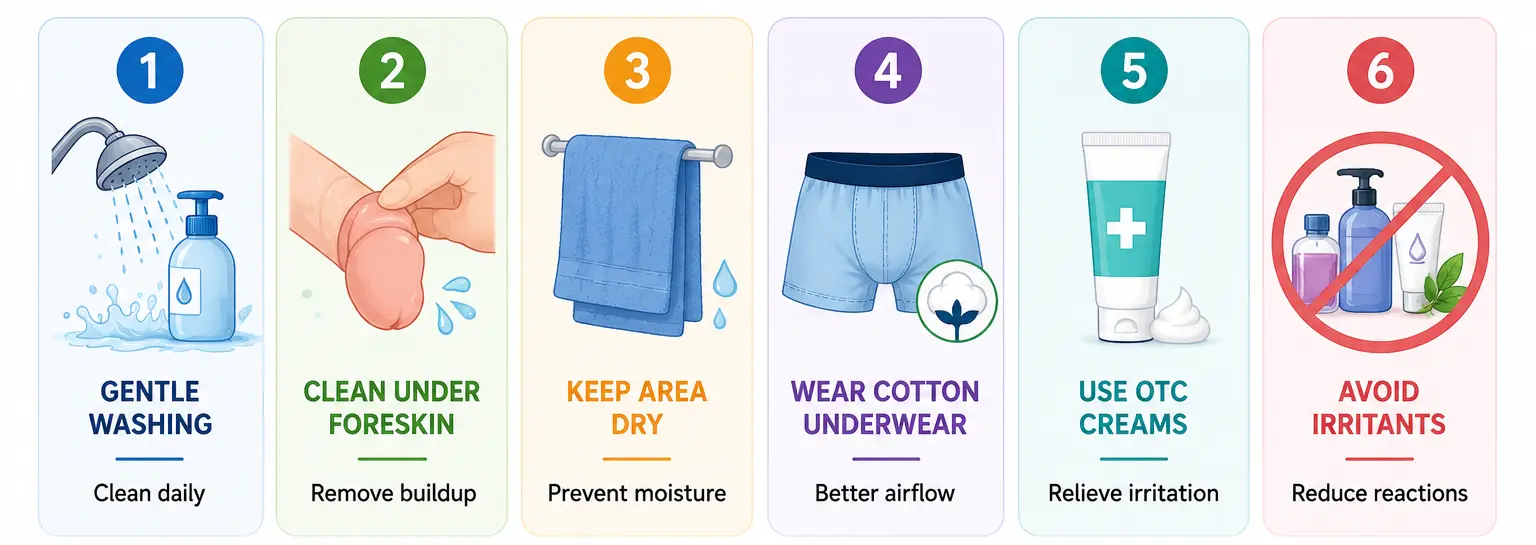
Keep Area Dry
Make sure to dry the area really well after you’ve had a bath or wash. When moisture builds up under the foreskin or in skin folds, it can promote fungal growth. This could make irritation worse.
Wear Cotton Underwear
Consider opting for loose-fitting underwear that helps keep you cool and dry. Opt for cotton underwear that’s soft and breathable. It helps with airflow and keeps your genital area comfortable.
Use OTC Creams
Clotrimazole and Miconazole creams can be a big help. They’re great for fungal rashes that might pop up. Hydrocortisone 1% cream is a good option. It’s great for dealing with mild allergic reactions and contact dermatitis. It really helps with these kinds of issues.
Avoid Irritants
Hold off on sexual contact until a doctor checks out and treats the rash. It might be a good idea to avoid strong soaps, perfumed products, toothpaste, and straight tea tree oil.
Professional Treatment
Penile rashes can occur due to different factors. It’s essential to identify each cause so that you can get the appropriate treatment. A proper diagnosis is key to helping doctors choose the right medicine.
Prevention Strategies
Regular hygiene helps to keep you safe and healthy. It can lower the risk of penile rashes, infections, irritation, and other problems that keep coming back.
Daily Prevention Tips
It’s a good idea to wash your genitals each day. You can use plain water or a soft cleanser that doesn’t have any fragrance. This will help reduce irritation and keep you feeling good.
After washing, make sure to dry the area completely. Focus on under the foreskin, as moisture can sometimes build up there.
Go for cotton underwear that lets your skin breathe. It’s a good idea to change it every day to keep things clean and dry down there.
Using condoms during sex is a great way to protect yourself and your partner. They reduce the risk of STIs.
Keep your towels and underwear to yourself. Sharing them can spread germs and infections.
If you have diabetes, managing your blood sugar levels is key. This can help decrease the chances of Candida overgrowth.
It’s best to avoid scented soaps, lotions, and sprays, as they may irritate sensitive genital skin. Consider using fragrance-free options for comfort.
Get checked for STIs regularly. It’s a good idea if you’ve got lots of sexual partners or if you don’t always use protection.
FAQs
Q1:- What does a penile rash look like?
Ans:- A rash on the penis can show up in various colors. It may be red, purple, brown, or have dark patches. Some people get small bumps, blisters, or sores on their skin. They might also notice shiny areas popping up.
Q2:- Can a rash on the penis go away on its own?
Ans:- Yes, Mild rashes due to friction, sweat, or temporary irritation often clear up on their own. Keeping the area clean and dry is a good idea. Infections and long-term skin issues need the right treatment. Proper care is usually necessary for these kinds of problems.
Q3:- What is the best cream for a rash on the penis?
Ans:- The best cream to use depends on what’s causing the rash. So, figuring out the cause is key to finding the right cream. Antifungal creams are used to treat fungal infections. For allergic or inflammatory rashes, mild steroid creams can be a big help. Bacterial infections usually need antibiotics from a doctor.
Q4:- Can poor hygiene cause a penile rash?
Ans:- Yes, not taking care of yourself can lead to penile irritation and rashes. It happens when sweat, dead skin, bacteria, and smegma collect under the foreskin. This buildup can cause problems like inflammation, infection, and redness. These can be quite uncomfortable.
Q5:- How do I know if my penile rash is an STI?
Ans:- A rash from an STI can show up as blisters, ulcers, sores, or genital warts. It’s basically a skin issue that can take different forms. It may also occur with discharge, painful urination, or swollen lymph nodes. You can only be sure you have an STI with medical testing.
Q6:- Is balanitis the same as a yeast infection?
Ans:- No. Balanitis is when the head of the penis gets inflamed. One thing that can cause it is a yeast infection. Bacteria can cause balanitis, but that’s not the only reason. It can also happen if you have allergies, skin issues or don’t keep yourself clean.
Q7:- Can stress cause a rash on the penis?
Ans:- Stress doesn’t directly cause a rash on the penis. But constant stress can weaken your immune system. This makes you more likely to get infections. It can also make skin conditions worse. This includes eczema and psoriasis.
Q8:- Should I use antifungal cream on my penis rash?
Ans:- Only use antifungal cream if you think a fungal infection is present. Use it also if a doctor confirms the infection. Antifungal medicines help with yeast rashes. They also treat other fungal rashes. If the rash is caused by allergies or irritation, a different treatment may be needed.
Q9:- How long does a penile rash take to heal?
Ans:- Lots of rashes on the penis get better on their own within 3 to 7 days if you treat them right. Severe infections or long-lasting skin issues may take more time to heal. If symptoms don’t get better in a week, you should see a doctor.
Q10:- Can my partner catch my penile rash?
Ans:- The cause of the rash matters. If it’s an infection like an STI or a fungal infection, it can spread to a partner through close contact. Rashes can develop due to allergies, irritation, eczema, or psoriasis. They are usually not contagious.
- https://www.ncbi.nlm.nih.gov/books/NBK537143/
- https://www.statpearls.com/point-of-care/18119
- https://pmc.ncbi.nlm.nih.gov/articles/PMC6620173/
- https://pmc.ncbi.nlm.nih.gov/articles/PMC8284224/
- https://pmc.ncbi.nlm.nih.gov/articles/PMC11357599/
- https://www.cdc.gov/sti-statistics/annual/index.html
- https://www.ncbi.nlm.nih.gov/books/NBK560808/
- https://link.springer.com/article/10.1007/s13555-018-0257-y
- https://www.ncbi.nlm.nih.gov/pmc/articles/PMC8140694/
- https://pmc.ncbi.nlm.nih.gov/articles/PMC6118254/
- https://www.ncbi.nlm.nih.gov/pmc/articles/PMC10545057/
- https://pmc.ncbi.nlm.nih.gov/articles/PMC9262734/
- https://pubmed.ncbi.nlm.nih.gov/10570372/
- https://onlinelibrary.wiley.com/doi/10.1111/jdv.19723
