


Why This Topic Matters Globally
Sexual health issues are more common now than they used to be. They’re not just for older people, either. These days, people of all ages can experience them.
Sexual performance issues are a big health problem worldwide, but they often go unnoticed. Around 322 million[1], men have erectile dysfunction problems, based on 2025 and 2026 reviews. About 150 million men[1] around the globe deal with sexual performance problems.
About one in two patients at sexual health clinics deal with erectile dysfunction. Developing countries are seeing the fastest rise in cases. The number of reported cases is growing quickly there.
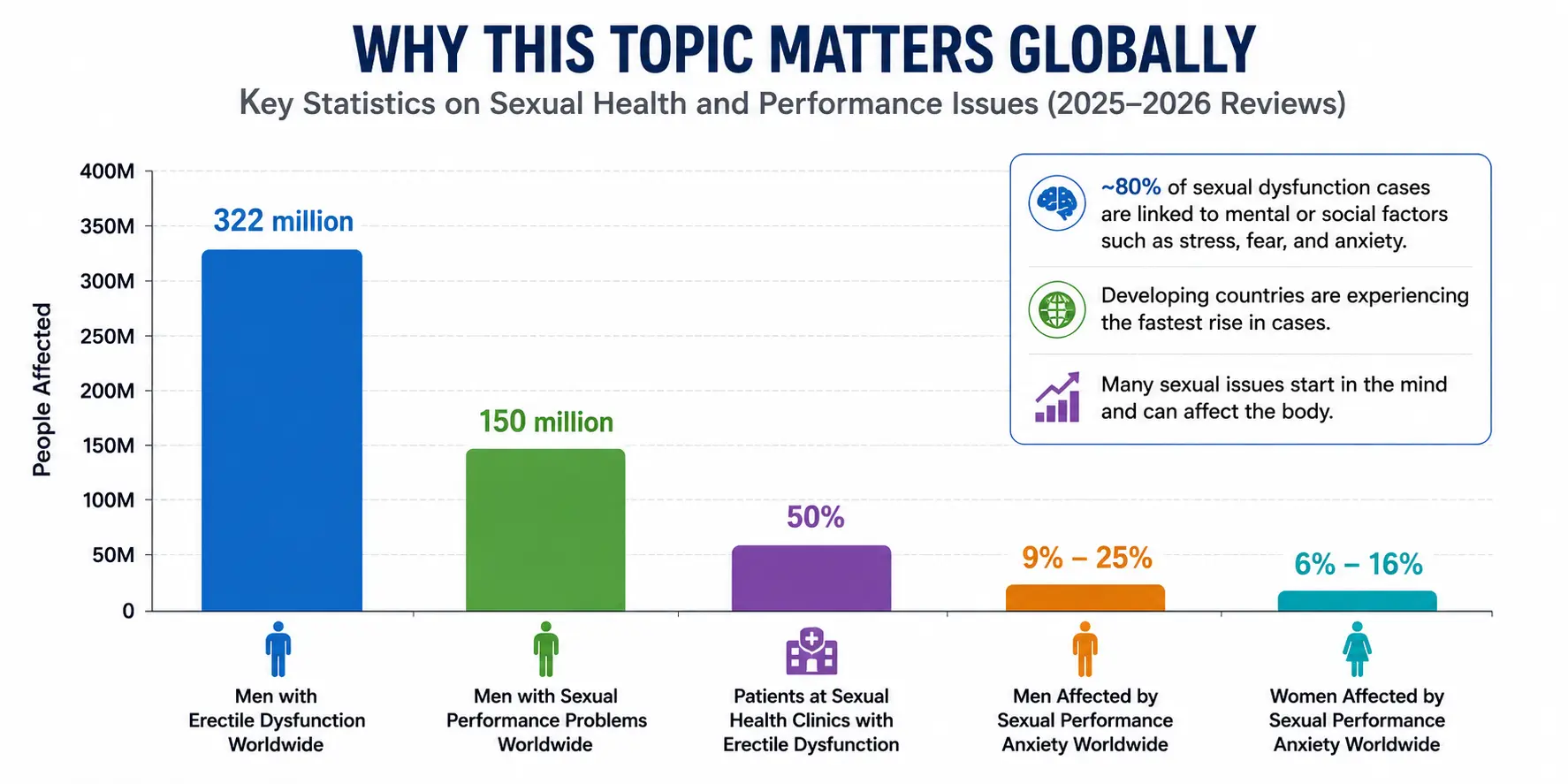
Experts say many sexual issues start in your mind. They can then affect your body. About 80% of sexual dysfunction cases are tied to mental or social problems. It’s common for people to feel stress, fear, and anxiety in relationships.
These feelings can affect sexual performance. Sexual performance anxiety is something that can affect around 9% to 25%[2] of men. It also impacts about 6% to 16%[2] of women worldwide. Understanding this issue helps us support each other more.
What Is Sexual Performance Dysfunction?
Sexual performance dysfunction refers to persistent difficulty in achieving or maintaining satisfactory sexual function.
Common presentations include erectile dysfunction (ED), premature ejaculation, hypoactive sexual desire disorder, and difficulty reaching orgasm affecting both men and women across all age groups.
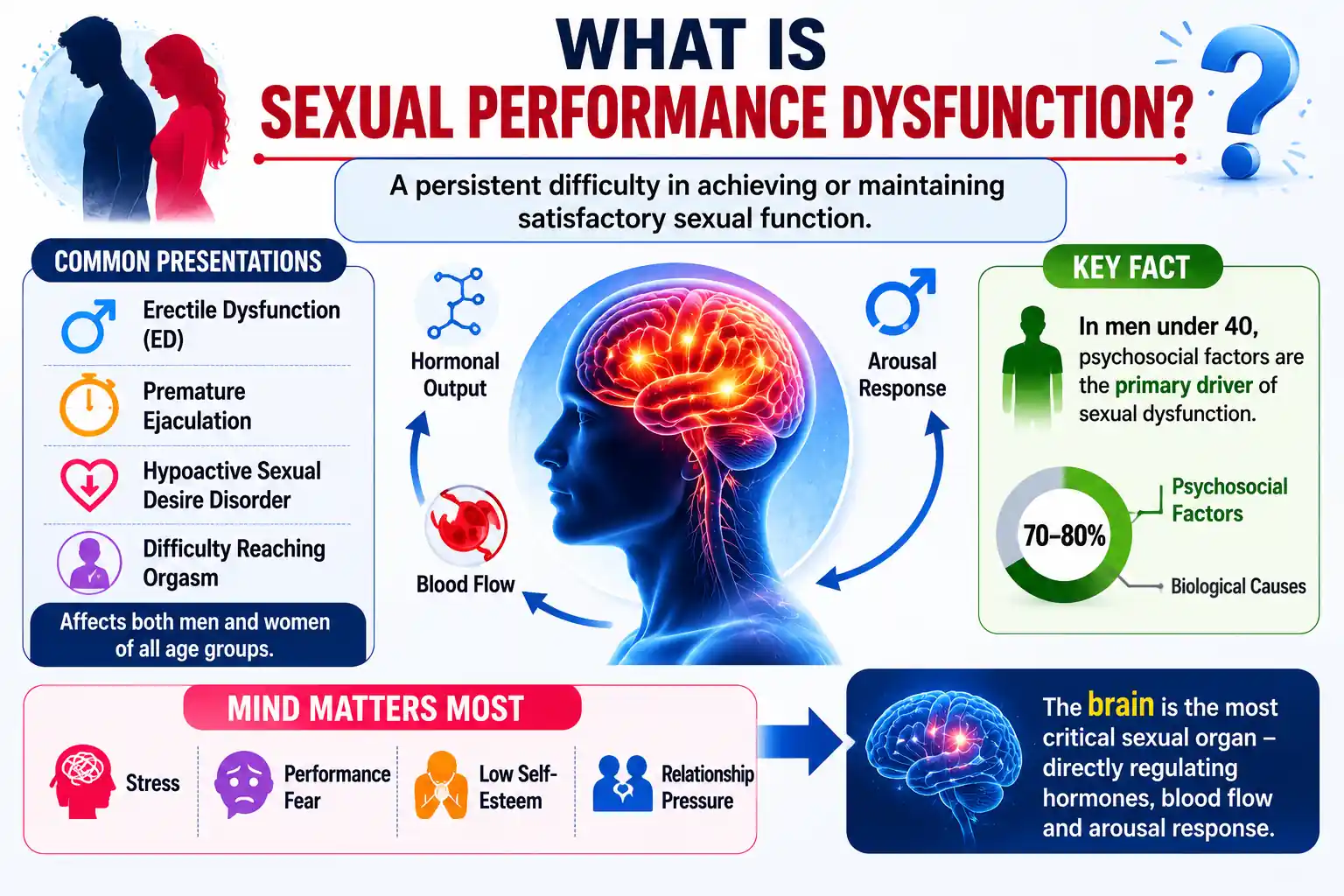
In men under 40[3], psychosocial factors are considered the primary driver of sexual dysfunction, with biological causes playing a secondary role.
The brain functions as the most critical sexual organ directly regulating hormonal output, blood flow, and arousal response. Psychological states including stress, performance fear, low self-esteem, and relationship pressure can significantly impair this neurological feedback loop.
12 Mental Habits That Weaken Sexual Performance
Sexual performance issues usually begin in our mind. This can happen even before we see any physical signs. Negative thoughts can hurt your confidence. This can make sexual dysfunction more likely to happen and last longer.
Habit 1: Performance Anxiety
Performance anxiety is the ongoing fear of not doing well during sex. This fear weighs you down mentally. It affects your emotions, confidence, and physical sexual response in a big way.
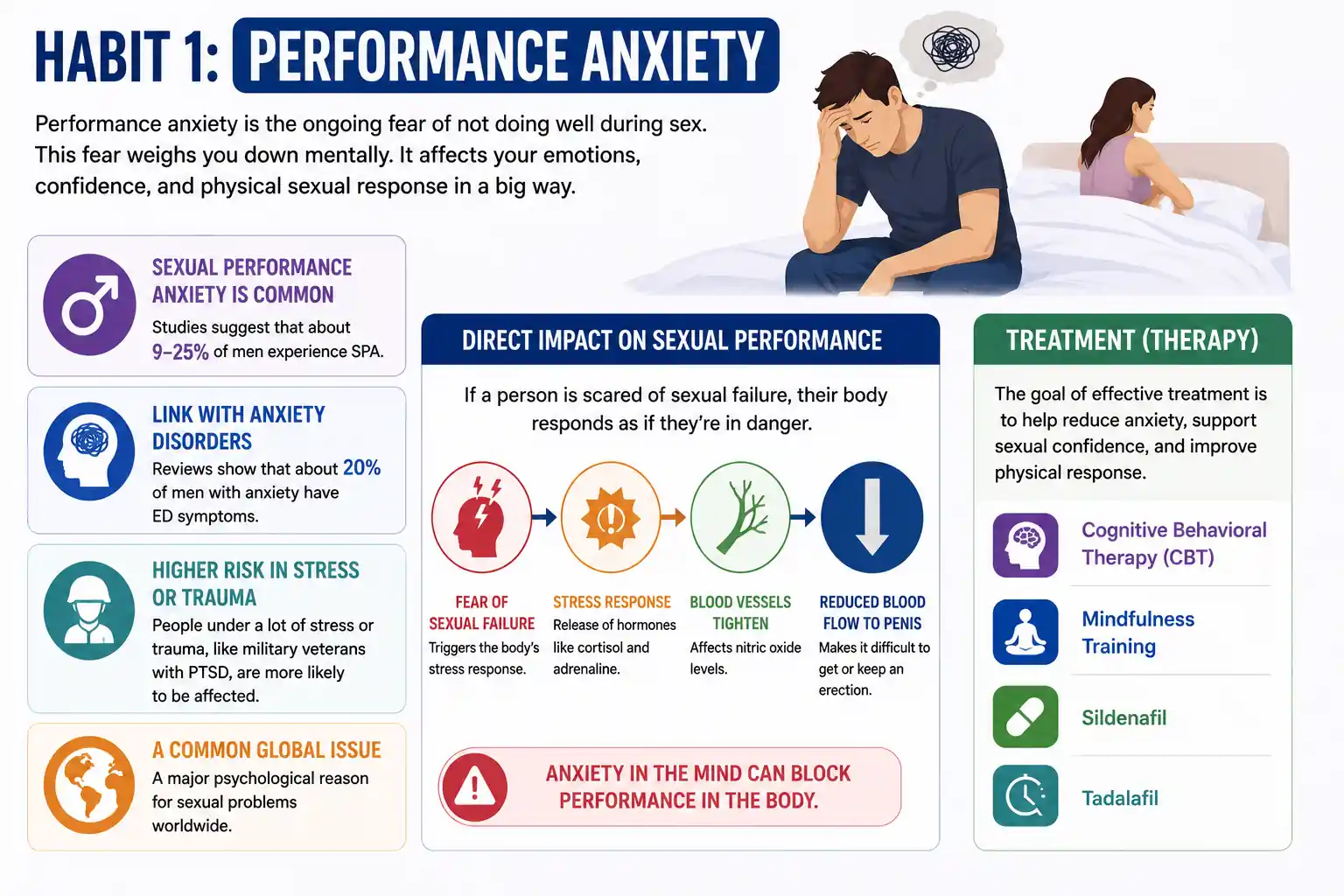
Sexual performance anxiety is a really common psychological reason for sexual problems around the world. Studies suggest that about 9-25%[2] of men experience SPA.
It’s been found that there’s a clear link between anxiety disorders and erectile dysfunction. Reviews show that about 20% of men with anxiety have ED symptoms.
The risk is even higher for people under a lot of stress or trauma. This includes military veterans who are dealing with post-traumatic stress disorder. For instance, they’re more likely to be affected.
Direct Impact on Sexual Performance
If a person is scared of sexual failure, their body responds as if they’re in danger. Stress leads to the release of hormones like cortisol and adrenaline.
This makes blood vessels tighten up. This process plays a role in nitric oxide levels. It can cut down blood flow to the penis, which makes it tough to get or keep an erection.
Treatment (Therapy)
The goal of effective treatment is to help reduce anxiety. It also supports sexual confidence and improves physical response.
Therapies include:
Habit 2: Chronic Stress & Cortisol Overload
Chronic stress occurs when the body is under pressure for too long. This kind of stress can build up over time and stick around. This raises stress hormones, disrupts sexual hormones, and makes it tough for the body to relax.
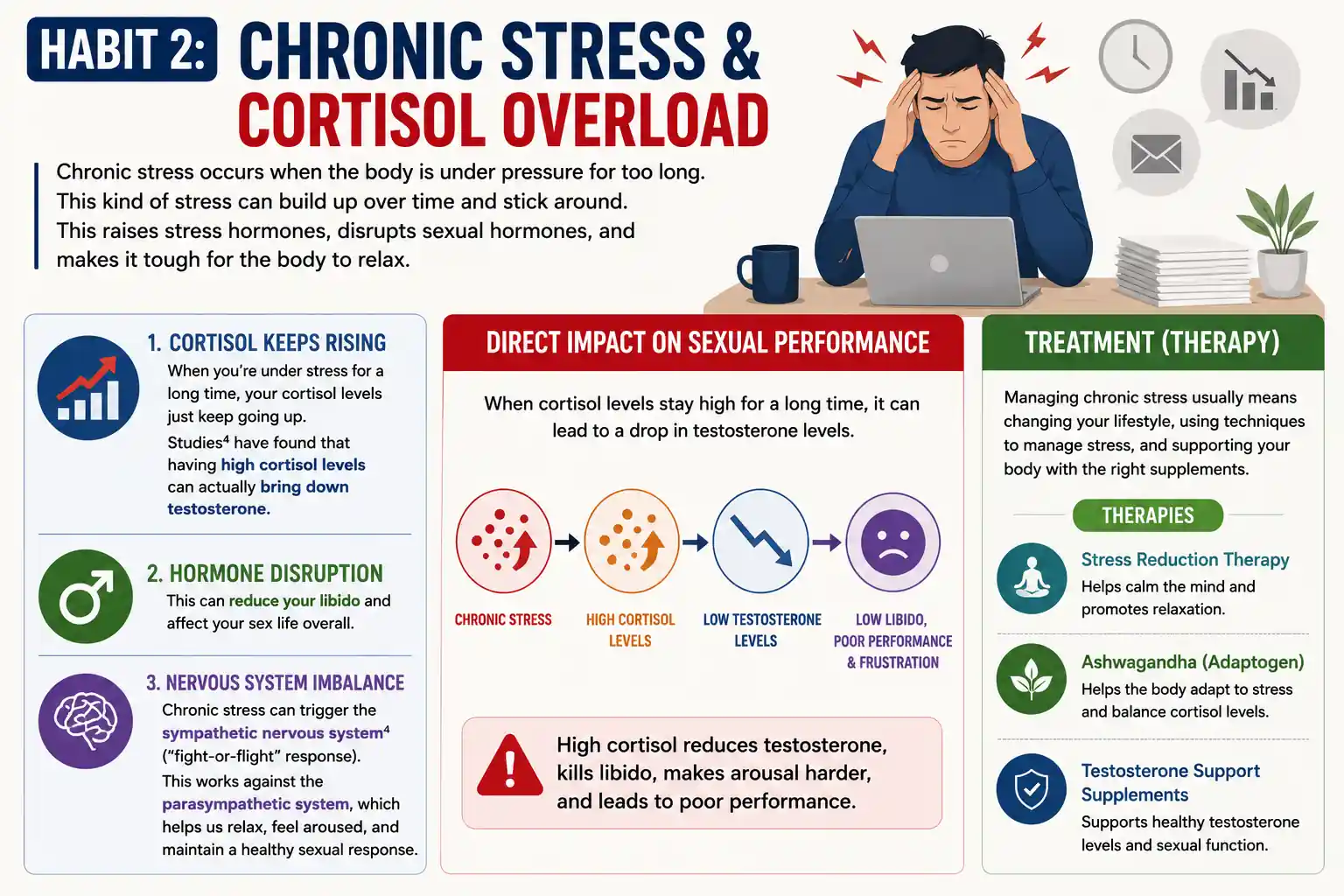
When you’re under stress for a long time, your cortisol levels just keep going up. Studies[4] have found that having high cortisol levels can actually bring down testosterone. This can reduce your libido and affect your sex life overall.
Chronic stress can trigger the sympathetic nervous system[4]. This is often called the “fight-or-flight” response. It helps us react to tough situations. This state works against the parasympathetic system. It helps us relax, feel aroused, and keep a healthy sexual response.
Direct Impact on Sexual Performance
When cortisol levels stay high for a long time, it can lead to a drop in testosterone levels. This drop can be really significant. It kills libido and makes arousal harder. This leads to poor performance and more frustration.
Treatment (Therapy)
Managing chronic stress usually means changing your lifestyle. You’ll also need to use techniques to manage stress. Some supplements can be helpful as well.
Therapies:
Habit 3: Excessive Pornography Consumption
Watching porn too much means you often view very stimulating sexual content. This can change what you expect, how you feel aroused, and how you respond during real-life intimacy.
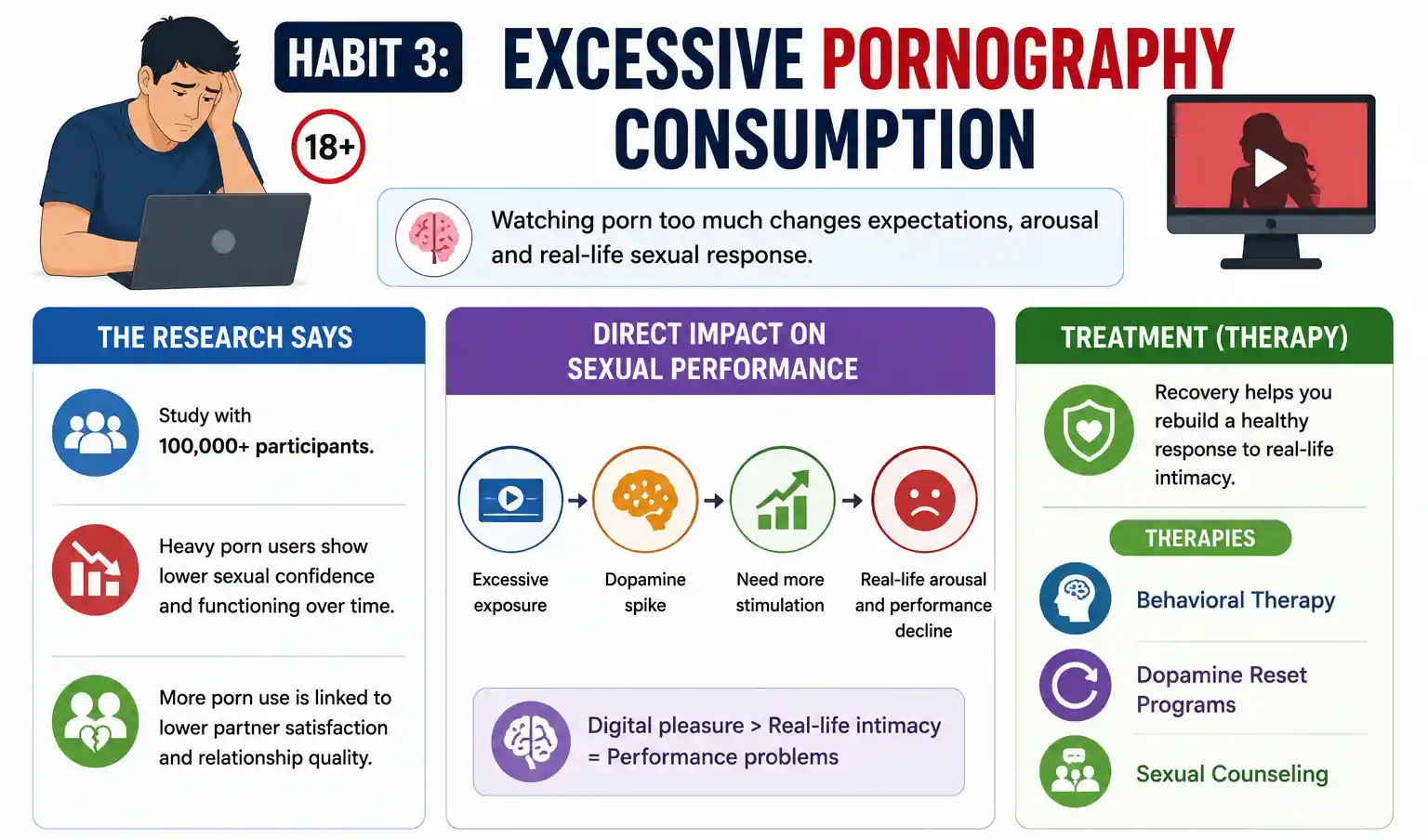
A big three-part study had over 100,000 participants[5]. It found some interesting results. Guys who watch a lot of porn tend to feel less confident about their sex lives. They also have lower sexual functioning as time goes on.
The research showed that more porn use is tied to lower sexual satisfaction for partners. Men who watched more pornography often had a hard time. They found it hard to build healthy and satisfying relationships.
Direct Impact on Sexual Performance
When you’re exposed to a lot of intense sexual content, it can increase your brain’s dopamine levels. This leads to needing more to feel the same amount of pleasure. Intimacy in real life can be less exciting than what you get from digital stuff. This makes it tougher to get aroused and can lead to problems in the bedroom.
Treatment (Therapy)
Recovery helps you rebuild a healthy response to real-life intimacy.
Therapies:
Habit 4: Negative Body Image & Self-Consciousness
Lots of people have a tough time with negative body image. They can feel really self-conscious about their flaws. This is especially true during times of intimacy.
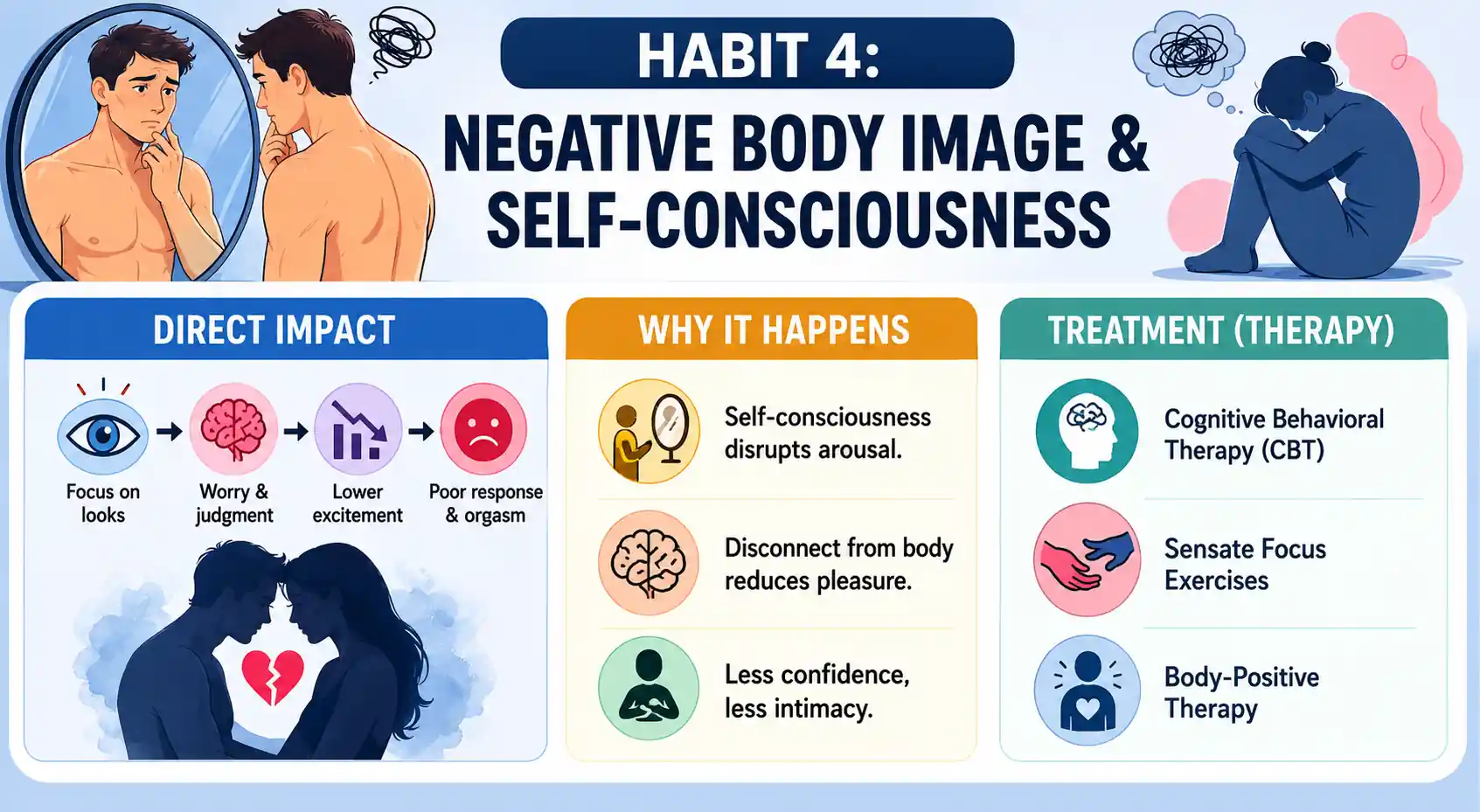
A study from Spain found that bodily dissociation can have a big impact on sexual dissatisfaction. Many people felt disconnected from their bodies. They said they enjoyed less and felt less confident. Their sexual experiences were harder.
Researchers found that self-consciousness during sex is a problem. This is often called “spectatoring.” It disrupts natural arousal. When people focus on themselves, it can reduce feelings of intimacy. This change might make it harder to connect sexually.
Direct Impact on Sexual Performance
When we focus on our looks, body flaws, or worry about judgment, we stop being present. This reduces emotional and physical involvement. It lowers excitement and impacts sexual response. It can also make reaching orgasm hard.
Treatment (Therapy)
The goal of treatment is to boost self-confidence positively. This makes it easier for people to enjoy physical sensations during intimate moments.
Therapies:
Habit 5: Depression & Depressive Thinking
Depression and negative thinking can create a lasting low mood. This may affect sexual interest. This can have a big impact on mental and sexual health over time.
Studies have found that depression is closely tied to erectile dysfunction. A big analysis of many studies found that people with depression have a higher risk of getting ED. This means they’re more likely to develop it. Also, those with ED are more likely to face depression.
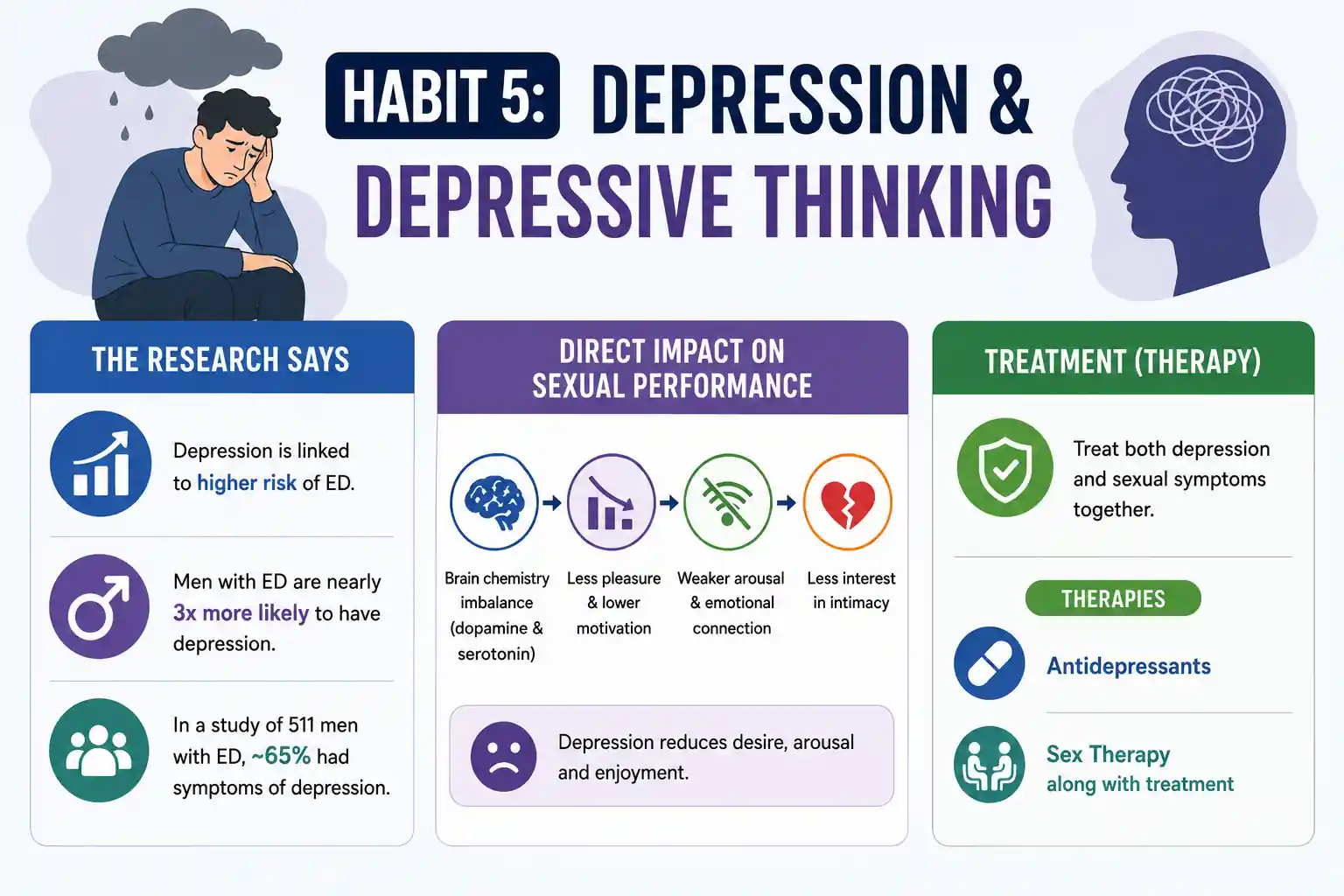
A review of 12 studies[6] found that men with erectile dysfunction have a higher chance of depression. They are nearly three times more likely to face it. In a study of 511 men[7] with ED, about 65% had symptoms of depression. This shows a strong link between the two conditions.
Direct Impact on Sexual Performance
Depression can lower how much pleasure you get from things. It does this by altering key brain chemicals, like dopamine and serotonin.
This imbalance can impact sexual desire. It may weaken arousal signals and reduce emotional connection. Because of this, there might be less interest in intimacy.
Treatment (Therapy)
Treatment should tackle both depression and sexual symptoms at the same time. Picking the right medication helps improve mood. It also protects sexual function.
Therapies:
Habit 6: Fear of Intimacy & Emotional Avoidance
Fear of intimacy can sometimes make people avoid close relationships. They may feel this way when they are uneasy with emotional connections. This can block healthy sexual relationships.
Studies have found that being rigid in your mindset can lead to problems in the bedroom. People who find it hard to adapt emotionally often say they feel less satisfied with sex. They also face more performance problems.
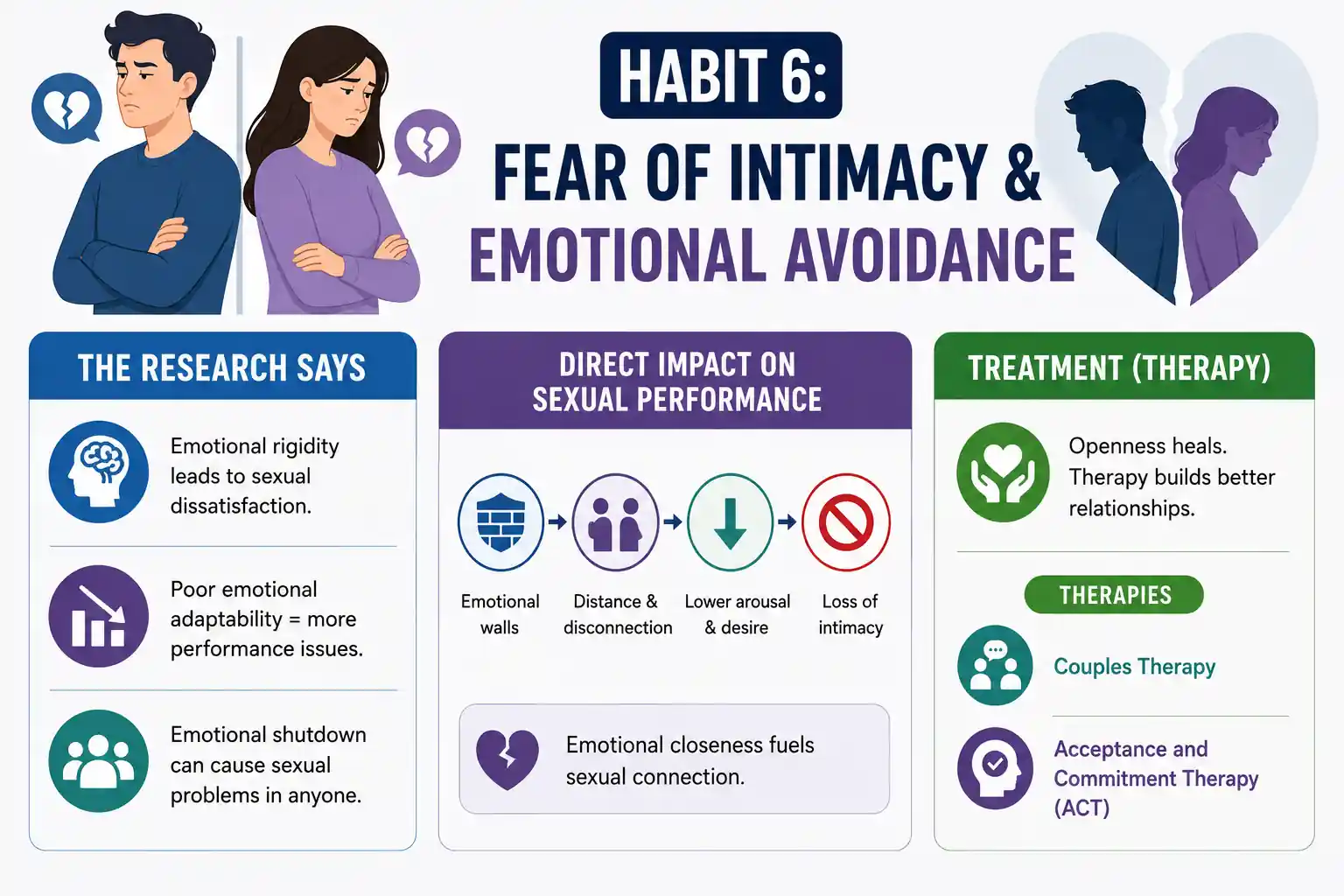
Lots of research suggests that shutting down emotionally can lead to sexual issues. This can affect anyone, even those who are otherwise healthy.
Direct Impact on Sexual Performance
Partners who build emotional walls often find their sex life suffers. They drift apart and lose their closeness. Lack of emotional closeness can lower arousal and desire. This might cause people to stop having sex.
Treatment (Therapy)
Treatment helps people be more open with their emotions. Therapy can really help people form better relationships and get closer to others.
Therapies:
Habit 7: Relationship Resentment & Unresolved Conflict
Resentment can grow in a relationship. This happens when partners don’t talk about their anger or disappointment. Negative emotions can hurt emotional bonds and sexual intimacy over time.
Research shows that challenges in relationships can play a big role in causing sexual issues.
A global survey found that 1 in 7 women (14.7%)[8] reported being blamed by their male partner for erectile dysfunction directly leading to lower sexual satisfaction and higher rates of relationship breakdown.
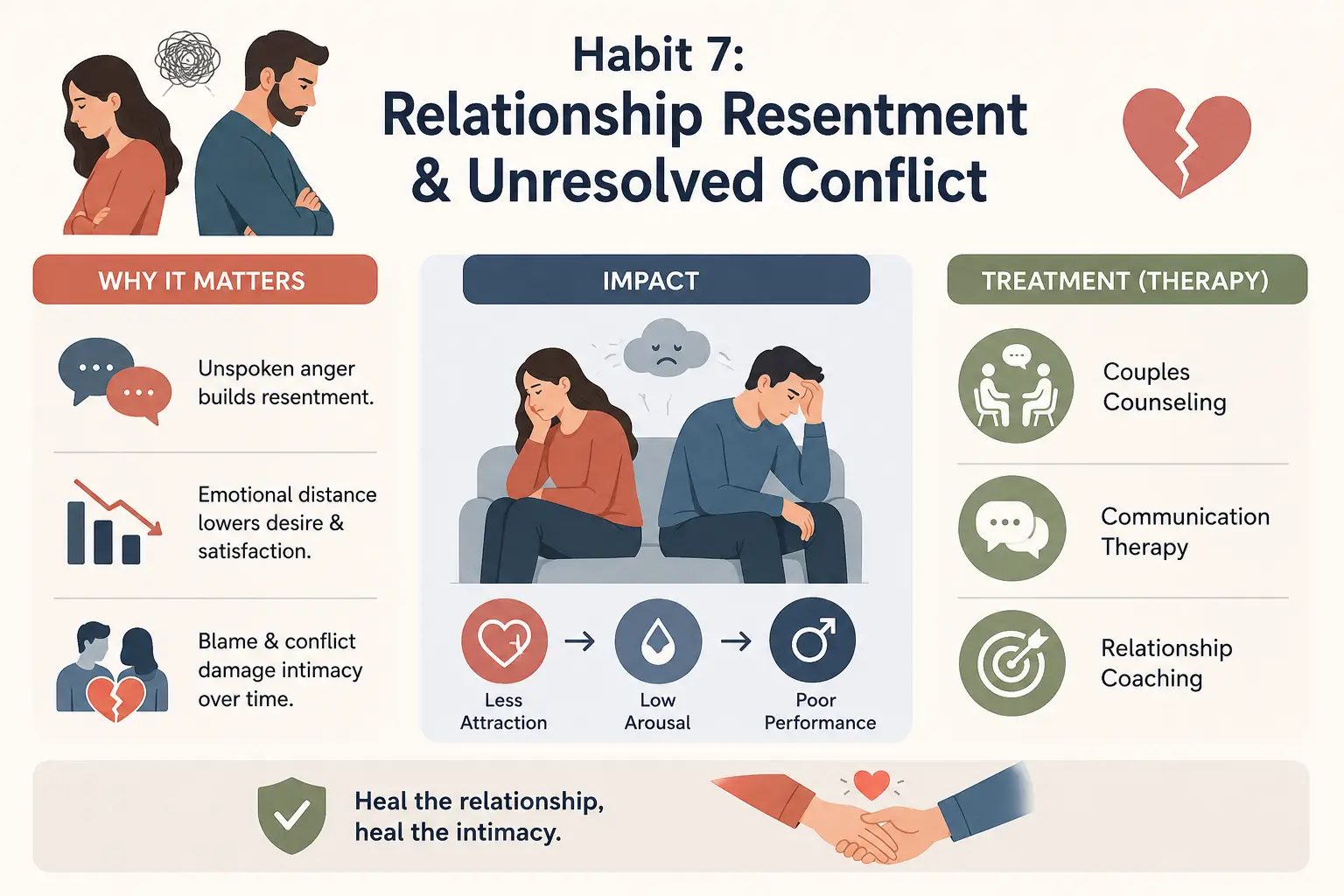
Conflict and bad communication can really damage sexual desire. Emotional distance can reduce satisfaction.
Studies show[9] that negative attributional styles are a problem. For example, blaming yourself or your partner for issues hurts relationships. Clinical research confirms that ED rarely occurs in relational isolation conflict, communication breakdowns, and blame significantly deepen dysfunction and prevent recovery.This leads to worse sexual outcomes over time. These patterns can build lasting barriers to healthy intimacy.
Direct Impact on Sexual Performance
When partners are emotionally distant, it can decrease the attraction and desire they feel for each other. When resentment builds, sexual interest often fades. It can make arousal harder. It may also cause physical problems during intimate moments.
Treatment (Therapy)
To improve a relationship, rebuild trust and address the underlying issues.
Therapies:
Habit 8: Guilt, Shame & Negative Beliefs Around Sex
Guilt, shame, and negative beliefs about sex can happen. This can happen if someone thinks sexual thoughts, desires, or actions are shameful or wrong. These beliefs can block healthy sexual expression.
Internalized guilt often starts during childhood. Cultural expectations, religious teachings, or social conditioning can shape it. This leads to a constant battle between natural sexual desire and mental suppression.
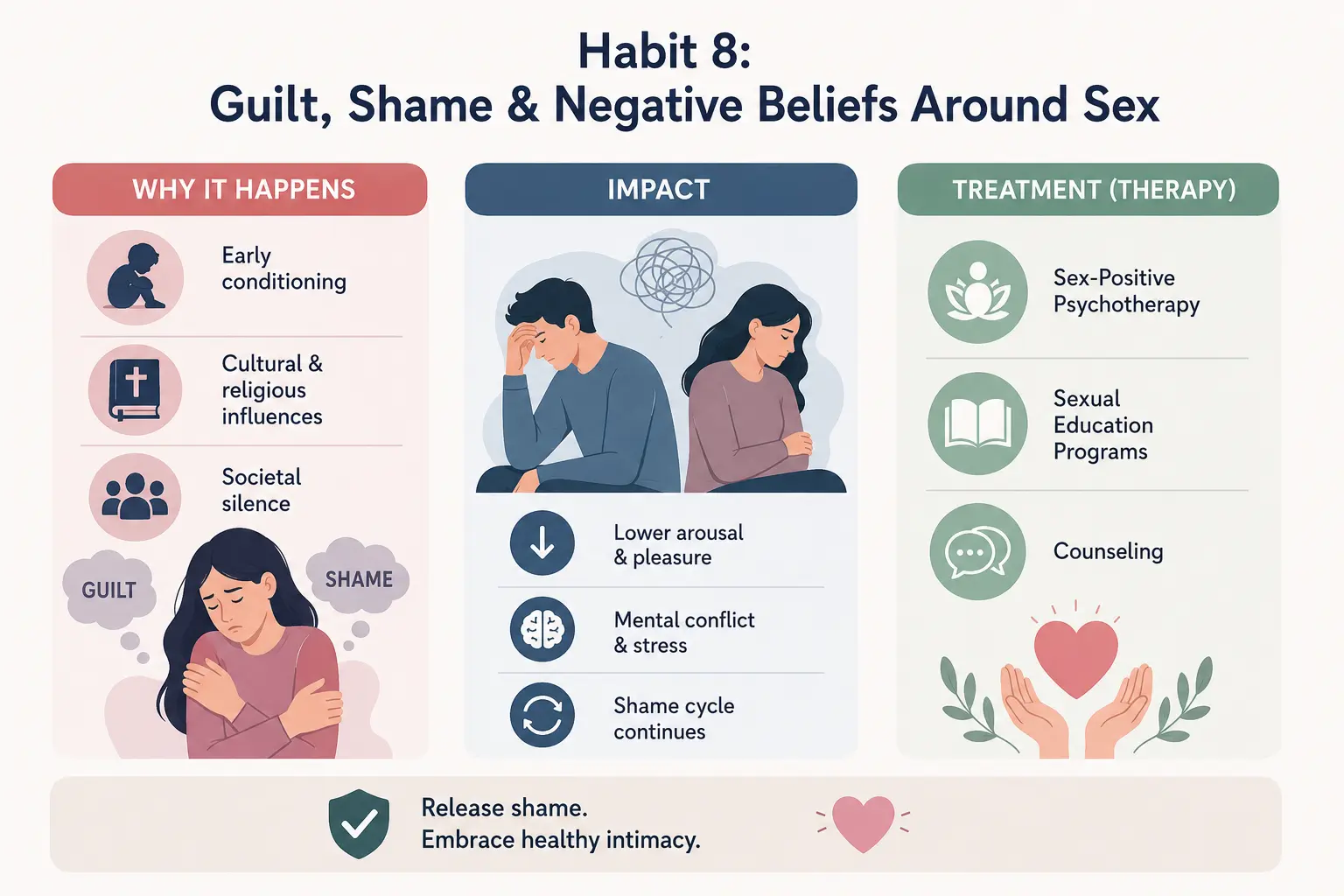
This pattern tends to show up in traditional societies. In these places, people don’t often talk openly about sex. Conversations about it can be pretty limited. Experts say guilt and shame are important factors. They affect sexual well-being in many South Asian and Middle Eastern communities.
Direct Impact on Sexual Performance
When sexual desire is linked to guilt or shame, it creates conflict. The mind struggles with these feelings. This mental struggle can lower arousal and pleasure. It also tends to create a shame cycle that further hurts sexual confidence.
Treatment (Therapy)
Treatment is all about changing beliefs that aren’t doing you any good. The main goal is to have a healthier relationship with intimacy. This is done through education and professional support.
Therapies:
Habit 9: Low Self-Esteem & Feelings of Inadequacy
Low self-esteem and feelings of inadequacy often happen when someone starts to doubt their own value. They may doubt their looks or sexual abilities. They can also disrupt healthy sexual experiences.
Research[10] reveals that erectile dysfunction can really affect a guy’s mental well-being. It’s not only physical; it can also affect his mind.
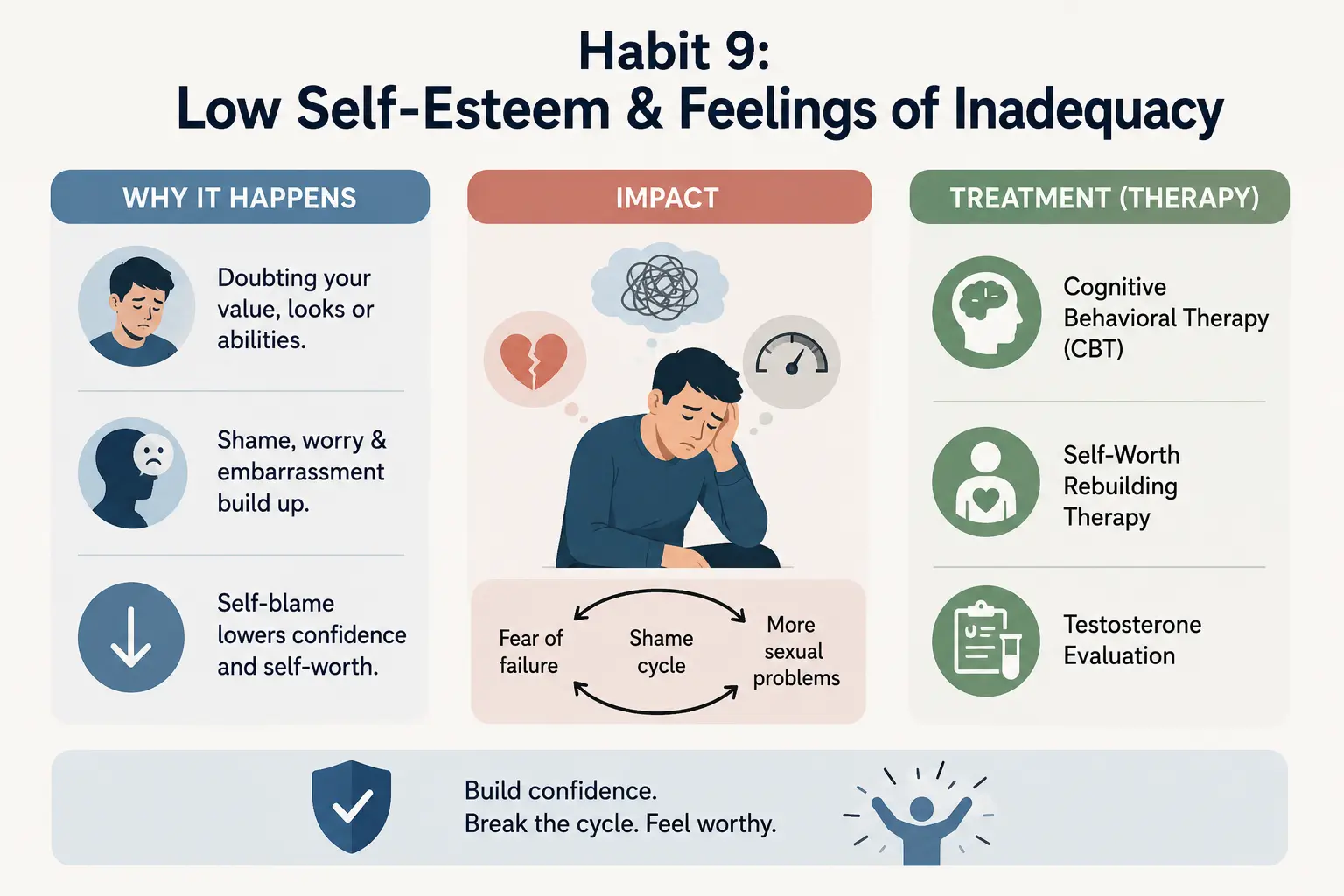
Many people feel shame. They often have low self-worth. Embarrassment is common, too. They worry about how others see them.
Research shows[11] that men with ED often blame themselves. They think it’s their fault for sexual problems. Taking these challenges to heart can damage your confidence. This often starts a cycle of emotional distress.
Direct Impact on Sexual Performance
Low self-esteem can get you stuck in a cycle of shame. When you’re scared of failing, it can hold you back from getting close to others. This, in turn, lowers their confidence and raises the chances of ongoing sexual problems.
Treatment (Therapy)
Treatment helps boost confidence. It also tackles negative thoughts. The goal is to address these factors and help people feel better about themselves.
Therapies:
Habit 10: Spectatoring (Observing Yourself During Sex)
Spectatoring is when you mentally step back during sex. Instead of fully engaging, you might be watching or judging your own performance. Attention goes from feeling pleasure to self-criticism. It also shifts to monitoring performance.
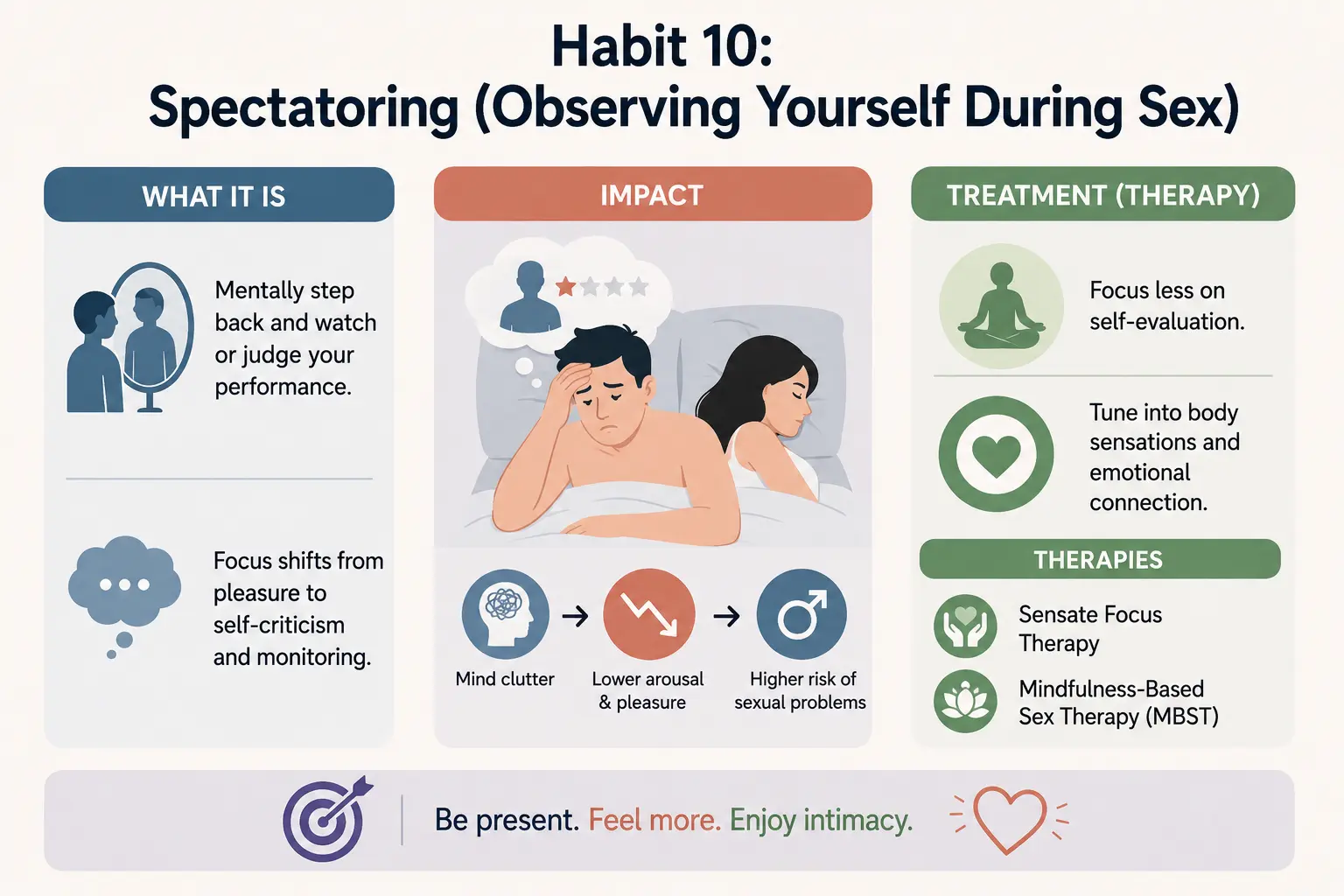
Research[12] in sex therapy shows that spectatoring affects sexual function. This is an important mental factor to discuss. People often care more about how they are doing. They think less about their physical and emotional feelings.
Researchers[13] found that spectatoring can mess up the body’s natural arousal. It basically disrupts things. Constantly keeping an eye on yourself can disrupt your body’s natural sexual response.
This disruption can make it tough to perform well sexually. It’s like your mind is getting in the way of what should happen naturally.
Direct Impact on Sexual Performance
Too much self-observation can clutter the mind and take away from pleasure. This disruption breaks the normal feedback loop for arousal. As a result, it raises the risk of erection difficulties and issues with reaching orgasm.
Treatment (Therapy)
Treatment helps us focus less on self-evaluation. It encourages us to be aware of our physical sensations and emotional connections.
Therapies:
Habit 11: Comparison to Unrealistic Standards (Media / Porn)
Many people compare their bodies and sexual skills to perfect images in media. This includes social media and adult content. This can create unrealistic expectations.
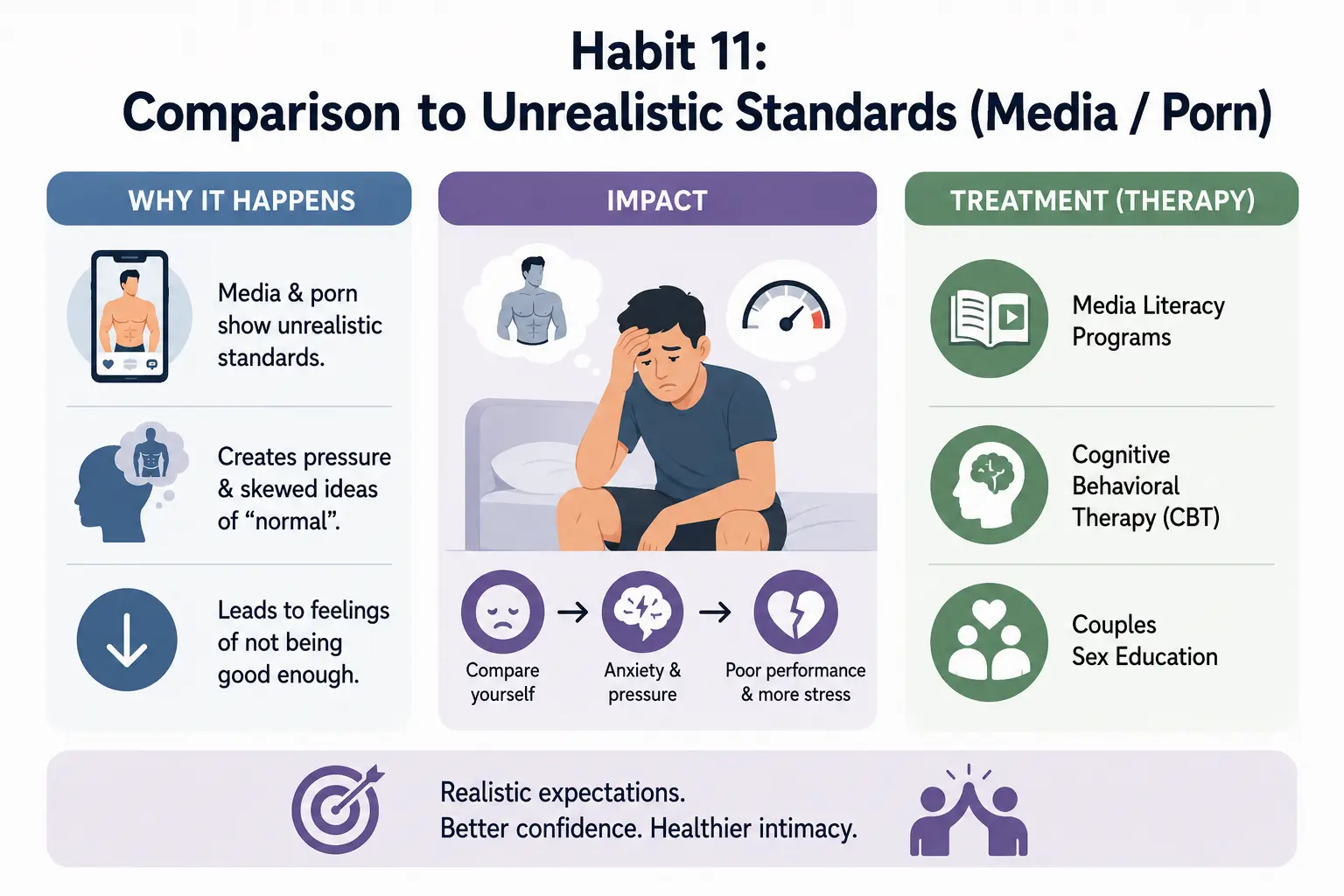
Research[14] says that the media and porn can give people unrealistic ideas about sex. This can cause a lot of pressure to live up to these expectations all the time. Many people have skewed ideas about what “normal” sexual performance is.
Research[15] says that feeling like you’re not good enough can be a problem. Having unrealistic ideas about how men should perform can also cause erectile issues. These beliefs can make you feel anxious and less confident in intimate situations.
Direct Impact on Sexual Performance
Comparing yourself to others can be a real downer. It can make you feel like you’re not up to par. This can even happen before things get intimate. This anxiety raises performance pressure. It often creates a cycle where fearing failure leads to real sexual problems.
Treatment (Therapy)
Treatment is all about changing unrealistic beliefs. It gives people a confidence boost and helps them set more realistic goals when it comes to sex, relationships, and how they see their body.
Therapies:
Habit 12: Sleep Deprivation & Mental Fatigue
Sleep deprivation and mental fatigue kick in when your brain and body don’t get enough rest. So, this can impact stuff like hormones, mood, energy, and sex life.
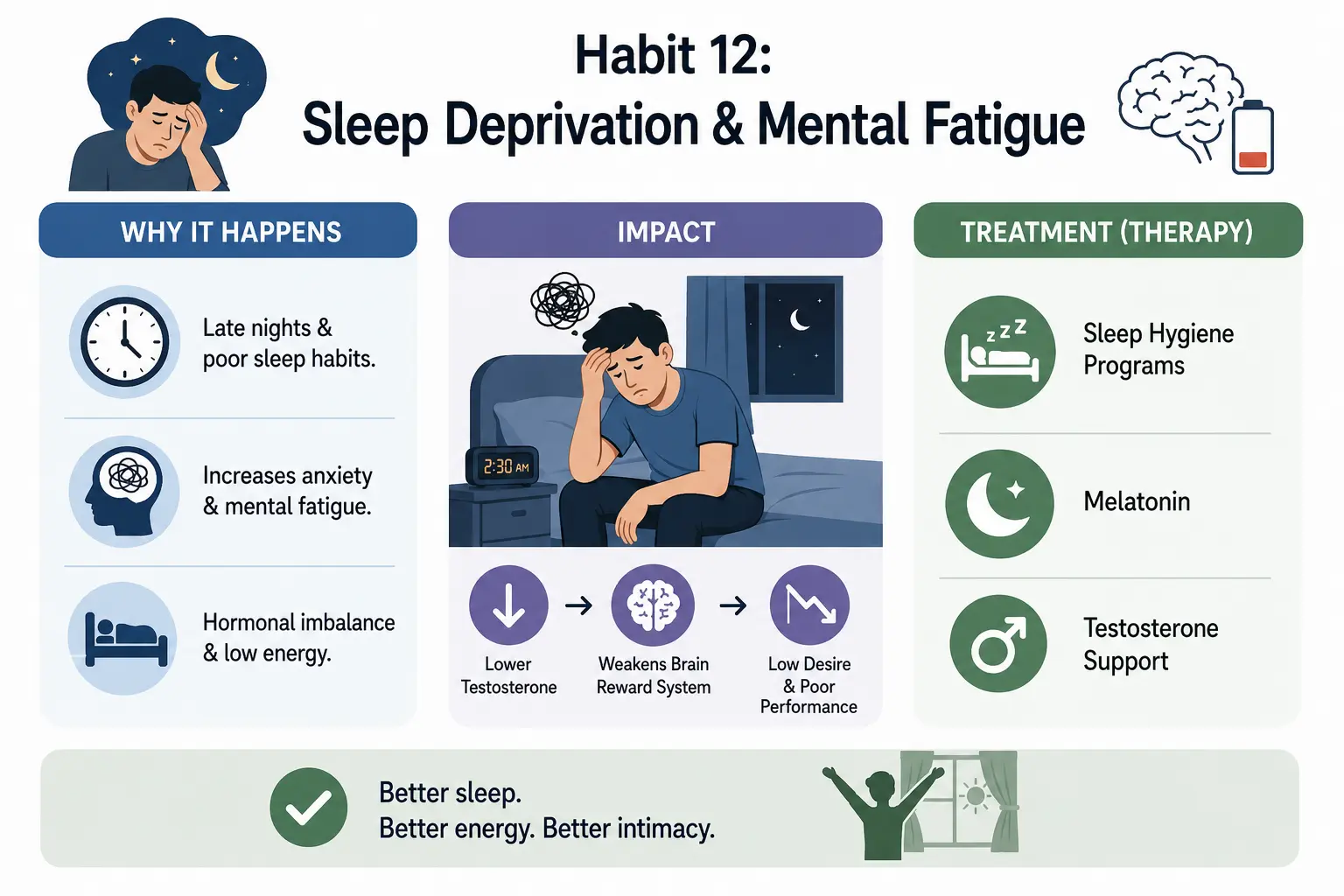
Research says that sleeping at odd hours can make people feel more anxious. This is especially true for people who have erectile dysfunction.
It’s been found that skipping a night’s sleep can decrease testosterone levels by as much as 10-15%[16]. It can also hurt the brain’s reward system, which is key for sexual desire and motivation.
Direct Impact on Sexual Performance
Sleeping too little can lower testosterone levels. It also weakens key brain functions that affect motivation and pleasure. Sexual desire may drop, arousal can be harder, and sexual performance might suffer.
Treatment (Therapy)
Treatment usually involves ways to boost sleep quality. It also offers specific supportive therapies that can be very beneficial.
Therapies:
Symptoms That Your Problem Is Mental (Not Physical)
Stress is a common cause of sexual performance issues. It’s not usually a physical disease that’s the problem. Certain patterns may suggest that the main cause is likely psychological.
Signs of Psychologically Driven Sexual Dysfunction
How to Fix Mental Habits (Step-by-Step Recovery Plan)
Step 1: Rewire Your Mind (Cognitive Techniques)
Rewiring negative thoughts is a key first step. It helps you get your sexual confidence back.
Cognitive Behavioral Therapy (CBT) is a great way for people to question and overcome unhelpful beliefs. Mindfulness techniques keep individuals present during intimacy. Research shows that CBT helps sexual performance in about 56-69%[17] of cases.
Step 2: Reduce Performance Pressure
Focus less on performance. Instead, emphasize connection, enjoyment, and shared moments. Your body returns to its normal state when pressure eases.
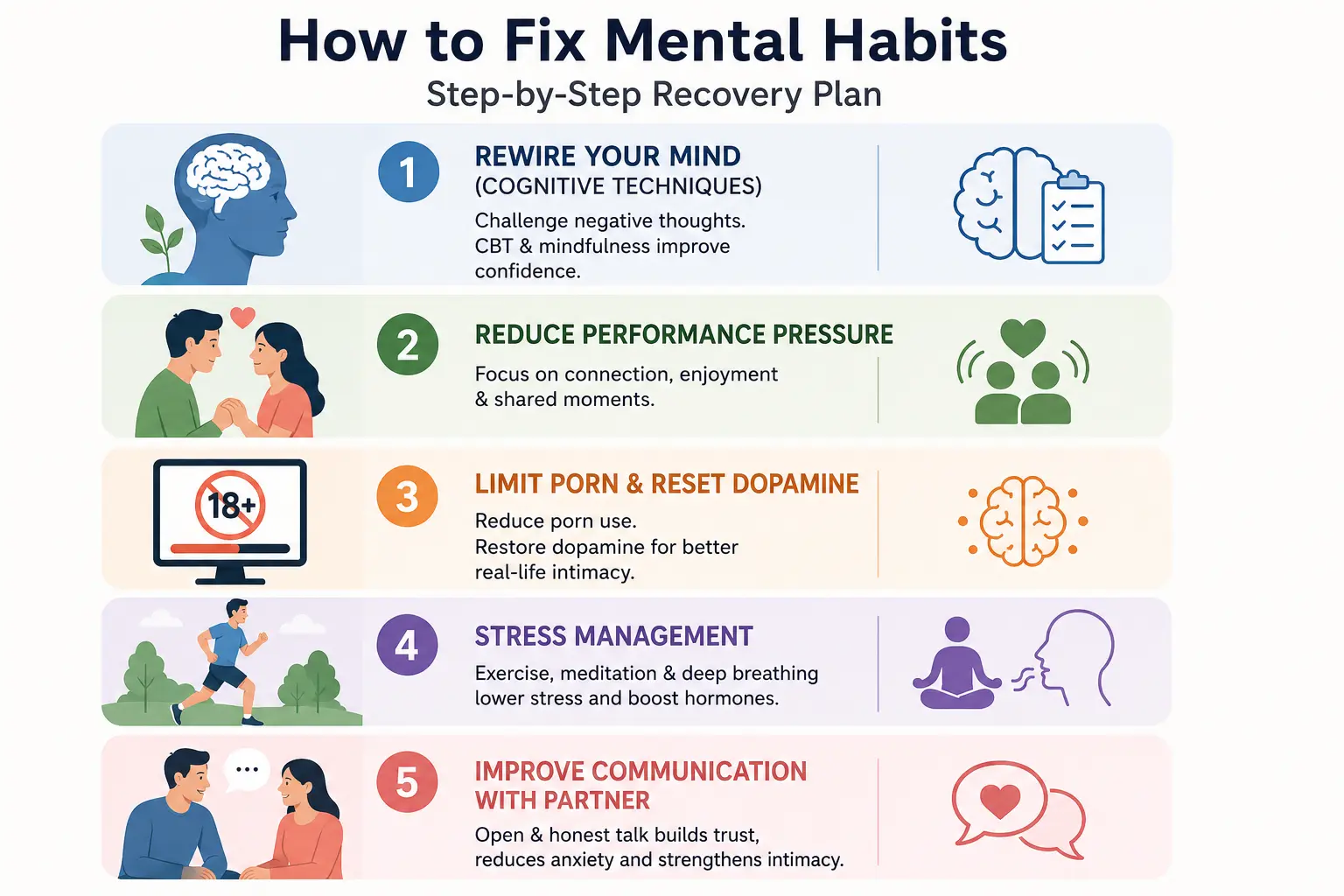
Step 3: Limit Porn & Reset Dopamine
Cutting back on porn can help get your dopamine sensitivity back to normal. Over time, real-life intimacy can feel more rewarding and exciting again.
Step 4: Stress Management
Boost your hormone health by exercising. Regular aerobic exercise such as 40-60 minutes of walking or jogging, 4-5 times per week has been shown to significantly improve testosterone levels and erectile function.[18]. It also boosts your overall well-being.
Meditation and deep breathing are a great way to calm your nerves. They help lower cortisol levels too. A calm mind is key to a healthier sex life.
Step 5: Improve Communication with Partner
Talking openly and honestly helps build trust. This approach also cuts down on anxiety and boosts emotional bonds. Talking about worries and hopes can really boost intimacy and sexual confidence.
Treatment Options
This section covers common ways to deal with sexual performance problems. It looks at both medicine and natural remedies.
Pharmaceutical Treatments
Prescription medicines are the top choice for treating erectile dysfunction. They are well-researched and effective. They also assist with sexual performance issues around the world.
PDE5 Inhibitors for Erectile Dysfunction
PDE5 inhibitors are a good option for erectile dysfunction. They work well, especially when the cause is psychological. This type of dysfunction happens when mental issues are the main reason.
Testosterone Replacement Therapy (TRT) – For Low Libido / Low T
TRT products are often given when lab tests show low testosterone. This can cause low sexual desire and performance problems.
Hormonal Support for Testosterone Deficiency
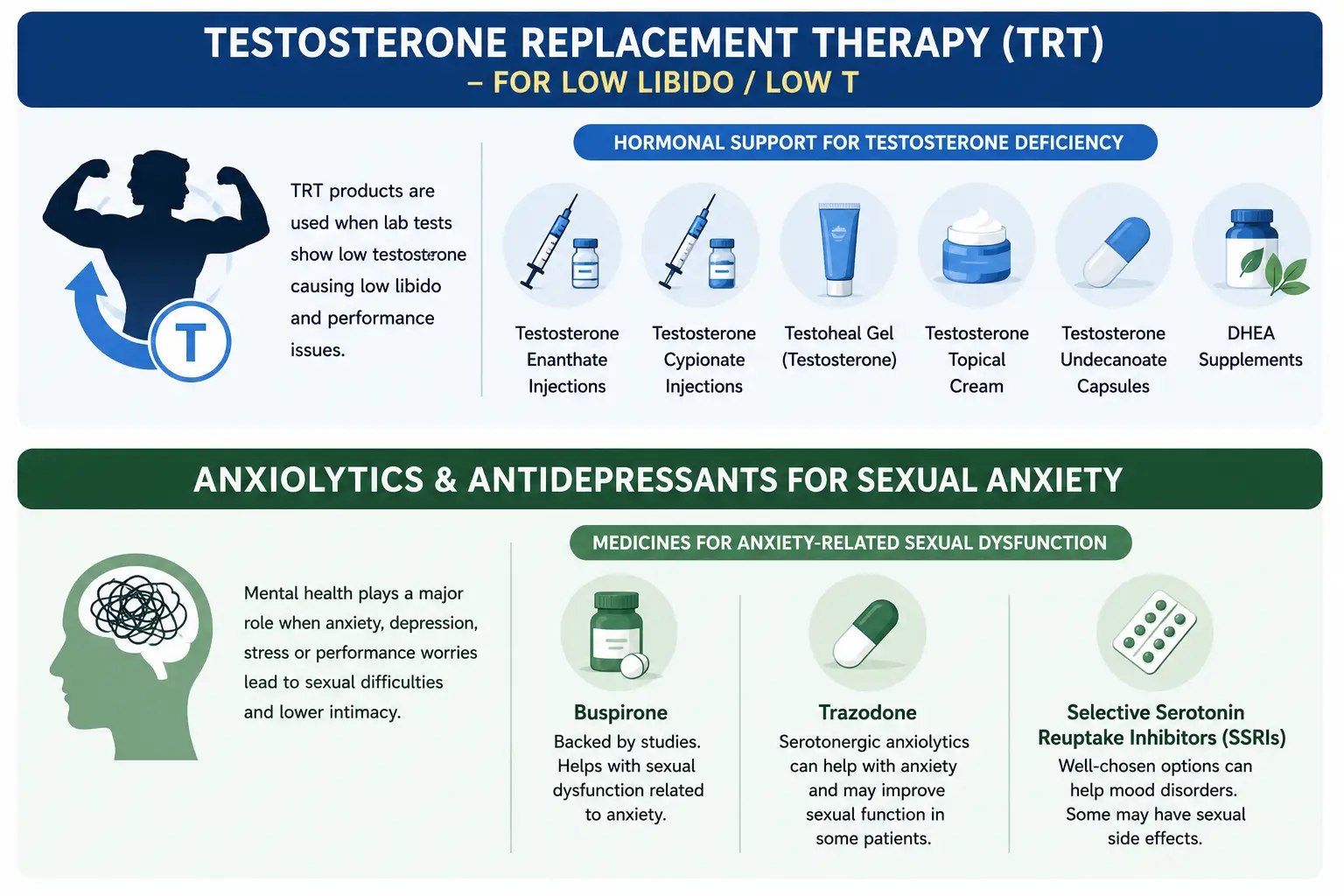
Anxiolytics & Antidepressants for Sexual Anxiety
Mental health can make a big difference when anxiety, depression, stress, or worries about performance lead to sexual difficulties. This can also reduce intimacy.
Medicines for Anxiety-Related Sexual Dysfunction
Female Sexual Dysfunction Medicines
Lots of approved meds can really help women out. They tackle things like low libido and sexual problems linked to hormones.
Treatments for Female Sexual Health
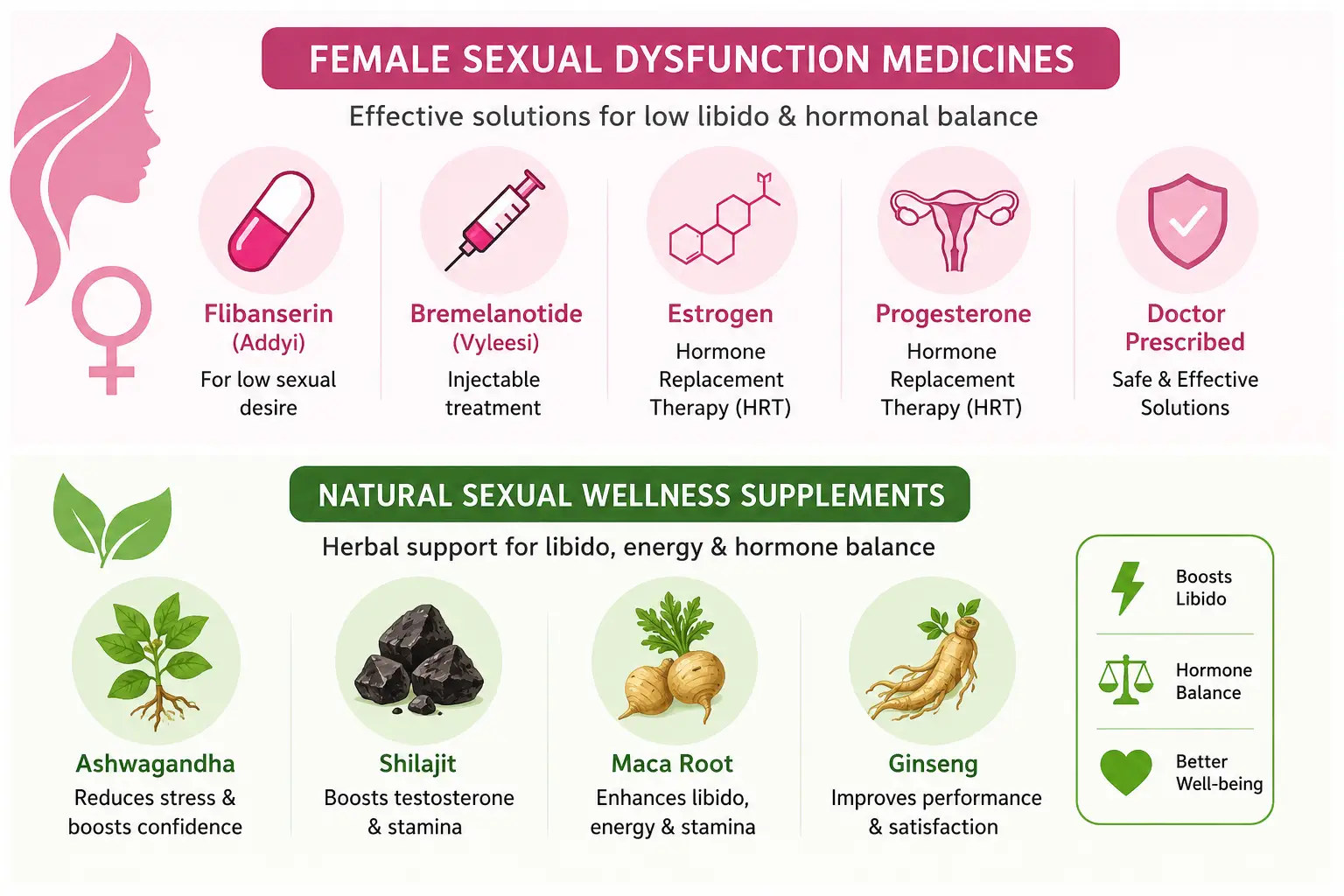
Herbal / Supplement Support (High Export Demand from India)
Natural supplements are really popular around the world. They can help with things like libido, stress, and hormone balance.
Natural Sexual Wellness Supplements
Non-Pharmaceutical Treatment Options
Psychotherapy
Psychological therapies deal with key mental and emotional issues. These issues often cause sexual problems. They are often suggested with medical treatment.
Evidence-Based Psychological Therapies
Mindfulness-Based Interventions
Studies have found that Mindfulness can really help men. It makes a big difference in their sex lives, boosting satisfaction. It also boosts sexual function and genital self-image.
Mindfulness-Based Sex Therapy, or MBST, is becoming a popular option. It’s really helpful for people dealing with psychogenic sexual issues. This is because it helps lower anxiety and boost awareness of the present moment.
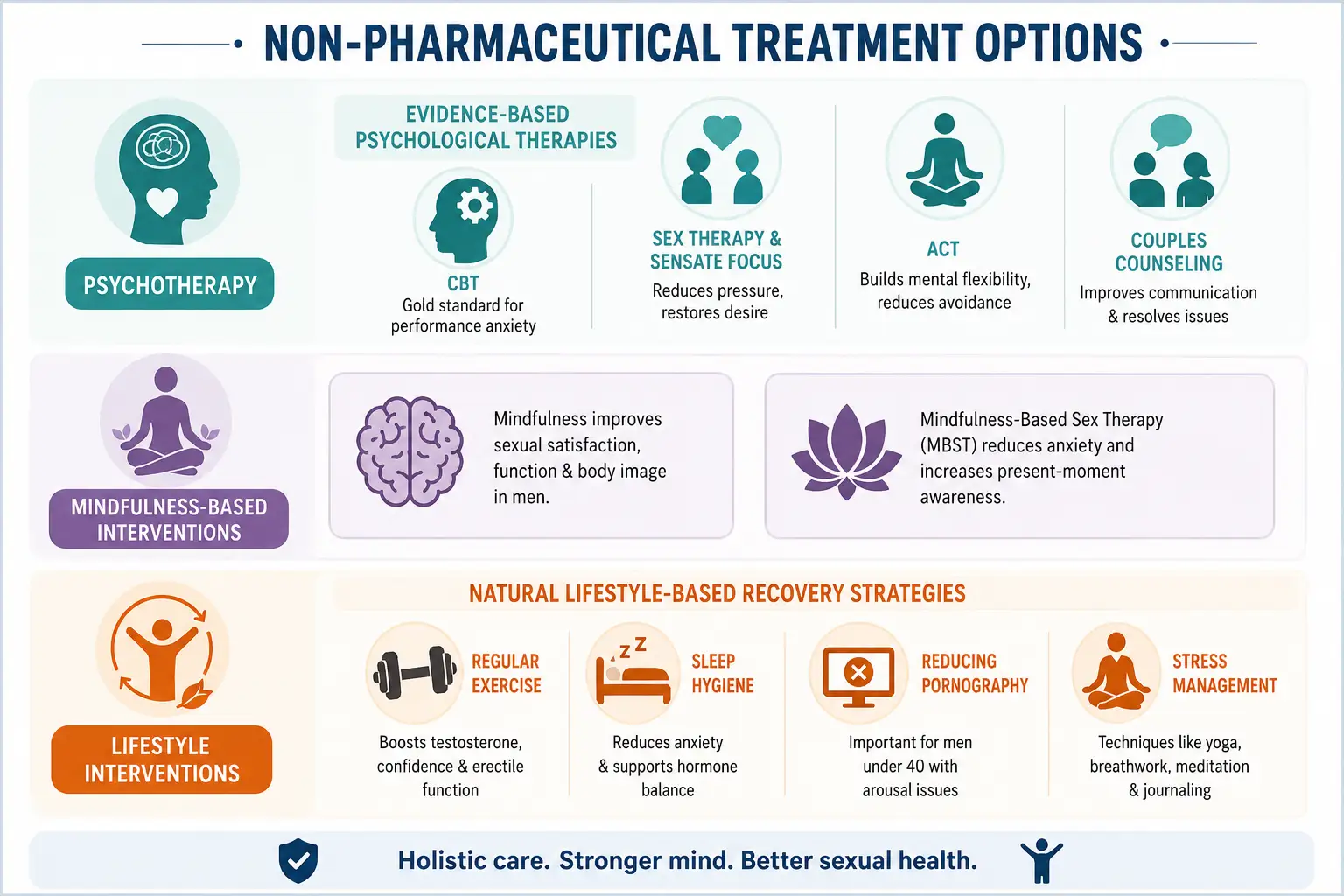
Lifestyle Interventions
Adopting a healthy lifestyle can positively impact sexual function. It can also help you feel more confident and improve your overall well-being.
Natural Lifestyle-Based Recovery Strategies
Natural Supplements That May Help
Certain natural supplements can help cut down on stress. They might also help with blood flow and give your sex life a boost.
Popular Natural Sexual Health Supplements
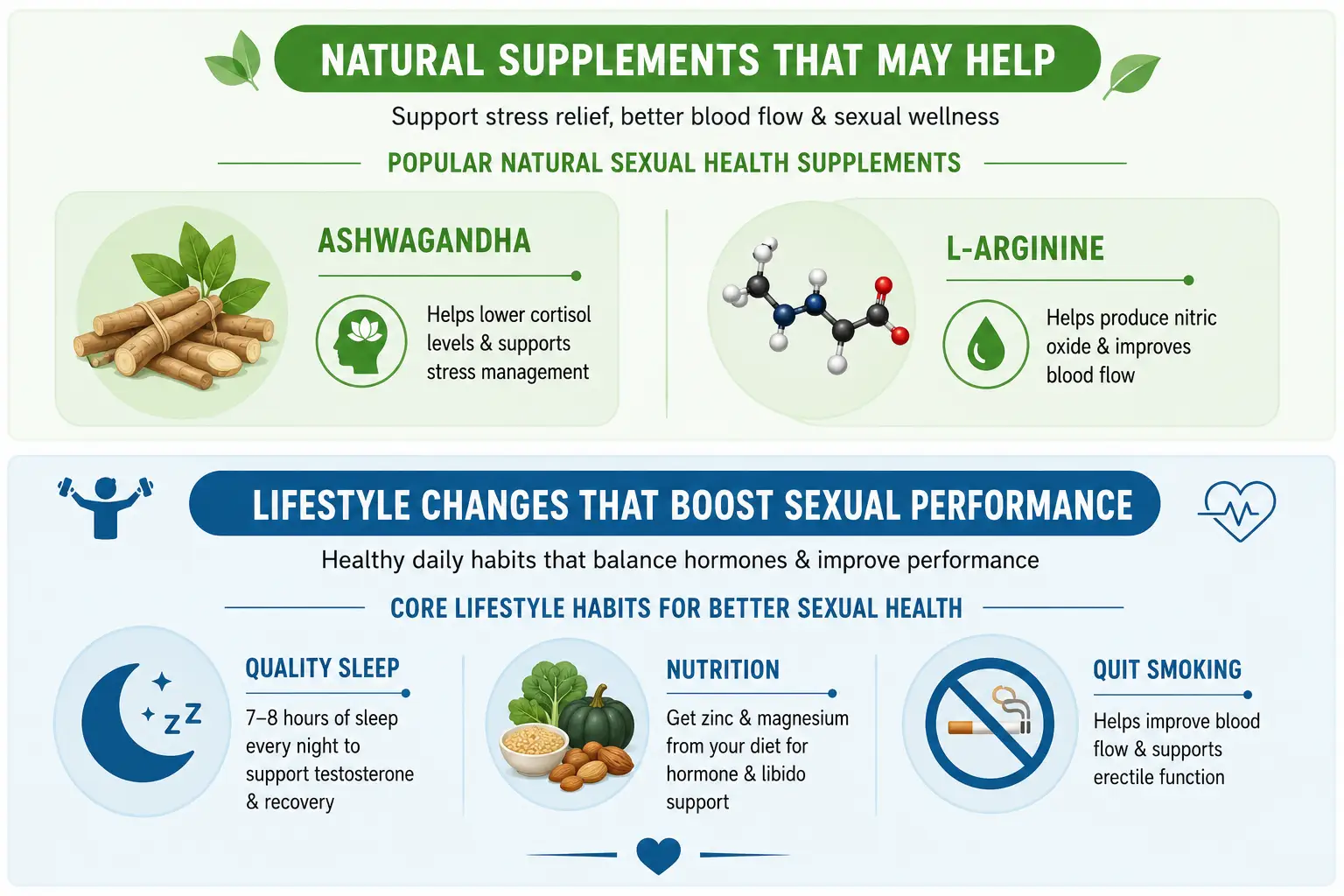
Lifestyle Changes That Boost Sexual Performance
Daily habits can really help get your hormones in balance. With time, these habits can make a big difference in your sexual performance.
Core Lifestyle Habits For Better Sexual Health
When to See a Doctor
If you find that sexual performance issues continue for a while, it’s a good idea to consult a doctor. If these issues impact your enjoyment of life, seek support.
Warning Signs That Need Medical Attention
Conclusion
Your mindset plays a big role in how well you perform sexually. It’s all about how your mind, hormones, blood flow, and body work together.
Stress, anxiety, depression, low confidence, poor sleep, and relationship issues can harm this connection. They often lead to ongoing sexual problems. Knowing these mental triggers is often the first step. It helps you improve.
The good news is that you can get better. Therapy and the right meds can really help. So do healthy habits and finding ways to manage stress.
Good communication can give you a confidence boost and even improve your sexual function as time goes on.
Looking for a reliable Indian supplier of sexual health medicines? Get in touch with Actiza Pharmaceutical for sexual wellness products that are ready to export.
We offer manufacturing that is certified by WHO-GMP. This means our quality is high and reliable. We’ve got global regulatory support covered too. We have supply solutions for bulk needs, customized just for everyone.
FAQs
Q1:- Can mental stress cause erectile dysfunction?
Ans:- Yes, mental stress can cause erectile dysfunction (ED). Stress keeps your body on high alert all the time. It impacts blood flow and your sex life. Managing it can help improve sexual performance and confidence.
Q2:- What is sexual performance anxiety and how is it treated?
Ans:- Sexual performance anxiety is basically the fear of not doing well in bed. Treatment can include therapy. It may also involve relaxation techniques. Better communication with a partner is important too. Some also get benefits from medicines prescribed for ED.
Q3:- Which medicines help with psychogenic erectile dysfunction?
Ans:- Doctors usually give patients Sildenafil or Tadalafil for ED caused by psychological factors. These medicines help make erections better. They also reduce fear about performance.
Q4:- Does pornography addiction cause sexual dysfunction?
Ans:- Watching too much porn can affect how some people get turned on. Real-life intimacy can feel less exciting than online content. It can mess with erections. It can also impact how satisfied you are.
Q5:- How does depression affect sexual performance?
Ans:- Depression can affect your sexual desire and how you connect with others emotionally. It can make you less interested in sex and feel less connected to your partner. Many people with depression say they have issues with erections or arousal.
Q6:- What is the best medicine for sexual performance anxiety in India?
Ans:- Sildenafil and Tadalafil are pretty common treatments for ED performance issues in India. They’re often used to help with this problem. These medicines work best with anxiety management. They help each other.
Q7:- Can Mindfulness improve sexual performance?
Ans:- Yes, Mindfulness can really help boost sexual performance. It does this by lowering anxiety, which happens when you focus on the here and now. This allows people to focus more on intimacy and less on worries.
Q8:- Which sexual health medicines are exported from India?
Ans:- India ships a variety of generic medicines for sexual health to countries all over the world. Popular products are Sildenafil, Tadalafil, Vardenafil, and Dapoxetine. These are well-known options. They supply these medicines to many countries overseas.
Q9:- How long does it take to recover from performance anxiety?
Ans:- Recovery time depends on how severe the anxiety is. Many people see changes in two to six weeks. This happens with consistent effort.
- https://pubmed.ncbi.nlm.nih.gov/10444124/
- https://pubmed.ncbi.nlm.nih.gov/31447414/
- https://pmc.ncbi.nlm.nih.gov/articles/PMC10794957/
- https://pmc.ncbi.nlm.nih.gov/articles/PMC3880087/
- https://pmc.ncbi.nlm.nih.gov/articles/PMC10235646/
- https://www.sciencedirect.com/science/article/pii/S1743609518310075
- https://pmc.ncbi.nlm.nih.gov/articles/PMC9899110/
- https://pmc.ncbi.nlm.nih.gov/articles/PMC8240332/
- https://journals.sagepub.com/doi/10.1177/15579883261424739
- https://journals.sagepub.com/doi/10.1177/09637214231192269
- https://www.ncbi.nlm.nih.gov/books/NBK562253/
- https://www.researchgate.net/publication/238335990
- https://pmc.ncbi.nlm.nih.gov/articles/PMC12684971/
- https://onlinelibrary.wiley.com/doi/full/10.1002/tre.791
- https://academic.oup.com/jsm/article/18/9/1582/6956075
- https://www.uchicagomedicine.org/forefront/news/sleep-loss-lowers-testosterone-in-healthy-young-men
- https://pmc.ncbi.nlm.nih.gov/articles/PMC11845324/
- https://www.sciencedaily.com/releases/2016/11/161104190533.htm