


Seeing yellow Discharge can confuse and concern many. The direct response is that pale yellow Discharge that is not accompanied by an odor can be considered within the normal range. In contrast, darker yellow Discharge that is persistent, accompanied by a smell and/or is itchy.
It can signal an infection that is very treatable. A lot of people experience this, and your uncertainty can likely be solved in under thirty minutes with a visit to the clinic.
This guide includes normal discharge ranges and common yellow discharge symptoms that clinic staff usually diagnose. You will also find the treatments that can accompany each symptom, and a list of the most serious symptoms that can signal an infection.
You should not wait to be treated. The goal of this guide is to help you know what your Discharge can mean and what your best next step is, rather than to self-diagnose based on just the color of Discharge.
Understanding Yellow Discharge
A little yellow discharge can be completely normal. As for problematic Discharge, darker yellow Discharge can signal an infection, which is very treatable and extremely common.
Discharge issues are a major reason people visit the doctor. In the US, women make about 10 million trips each year for vaginal discharge problems[1]. This shows that yellow discharge is common, and there’s no shame in it.
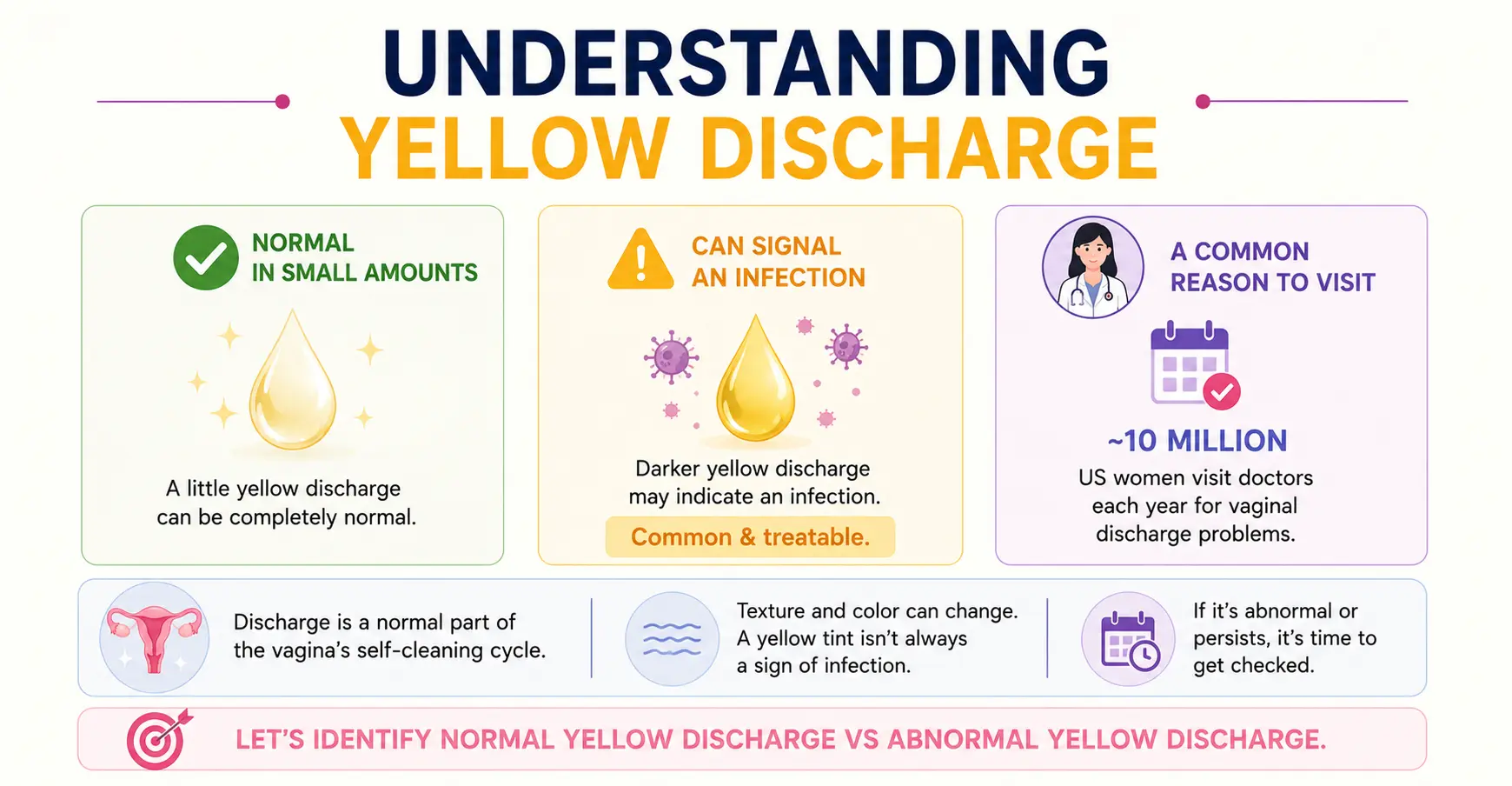
Discharge is a normal part of the vagina’s self-cleaning cycle as it sheds tissue and other things periodically. Vaginal Discharge can change in texture and color. A yellow tint does not always indicate an infection, but anything abnormal or that persists after the normal duration should prompt a reconsideration.
We’ve identified what yellow Discharge is, and now we can identify normal yellow Discharge vs abnormal yellow Discharge.
Is Yellow Discharge Normal?
A healthy discharge is clear and white and may have a slight odor. Discharge that is yellow and odorless may be harmless, but darker or persistently yellow Discharge can be a sign of a silent infection.
Here is how Discharge generally appears:
What normal Discharge looks like
Normal Discharge can be clear or white and may also be off-white. A healthy discharge may have a slight odor, but it does not have to. It can also change its thickness through the menstrual cycle.
However, a persistent or new discharge that is odorless may be a sign of a lingering infection. Bacterial vaginosis or sexually transmitted infections are frequently asymptomatic as well[2].
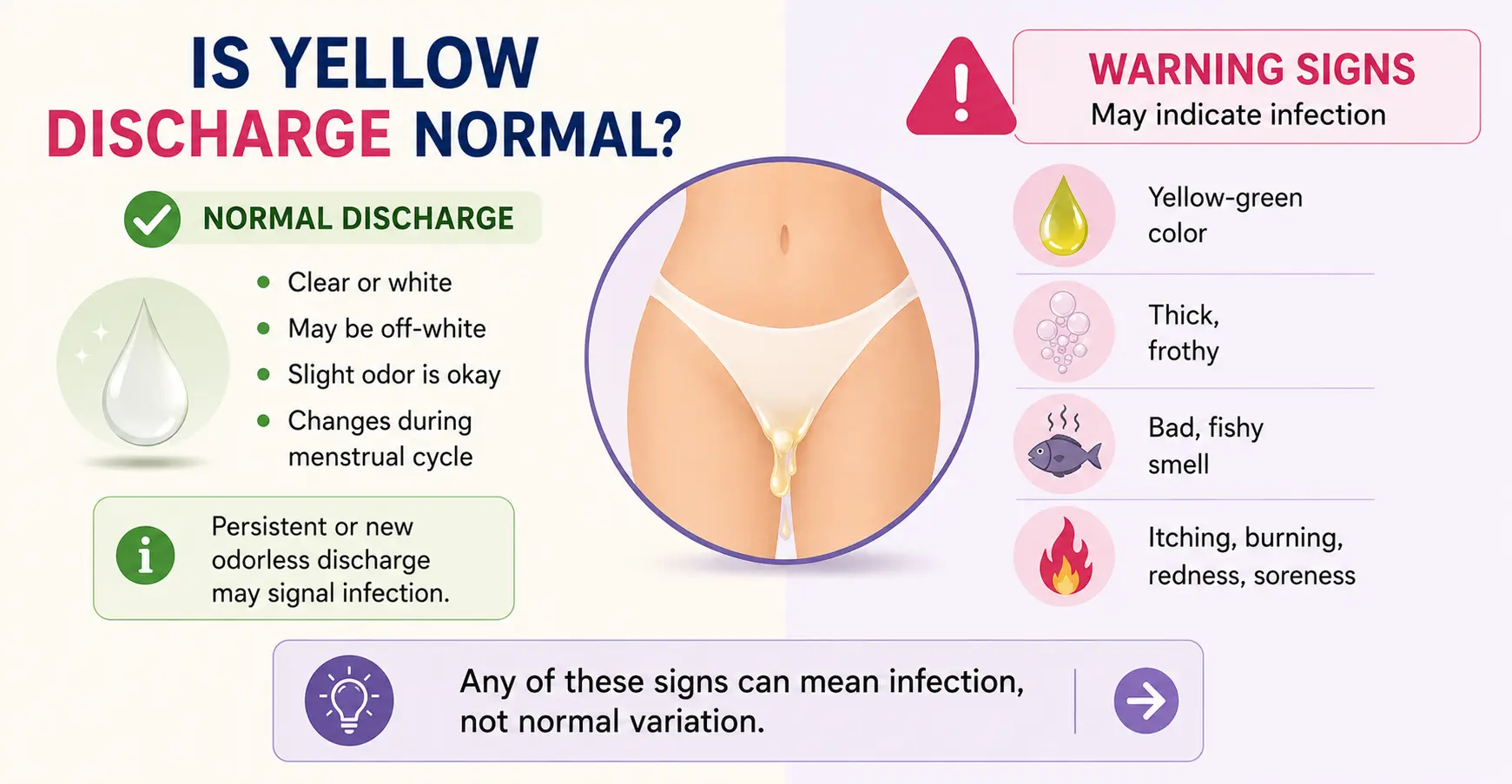
The warning signs that point to a problem
Any of these that suggest infection over normal variation can be a signal for a problem.
Now that we have covered normal and abnormal, let’s look at the conditions that cause yellow Discharge.
What Causes Yellow Discharge?
It is important to note that colour alone cannot be the final diagnosis for the yellow Discharge that confirms the cause.
Here are the reasons that cause yellow Discharge.
Bacterial Vaginosis (BV) – the most common cause
Bacterial Vaginosis is the leading cause of the irregular release of fluid. It is treated with antibiotics, unlike sexually transmitted diseases.
Bacterial Vaginosis happens when the good Lactobacillus bacteria are overpowered by anaerobes. This leads to an imbalance in bacteria. It appears with a fishy odor, grayish-yellow, thin Discharge that occurs after intercourse and is regarded as BV.
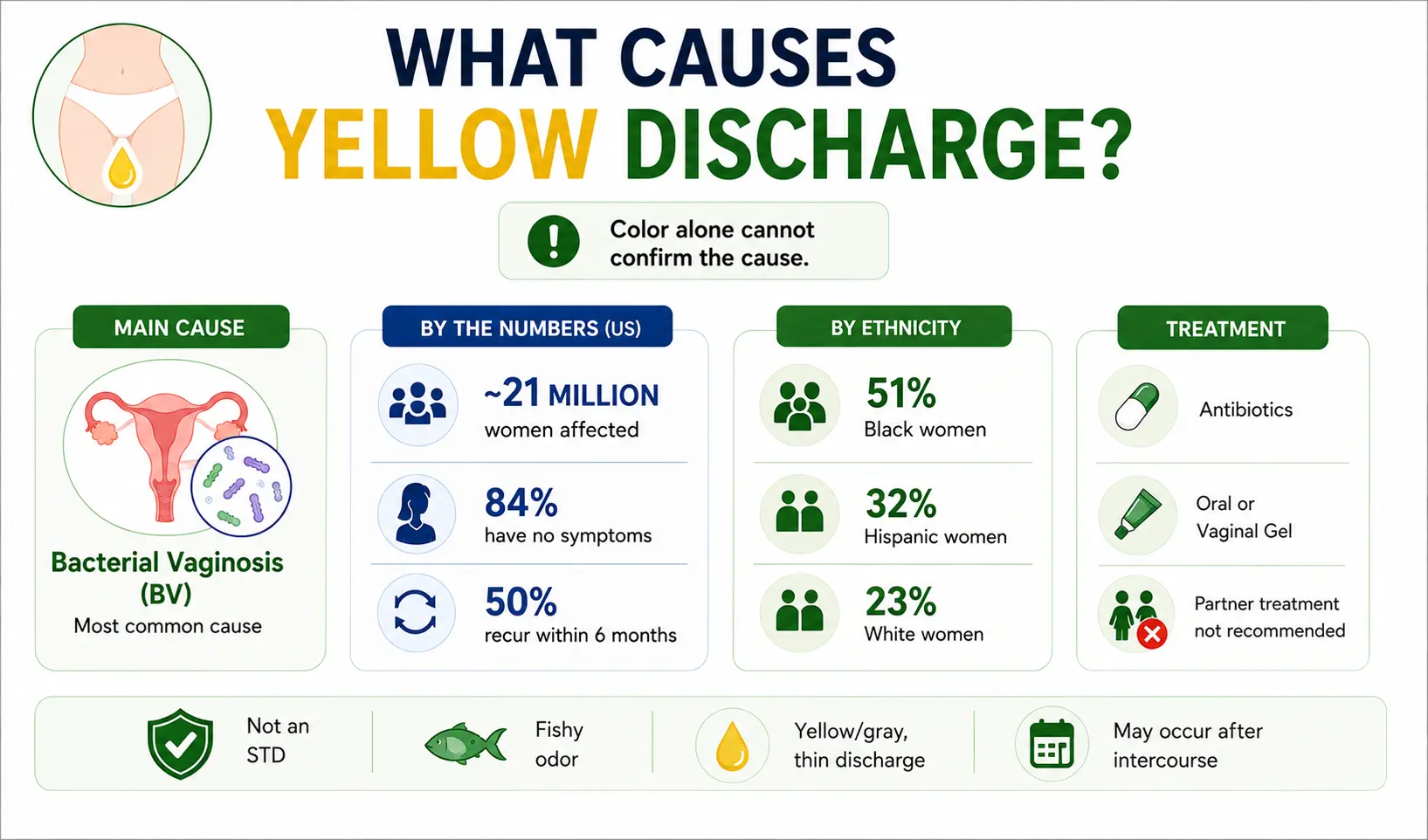
According to the National Health and Nutrition Examination Survey (NHANES)[2]:
BV has no sexually transmitted component. So, the general treatment for BV includes oral Metronidazole, Metrogyl Gel 2% (Metronidazole), or Erytop Gel (Clindamycin) . Partner treatment is not recommended. This is also according to the General Treatment of the BV in the 2021 CDC treatment guide[3].
Trichomoniasis (“trich”) – a common STI
Trichomoniasis is a curable STD and the most common non-viral STD worldwide. It can cause a frothy yellow-green discharge, though most instances of Trichomoniasis are asymptomatic.
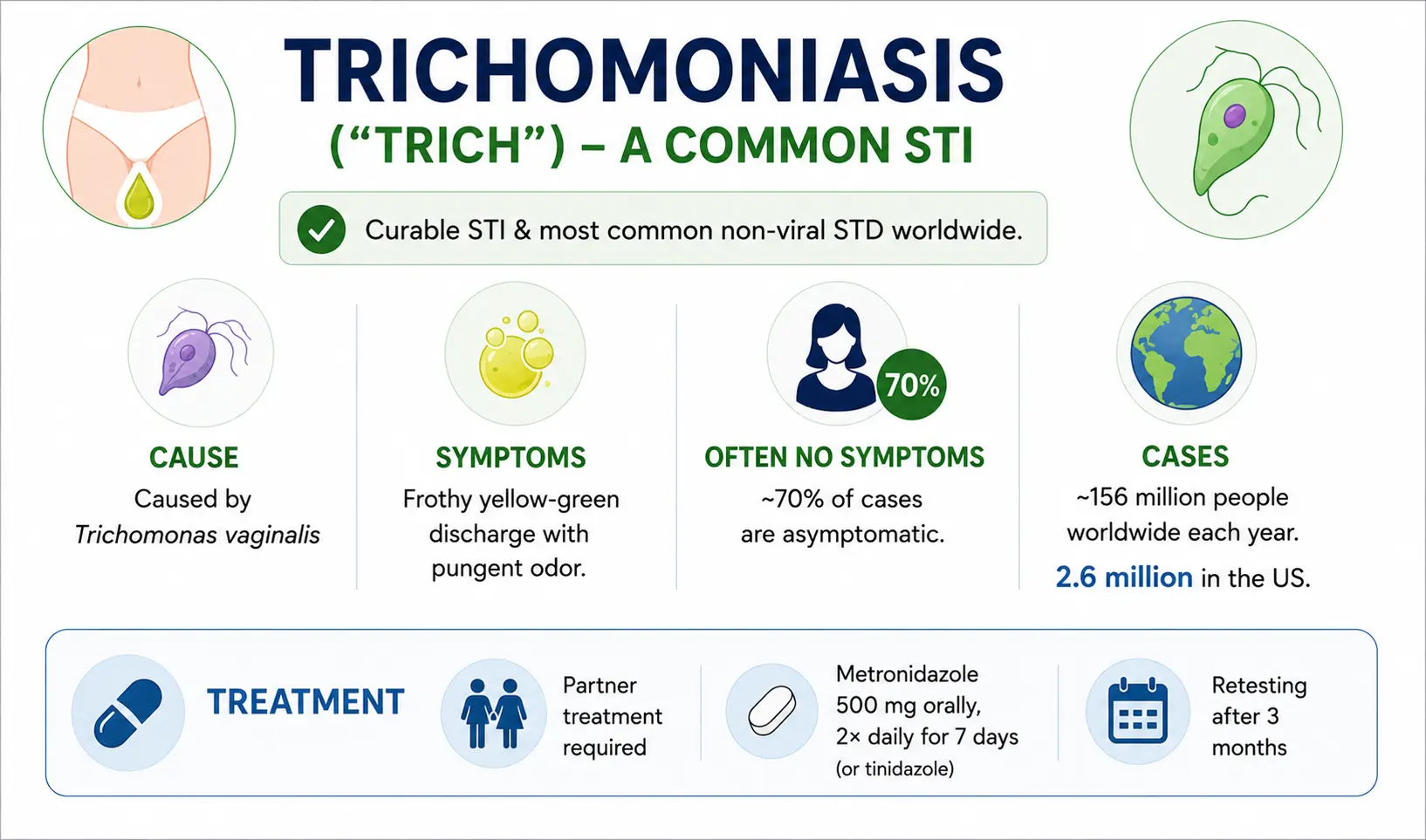
It is treated by partner treatment of either Metroprin 500 Mg (Metronidazole), taken orally, 2 times a day, for a week, or tinidazole. Retesting must occur 3 months after treatment[4].
Chlamydia and gonorrhea – often silent STIs
They both can cause yellowish and cloudy Discharge, but often show no symptoms. This is exactly why screening is important.
Chlamydia and gonorrhea can lead to similar signs. These include yellowish discharge, painful urination, and abnormal vaginal bleeding between cycles. However, they commonly present no symptoms. If chlamydia and/or gonorrhea go untreated, they can cause pelvic inflammatory disease (PID)[3].
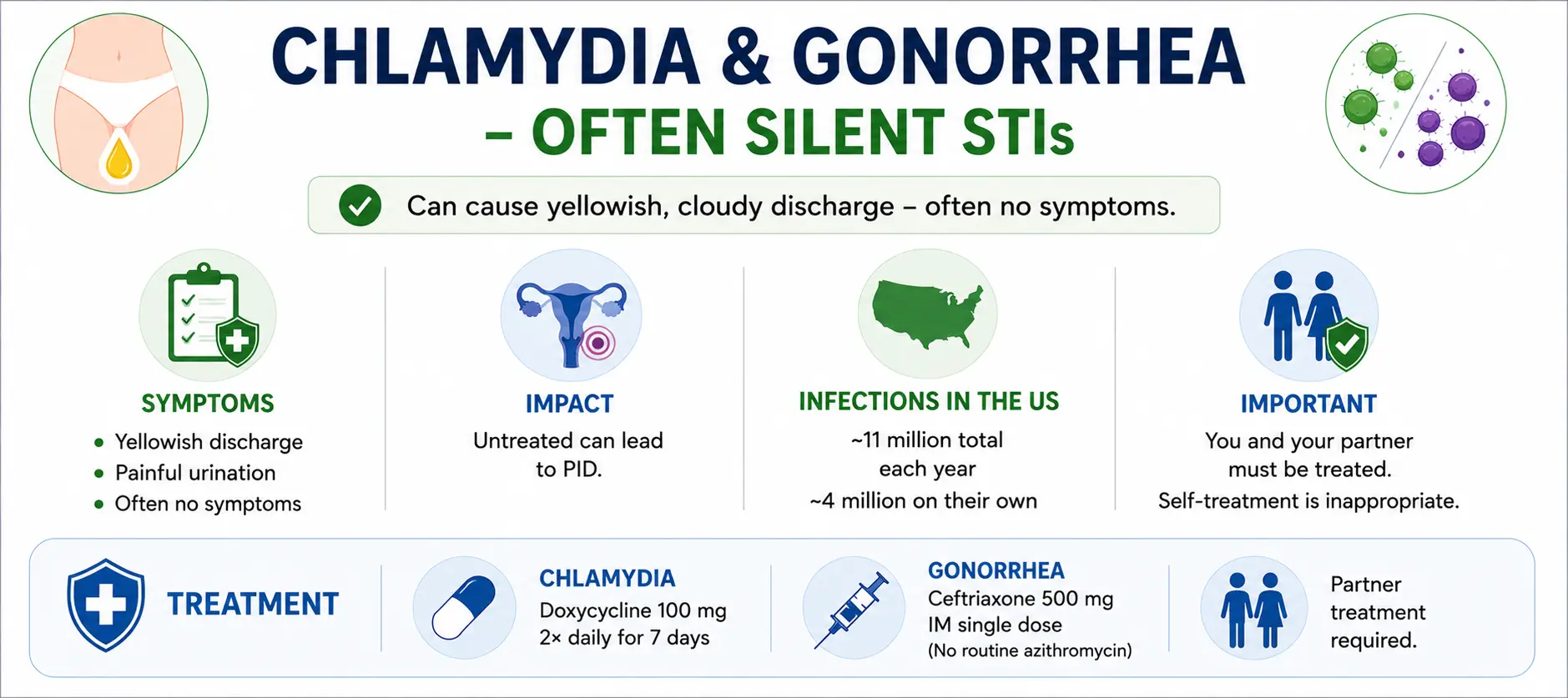
According to CDC reports, these two diseases lead to almost 11 million infections each year in the US. They cause about 4 million infections[6] on their own.
For treatment, the CDC states:
It is a requirement that both your partner and you are treated, while self-treatment is and will always be inappropriate.
Yeast infection (vulvovaginal candidiasis)
A common self-treatable cause of discharge with a strong itch is a yeast infection. It often shows up as thick, white, cottage cheese-like discharge, but it can also be pale yellow.
Yeast infections are mostly caused by Candida albicans[5], which causes thick white Discharge and intense itching, but can also be pale yellow, and is relevant when searching for yellow Discharge and itching.
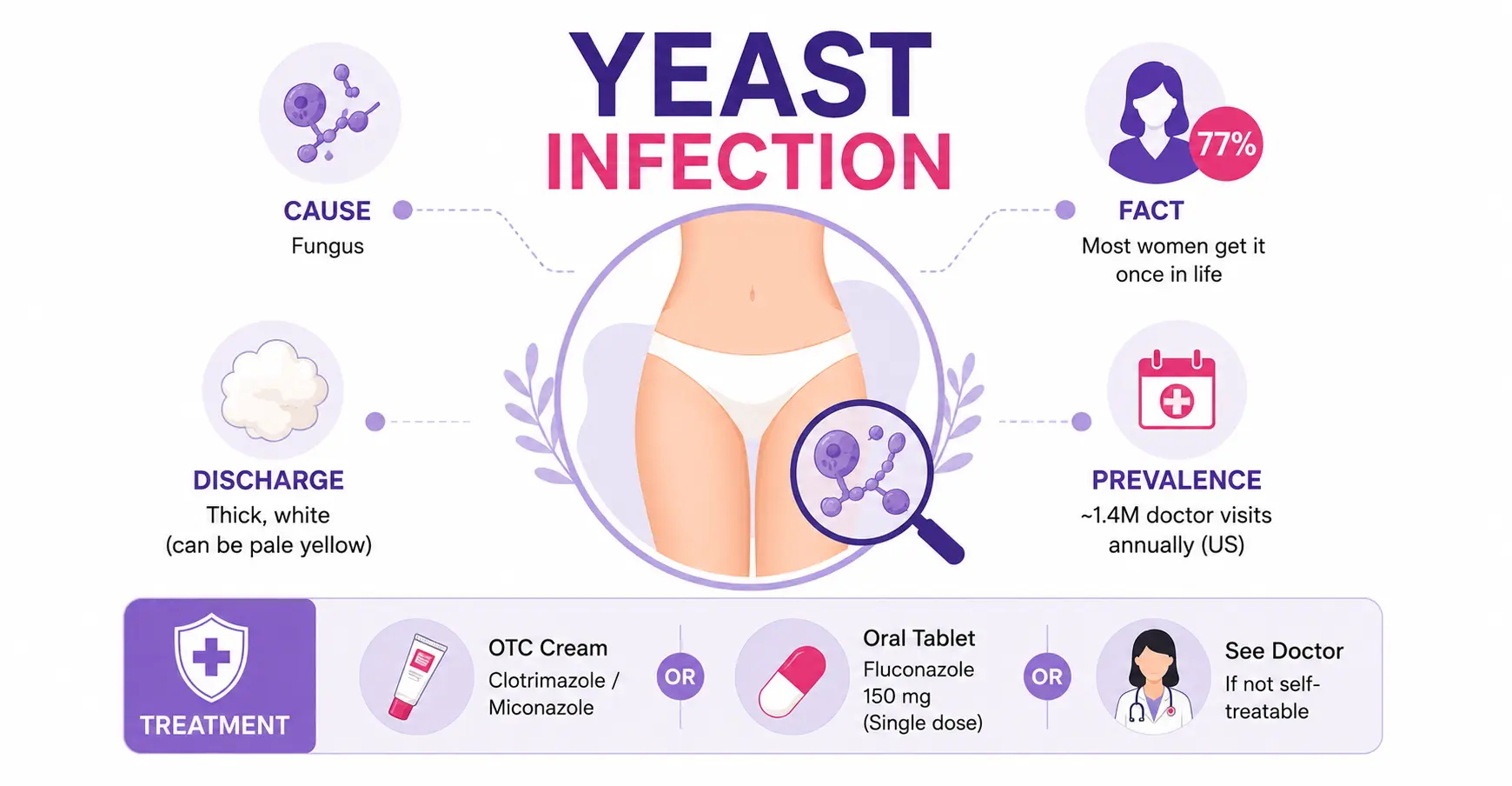
77% of women will have at least one yeast infection in their lifetime, leading to 1.4 million[7] annual visits to a physician in the US. Yeast infection is the 2nd most common vaginal infection.
Self-treatable yeast infection cases are treated with OTC antifungals like clotrimazole or miconazole, or a single dose of Fungicip 150 Mg (Fluconazole). If a yeast infection is not self-treatable, it is more prudent to visit a physician rather than continuing to self-treat[5].
Pelvic inflammatory disease (PID)
An example of a serious complication from a sexually transmitted infection (STI).
Of the multiple organs PID can infect in the female reproductive system (ovaries, uterus, fallopian tubes), the infection usually originates in the fallopian tubes because of an STI that has gone untreated.
Yellow Discharge and pelvic pain accompanied by a fever and pain during intercourse are red flags.
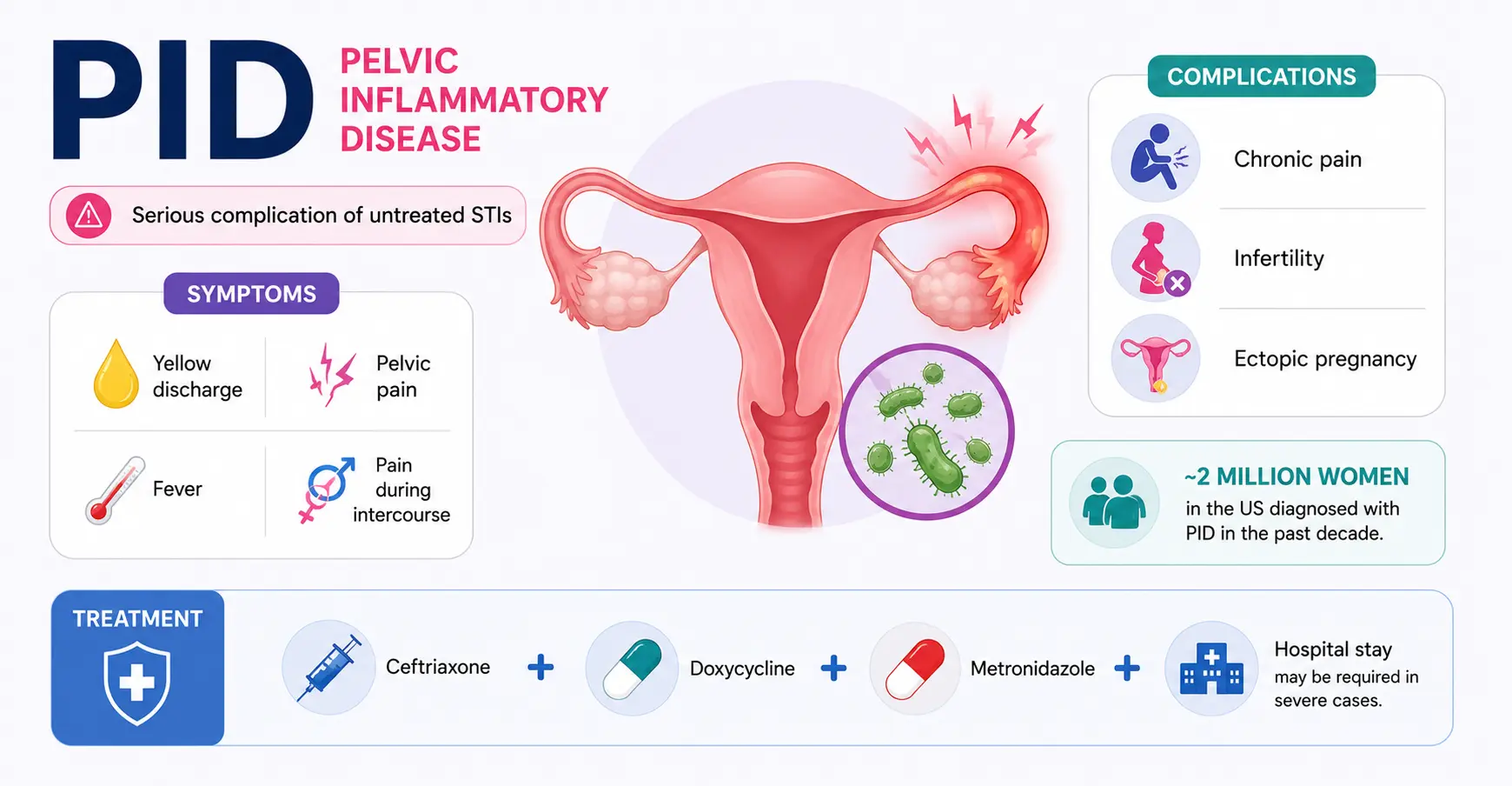
PID can also cause pain that persists and does not resolve even after treatment (chronic), loss of the ability to conceive (infertility), and an abnormal pregnancy where the fetus develops in a place it’s not supposed to.
In the past decade, approximately 2 million women[8] of reproductive age residing in the US have been diagnosed with PID[3].
Ceftriaxone, doxycycline, and Metronidazole are the antibiotics of choice for treatment and are to be used in conjunction. Hospital stays may be required for more advanced cases.
Other causes
Now that we have covered the causes, we can describe how the clinician will confirm which one of the causes is, in fact, present.
How Is Yellow Discharge Diagnosed?
Due to the similar presentation of these causes, a short, low-cost workup is preferred over guesswork during diagnosis.
Typically, a clinician will request a brief patient history, perform a pelvic exam, test vaginal pH, and order a wet mount and urine or swab NAAT for STIs.
This exam is routine and can be done in a primary care office, gynecology office, or sexual health clinic.
There are at-home STI testing kits available, but they should not be used to self-treat without a confirmed diagnosis.
With diagnosis covered, let’s move to the treatment for each of these causes.
How to Treat Yellow Discharge
The diagnosis determines treatment, and most causes involve a prescription from a doctor, with the exception of uncomplicated yeast infections, which can be treated over-the-counter.
There is no direct treatment for yellow Discharge. The best option is a swift diagnosis followed by direct treatment.
| Condition | Treatment |
|---|---|
| BV | Metronidazole or clindamycin[3] |
| Trichomoniasis | metronidazole + partner treatment[3] |
| Chlamydia | 7-day doxycycline[3] |
| Gonorrhea | one-time ceftriaxone injection[3] |
| Yeast infection | OTC antifungal or fluconazole[5] |
| PID | multiple antibiotics + may require hospitalization[5] |
It is very important to complete the entire course of antibiotics and treat partners to prevent the recurrence of PID.
Things to avoid: self-treating, assuming a diagnosis, and douching are things to avoid if yellow Discharge is present.
We are done discussing treatment for yellow Discharge. We will now cover causes that indicate an urgent doctor’s visit.
Important disclaimer
When to See a Doctor
Seek immediate medical care for[3]:
Trichomoniasis, left untreated, causes damage to the reproductive system and spreads to other people. Testing is safer than treatment.
We’ve discussed red flags. Now, let’s examine examples requiring more subtlety.
Special Situations
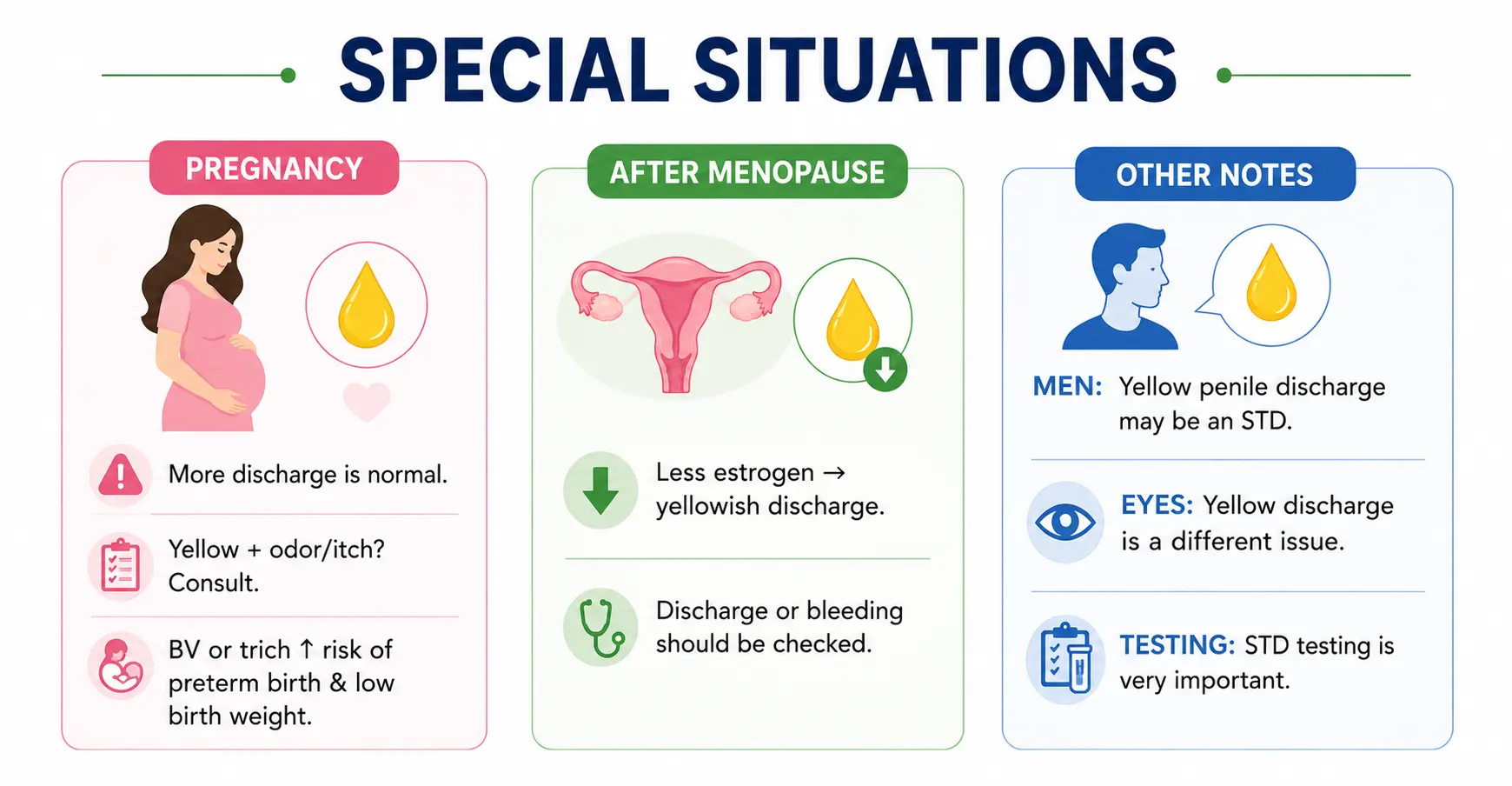
Yellow Discharge in Pregnancy
An increase in Discharge is expected when pregnant. However, yellow Discharge during pregnancy that is green in color, has an odor, or is accompanied by an itchy sensation should require a consult.
Assessments are important because BV and Trichomoniasis when pregnant, are associated with an increased risk of preterm birth and low birth weight[4].
After menopause
Decreased estrogen may result in yellowish Discharge and thinning epithelium. Menopause-related Discharge and bleeding should be clinically assessed.
A note on other types of “yellow discharge”
Men should also be concerned about yellow Discharge. Yellow penile Discharge is often a sign of an STD. Prompt testing is needed. Gonorrhea and chlamydia are common causes. Yellow Discharge from the eyes is also not normal, but it is a separate issue. Different issues cause Yellow Discharge from the eyes.
Testing for STDs with yellow penile Discharge is extremely important.
Now that we’ve got that out of the way, let’s discuss how we can address the risk of common infections that you deal with.
Prevention & Everyday Vaginal Health
Frequently Asked Questions
Q1:- Is yellow Discharge normal?
Ans:- Sometimes. Yellow Discharge can be totally normal, especially when it’s around the time of your period, and it’s a pale yellow that is odorless and has no other symptoms. But if it’s darker and/or you smell something and/or it itches, it may be BV, another infection, or an STI, so you should get it checked.
Q2:- What does yellow Discharge mean?
Ans:- Yellow Discharge can be the result of changes to your normal cycle or an infection like BV, Trichomoniasis, chlamydia, or gonorrhea. A yeast infection can also be pale yellow. There is no diagnosis for yellow Discharge, but it is simple to do a test or a swab to confirm.
Q3:- Does yellow Discharge always mean an STD?
Ans:- Not really. Yellow Discharge does sometimes come from an STD, but it is also caused a lot by BV, which is not an STD and just a normal variation. Still, Trichomoniasis, chlamydia, and gonorrhea, which are STDs, can cause it, and they are pretty much undetectable, so unfortunately, the only way to know is to get tested.
Q4:- What causes yellow Discharge with no smell?
Ans:- It can be normal oxidized Discharge or just old blood from around your period. There are also some infections like chlamydia and early BV, which can cause yellow Discharge, and they also don’t smell, so just because there is no smell, that does not mean there’s no infection.
Q5:- What causes thick yellow Discharge?
Ans:- Thick yellow Discharge can be a yeast infection, and that is usually pretty intense, itchy, and pale yellow. More likely, thick yellow and green Discharge with a smell is caused by Trichomoniasis or gonorrhea, and a clinician will have to do a swab and exam to tell the infections apart.
Q6:- Why do I have yellow Discharge before my period?
Ans:- Most women will experience yellow Discharge leading up to their menstrual cycle. This is likely due to the old blood mixing with your vaginal Discharge. This normally should not be concerning unless there is a strong odor, itchiness, or an abnormal texture. In this case, you may be experiencing an infection.
Q7:- How do you treat yellow Discharge?
Ans:- The treatment of yellow vaginal Discharge depends on the cause. Metronidazole is needed to treat Bacterial Vaginosis (BV) and Trichomoniasis. Doxycycline is needed for chlamydia, and a ceftriaxone injection for gonorrhea. Yeast infections can be treated with antifungals. Seeing a clinician would be best due to how many of these cases need prescription medication.
Q8:- Can yellow Discharge go away on its own?
Ans:- Sometimes normal yellow Discharge will resolve on its own; however, BV, Trichomoniasis, chlamydia, and gonorrhea usually will not go away on their own and can worsen to affect your fertility. If it is persistent, have it checked.
Q9:- Is yellow Discharge during pregnancy a concern?
Ans:- An increase in vaginal Discharge is normal during pregnancy. Yellow Discharge that is green, smelly, or itchy should be evaluated. BV and Trichomoniasis can cause preterm birth during pregnancy, so it is important to seek care quickly.
Q10:- When should I see a doctor about yellow Discharge?
Ans:- See a clinician for green/gray or frothy Discharge, strong odor, itching, burning, pelvic pain, pain during sex or urination, fever, symptoms during pregnancy, or if you have experienced a possible STI. Testing early will avoid complications.
Q11:- Can a yeast infection cause yellow Discharge?
Ans:- Yeast infections typically cause a discharge that resembles white, thick, cottage cheese, but may cause pale-yellow Discharge along with severe itching. If the symptoms persist despite the use of over-the-counter antifungal medication, consult a doctor.
Q12:- What’s the difference between BV and a yeast infection?
Ans:- While Yeast Infections and BV both cause itching and result in Discharge, the significant differences that may also be used to identify both conditions are the Discharge’s color (white and thick for Yeast Infections and thin with a greyish-yellow tinge for BV) and odor (Yeast Infections have little odor, while BV’s Discharge has a fishy odor).
- https://pmc.ncbi.nlm.nih.gov/articles/PMC4374027/
- https://pubmed.ncbi.nlm.nih.gov/17621244/
- https://www.cdc.gov/std/treatment-guidelines/bv.htm
- https://www.cdc.gov/std/treatment-guidelines/trichomoniasis.htm
- https://pubmed.ncbi.nlm.nih.gov/31384073/
- https://www.uspharmacist.com/article/updated-treatment-guidelines-for-sexually-transmitted-infections
- https://academic.oup.com/cid/article/74/Supplement_2/S162/6567950
- https://www.cdc.gov/mmwr/volumes/66/wr/mm6603a3.htm