


The Dry Eye Crisis
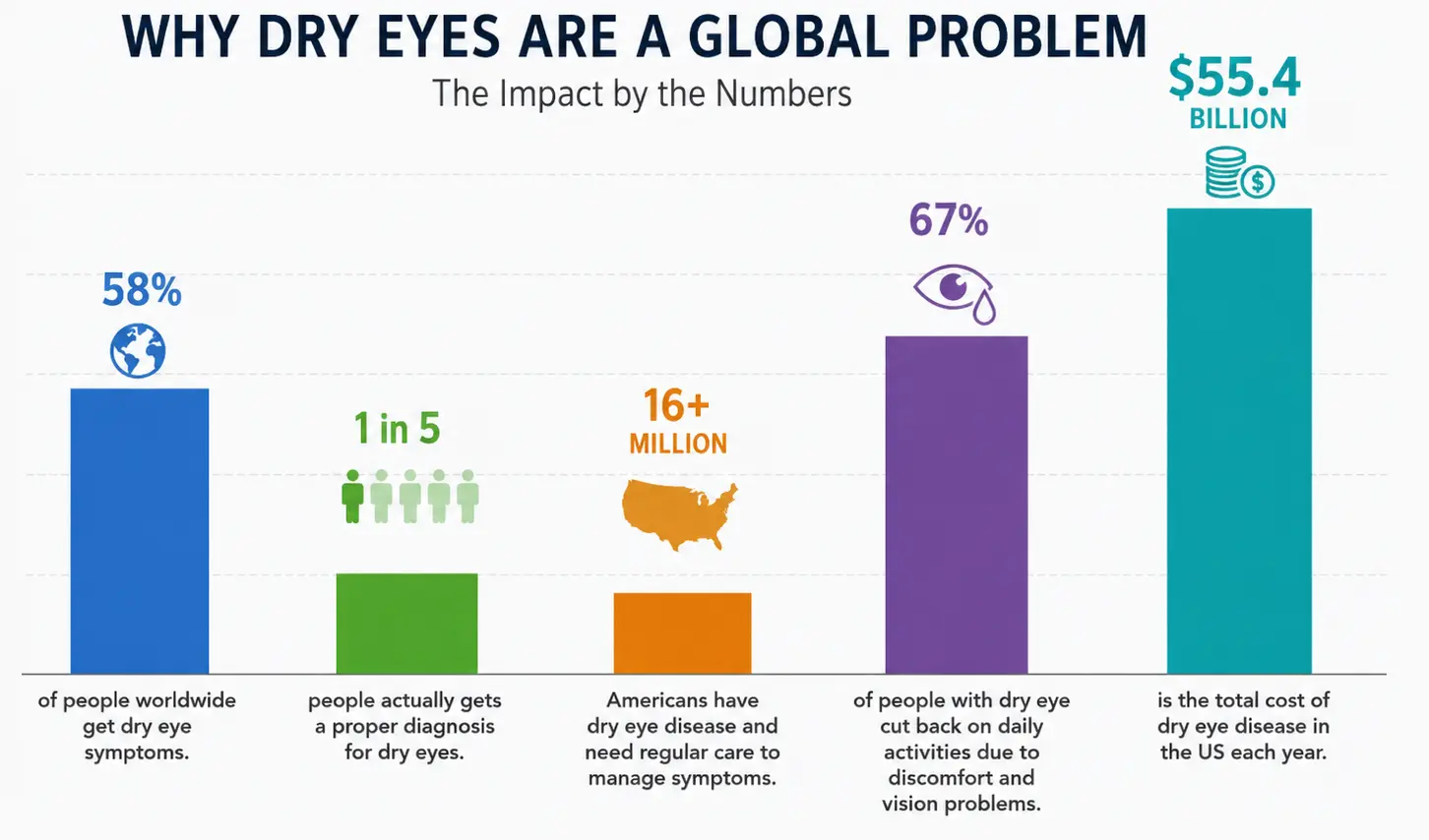
Dry eye disease is a big problem that’s getting worse fast. It’s affecting millions of people, regardless of their age.
Why Dry Eyes Are a Global Problem
Dry eye disease isn’t just about feeling a bit uncomfortable now and then. It affects productivity, quality of life, and healthcare costs. Plus, it can mess with your daily routine. Recent global studies show a rising burden.
What Is Dry Eye Disease?
Dry eye disease happens when your eyes do not create enough tears. It can also take place if tears dry up too quickly. This stops your eyes from getting enough moisture.
The two main types are Aqueous Tear Deficiency and Evaporative Dry Eye. Aqueous Tear Deficiency occurs when there isn’t enough tear fluid.
Evaporative Dry Eye happens when the oil layer in your eyes is out of balance. It causes tears to evaporate way too quickly.
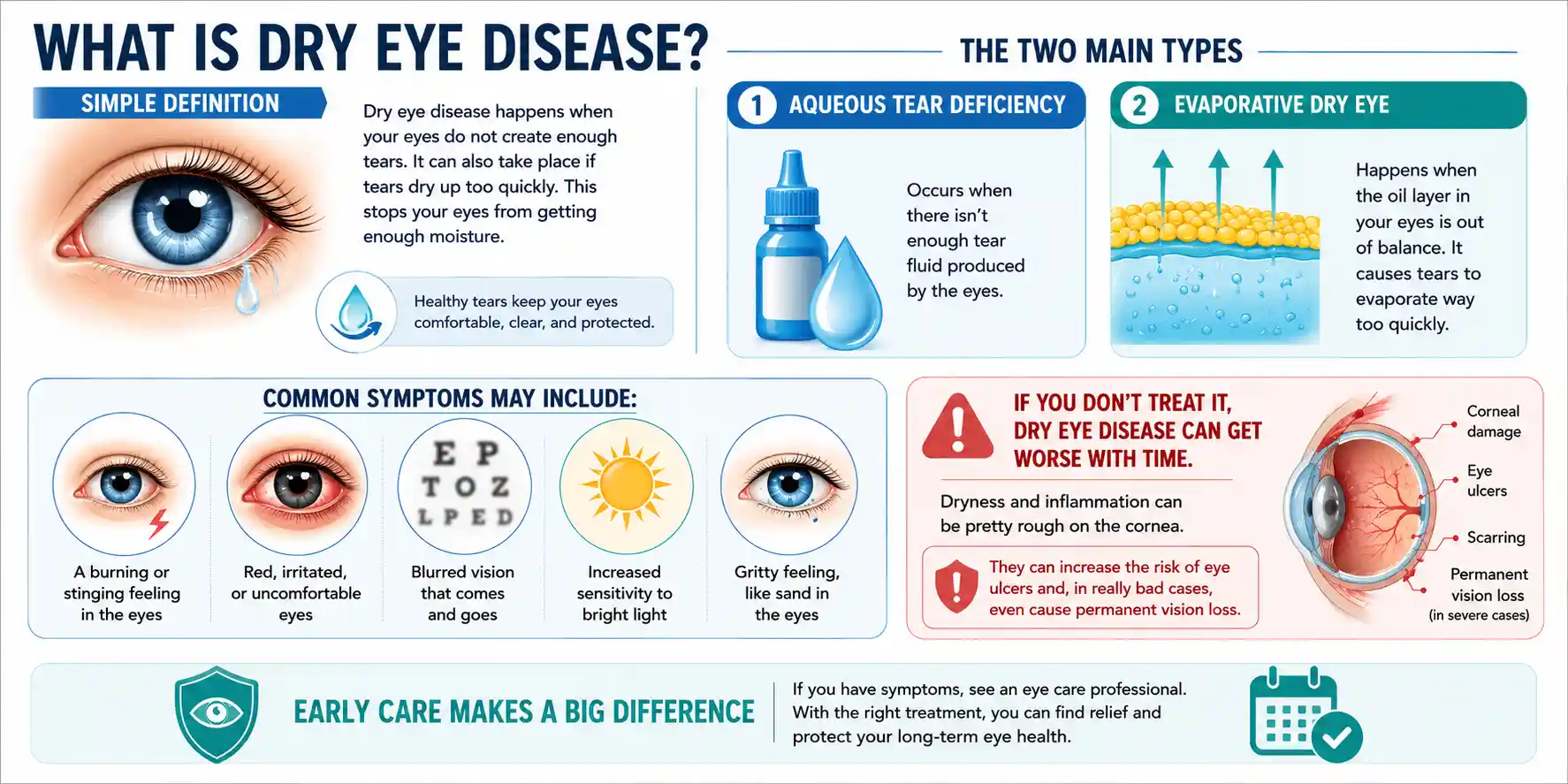
Common symptoms may include:
If you don’t treat it, dry eye disease can get worse with time. Dryness and inflammation can be pretty rough on the cornea.
They can increase the risk of eye ulcers and, in really bad cases, even cause permanent vision loss.
What Causes Dry Eyes in Daily Life?
Daily habits and things in your environment can affect the quality of your tears. Over time, it can cause bigger problems with the surface of your eyes.
Too Much Screen Time
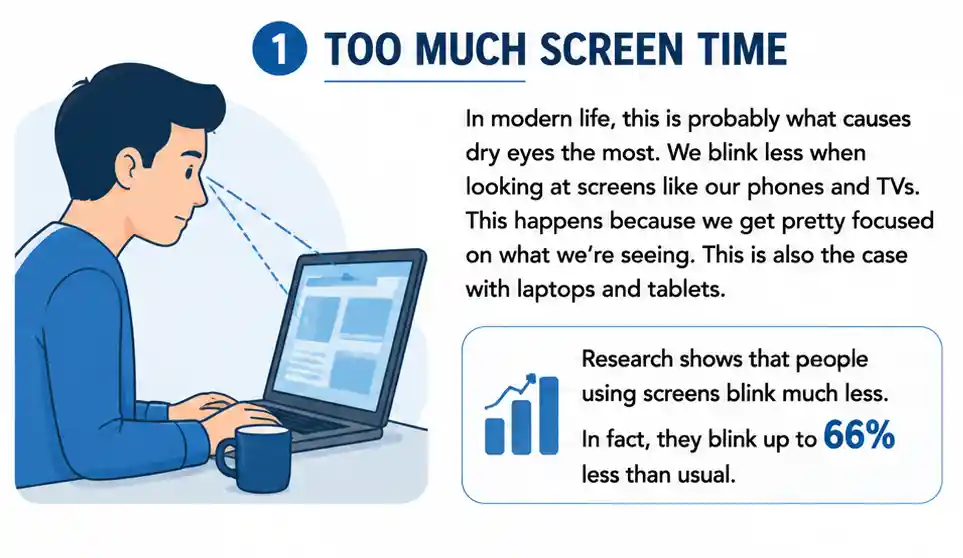
In modern life, this is probably what causes dry eyes the most. We blink less when looking at screens like our phones and TVs.
This happens because we get pretty focused on what we’re seeing. This is also the case with laptops and tablets. Research shows that people using screens blink much less. In fact, they blink up to 66%[6] less than usual.
Blinking is pretty important for your eyes. It spreads tears all over them. When you don’t blink a lot, your tears dry up, and your eyes get dry. Less blinking means dry eyes. This is now so well-recognized that it has its own name: Computer Vision Syndrome, or Digital Eye Strain.
Air Conditioning and Indoor Heating
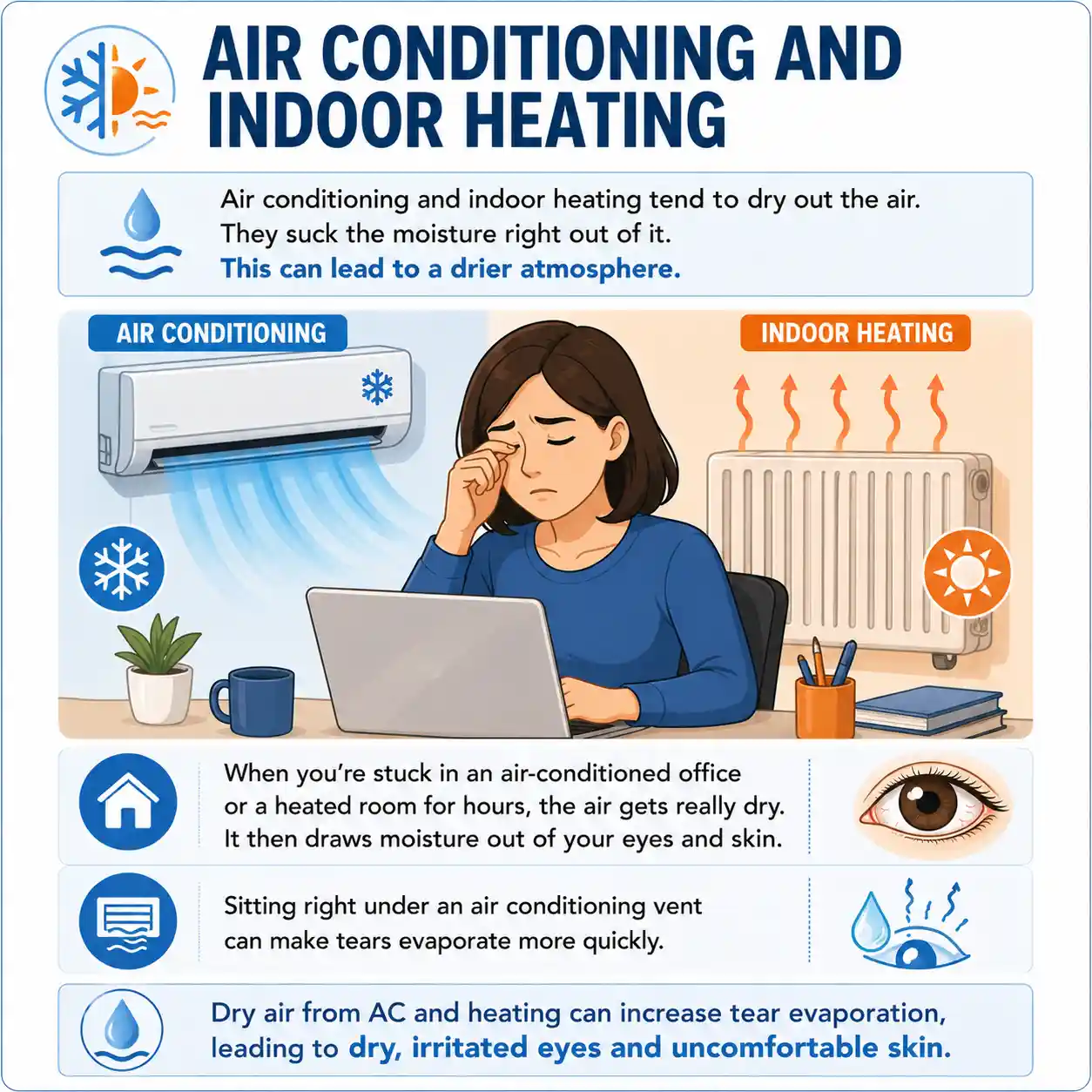
Air conditioning and indoor heating tend to dry out the air. They suck the moisture right out of it. This can lead to a drier atmosphere. When you’re stuck in an air-conditioned office or a heated room for hours, the air gets really dry. It then draws moisture out of your eyes and skin.
Sitting right under an air conditioning vent can make tears evaporate more quickly. The airflow speeds up this process even more.
Contact Lens Wear
Contact lenses sit directly on the eye. They need tear film around them. This includes both under and over the lens. This helps them feel comfortable on your eye. So, contact lenses tend to make your tears evaporate faster.
Wearing lenses too much can be a real issue. Sleeping in contacts isn’t a good idea either. If you don’t clean them properly, it’ll only make things worse. Many people who wear contact lenses get dry eyes as a result.
Medicines That Cause Dry Eyes
Many people don’t realize that common medicines can cause dry eyes. This is a common side effect. Antihistamines dry out the secretions in your body. This affects your tear glands, too.
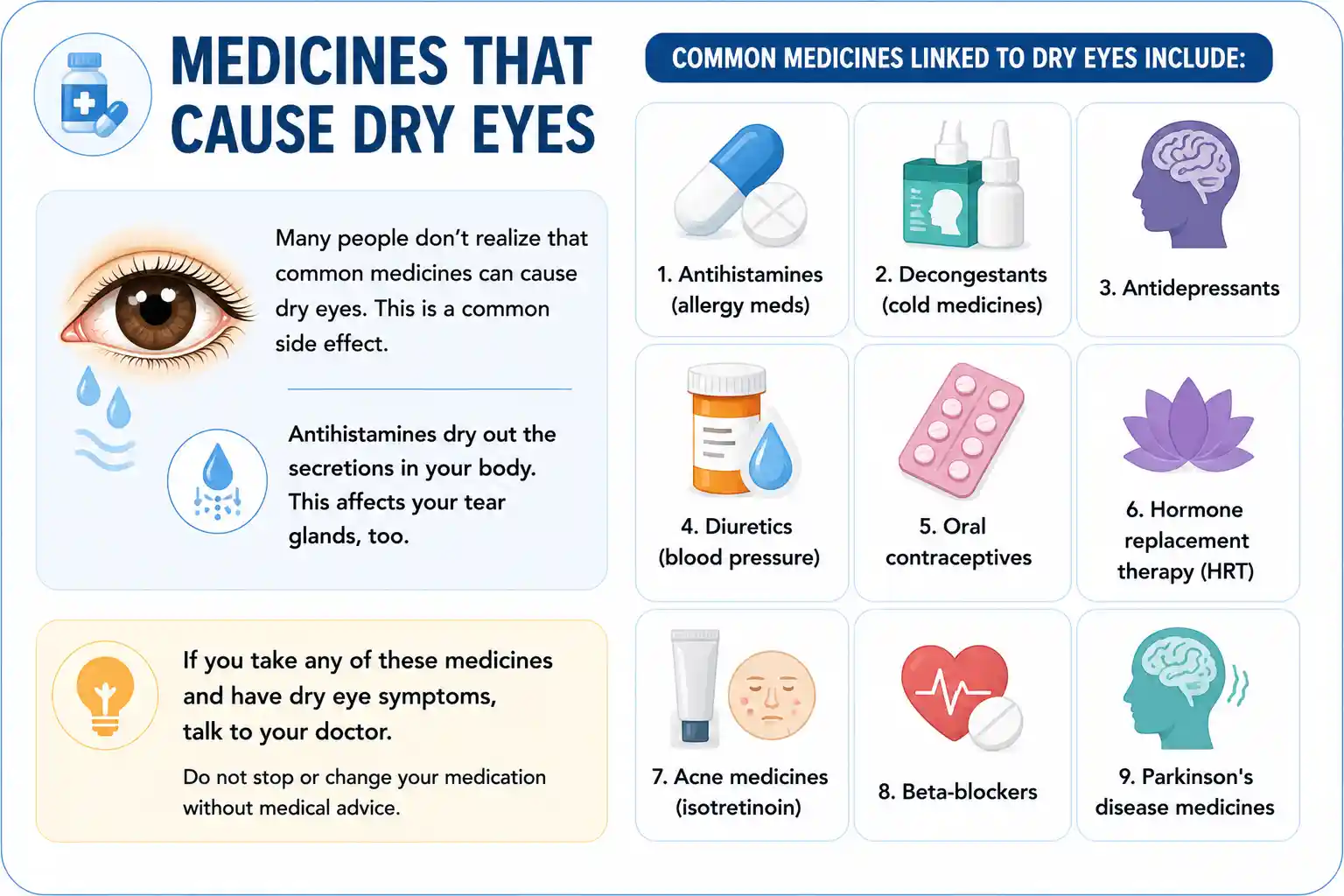
Common medicines linked to dry eyes include:
Aging
Our eyes naturally generate fewer tears as we age, and the quality of those tears also varies. According to research, the Research shows that dry eye prevalence rises sharply with age from 2.7% in adults aged 18-34 to 18.6%[3] in those aged 75 and older.

Women are twice as likely as men to develop dry eye disease. A 2025 study of over 3,500 women found that 57.38%[7] of postmenopausal women had dry eye disease compared to 53.22% of premenopausal women confirming that menopause is a significant risk factor.
During perimenopause and menopause, declining levels of estrogen, progesterone, and testosterone impair the meibomian glands reducing oil production in tears and causing them to evaporate too quickly.
Hormonal Changes (Especially in Women)
Hormones have a bigger effect on eye health than most people think. Androgens are hormones found in both men and women. They help the meibomian glands make oil. These glands sit in the eyelids and keep tears from drying too fast.
When androgen levels decrease, the glands make less oil. Research confirms[8] that androgens directly regulate meibomian gland function controlling the quality and quantity of lipids produced. Androgen deficiency leads to meibomian gland dysfunction, altered lipid profiles, and evaporative dry eye.
This mostly happens during menopause or perimenopause. Some hormone medications can also lower these levels. Importantly, estrogen and androgens have opposing effects on meibomian glands while androgens promote oil production, estrogen actually decreases lipid production.
This is why estrogen-only hormone replacement therapy may worsen dry eye symptoms in some postmenopausal women[9].Less oil causes tears to evaporate more quickly, which leads to drying out the eyes.
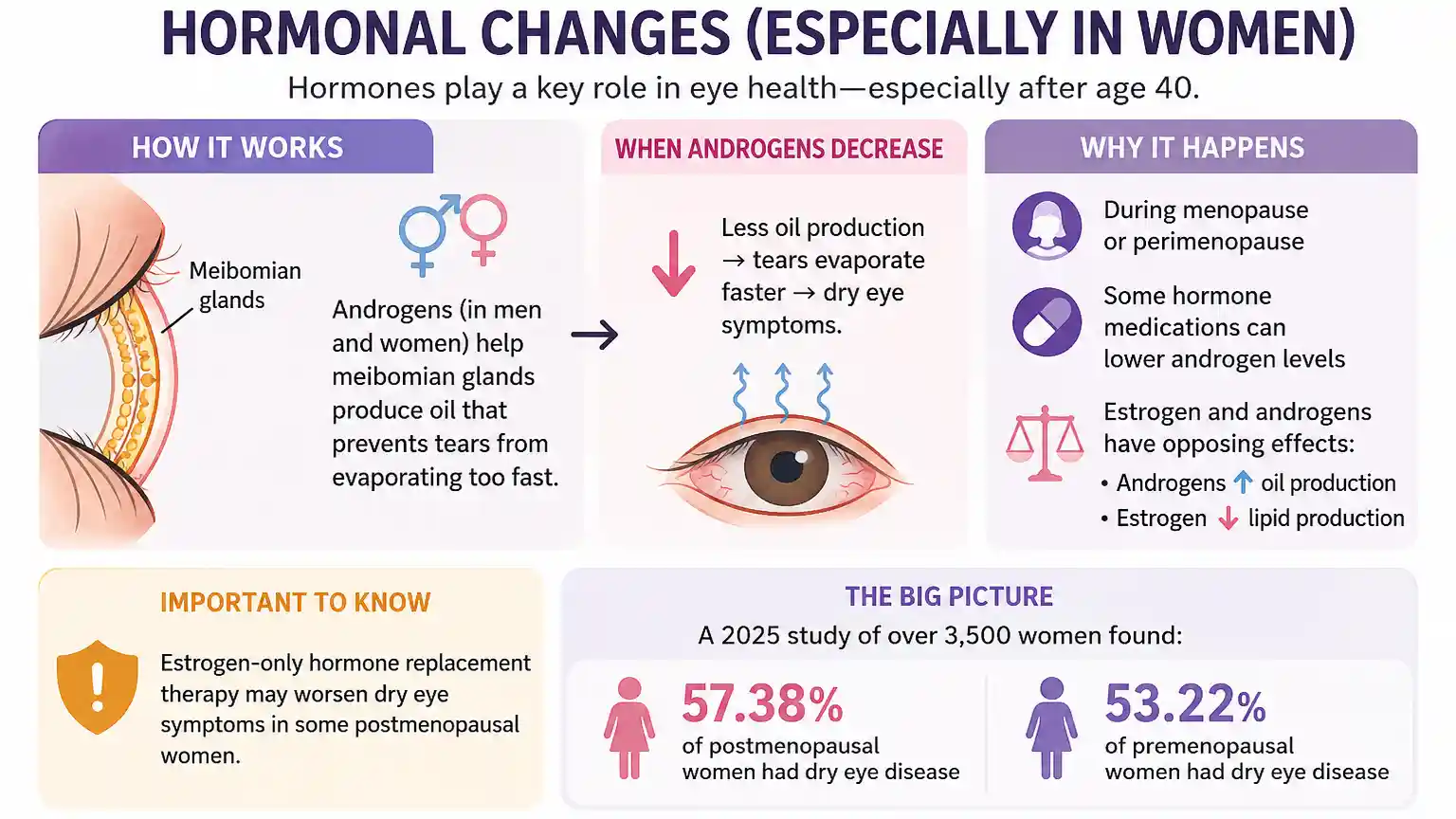
This is one reason dry eye is common in women over 40. A 2025 study[10] of over 3,500 women confirmed that 57.38% of postmenopausal women had dry eye disease compared to 53.22% of premenopausal women.
Environmental Factors (Wind, Dust, Smoke, Pollution)
Screen time and ageing are not the only causes of dry eyes. Things around you can play a big role too. Smoke, pollution, wind, and dust can all irritate the eyes. They also make tears dry up faster.
You may be more prone to dry eye if you live in a windy or dry place. This is also true if you work in a dusty place or spend a lot of time around pollution.Persistent eyelid irritation may sometimes be caused by conditions other than dry eye, such as lice in the eyelashes.
Underlying Medical Conditions
Screen time and ageing are not the only causes of dry eyes. One common cause is Sjogren’s Syndrome. This condition affects the glands that make tears and saliva. It can leave your eyes feeling dry and irritated.
Other health problems linked to dry eye include diabetes, thyroid disorders, rheumatoid arthritis, lupus, rosacea, and sleep apnea. If you have one of these conditions, It’s important to treat dry eye for overall health care.
Previous Eye Surgery (LASIK, Cataract Surgery)
LASIK and other vision correction surgeries can sometimes cause dry eyes. This happens because the surgery may affect the nerves that help tell your eyes to make tears. The result of cataract surgery may also be the same.
It sounds a bit scary. For most people, the dryness is for a small time, and it gets better within a few weeks or months. Tear production often improves as the eyes heal. But for some people, dry eyes can last longer and need ongoing care.
Poor Hydration and Diet
Water is important to make tears in the body. Your eyes may get dry if you don’t drink enough water. This is why dry eyes often feel worse on hot days or after exercise.
What you eat matters too. Your eyelids’ oil glands are kept working properly by omega-3 fats. These healthy fats are found in foods like fish, flaxseeds, and walnuts. Fewer omega-3s means your tears may not have enough oil. They can dry up faster.
How to Prevent Dry Eyes in Daily Life
Some simple habits can make a big difference in keeping your eyes comfy and moist, and protected from dryness.
Step-by-Step Practical Solutions
These simple methods can really improve tear quality. They also help cut down on daily dry eye symptoms.
20-20-20 Rule
Every 20 minutes, it’s a good idea to give your eyes a little break. Try looking at something about 20 feet away for 20 seconds. This simple habit encourages more frequent blinking and helps reduce dry eye discomfort. A 2020 clinical study found that following the 20-20-20 rule[12] significantly improved tear break-up time a key marker of dry eye health.
Increase Blink Rate
When you’re staring at a screen on your phone, tablet, or computer, don’t forget to blink fully. It spreads tears evenly and keeps eyes hydrated all the time.
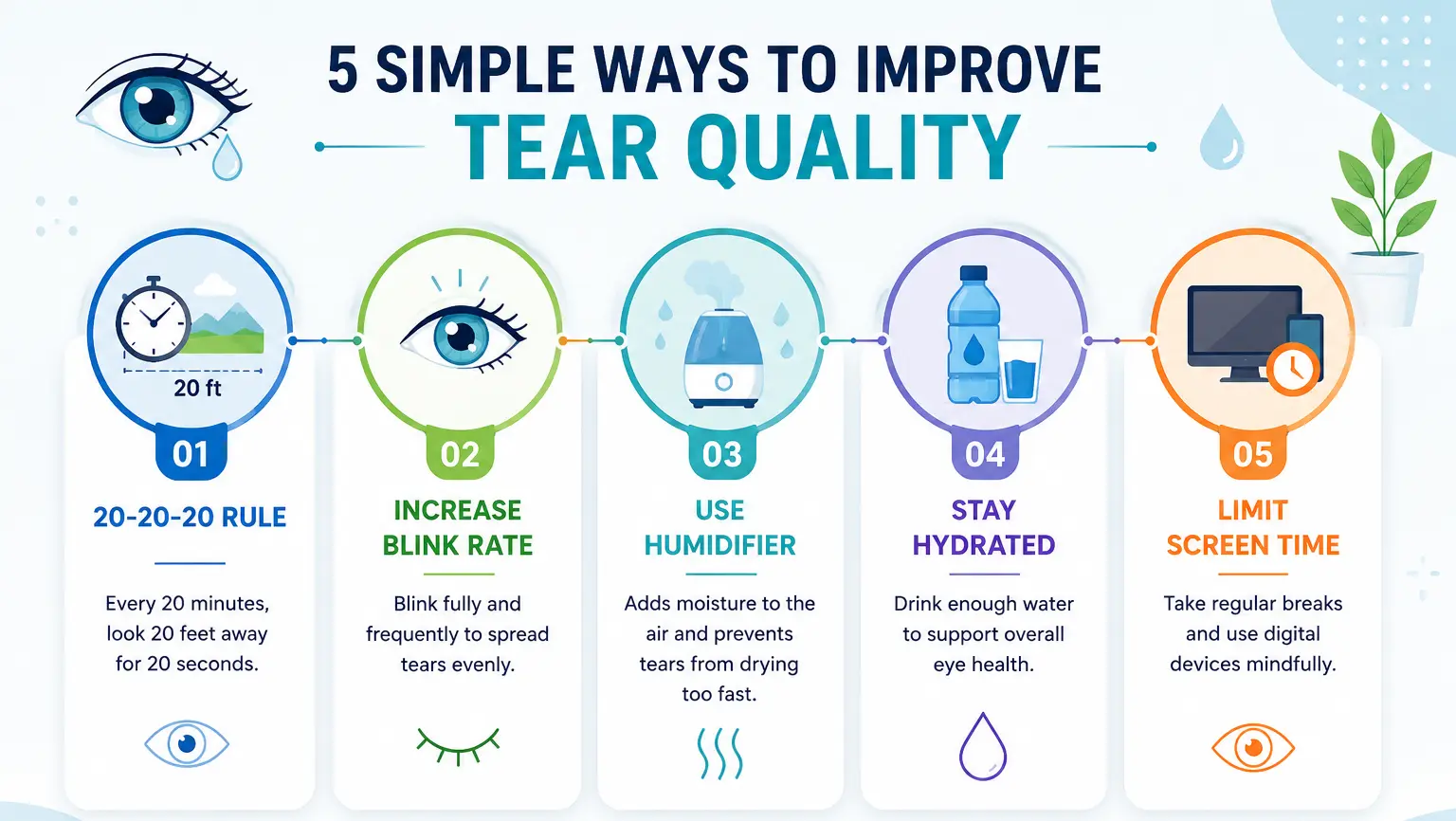
Use Humidifier
A humidifier is a big help in stopping tears from drying out too fast. It’s really useful in rooms with air conditioning or heating.
Stay Hydrated
Proper hydration helps your eyes stay healthy and comfy. Just carrying a water bottle and taking regular sips can make a big difference.
Limit Screen Time
Spend too much time on digital devices, and you might find yourself blinking less, which can lead to dry eyes. Take regular breaks and only use your screen when it’s essential.
Treatment Options
Lots of treatments can help with dry eyes. These treatments can make your tears better and protect your eyes from damage over time.
Artificial Tears / Lubricating Eye Drops
Artificial tears are often the first choice for treating mild to moderate dry eye. They add moisture to the eyes and help reduce irritation.
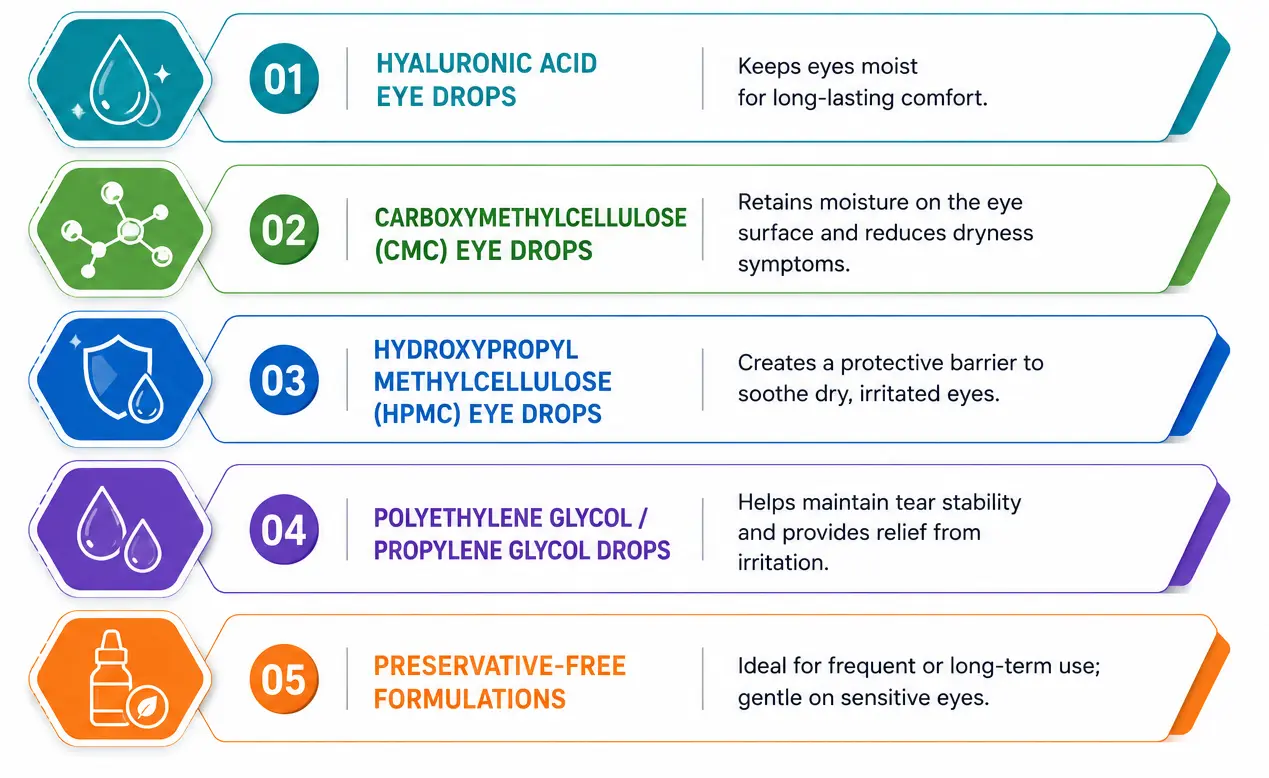
Over-the-counter drops that keep eyes lubricated include:
Prescription Eye Drops
Prescription treatments can help with dry eyes. They are a good choice if regular lubricating drops don’t give enough relief.
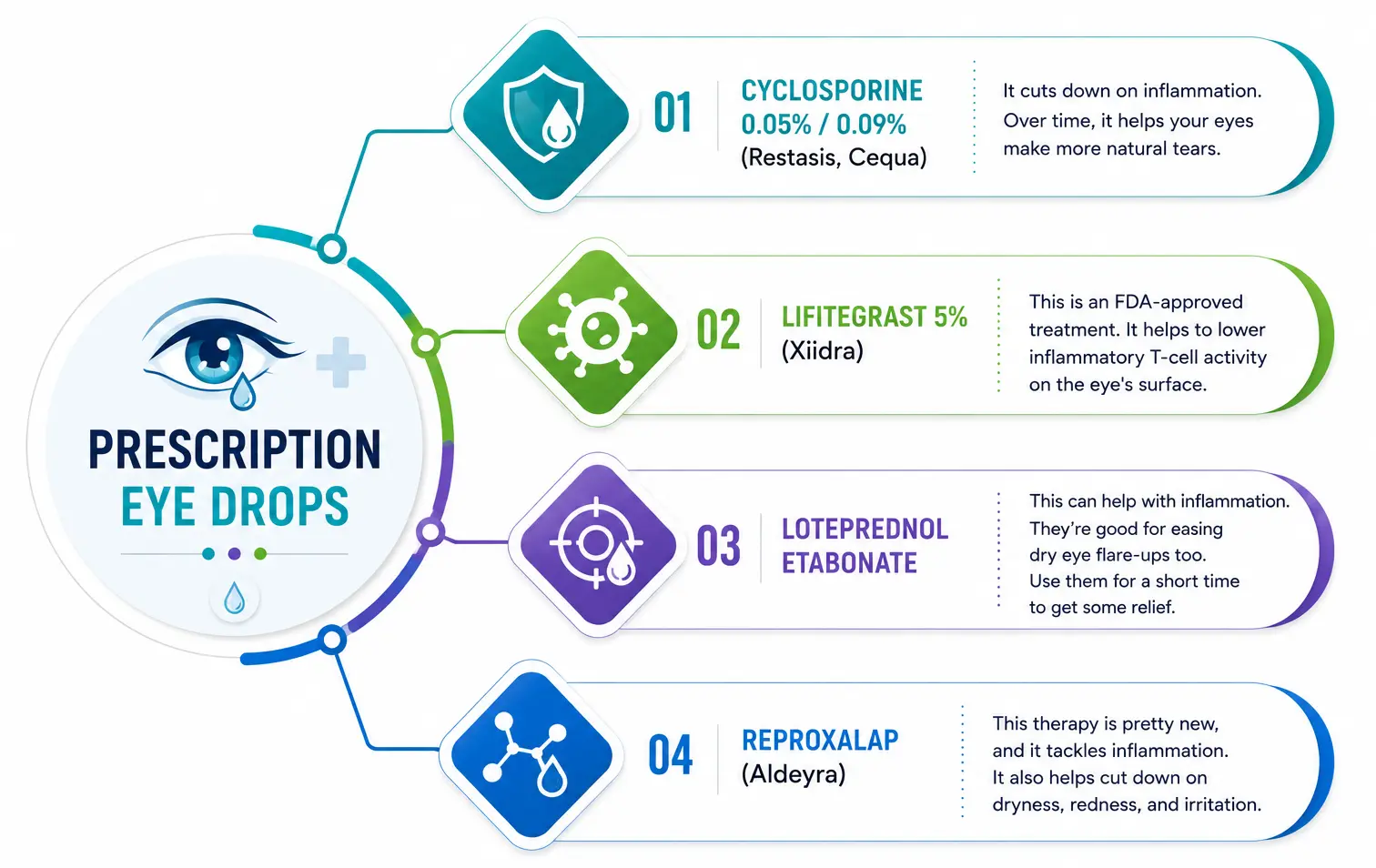
Doctor-prescribed medicines for moderate to severe dry eye are:
Nasal Sprays for Dry Eye
Some new treatments use the nose to help the body make more tears. One of those sprays includes Varenicline Solution Nasal Spray (Tyrvaya). It’s an FDA-approved nasal spray that can help with tear production. The spray stimulates the nasal nerve pathway to make you cry.
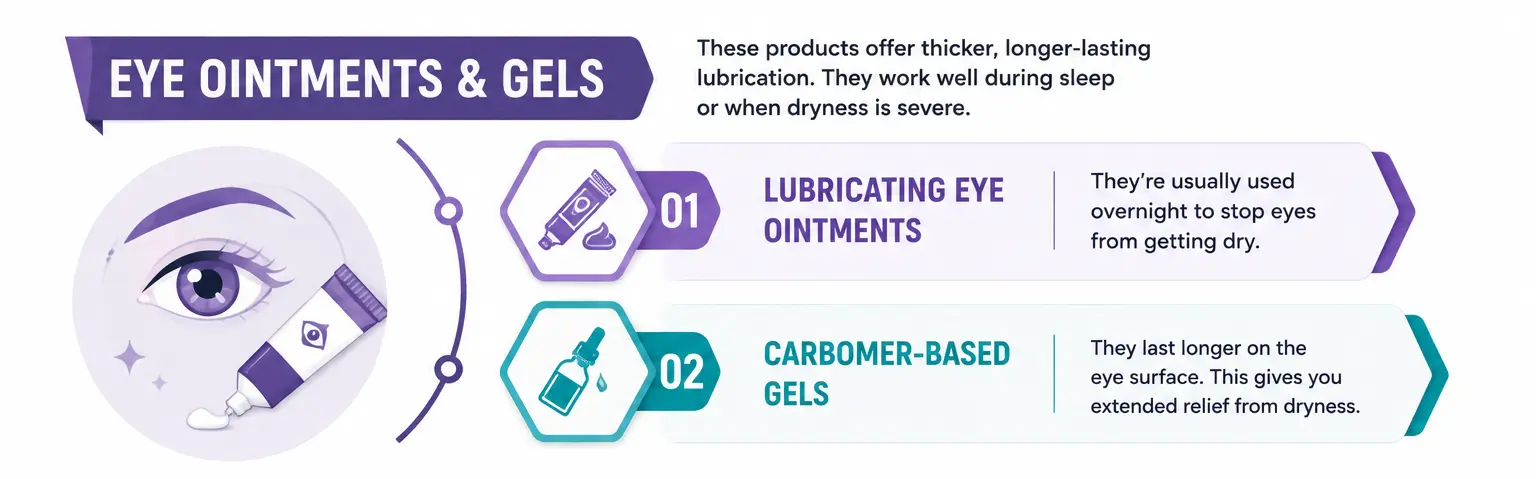
Eye Ointments & Gels
These products offer thicker, longer-lasting lubrication. They work well during sleep or when dryness is severe.
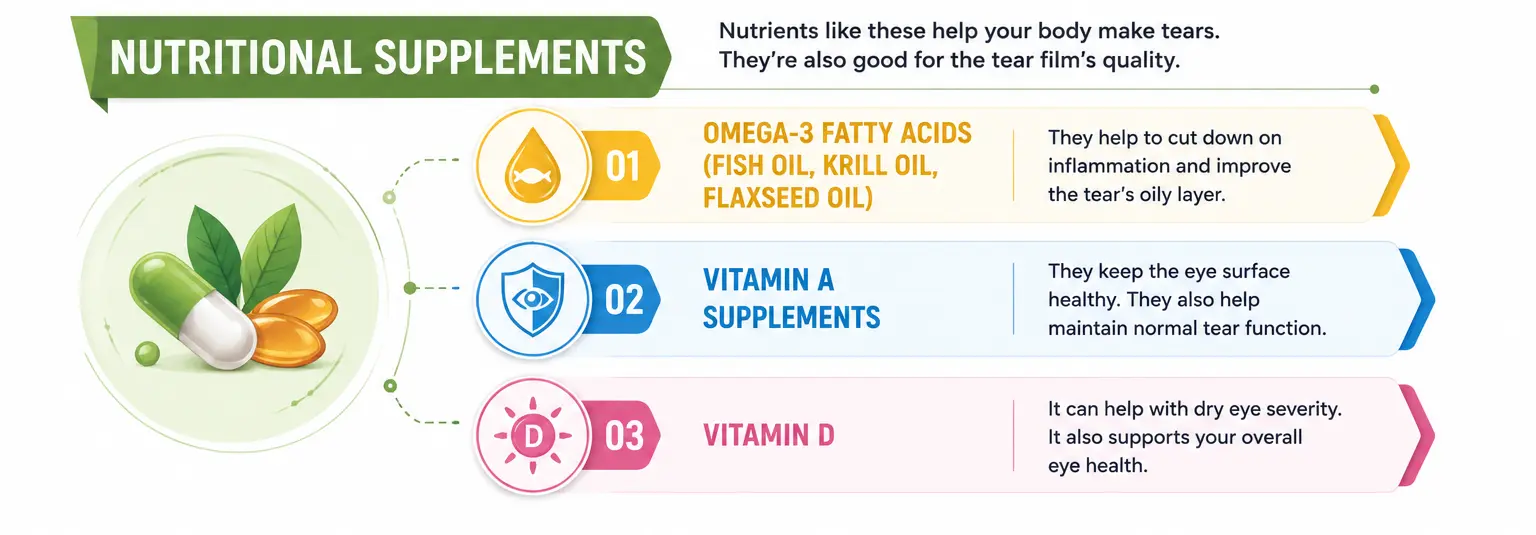
Nutritional Supplements
Nutrients like these help your body make tears. They’re also good for the tear film’s quality.
When to See a Doctor
Some signs of dry eyes can be a warning sign for something more serious. Take them seriously, especially if they stick around or get worse over time. If they don’t clear up, it’s a good idea to look into it.
Get medical help if you spot these symptoms:
Conclusion
Dry eyes can be frustrating, but you don’t have to live with it. There are solutions to help you feel better. Dry eyes are common, but treatable.
Finding the cause of your dry eyes is usually the first step. Then, you can try some simple and effective ways to get real relief.
Start with a few simple changes: drink more water, take regular breaks from screens, and think about using a humidifier. Add artificial tears if needed.
If you’re still having trouble, or it’s really affecting you, don’t stop. The best idea would be to visit the doctor. They’ve got some great new treatments now that didn’t exist a few years back.
“Your eyes work hard for you every day. Give them the care they deserve.”
If a medicine you take is on the dry eye triggers list, don’t stop it. You don’t have to worry. There are always solutions.
You can switch formulations to add lubricating drops to your routine. Looking for a trusted supplier of artificial tears, lubricating eye drops, and ophthalmic medicines? Always make sure that you get in touch with a reliable pharmacy.
Get in touch with Actiza Store today. We have our products ready and export-ready. We are WHO-GMP certified with bulk supply to our customers across the globe.
FAQs (For Google SGE + AI Visibility)
Q1:- What are the most common causes of dry eyes in daily life?
Ans:- Dry eyes are pretty common and can be caused by lots of everyday things. Spending too much time on screens, being in dry air, getting older, and not drinking enough water are all common culprits. Your eyes can get dry and irritated from stuff like smoke, wind, and even the air conditioning.
Q2:- Can screen time really cause dry eyes?
Ans:- Yes, it can. When you spend time looking at a screen, you might blink less often. This can cause your tears to dry up quicker. As a result, your eyes might feel tired, itchy, or just plain uncomfortable.
Q3:- Which medicines cause dry eyes as a side effect?
Ans:- Certain meds can dry out your eyes. This list covers things like allergy meds, antidepressants, blood pressure pills, and decongestants. If you start taking a new medicine and notice any symptoms, it’s a good idea to get in touch with your doctor.
Q4:- How do I know if I have dry eye syndrome?
Ans:- Signs of dry eye often include a burning feeling, stinging, red eyes, and vision that’s a bit blurry. You might also notice your eyes feeling pretty gritty, like there’s sand in them. If the symptoms keep coming back, you should probably get your eyes checked.
Q5:- What is the best eye drop for dry eyes?
Ans:- Artificial tears are typically the go-to solution for dry eyes. They’re often the first thing people try to get some relief. Lots of people find hyaluronic acid eye drops really helpful, as they keep your eyes moist for a longer period. It’s all about what works best for your symptoms.
Q6:- Can dry eyes be cured permanently?
Ans:- Some cases of dry eye get a lot better with treatment. But many people need regular care to manage their symptoms. The good news is most people can find relief that lasts.
Q7:- Does drinking more water help dry eyes?
Ans:- Yes, staying hydrated is a big help for healthy tear production. It can make a difference with mild dryness and discomfort. Stay hydrated to support healthy eyes.
Q8:- Are dry eyes serious if left untreated?
Ans:- Dry eyes may seem small, but they can cause problems. If you don’t treat them, they can irritate you. They can also harm the surface of your eye. This can be a real issue if you don’t take care of it. In severe cases, vision can also be affected.
Q9:- What is the 20-20-20 rule for dry eyes?
Ans:- The 20-20-20 rule is a simple way to give your eyes a break. To help your eyes feel better, try to take a short break every 20 minutes. Look at something about 20 feet away for just 20 seconds. This helps reduce eye strain and reminds you to blink more often.
Q10:- Can hormonal changes cause dry eyes in women?
Ans:- Yes, Hormonal changes can impact tear production. Many women have dry eyes during menopause, pregnancy, or hormone changes. This is quite common. It usually happens because hormonal changes impact how the body makes tears. This is one reason dry eye is more common in women.
- https://www.eurekalert.org/news-releases/1097659.
- https://www.sciencedaily.com/releases/2025/09/250914205829.htm
- https://pubmed.ncbi.nlm.nih.gov/28705660/
- https://ir.bausch.com/press-releases/millions-americans-experience-dry-eye-symptoms-yet-new-national-survey-shows
- https://pubmed.ncbi.nlm.nih.gov/21045640/
- https://hub.salford.ac.uk/appliedcognition/2021/08/27/2068/
- https://menopause.org/press-releases/risk-of-dry-eye-disease-increases-during-menopause-transition
- https://pubmed.ncbi.nlm.nih.gov/12114274/
- https://pmc.ncbi.nlm.nih.gov/articles/PMC5496280/
- https://menopause.org/press-releases/risk-of-dry-eye-disease-increases-during-menopause-transition
- https://www.hopkinsmedicine.org/health/wellness-and-prevention/perimenopause-menopause-and-dry-eyes
- https://www.aoa.org/healthy-eyes/eye-and-vision-conditions/computer-vision-syndrome
https://pubmed.ncbi.nlm.nih.gov/36473088/