...

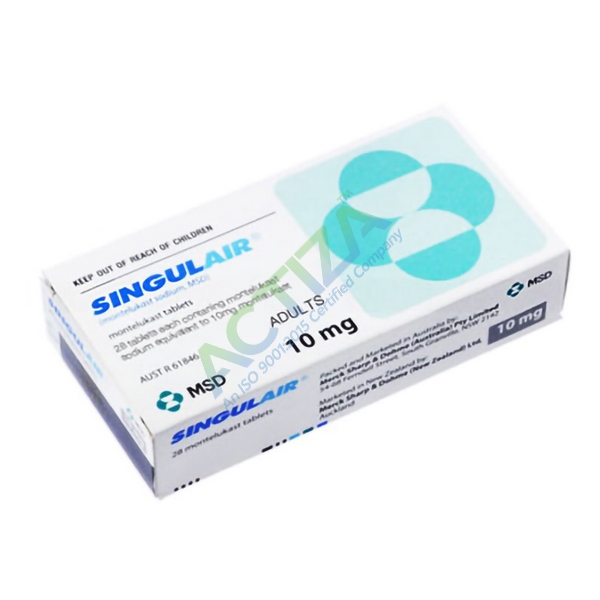
Singulair 10 Mg (Montelukast)

Medically reviewed by Sanjay Gangani, B.Pharm, CMO & Pharmacist

Active Ingredient Montelukast
Indication Asthma prevention, Sneezing and runny nose due to allergies
Manufacturer MSD Pharmaceuticals Pvt. Ltd.
Strength:- 10mg
Packaging 14 Tablets in Strip

Singulair 10 Mg (Montelukast)

Pack Size Price Price/unit Quantity Add To Cart
28 Tablet/s $20 $0.71/Pill
56 Tablet/s $38 $0.68/Pill
84 Tablet/s $54 $0.64/Pill

What is Singulair 10 mg?

  • Singulair 10 mg is a prescription tablet for asthma and allergy.

  • Each tablet contains 10 mg of montelukast.

  • Montelukast is a leukotriene receptor antagonist, often shortened to LTRA.

  • It was developed and first marketed by Merck & Co., Inc.

  • Marketing arrangements differ by country, so check the local pack.

  • Singulair is the original brand of montelukast worldwide.

  • The FDA first approved it in 1998.

  • The first generic versions were approved in 2012.

  • Generic montelukast contains the same active molecule.

  • It helps prevent asthma attacks over the long term.

  • It also helps prevent breathing problems brought on by exercise.

  • It treats allergic rhinitis, commonly called hay fever.

  • That covers sneezing, a runny nose and a blocked nose.

  • It is a preventer taken daily, not a reliever taken during an attack.

  • It is not a steroid and not an antihistamine.

  • It does not cure asthma or allergy.

  • Singulair also comes as chewable tablets and oral granules.

  • The 10 mg tablet is the adult strength.

  • It carries a boxed warning about serious mental health effects.

  • A Medication Guide must be supplied with every prescription.

  • Use Singulair only for the condition your doctor prescribed.

How Singulair 10 mg Works (Mechanism of Action)

The action happens in five simple steps:

  • Contact with an allergen triggers immune cells in the airways.

  • Those cells release chemicals called cysteinyl leukotrienes.

  • Leukotrienes bind to receptors in the airway lining and muscle.

  • Montelukast blocks those receptors so leukotrienes cannot act.

  • Airway swelling, mucus and tightening are all reduced.

What that means for the patient:

  • Airway inflammation settles over days of regular use.

  • The airways become less twitchy and less likely to narrow.

  • Fewer asthma symptoms occur during the day and at night.

  • Nasal symptoms of hay fever also improve.

  • Reliever inhaler use often falls with good control.

Key pharmacology facts:

  • Effects can begin within about one to three hours of a dose.

  • A single dose works for roughly 24 hours.

  • That is why one tablet daily is enough.

  • It is absorbed well and can be taken with or without food.

  • The liver breaks it down before excretion.

What it does not do:

  • It does not relax airway muscle quickly like a reliever inhaler.

  • It cannot reverse bronchospasm during an acute attack.

  • It is not a replacement for a steroid inhaler.

  • It should not be used alone for exercise-induced symptoms.

Dosage Guide

Always follow the dose written on your prescription.

Patient SituationTypical DoseTimingKey Note
Adults and adolescents, asthmaOne 10 mg tablet once dailyIn the evening, with or without foodSingulair 10 mg is the adult strength
Adults, allergic rhinitisOne 10 mg tablet once dailyAt a time that suits the symptomsTiming may be individualised
Adults with both conditionsOne 10 mg tablet once dailyIn the eveningOne tablet covers both
Exercise-induced symptomsOne 10 mg tabletAt least two hours before exerciseNot to be used as the only treatment
Second dose before exerciseNot permitted within 24 hoursNot applicableNever take an extra tablet the same day
Hay fever where other medicines workMontelukast is not first choiceNot applicableFDA advises reserving it for other cases
Children aged 6 to 145 mg chewable tabletAs prescribedA different Singulair product
Children aged 2 to 54 mg chewable or granulesAs prescribedA different Singulair product
Acute asthma attackMontelukast has no roleNot applicableUse a reliever inhaler immediately
Severe liver diseaseTell your doctor before startingAs prescribedCaution is advised
Pregnancy or breastfeedingDiscuss with your doctor firstAs prescribedHuman data are limited

How to read this table:

  • The adult dose is simple: one tablet once a day.

  • Evening dosing is usual when the main problem is asthma.

  • Do not take more than one tablet in any 24 hours.

  • Do not double up before exercise if you took a dose that day.

  • Keep taking it daily even when symptoms are absent.

  • Stopping it can allow symptoms and attacks to return.

Missed dose and overdose rules:

  • Take a missed dose as soon as you remember that day.

  • Skip it if the next dose is almost due.

  • Never take two tablets together to catch up.

  • Overdose may cause stomach pain, drowsiness, thirst or headache.

  • Contact a doctor or poison centre after a large overdose.

How to Take Singulair 10 mg

  • Take the dose exactly as your doctor has prescribed it.

  • Swallow the tablet whole with water.

  • Do not crush, break or chew the film-coated tablet.

  • Take it with or without food, as you prefer.

  • Take it in the evening if you are treating asthma.

  • Keep to the same time every day.

  • Take it at least two hours before exercise if that is the reason.

  • Keep taking it daily even when your breathing feels fine.

  • Continue your inhalers exactly as prescribed.

  • Always carry your fast-acting reliever inhaler.

  • Use the reliever, not this tablet, during sudden breathlessness.

  • Do not reduce a steroid inhaler without medical advice.

  • Do not stop the tablet suddenly on your own.

  • Read the Medication Guide supplied with each prescription.

Practical usage tips:

  • Set a daily alarm so evening doses are not missed.

  • Benefit builds over days rather than appearing at once.

  • Keep a record of how often you need your reliever inhaler.

  • Rising reliever use is an early sign of poor control.

  • Ask someone close to you to mention any change in your mood.

  • Report any new sleep problems or vivid dreams.

  • Tell your doctor promptly about any behaviour change in a child.

Precautions

Absolute Contraindications – Do Not Use Singulair If You:

  • Are allergic to montelukast or any tablet ingredient.

  • Are having an acute asthma attack right now.

  • Need a medicine to open the airways quickly.

  • Have previously had a serious mental health reaction to montelukast.

Important limits on use:

  • It must never be used to reverse an acute attack.

  • It must never be used alone for exercise-induced bronchospasm.

  • It must not replace a steroid inhaler without medical direction.

  • For hay fever, other medicines should usually be tried first.

Conditions You Must Disclose to Your Doctor

  • Any depression, anxiety or other mental health condition.

  • Any past thoughts of self-harm or suicide.

  • Any behavioural problems, including in a child taking it.

  • Any sleep disorder, nightmares or sleepwalking.

  • Severe liver disease or any liver problem.

  • Any worsening of asthma or rising reliever inhaler use.

  • Any plan to reduce or stop a steroid inhaler or tablet.

  • Any phenylketonuria, relevant to the chewable forms.

  • Any lactose intolerance, since tablets may contain lactose.

  • Any pregnancy, planned pregnancy or breastfeeding.

  • Any epilepsy or history of seizures.

  • All prescription, herbal and over-the-counter products you use.

Food and Drink Precautions

  • Singulair 10 mg can be taken with or without food.

  • No specific food needs to be avoided.

  • Limit alcohol, which can add to drowsiness and low mood.

  • Alcohol may also mask or worsen mood-related side effects.

  • Avoid known allergy triggers alongside taking the medicine.

  • Keep well hydrated during hay fever season.

  • Ask your doctor before starting any herbal sedative.

  • St John’s wort may reduce the medicine’s effect.

Before-Use Safety Checklist

  • Do you hold a valid prescription for Singulair 10 mg?

  • Do you understand this is a preventer, not a reliever?

  • Do you have a fast-acting reliever inhaler with you?

  • Do you know what to do during a sudden asthma attack?

  • Has your doctor explained the mental health warning?

  • Do you know which symptoms mean stopping and calling a doctor?

  • Have you disclosed any depression or anxiety?

  • Have you disclosed any liver problems?

  • For hay fever, have other treatments been tried first?

  • Have you listed all your medicines for the doctor or pharmacist?

  • Have you checked the expiry date on the strip?

  • Do you know the emergency warning signs in Section 8?

Common and Less Common Side Effects

Most everyday effects are mild; the mental health effects are the serious ones.

Side EffectFrequencyWhat It Feels LikeWhat to Do
HeadacheCommonDull or throbbing head painRest and drink water; report if severe
Abdominal painCommonStomach ache or crampingReport if persistent
Nausea or vomitingCommonQueasy or upset stomachReport if it repeats
DiarrhoeaCommonLoose or frequent stoolsKeep hydrated; report if persistent
Cold or flu-like symptomsCommonSore throat, runny nose, mild feverReport any worsening chest symptoms
CoughCommonDry or tickly coughReport if breathing worsens
Dizziness or drowsinessCommonLight-headed or sleepy feelingAvoid driving until clear
RashLess commonRed or itchy patches on the skinContact your doctor
Trouble sleepingBoxed warningDifficulty falling or staying asleepTell your doctor promptly
Vivid dreams or nightmaresBoxed warningUnusually intense or disturbing dreamsTell your doctor promptly
SleepwalkingBoxed warningActivity while not fully awakeStop and contact a doctor
Agitation or restlessnessBoxed warningFeeling tense, wound up or unable to settleStop and contact a doctor
Aggression or hostilityBoxed warningOut-of-character anger or irritabilityStop and contact a doctor
AnxietyBoxed warningPersistent worry or panic feelingsStop and contact a doctor
DepressionBoxed warningLow mood, tearfulness, hopelessnessStop and contact a doctor
Disorientation or confusionBoxed warningMuddled thinking or memory problemsStop and contact a doctor
HallucinationsBoxed warningSeeing or hearing things that are not thereStop and seek urgent advice
Tremor or shakinessBoxed warningShaking hands or unsteadinessTell your doctor promptly
StutteringBoxed warningNew difficulty with speechTell your doctor promptly
Uncontrolled muscle movementsBoxed warningTwitching or movements you cannot stopTell your doctor promptly
Suicidal thoughts or actionsBoxed warningThoughts of self-harm or hopelessnessStop and seek medical help the same day
Worsening asthmaUncommonMore wheeze, cough or reliever useContact your doctor promptly
Eosinophilic conditionsRareRash, pins and needles, worsening lung symptomsSeek urgent medical advice
Liver inflammationRareYellow skin or eyes, dark urine, fatigueSeek urgent medical advice
Severe allergic reactionRareSwelling of face, lips or throat; breathlessnessEmergency — call for help immediately

A note on the mental health warning:

  • The FDA added this boxed warning in March 2020.

  • Warnings had already been added to the label back in 2008.

  • Reports continued, so the FDA reviewed the drug again.

  • It identified 82 cases of completed suicide in reports to the agency.

  • More than 500 suicide attempts appear in unverified reports.

  • The exact frequency of these events is not known.

  • A large FDA observational study found no such association.

  • The FDA still required the warning despite that finding.

  • It cited limits of observational data and safer hay fever options.

  • Symptoms can occur without any previous mental health history.

  • Most reported cases improved after the medicine was stopped.

  • Some events were reported after stopping the medicine.

  • Tell a doctor promptly about any change in mood or behaviour.

  • Seek help the same day if you have thoughts of self-harm.

  • Parents should watch for behaviour changes in a child taking it.

Drug Interactions – Avoid or Use With Caution

Tell your doctor before combining Singulair with these:

  • Phenobarbital, used for epilepsy or sedation.

  • Phenytoin and carbamazepine, also used for epilepsy.

  • Rifampicin, used for tuberculosis.

  • St John’s wort, a herbal antidepressant.

  • Gemfibrozil, used to lower blood fats.

  • Any other asthma or allergy medicine.

  • Any antidepressant or medicine for mental health.

  • Any sedating medicine, including sleeping tablets.

Interaction outcomes to understand:

  • Phenobarbital and similar drugs can lower montelukast levels.

  • Lower levels may reduce how well asthma is controlled.

  • Gemfibrozil can raise montelukast levels instead.

  • Montelukast does not replace inhaled or oral steroids.

  • Reducing steroids too quickly can trigger serious problems.

  • Any medicine affecting mood deserves careful review here.

Emergency Warning Signs – Seek Urgent Medical Help

Call emergency services immediately if you or someone else has:

  • Breathlessness that is getting rapidly worse.

  • Difficulty speaking a full sentence in one breath.

  • A reliever inhaler that is no longer working.

  • Lips, face or fingertips turning blue or grey.

  • Drowsiness or exhaustion while struggling to breathe.

  • A silent chest, where wheezing suddenly stops.

  • Swelling of the face, lips, tongue or throat.

  • A widespread rash with breathing difficulty.

Stop the medicine and contact a doctor the same day if you have:

  • Any thoughts of harming yourself.

  • New or worsening depression or hopelessness.

  • Agitation, aggression or out-of-character behaviour.

  • Hallucinations or confused thinking.

  • Sleepwalking or activity while not fully awake.

  • Any marked change in a child’s behaviour or mood.

  • Yellowing of the skin or eyes.

  • Pins and needles with a rash and worsening breathing.

Critical instructions in an emergency:

  • Use your fast-acting reliever inhaler straight away.

  • Do not take an extra Singulair tablet instead.

  • Tell every treating doctor that you take montelukast.

  • Mention the mental health boxed warning if mood is involved.

  • State how long you have been taking it.

  • Bring the pack with you if that is possible.

If your mood changes, please tell someone.

  • Mood effects from montelukast are a recognised drug side effect.

  • They are not a personal failing and often improve on stopping.

  • A doctor can change treatment once they know.

  • Local crisis helplines are available if you feel unsafe.

Why Choose Singulair 10 mg?

Benefits of montelukast when it is clinically appropriate:

  • One tablet once daily is simple to remember.

  • A tablet suits people who struggle with inhaler technique.

  • It treats asthma and hay fever with a single medicine.

  • It also helps prevent exercise-induced symptoms.

  • It is not a steroid, so it avoids steroid side effects.

  • It works alongside inhalers rather than replacing them.

  • It can be taken with or without food at any time.

  • Singulair is the originator brand with the longest clinical record.

  • Child-friendly chewable and granule forms exist in the range.

  • A Medication Guide accompanies every prescription by requirement.

  • Approved generics contain the identical active molecule.

Honest balance for the buyer:

  • Montelukast carries the FDA’s most serious warning type.

  • Serious mood and behaviour changes have been reported.

  • For hay fever, other medicines should usually be tried first.

  • It is never a substitute for a reliever inhaler.

  • Inhaled steroids remain the foundation of asthma treatment.

  • It does not cure asthma or allergic rhinitis.

  • Benefit varies; some people respond much better than others.

  • Treatment needs regular review with a doctor.

  • Anyone with a mental health history needs careful assessment.

  • Generic montelukast is usually far cheaper and equally effective.

  • The FDA has named alternatives for hay fever specifically.

  • Those include antihistamines such as loratadine and cetirizine.

  • They also include steroid nasal sprays such as fluticasone.

Storage Instructions

  • Store at room temperature in a cool, dry place.

  • Keep tablets in the original strip until use.

  • Protect from direct sunlight, heat and moisture.

  • Do not store in the bathroom or near a sink.

  • Do not refrigerate or freeze the tablets.

  • Check the strip is intact and undamaged before use.

  • Keep the pack out of sight and reach of children.

  • Chewable forms are flavoured and attractive to children.

  • Store all forms well out of reach for that reason.

  • Keep away from pets at all times.

  • Check the expiry date printed on the strip and carton.

  • Order refills early so daily therapy is not interrupted.

  • Do not use tablets that are chipped, discoloured or damp.

  • Do not transfer tablets into unlabelled containers.

  • Do not flush unused tablets down the toilet.

  • Return expired medicine to a pharmacy take-back scheme.

Sanjay Gangani

Sanjay Gangani

B.Pharm, CMO & Pharmacist

Licensed pharmacist (B.Pharm) with 12+ years in clinical pharmacy and patient care. Reviews every article for evidence-based accuracy before it is published on ACTIZA Store.

Reviews

There are no reviews yet.

Be the first to review “Singulair 10 Mg (Montelukast)”

Your email address will not be published. Required fields are marked *

This site uses Akismet to reduce spam. Learn how your comment data is processed.

All Categories

Shopping Cart

0
×

Loading cart...