Premarin 0.625 Mg (Conjugated Estrogen) Medically reviewed by Sanjay Gangani, B.Pharm, CMO & Pharmacist
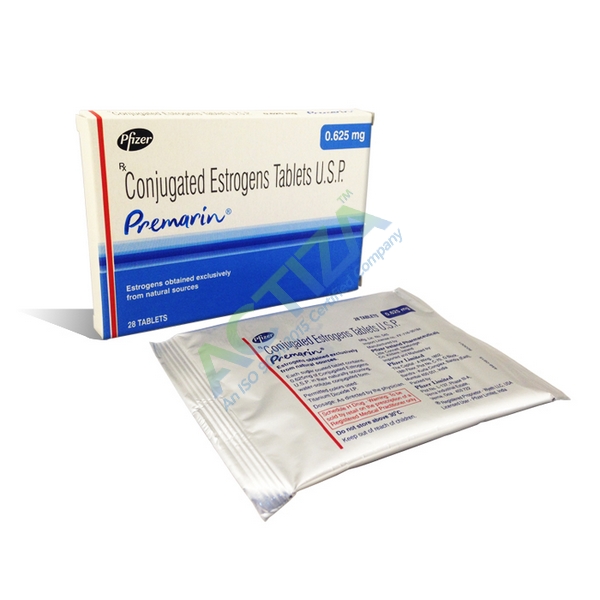
Active Ingredient Conjugated Estrogen Indication Post menopausal osteoporosis, Hormone replacement therapy, Contraception Manufacturer Pfizer India Ltd Strength:- 0.625mg Packaging 28 Tablets in Strip
INQUIRE ABOUT Premarin 0.625 Mg (Conjugated Estrogen)
What is Premarin 0.625 mg? Premarin is a prescription hormone replacement tablet.
Each tablet contains 0.625 mg and Premarin 0.3 mg of conjugated oestrogens.
Conjugated oestrogens are a mixture of oestrogens from natural sources.
The main components are estrone and equilin.
It is imported and marketed in India by Pfizer Limited.
It is made by Pfizer Ireland Pharmaceuticals.
The Indian label lists these uses:
Moderate to severe hot flushes and sweats around the menopause.
Thinning and dryness of the vulva and vagina.
Preventing bone thinning after menopause in women at fracture risk.
Managing bone thinning after menopause in women at fracture risk.
Low oestrogen from ovarian failure, ovary removal or hypogonadism.
What it is not:
It is not a contraceptive.
It is not a treatment for depression.
It is not recommended for children.
How Premarin Works (Mechanism of Action) The action happens in five simple steps:
Before menopause, the ovaries make most of a woman’s oestrogen .
After menopause, that supply falls sharply.
Low oestrogen causes hot flushes and vaginal thinning.
Premarin replaces the missing oestrogen.
That relieves symptoms and slows bone loss.
What studies showed:
Women averaged about 12 hot flushes a day before treatment.
After 12 weeks on 0.625 mg, they averaged fewer than one.
Women on placebo still averaged about five a day.
Spine bone density rose 2.3% on 0.625 mg.
It fell 2.5% on placebo over the same period.
How the body handles it:
The tablet releases its oestrogens slowly over several hours.
Peak levels occur about 6 to 10 hours after a dose.
Bone protection lasts only while treatment continues.
Dosage Guide The regimen below comes from Pfizer’s Indian prescribing information.
Situation Labelled Dose Timing Key Note Hot flushes and sweats 0.625 to 1.25 mg daily Once daily, continuously Depends on individual response Vaginal or vulval thinning 0.625 to 1.25 mg daily Once daily Consider a vaginal product if this is the only problem Preventing bone thinning 0.625 mg daily for most women Once daily Only for women at significant fracture risk Low oestrogen from ovarian failure As prescribed Three weeks on, one week off A cyclical regimen Woman with a womb Add a progestogen At least 12 days per cycle Essential to protect the womb lining Above 0.625 mg with a womb Progestogen protection not demonstrated Not applicable Discuss with your doctor Woman after hysterectomy Oestrogen alone is usual As prescribed Progestogen if endometriosis remains Starting treatment Any convenient day From sequential HRT, the day after No gap needed Missed tablet Take it when you remember Then continue as before If several are missed, take only the latest Older women No special adjustment As prescribed Use the lowest effective dose Children Not recommended Not applicable Can affect growth and development
How to read this table:
Your prescription is the authority for your own dose.
For bone protection alone, non-oestrogen medicines should be considered first.
Treatment should be guided by symptoms, not by hormone blood tests.
Overdose:
It may cause nausea and vomiting.
Some women may have a withdrawal bleed.
There is no specific antidote; treatment addresses symptoms.
How to Take Premarin Have a full medical and gynaecological examination before starting.
That includes blood pressure, breasts, abdomen and pelvis.
Take one tablet by mouth each day.
Swallow it whole.
Do not split, crush, chew or dissolve it in your mouth.
Take your progestogen exactly as prescribed, if you have a womb.
Follow the missed-tablet rule if you forget a dose.
Continue breast awareness and routine screening.
Attend follow-up checks every 6 to 12 months.
Practical tips:
Spotting is common in the first months of treatment.
Report bleeding that starts later or continues after stopping.
Missed tablets can cause breakthrough bleeding.
Tell every doctor and surgeon that you take HRT.
Precautions Contraindications – Do Not Use Premarin If You Have: An allergy to conjugated oestrogens or any tablet ingredient.
Known, suspected or past breast cancer.
Known or suspected oestrogen-dependent cancer, such as womb cancer.
Genital bleeding that has not been diagnosed.
Untreated thickening of the womb lining.
A blood clot in a vein or lung, now or in the past.
A known clotting disorder, such as protein C or S deficiency.
Active or recent angina or heart attack.
Acute liver disease, or past liver disease with abnormal tests.
Porphyria.
Conditions Needing Close Supervision Fibroids or endometriosis.
Risk factors for blood clots.
A mother, sister or daughter with breast cancer.
High blood pressure.
Liver problems, including a liver adenoma.
Diabetes.
Gallstones
Migraine or severe headaches.
Systemic lupus erythematosus.
A past thickening of the womb lining.
Epilepsy or asthma.
Otosclerosis, a hearing condition.
Heart or kidney problems, as oestrogen can cause fluid retention.
Very high triglycerides, which rarely lead to pancreatitis.
Thyroid replacement therapy, as the dose may need raising.
Lactose or sucrose intolerance, as the tablets contain both.
Stop immediately and see your doctor if:
You develop jaundice or worsening liver tests.
Your blood pressure rises significantly.
You get a new migraine-type headache.
You become pregnant.
Food, Drink and Lifestyle Grapefruit juice can raise oestrogen levels.
St John’s wort can reduce its effect.
Before planned surgery with long immobility, stop 4 to 6 weeks beforehand.
Restart only once you are fully mobile again.
Before-Use Checklist Has a doctor assessed your personal and family history?
Do you still have a womb? If so, is a progestogen prescribed?
Have you ever had breast cancer or womb cancer?
Have you ever had a blood clot, angina or heart attack?
Do you have unexplained vaginal bleeding?
Do you have any liver disease?
Do you know to swallow the tablet whole?
Do you know the warning signs in Section 8?
Side Effects and Long-Term Risks Frequencies follow the Indian label’s table.
Side Effect Frequency What It Feels Like What to Do Breakthrough bleeding or spotting Common Unexpected bleeding Report if it starts later or persists Breast pain, tenderness or enlargement Common Sore or swollen breasts Report if persistent Nausea, bloating or abdominal pain Common Stomach upset Report if persistent Depression Common Low mood Tell your doctor Hair loss Common Thinning hair Report to your doctor Joint pain or leg cramps Common Aching joints or cramps Report if persistent Change in weight Common Weight up or down Discuss with your doctor Vaginal thrush Common Itching and discharge Treatable; seek advice Headache, migraine or dizziness Uncommon Head pain or light-headedness Stop for a new migraine-type headache Anxiety or mood changes Uncommon Feeling anxious or unsettled Tell your doctor Change in libido Uncommon Altered interest in sex Discuss with your doctor Gallbladder disease Uncommon Pain under the right ribs Seek medical advice Skin patches, itching or excess hair Uncommon Brown patches, rash or hair growth Report to your doctor Blood clot in a vein Uncommon Painful leg swelling Emergency – call for help Stroke or heart attack Rare One-sided weakness, chest pain Emergency – call for help Serious allergic reaction Rare Swelling, hives, breathing difficulty Emergency – call for help
Long-term risks, using the label’s own figures:
Womb cancer: about 5 in 1,000 women with a womb get it without HRT.
Oestrogen alone adds 5 to 55 cases per 1,000 women aged 50 to 65.
A progestogen for 12 or more days per cycle prevents that rise.
Breast cancer: oestrogen-only HRT from 50 adds about 2.7 per 1,000 over 5 years.
After 10 years it adds about 7.1 per 1,000.
In the WHI trial, this medicine alone did not raise breast cancer risk.
That trial studied women who had had a hysterectomy.
Ovarian cancer: about 1 extra case per 2,000 users over 5 years.
Blood clots: 1.3 to 3 times the usual risk, highest in year one.
Ischaemic stroke: up to 1.5 times the usual risk.
In women aged 50 to 59, WHI analyses suggested no rise in stroke.
Gallbladder disease needing surgery: 2 to 4 times the usual risk.
Drug Interactions Medicines that can reduce the effect of Premarin:
Phenobarbital, phenytoin and carbamazepine, used for epilepsy.
Rifampicin and rifabutin, used for infections such as tuberculosis.
Nevirapine and efavirenz, used for HIV.
Dexamethasone, a steroid.
St John’s wort, a herbal remedy.
Medicines that can raise oestrogen levels:
Erythromycin, clarithromycin, ketoconazole and itraconazole.
Ritonavir and nelfinavir, used for HIV.
Cimetidine, used for stomach acid.
Grapefruit juice.
Medicines Premarin can affect:
Lamotrigine, where seizure control may be reduced.
Thyroid replacement, which may need a higher dose.
Anticoagulants, which need careful benefit-risk review.
Effects on laboratory tests:
It can alter thyroid, liver, clotting and blood fat test results.
Tell the laboratory and your doctor that you take HRT.
Emergency Warning Signs – Seek Urgent Medical Help Seek urgent medical help if you have:
Painful swelling in one leg.
Sudden chest pain.
Sudden breathlessness.
Sudden weakness on one side, or difficulty speaking.
Sudden loss of vision.
Yellowing of the skin or eyes.
Swelling of the face, lips or throat.
See your doctor promptly if you have:
Any vaginal bleeding after menopause.
A new migraine-type headache.
A breast lump or other breast change.
A significant rise in blood pressure.
About unexpected bleeding:
Spotting in the first months is common.
Later bleeding must be investigated.
That may include a womb lining biopsy to exclude cancer.
Why Choose Premarin 0.625 mg? Benefits when clinically appropriate:
It greatly reduced hot flushes within 12 weeks in trials.
It eases vaginal dryness and related discomfort.
It raised spine bone density while placebo lost it.
HRT reduces the risk of hip, spine and other fractures.
0.625 mg is the minimum effective bone dose for most women.
It is a single daily tablet.
It is made by Pfizer under a current Indian label.
Honest balance for the buyer:
Women with a womb must take a progestogen as well.
It raises the risk of blood clots and ischaemic stroke.
Long use raises breast and ovarian cancer risk slightly.
It does not protect the heart or improve memory.
For bone protection alone, other medicines should be considered first.
It needs a yearly review of risks and benefits.
It is not a treatment for depression.
Storage Instructions Store below 30°C.
Keep tablets in the blister until use.
Keep out of sight and reach of children.
Check the expiry date; the shelf life is 36 months.
Return unused tablets to a pharmacy take-back scheme.
Sanjay Gangani
B.Pharm, CMO & Pharmacist
Licensed pharmacist (B.Pharm) with 12+ years in clinical pharmacy and patient care. Reviews every article for evidence-based accuracy before it is published on ACTIZA Store.



Reviews
There are no reviews yet.