...

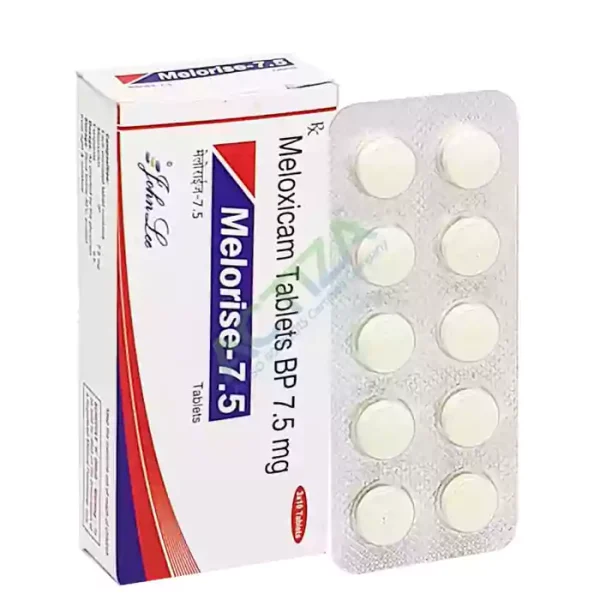
Meloxicam 7.5 Mg (Meloxicam)

Medically reviewed by Sanjay Gangani, B.Pharm, CMO & Pharmacist

Active Ingredient Meloxicam
Indication Pain relief
Manufacturer Johnlee Pharmaceuticals Pvt. Ltd
Strength:- 7.5Mg
Packaging 10 tablets in 1 strip

Meloxicam 7.5 Mg (Meloxicam)

Pack Size Price Price/unit Quantity Add To Cart
100 Tablet/s $12 $0.12/Pill
200 Tablet/s $23 $0.12/Pill
300 Tablet/s $33 $0.11/Pill

WHAT IS MELOXICAM 7.5 MG

  • Meloxicam is a non-steroidal anti-inflammatory drug, or NSAID.

  • It belongs to the oxicam family of NSAIDs.

  • Each tablet in this pack contains 7.5 mg of meloxicam.

  • It reduces pain, swelling and stiffness in joints.

  • Its main use is osteoarthritis, the wear-and-tear joint disease.

  • It is also used in rheumatoid arthritis.

  • In Europe it is also approved for ankylosing spondylitis.

  • It is taken once a day, not several times a day.

  • Meloxicam 15 Mg treats symptoms; it does not cure the arthritis.

  • It is described as a preferential COX-2 inhibitor.

  • That means it acts more on COX-2 than on COX-1, but not only on COX-2.

  • It is not a selective coxib such as celecoxib.

  • It is a prescription medicine, not a general painkiller to self-buy.

HOW IT WORKS (MECHANISM OF ACTION)

Step by step

  • Injured or inflamed tissue releases arachidonic acid.

  • Cyclo-oxygenase enzymes convert that into prostaglandins.

  • Prostaglandins sensitise nerve endings to pain.

  • They also widen blood vessels, causing swelling and redness.

  • They also help drive fever.

  • Meloxicam inhibits cyclo-oxygenase, shortened to COX.

  • Prostaglandin production therefore falls.

  • Pain, swelling and morning stiffness reduce.

  • The effect is symptomatic, so it lasts while the drug is taken.

  • Meloxicam acts preferentially, not exclusively, on COX-2.

  • So it still carries COX-1 risks to the stomach and kidney.

  • That is why the boxed warning still applies to it.

  • Blocking COX-2 is also linked to the cardiovascular risk.

  • No NSAID is free of both risks.

  • Meloxicam has a long elimination half-life.

  • One dose therefore covers a full 24 hours.

  • Taking it more than once a day exceeds the maximum.

  • Never add an extra dose for breakthrough pain.

DOSAGE GUIDE

The maximum adult dose is 15 mg a day, in any formulation. Never exceed it, and never take two doses in one day.

Dosing by indication

IndicationDoseSource
Osteoarthritis, starting and maintenance7.5 mg once dailyFDA label
Osteoarthritis, if 7.5 mg is not enoughMay increase to 15 mg once dailyFDA label
Acute flare-up of osteoarthrosis7.5 mg a day, may rise to 15 mgEU SmPC
Rheumatoid arthritis, starting and maintenance7.5 mg once dailyFDA label
Rheumatoid arthritis, European dosing15 mg a day, may reduce to 7.5 mgEU SmPC
Ankylosing spondylitis15 mg a day, may reduce to 7.5 mgEU SmPC
Maximum adult dose15 mg a dayBoth labels

Where 7.5 mg is specifically the right strength

SituationRecommended dose
Starting treatment for osteoarthritis7.5 mg a day
Elderly patient on long-term treatment for arthritis7.5 mg a day
Patient with a history of gastrointestinal diseaseStart at 7.5 mg a day
Patient with cardiovascular risk factorsStart at 7.5 mg a day
End-stage renal disease on haemodialysisDo not exceed 7.5 mg a day
  • For those patients, 7.5 mg is not just a starting dose.

  • It is the ceiling the label sets for them.

  • Stock 7.5 mg so these patients can be served correctly.

Dosing in children and adolescents

LabelPosition
European SmPCContraindicated under 16 years of age
FDA label, juvenile rheumatoid arthritis7.5 mg once daily, only in children weighing 60 kg or more
FDA label, tablets below 60 kgTablets should not be used
FDA label, above 7.5 mg in childrenNo added benefit was seen

Dosing in kidney and liver impairment

SituationGuidance
Mild to moderate renal impairment, clearance above 25 mL/minNo dose reduction needed
Severe renal failure, not on dialysisContraindicated
End-stage renal disease on haemodialysisMaximum 7.5 mg a day
Advanced renal diseaseAvoid unless benefits outweigh the risk
Mild to moderate hepatic impairmentNo dose reduction needed
Severe hepatic impairmentContraindicated

Rules that are often broken

  • Never take more than one dose in 24 hours.

  • Never take meloxicam with another NSAID.

  • That includes ibuprofen, diclofenac and naproxen.

  • That includes anti-inflammatory doses of aspirin.

  • Never take it with a COX-2 inhibitor such as celecoxib.

  • Take the whole daily dose at once, with food and water.

  • Review the need for it regularly with your doctor.

HOW TO TAKE IT

Taking the tablet

  • Take it only on a doctor’s prescription.

  • Take the whole daily dose at one time.

  • Swallow the tablet with water or another drink.

  • Take it during a meal, as the SmPC directs.

  • Food helps protect the stomach lining.

  • Take it at about the same time each day.

  • Do not take a second tablet for extra pain relief.

  • Use it for the shortest time that controls symptoms.

  • Ask your doctor to review the need for it regularly.

  • Tell your doctor about any past ulcer or stomach bleeding.

  • At-risk patients may be given a stomach-protecting medicine.

  • A proton pump inhibitor or misoprostol may be used.

  • Stop the tablet and seek care if you notice bleeding.

  • Avoid alcohol, which adds to the stomach bleeding risk.

  • Avoid taking it with a steroid tablet unless prescribed.

Protecting the kidneys

  • Drink enough fluid, especially in hot weather.

  • Dehydration raises the risk of kidney injury.

  • Tell your doctor if you are on a water tablet.

  • Tell your doctor if you take a blood pressure medicine.

  • Report any reduction in the amount of urine you pass.

  • Report swelling of the ankles or sudden weight gain.

  • Never take it with another NSAID or with a coxib.

  • Never take it in the third trimester of pregnancy.

  • Never take it before or after bypass heart surgery.

  • Never restart it after a severe skin reaction to it.

  • Never give it to a child under 16, per the European label.

  • Never share your tablets with anyone else.

PRECAUTIONS

Absolute contraindications

  • Known hypersensitivity to meloxicam or any excipient.

  • Asthma, hives or allergic reaction after aspirin or any NSAID.

  • Nasal polyps or angioneurotic oedema after aspirin or an NSAID.

  • History of gastrointestinal bleeding or perforation on an NSAID.

  • Active or recurrent peptic ulcer or stomach bleeding.

  • Any current gastrointestinal bleeding.

  • History of bleeding in the brain, or any bleeding disorder.

  • Severely impaired liver function.

  • Severe renal failure in a patient not on dialysis.

  • Severe heart failure.

  • Third trimester of pregnancy.

  • Children and adolescents under 16 years, per the European label.

  • The setting of coronary artery bypass graft surgery.

Conditions to disclose to your doctor

  • Any heart disease, including angina or past heart attack.

  • Any past stroke or mini-stroke.

  • High blood pressure, especially if uncontrolled.

  • Heart failure of any degree.

  • Peripheral arterial disease.

  • Smoking, high cholesterol or diabetes.

  • Any stomach or duodenal ulcer, past or present.

  • Indigestion, reflux or Helicobacter infection.

  • Ulcerative colitis or Crohn’s disease.

  • Any kidney disease, or dialysis.

  • Nephrotic syndrome or lupus kidney disease.

  • Any liver disease.

  • Asthma, especially if aspirin makes it worse.

  • Nasal polyps.

  • Dehydration, vomiting or diarrhoea.

  • Pregnancy, planned pregnancy or difficulty conceiving.

  • Breastfeeding.

  • Older age, which raises the bleeding risk.

  • Every other medicine, including ones bought without prescription.

Food, drink and lifestyle precautions

  • Take the tablet during a meal, not on an empty stomach.

  • Avoid alcohol; it multiplies the stomach bleeding risk.

  • Drink enough fluid to protect the kidneys.

  • Do not take extra over-the-counter painkillers containing NSAIDs.

  • Check cold and flu remedies for hidden ibuprofen or aspirin.

  • Monitor your blood pressure if you have hypertension.

  • Weigh yourself if you are prone to fluid retention.

  • Avoid long unbroken courses; review the need regularly.

  • Use sun protection; photosensitivity has been reported.

Before-use safety checklist

  • Do you have a prescription for meloxicam?

  • Has the cause of your joint pain been diagnosed?

  • Have you ever had a stomach ulcer or stomach bleeding?

  • Have you ever reacted badly to aspirin or another NSAID?

  • Do you have asthma that aspirin makes worse?

  • Do you have heart disease, or have you had a stroke?

  • Is your blood pressure controlled?

  • Has your kidney function been checked?

  • Do you have liver disease?

  • Could you be pregnant, and how many weeks?

  • Are you taking a blood thinner, a steroid or a water tablet?

  • Are you taking any other anti-inflammatory painkiller?

  • Do you know the warning signs of stomach bleeding?

  • Do you know the warning signs of heart attack and stroke?

What the harm is

  • NSAIDs can cause fetal kidney problems after about 20 weeks.

  • That reduces amniotic fluid, a condition called oligohydramnios.

  • Low fluid has been reported as early as 48 hours after starting.

  • It is usually, but not always, reversible when the drug stops.

  • Prolonged low fluid can cause limb contractures.

  • It can also delay lung maturation.

  • Some newborns needed exchange transfusion or dialysis.

  • After 30 weeks, a fetal heart vessel can close too early.

What your page must say

  • State that it is contraindicated in the third trimester.

  • State the 20-week limit clearly for women who may be pregnant.

  • Do not offer it as a general period-pain remedy to buy freely.

  • Add a line telling pregnant buyers to speak to a doctor first.

  • State that breastfeeding is not recommended on this drug.

SIDE EFFECTS

Very common and common side effects

Side effectFrequency band
Indigestion (dyspepsia)Very common, 10% or more
NauseaVery common
VomitingVery common
Abdominal painVery common
ConstipationVery common
Wind (flatulence)Very common
DiarrhoeaVery common
HeadacheCommon, 1% to 10%

Figures from the clinical trials

Trial and groupGastrointestinal eventsOther figures
Osteoarthritis, 12 weeks, placebo17.2%Diarrhoea 3.8%; headache 10.2%
Osteoarthritis, 12 weeks, meloxicam 7.5 mg20.1%Diarrhoea 7.8%; headache 7.8%
Osteoarthritis, 12 weeks, meloxicam 15 mg17.3%Diarrhoea 3.2%; headache 8.3%
Osteoarthritis, 12 weeks, diclofenac 100 mg28.1%Diarrhoea 9.2%; headache 5.9%
Rheumatoid arthritis, 12 weeks, placebo14.1%Upper respiratory infection 4.1%
Rheumatoid arthritis, 12 weeks, 7.5 mg18.9%Upper respiratory infection 7.0%
Rheumatoid arthritis, 12 weeks, 15 mg16.8%Upper respiratory infection 6.5%
Osteoarthritis, 6 months, 7.5 mg26.6%Dyspepsia 8.9%
Osteoarthritis, 6 months, 15 mg24.2%Dyspepsia 9.5%

Uncommon side effects

SystemEffects
BloodAnaemia
ImmuneAllergic reactions
Nervous systemDizziness, drowsiness, vertigo
Heart and circulationRaised blood pressure, flushing
DigestiveHidden or visible gastrointestinal bleeding, mouth inflammation, gastritis, belching
LiverLiver function disorder
SkinAngioedema, itching, rash
Fluid and electrolytesSodium and water retention, high potassium, oedema
KidneyAbnormal renal function tests

Rare and very rare side effects

Frequency bandEffects
RareAbnormal blood counts, low white cells, low platelets
RareMood changes, nightmares, visual disturbance, conjunctivitis, tinnitus
RarePalpitations, asthma in aspirin-sensitive patients
RareColitis, gastroduodenal ulcer, oesophagitis, hives
RareStevens-Johnson syndrome and toxic epidermal necrolysis
Very rareAgranulocytosis, gastrointestinal perforation, hepatitis
Very rareBullous dermatitis, erythema multiforme, acute renal failure
Not knownAnaphylaxis, confusion, disorientation, pancreatitis, photosensitivity
Not knownFixed drug eruption, female infertility, delayed ovulation
  • Cross-reactivity with other oxicams is possible.

  • Most severe skin reactions appear in the first weeks of treatment.

DRUG INTERACTIONS – AVOID WITH

Combinations that are not recommended

MedicineWhy
Other NSAIDs such as ibuprofen, diclofenac, naproxenMultiplies ulcer and bleeding risk
COX-2 inhibitors such as celecoxibSame class; risks add
Aspirin at anti-inflammatory doses, 500 mg or more per doseMultiplies ulcer and bleeding risk
Low-dose aspirinNot generally recommended with meloxicam
Anticoagulants such as warfarinSerious bleeding risk; monitor INR closely
Heparin at treatment doses, or in the elderlySerious bleeding risk
LithiumMeloxicam raises lithium levels; toxicity risk
Methotrexate above 15 mg a weekIncreased methotrexate toxicity

Combinations needing monitoring

MedicineEffect
CorticosteroidsIncreased gastrointestinal bleeding and ulceration
Antiplatelet drugs and thrombolyticsIncreased bleeding risk
SSRIs and SNRIsIncreased bleeding risk
DiureticsReduced effect; risk of kidney injury if dehydrated
ACE inhibitors and angiotensin II antagonistsReduced blood pressure control and possible kidney deterioration
Beta-blockersReduced blood pressure control
Ciclosporin and tacrolimusIncreased kidney toxicity
Sulfonylureas and nateglinideMonitor for low blood sugar
DeferasiroxIncreased gastrointestinal adverse effects
ZidovudineIncreased blood toxicity
Quinolone antibioticsPossible increased seizure risk
Intrauterine devicesNSAIDs may reduce effectiveness

Two specific timing rules

MedicineRule
PemetrexedInterrupt meloxicam at least 5 days before, on the day, and 2 days after
Pemetrexed with creatinine clearance below 45 mL/minAvoid the combination
MifepristoneAvoid NSAIDs for 8 to 12 days after it is given
CholestyramineIncreases meloxicam clearance by about 50%

What to tell your pharmacist

  • List every painkiller, including ones bought without prescription.

  • Check cold and flu remedies for hidden NSAIDs.

  • List every blood thinner and antiplatelet tablet.

  • List every blood pressure and water tablet.

  • List any steroid tablet.

  • List any antidepressant.

  • Mention lithium, methotrexate or any transplant medicine.

  • Mention how much alcohol you drink.

EMERGENCY WARNING SIGNS

Get emergency medical help for any of these.

Signs of a heart attack or stroke

  • Chest pain, pressure or tightness.

  • Pain spreading to the jaw, neck, back or arm.

  • Sudden breathlessness or cold sweating.

  • Sudden weakness or numbness on one side of the body.

  • Sudden drooping of one side of the face.

  • Slurred speech or sudden difficulty understanding speech.

  • Sudden loss of vision in one eye.

  • Sudden severe headache with no known cause.

Signs of stomach or bowel bleeding

  • Vomiting blood, or vomit that looks like coffee grounds.

  • Black, tarry stools.

  • Fresh blood in the stools.

  • Severe or persistent stomach pain.

  • Sudden severe abdominal pain with a rigid abdomen.

  • Feeling faint, pale or breathless with any of the above.

  • These can occur with no earlier warning symptoms at all.

  • Any new rash, however mild, needs the drug stopped.

  • Blistering or peeling skin.

  • Sores in the mouth, eyes or genitals.

  • A spreading rash with fever and swollen glands.

  • Swelling of the lips, tongue, face or throat.

  • Difficulty breathing or wheezing.

  • Collapse with a widespread rash.

Signs of liver or kidney injury

  • Yellowing of the eyes or skin.

  • Dark urine with pale stools.

  • Persistent nausea with upper abdominal pain.

  • Unusual tiredness with loss of appetite.

  • Passing much less urine than usual.

  • Sudden swelling of the ankles, legs or face.

  • Rapid weight gain over a few days.

  • A sudden worsening of asthma after a dose.

  • Unexplained bruising or bleeding.

  • A sore throat with fever, which may signal low white cells.

WHY CHOOSE MELOXICAM 7.5 MG

Points in its favour

  • It is taken once a day, which is simple to remember.

  • One daily dose covers a full 24 hours.

  • It acts preferentially on COX-2 rather than COX-1.

  • 7.5 mg is the recommended starting dose for osteoarthritis.

  • That matches the rule of using the lowest effective dose.

  • It is also the correct long-term dose for many older patients.

  • It is the ceiling dose for patients on haemodialysis.

  • No dose change is needed in mild to moderate kidney impairment.

  • No dose change is needed in mild to moderate liver impairment.

  • In one trial, gastrointestinal events were lower than with diclofenac.

  • Those figures were 20.1% at 7.5 mg against 28.1% for diclofenac.

  • It is widely available as an inexpensive generic.

Points to be honest about

  • It carries the full NSAID boxed warning.

  • Being COX-2 preferential does not remove the ulcer risk.

  • Gastrointestinal events were still higher than placebo.

  • Those figures were 20.1% against 17.2% on placebo.

  • It can raise blood pressure and cause fluid retention.

  • It is contraindicated in the third trimester of pregnancy.

  • It may impair fertility in women trying to conceive.

  • It must not be used under 16 years in Europe.

What should never be claimed

  • Do not call it a safer NSAID.

  • Do not call it stomach-friendly or gentle on the stomach.

  • Do not call it a selective COX-2 inhibitor.

  • Do not promote it for everyday headache or fever.

  • Do not promote it for period pain without a prescription context.

  • Do not omit or soften the boxed warning.

STORAGE INSTRUCTIONS

SourceInstruction
European SmPCDo not store above 25 C; store in the original package
FDA label20 C to 25 C, excursions permitted 15 C to 30 C; dry place, tight container
  • Print the figure from your own carton.

  • Keep the tablets in the original blister or container.

  • Protect them from moisture.

  • Do not store them in a bathroom cabinet.

  • Do not transfer them into an unlabelled container.

  • Keep them out of the sight and reach of children.

  • An NSAID overdose in a child can damage the kidneys.

  • Do not use after the expiry date on the pack.

  • Return unused or expired tablets to a pharmacy.

  • Do not keep leftover tablets for a future pain episode.

  • Do not pass unused tablets to anyone else.

Sanjay Gangani

Sanjay Gangani

B.Pharm, CMO & Pharmacist

Licensed pharmacist (B.Pharm) with 12+ years in clinical pharmacy and patient care. Reviews every article for evidence-based accuracy before it is published on ACTIZA Store.

Reviews

There are no reviews yet.

Be the first to review “Meloxicam 7.5 Mg (Meloxicam)”

Your email address will not be published. Required fields are marked *

This site uses Akismet to reduce spam. Learn how your comment data is processed.

All Categories

Shopping Cart

0
×

Loading cart...