...

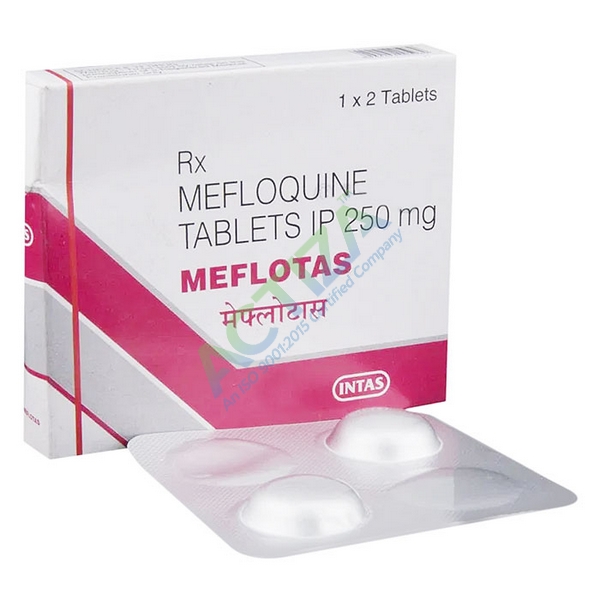
Mefloquine 250 Mg (Mefloquine)

Medically reviewed by Sanjay Gangani, B.Pharm, CMO & Pharmacist

Active Ingredient Mefloquine
Indication Malaria
Manufacturer Intas Pharmaceuticals Ltd
Strength:- 250mg
Packaging 2 tablets in strip
Dosage Form:- Tablet
Country of Origin India

Mefloquine 250 Mg (Mefloquine)

Pack Size Price Price/unit Quantity Add To Cart
50 Tablet/s $55.5 $1.11/Pill
100 Tablet/s $96.2 $0.96/Pill
200 Tablet/s $162.8 $0.81/Pill

What is Mefloquine 250 mg

  • Mefloquine is a prescription antimalarial tablet.

  • It belongs to the quinoline-methanol class.

  • It is taken once a week, not daily.

  • Falcigo Plus is used to prevent malaria in travellers.

  • It is also used to treat uncomplicated malaria.

  • It is active against Plasmodium falciparum and Plasmodium vivax.

  • In India it is sold under several brand names.

  • Meflotas 250 is marketed by Cipla Ltd, Mumbai.

  • Meflar is made by Acron Pharmaceuticals, Ahmedabad.

  • Mqf is a further 250 mg brand listed in India.

  • A doctor must prescribe it before purchase.

Product identity

FieldDetail
Generic nameMefloquine (as mefloquine hydrochloride)
Strength on carton250 mg
Actual drug content228.0 mg base (US) or 250 mg base (UK)
Dosage formFilm-coated or plain tablet, oral
Drug classQuinoline-methanol antimalarial
Primary useMalaria prophylaxis and treatment
Dosing frequencyOnce weekly for prevention
Indian brands checkedMefliam (Cipla), Meflar (Acron), Mqf
Mefliam pack and MRPPack of 6, MRP Rs. 295.01 (Rs. 276.57 current)
Meflar pack and MRPStrip of 10, MRP Rs. 380.00
Mqf pack and MRPStrip of 2, MRP Rs. 86.06
Prescription statusPrescription required
Reference labels usedUS FDA label and UK SmPC

How it works (mechanism of action)

  • Malaria parasites live inside red blood cells.

  • There they digest haemoglobin for food.

  • Digestion releases toxic free haem.

  • The parasite normally locks this haem away safely.

  • Mefloquine acts on the parasite blood stages.

  • Mefloquine acts on the parasite blood stages.

  • It is a blood schizonticide.

  • It kills the forms that multiply in red cells.

  • This stops the infection from growing.

  • It does not kill liver forms of Plasmodium vivax.

  • So relapse prevention needs a separate drug.

  • Primaquine is the drug used for that purpose.

  • Resistant parasite strains do exist.

  • They have been reported in multidrug-resistant South-East Asia.

  • Cross-resistance with halofantrine and quinine is seen in some regions.

Dosage guide

Doses below are from the official labels. Your doctor decides yours.

Adult prevention (prophylaxis)

ItemUS FDA labelUK SmPC
Weekly doseOne 250 mg tabletOne tablet, about 5 mg/kg
First dose1 week before arrival10 days before departure
Second doseOne week later3 days before departure
During the staySame day each weekSame day each week
After leavingContinue 4 weeksContinue 4 weeks
Minimum courseNot specified6 weeks
Maximum durationNot specified12 months

Child prevention, by body weight

Body weightUS FDA label weekly doseUK SmPC weekly dose
5 to 19 kgLimited experience under 20 kgOne quarter tablet
20 to 30 kgHalf tablet (125 mg)Half tablet
30 to 45 kgThree quarter tablet (187.5 mg)Three quarter tablet
Over 45 kgOne tablet (250 mg)One tablet

Treatment of uncomplicated malaria

Regimen sourceAdult total doseHow it is given
US FDA label1250 mg, five tabletsSingle oral dose
US CDC1250 mg total750 mg, then 500 mg after 6 to 12 hours
UK SmPC20 to 25 mg/kgTwo or three doses, 6 to 8 hours apart
UK SmPC, over 60 kgSix tabletsSplit across the doses above
  • India reserves treatment for artemisinin combinations instead.

  • Do not repeat a course that has already failed.

  • Do not use it to treat malaria that broke through prophylaxis.

  • If there is no improvement in 48 to 72 hours, change drug.

  • Wait at least 12 hours after a last quinine dose.

How to take it

  • Take the tablet just after your main meal.

  • Never take it on an empty stomach.

  • Food raises absorption by about 40%.

  • Swallow it with at least 240 mL of water.

  • That is about one full cup.

  • Swallow the tablet whole for prevention doses.

  • Choose one weekday and keep to it every week.

  • Set a weekly phone reminder on that day.

  • Continue for the full four weeks after you return.

  • If you vomit within 30 minutes, repeat the full dose.

  • If you vomit after 30 to 60 minutes, take an extra half dose.

  • Report dizziness, nightmares or low mood immediately.

  • Tablets may be crushed and mixed for small children.

  • Ask the pharmacist how to split a tablet accurately.

Precautions

Absolute contraindications

  • Known allergy to mefloquine, quinine or quinidine.

  • Allergy to any ingredient in the tablet.

  • Prophylaxis if you have active depression.

  • Prophylaxis if you have a past history of depression.

  • Prophylaxis with generalised anxiety disorder.

  • Prophylaxis with psychosis or schizophrenia.

  • Prophylaxis with any other major psychiatric disorder.

  • Prophylaxis after a suicide attempt or suicidal thoughts.

  • Prophylaxis after self-endangering behaviour.

  • Any history of convulsions or seizures.

  • Taking halofantrine now or within the last 15 weeks.

  • A past history of Blackwater fever.

  • Severe liver impairment.

Conditions to disclose to your doctor

  • Any mental health diagnosis, past or present.

  • Any episode of depression, anxiety or panic.

  • Any seizure, fit or epilepsy diagnosis.

  • Any heart rhythm problem or long QT diagnosis.

  • Any liver disease or hepatitis.

  • Any kidney disease.

  • Pregnancy, planned pregnancy or breastfeeding.

  • Every medicine you take, including herbal products.

  • Any anticonvulsant, antidepressant or antipsychotic.

  • Any anticoagulant or diabetes medicine.

  • Any planned diving, flying or machine operation.

  • Any upcoming oral live typhoid vaccination.

Food and drink precautions

  • Always take the dose after a full meal.

  • Food increases how much drug reaches the blood.

  • Drink a full cup of water with each tablet.

  • Avoid alcohol while taking this medicine.

  • Alcohol can add to dizziness and low mood.

  • Keep fluid intake normal in hot climates.

  • No specific food interaction is listed on the labels.

Before-use safety checklist

  • Confirm the carton says base or hydrochloride.

  • Confirm your doctor prescribed this exact strength.

  • Confirm no personal or family psychiatric history applies.

  • Confirm you have never had a seizure.

  • Confirm you took no halofantrine in 15 weeks.

  • Confirm you took no ketoconazole in 15 weeks.

  • Count the tablets needed for your whole trip.

  • Add four weeks of doses for after you return.

  • Check the expiry date on the strip.

  • Fix the weekly dosing day with your doctor.

  • Start early enough to test how you tolerate it.

  • Finish any oral typhoid vaccine three days before.

  • Agree a written plan for what symptoms to report.

Side effects

Common side effects

Side effectWhat to do
DizzinessAvoid driving and report it to your doctor
NauseaTake the dose after a fuller meal
VomitingFollow the repeat-dose rules in section 4
HeadacheReport if severe or persistent
DiarrhoeaKeep fluids up and tell your doctor
Abdominal painReport if persistent
Loss of appetiteMonitor and report weight loss
Muscle painReport if it limits movement
FatigueRest and report if it worsens
Ringing in the earsStop and contact your doctor
Skin rashStop and contact your doctor
Fever and chillsMay be malaria itself, seek review

Less common but serious side effects

Side effectWhy it matters
Anxiety or panicMay be an early sign of a serious reaction
DepressionMay persist for months after stopping
Nightmares or insomniaRecognised early warning sign
ConfusionRecognised early warning sign
Paranoia or mistrustNeeds the drug stopped and reviewed
HallucinationsNeeds urgent medical review
Suicidal thoughtsNeeds emergency medical help
Vertigo or loss of balanceMay be persistent or permanent
ConvulsionsNeeds emergency care
QT prolongation on ECGA heart rhythm risk
Liver injuryWatch for jaundice and dark urine
AgranulocytosisLow white cells, infection risk
Aplastic anaemiaBone marrow failure, rare
  • Dizziness, vertigo and balance loss may become permanent.

  • Depression and dizziness may last months after stopping.

Drug interactions – avoid with

Drug or groupWhy it must be avoided or watched
HalofantrineContraindicated now and for 15 weeks after
KetoconazoleRaises levels, QT risk, same 15-week window
Quinine or quinidineECG abnormalities, wait 12 hours after quinine
ChloroquineECG abnormalities and seizure risk
Antiarrhythmic drugsAdded QT prolongation
Beta-blockersAdded QT prolongation
Calcium channel blockersAdded QT prolongation
AntihistaminesAdded QT prolongation
Tricyclic antidepressantsQT risk and lower seizure threshold
PhenothiazinesAdded QT prolongation
Valproate, carbamazepineTheir levels may fall, monitor
Phenobarbital, phenytoinTheir levels may fall, monitor
SSRIs and bupropionLower the seizure threshold
AntipsychoticsLower the seizure threshold
TramadolLowers the seizure threshold
RifampicinLowers mefloquine levels
EfavirenzMay change mefloquine levels
PropranololOne report of cardiopulmonary arrest
Oral live typhoid vaccineFinish it 3 days before the first dose
AnticoagulantsCheck response before travel
Diabetes medicinesCheck response before travel

Emergency warning signs

  • Stop the tablet and get help for any of these.

  • Suicidal thoughts or thoughts of self-harm.

  • Hallucinations, hearing or seeing things.

  • Severe paranoia or feeling others mean you harm.

  • A seizure, fit or convulsion.

  • Sudden severe confusion or disorientation.

  • Severe depression or sudden mood collapse.

  • Severe vertigo or inability to stand.

  • Fainting, blackout or a racing heartbeat.

  • Yellow eyes or skin, or very dark urine.

  • Widespread rash, blisters or peeling skin.

  • Fever with mouth ulcers or a bad sore throat.

  • Unusual bruising or bleeding.

  • Carry the pack or wallet card to the hospital.

  • Tell staff the exact date of your last dose.

  • There is no specific antidote for overdose.

  • Overdose care is supportive, with ECG and mental state checks.

Why choose this medicine

  • It is dosed once a week, not every day.

  • Weekly dosing is easier to remember on long trips.

  • It can be used for stays of several months.

  • India approves it for stays beyond six weeks.

  • It may be continued for up to 12 months in the UK.

  • It covers both falciparum and vivax blood stages.

  • It may be considered in pregnancy within approved indications.

  • It is available as low-cost Indian brands.

  • Per-tablet cost ranges from about Rs. 38 to Rs. 46.

Reasons it may not suit you

  • Any psychiatric history bars preventive use.

  • Any seizure history bars it completely.

  • Some side effects may never fully resolve.

  • Resistance limits its use in parts of South-East Asia.

  • Daily alternatives exist and may suit you better.

  • Discuss alternatives with your doctor before travel.

Storage instructions

  • Store below 30 degrees Celsius.

  • Keep in a cool, dry place.

  • Keep away from direct sunlight and heat.

  • Protect the strip from moisture.

  • Leave tablets in the original strip until use.

  • Do not store in a bathroom cabinet.

  • Keep out of reach of children and pets.

  • Check the expiry date before each weekly dose.

  • Do not use tablets that are chipped or discoloured.

  • Return unused tablets to a pharmacy for disposal.

Sanjay Gangani

Sanjay Gangani

B.Pharm, CMO & Pharmacist

Licensed pharmacist (B.Pharm) with 12+ years in clinical pharmacy and patient care. Reviews every article for evidence-based accuracy before it is published on ACTIZA Store.

Reviews

There are no reviews yet.

Be the first to review “Mefloquine 250 Mg (Mefloquine)”

Your email address will not be published. Required fields are marked *

This site uses Akismet to reduce spam. Learn how your comment data is processed.

All Categories

Shopping Cart

0
×

Loading cart...