...

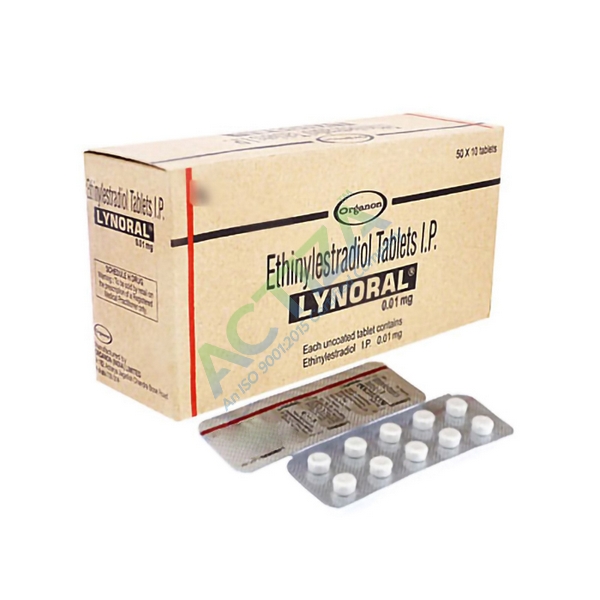
Lynoral Tablet (Ethinyl Estradiol)

Medically reviewed by Sanjay Gangani, B.Pharm, CMO & Pharmacist

Active Ingredient Ethinyl Estradiol
Indication Contraception, Hormone replacement therapy
Packaging 10 Tablets in Strip
Manufacturer Organon (India) Ltd

Lynoral Tablet (Ethinyl Estradiol)

Pack Size Price Price/unit Quantity Add To Cart
30 Tablet/s $10 $0.33/Pill
60 Tablet/s $20 $0.33/Pill
90 Tablet/s $30 $0.33/Pill

What is Lynoral?

  • Lynoral is a prescription tablet containing ethinylestradiol.

  • Ethinylestradiol is a synthetic form of the female hormone oestrogen.

  • Organon (India) Ltd manufactures it.

  • It is supplied in Lynoral 0.05 mg and 0.05 mg strengths.

  • Those are 10 micrograms and 50 micrograms respectively.

  • Strips contain ten tablets.

  • It is classified under Schedule H and requires a prescription.

  • Conditions caused by low oestrogen levels.

  • Female hypogonadism, where the ovaries do not develop or function.

  • Menopausal symptoms, as part of hormone replacement therapy.

  • Certain menstrual disorders.

  • Palliative treatment of some cancers, as a specialist decision.

  • Confirm which of these appear on your own Indian package insert.

What it is not

  • It is not a contraceptive when taken on its own.

  • It is not a complete hormone replacement regimen for a woman with a uterus.

  • It does not delay puberty. It would advance it.

  • It is not a treatment for breast cancer in any general sense.

  • It is not interchangeable with estradiol tablets.

  • It is not a medicine to take without medical supervision.

  • 0.05 mg is five times the dose of 0.01 mg.

  • 50 micrograms of ethinylestradiol is a high oestrogen dose by modern standards.

  • Modern combined contraceptive pills typically use 20 to 35 micrograms.

  • Higher oestrogen doses carry higher clot risk.

  • The strengths are not interchangeable and must not be substituted.

  • Check which strength the prescription specifies before dispatch.

How It Works (Mechanism of Action)

  • Oestrogen receptors are present in many tissues throughout the body.

  • They are found in the womb, breasts, vagina, bones, liver and blood vessels.

  • Ethinylestradiol binds those receptors in place of natural oestrogen.

  • The receptor complex then switches particular genes on or off.

  • In the womb lining, the result is growth and thickening.

  • In bone, the result is reduced bone breakdown.

  • In the brain, the result includes relief of hot flushes.

  • In the liver, the result includes changes to clotting proteins.

  • Natural estradiol is largely broken down as it passes through the liver.

  • The ethinyl group on ethinylestradiol prevents much of that breakdown.

  • More of the drug survives, which is why it works well as a tablet.

  • But it also means the liver is exposed to a strong oestrogen signal.

  • The liver responds by altering production of clotting factors.

  • Protein S and antithrombin fall. Resistance to activated protein C rises.

  • All three changes favour clot formation.

  • This is the pharmacological basis for the clotting risk.

Comparing the two oestrogens

PropertyEthinylestradiol17-beta-estradiol
SourceSynthetic modificationIdentical to the body’s own oestrogen
Survives the liverYes, extensivelyLargely broken down
Hepatic clotting effectsPotentConsiderably weaker
Main modern roleThe oestrogen in combined contraceptivesHormone replacement therapy
Position in hormone therapyLargely abandonedThe current standard
Transdermal optionNot used this wayAvailable, and lowest clot risk

That table is the single most useful thing a customer can take from this page. If an oestrogen is needed, the choice of which oestrogen is a real clinical decision with real consequences.

Dosage Guide

A doctor must prescribe and set this. Dosing depends entirely on the condition being treated.

SituationApproachProgestogen needed?Notes
Woman with a uterus, any oestrogen useAs prescribedYES, alwaysProtects the womb lining
Woman after hysterectomyAs prescribedNoNo endometrium to protect
Female hypogonadismSpecialist regimenYes if uterus presentLong-term endocrine supervision
Menopausal symptomsLowest effective doseYes if uterus presentShortest duration consistent with goals
Palliative oncology useSpecialist onlyNot applicableAn oncology decision, not a pharmacy one
ContraceptionNot applicableNot applicableThis is not a contraceptive
PregnancyContraindicatedNot applicableStop immediately if pregnancy occurs
Review intervalAt least annuallyNot applicableBenefit and risk reassessed each time

How to Take It

  • Confirm with a doctor which strength you have been prescribed.

  • Confirm whether you also need a progestogen.

  • Take one tablet daily, or as specifically directed.

  • Swallow it whole with water.

  • It may be taken with or without food.

  • Take it at the same time each day.

  • Do not stop or change the dose without medical advice.

  • Attend every review appointment.

What to report, and when

  • Any vaginal bleeding that is unexpected, heavy or prolonged.

  • Any bleeding after the menopause.

  • Any new breast lump.

  • Breakthrough bleeding that persists beyond the first few months.

  • These need investigation rather than reassurance.

  • Unexplained bleeding is the main early warning of endometrial change.

  • Smoking, particularly from age 35 onwards.

  • Long periods of immobility, including long flights.

  • Major surgery, especially with prolonged bed rest.

  • Significant overweight.

  • Dehydration

  • A personal or family history of clots.

  • Tell your doctor before any planned surgery.

  • Oestrogen is usually stopped several weeks beforehand.

Precautions

Contraindications

  • Known or suspected pregnancy.

  • Breastfeeding.

  • Known, suspected or past breast cancer.

  • Any known or suspected oestrogen-dependent tumour.

  • Undiagnosed abnormal genital bleeding.

  • Current or past deep vein thrombosis or pulmonary embolism.

  • Current or past arterial clotting disease, including stroke and heart attack.

  • Known inherited clotting disorder.

  • Active liver disease, or liver function that has not returned to normal.

  • Known hypersensitivity to ethinylestradiol or any excipient.

  • Porphyria.

Tell your doctor about

  • Whether you still have a uterus.

  • Whether you have been prescribed a progestogen alongside this.

  • Any personal or family history of blood clots.

  • Any personal or family history of breast cancer.

  • Any liver or gallbladder disease.

  • High blood pressure.

  • Diabetes.

  • Raised triglycerides, because of pancreatitis risk.

  • Migraine, particularly migraine with aura.

  • Epilepsy or asthma, which oestrogen can aggravate.

  • Fibroids or endometriosis, which oestrogen can stimulate.

  • Lupus.

  • Thyroid problems, since oestrogen alters thyroid test results.

  • Whether you smoke, and your age.

  • Any planned surgery or period of immobility.

  • Every other medicine you take, including herbal products.

Food, drink and daily life

  • No specific food restriction applies.

  • Take it consistently with respect to meals.

  • Grapefruit juice can raise oestrogen levels. Avoid large amounts.

  • Alcohol raises circulating oestrogen levels. Keep intake modest.

  • Move regularly on long journeys to reduce clot risk.

  • Keep well hydrated.

  • Weight-bearing exercise supports bone health.

  • Attend breast screening as recommended for your age.

  • Report any new breast lump promptly regardless of screening dates.

Before-use checklist

  • Has a doctor prescribed this specifically for me?

  • Do I still have a uterus?

  • If so, have I been prescribed a progestogen as well?

  • Do I understand this is not a contraceptive?

  • If I need contraception, is a separate method arranged?

  • Could I be pregnant?

  • Have I ever had a blood clot, stroke or heart attack?

  • Have I ever had breast cancer?

  • Do I smoke, and am I 35 or over?

  • Has my blood pressure been checked?

  • Have I discussed whether estradiol would be more appropriate?

  • Do I know the emergency signs in Section 8?

Side Effects

Common effects

  • Nausea, especially in the first weeks.

  • Headache.

  • Breast tenderness, pain or enlargement.

  • Bloating and fluid retention.

  • Abdominal cramps.

  • Vaginal spotting or breakthrough bleeding.

  • Mood changes.

  • Weight change.

  • Most settle over the first few months of treatment.

Serious effects

AreaWhat has been reported
ClottingDeep vein thrombosis, pulmonary embolism, stroke, heart attack
WombEndometrial hyperplasia and endometrial cancer with unopposed use
BreastIncreased breast cancer risk with prolonged hormone therapy
EyesRetinal vein thrombosis, visual disturbance, contact lens intolerance
LiverCholestatic jaundice, gallstones, altered liver function, liver tumours
Blood pressureA rise in blood pressure
MetabolicRaised triglycerides, pancreatitis, impaired glucose tolerance
SkinChloasma, which is brown facial patching, and may persist
MoodDepression and mood disturbance
Existing conditionsWorsening of fibroids, endometriosis, migraine, asthma, epilepsy, lupus

Drug Interactions – Avoid With

EffectSubstanceWhat happens
REDUCES ITRifampicin and rifabutinStrong enzyme inducers. Oestrogen levels fall markedly.
REDUCES ITCarbamazepine, phenytoin, phenobarbital, primidoneEnzyme induction. Treatment may become ineffective.
REDUCES ITTopiramate, oxcarbazepine at higher dosesEnzyme induction
REDUCES ITEfavirenz and some antiretroviralsEnzyme induction
REDUCES ITSt John’s WortHerbal enzyme inducer, widely sold without prescription
RAISES ITKetoconazole, itraconazole, clarithromycinEnzyme inhibition. Levels rise.
RAISES ITGrapefruit juice in quantityEnzyme inhibition
TWO-WAYLamotrigineOestrogen lowers lamotrigine levels, risking seizures
MONITORThyroid replacement therapyA higher thyroid dose may be needed
MONITORCiclosporinLevels may rise
MONITORDiabetes medicinesGlucose tolerance may change
CAUTIONAny other oestrogen-containing productDuplicated oestrogen dosing
  • The enzyme inducer group matters most in practice.

  • They can render hormone therapy ineffective without any obvious sign.

  • St John’s Wort is the one most often missed, because it is bought freely.

  • Tell your doctor and pharmacist about every product you take.

Emergency Warning Signs

Stop the tablets and seek urgent medical care if any of these occur.

  • Pain, swelling, warmth or redness in one leg.

  • Sudden breathlessness or sharp chest pain.

  • Coughing up blood.

  • Sudden severe headache unlike your usual headaches.

  • Weakness or numbness on one side of the body.

  • Sudden difficulty speaking or understanding speech.

  • Sudden loss or disturbance of vision in one or both eyes.

  • Any vaginal bleeding after the menopause.

  • Unexpected, heavy or prolonged vaginal bleeding at any age.

  • A new lump in the breast.

  • Yellowing of the skin or the whites of the eyes.

  • Severe upper abdominal pain, which may indicate gallbladder or pancreas.

  • A marked rise in blood pressure.

  • Severe low mood or thoughts of self-harm.

  • A first-ever migraine with visual symptoms.

Why This Product Is Prescribed, and What to Weigh

What holds up

  • Oestrogen replacement genuinely treats the symptoms of oestrogen deficiency.

  • It relieves hot flushes, vaginal dryness and related symptoms effectively.

  • It protects bone density and reduces fracture risk.

  • In young women with ovarian failure, replacement is not optional but necessary.

  • Ethinylestradiol is reliably absorbed and works predictably as a tablet.

  • Organon is a substantial manufacturer with a long history in this field.

  • The product is established, consistently labelled and inexpensive.

  • A 0.01 mg strength allows relatively low-dose use.

  • Used alone by a woman with a uterus, it raises endometrial cancer risk.

  • Ethinylestradiol has stronger hepatic clotting effects than estradiol.

  • Hormone therapy has largely moved to estradiol for that reason.

  • It is not a contraceptive, whatever two listings state.

  • It does not delay puberty, and one listing says otherwise.

  • Breast cancer is a contraindication, not an indication.

  • The 0.05 mg strength is a high oestrogen dose by modern standards.

Storage Instructions

  • Store below 30 °C unless your pack states otherwise.

  • Keep tablets sealed in the strip until taken.

  • Protect from direct sunlight, heat and moisture.

  • Gujarat summer temperatures regularly exceed typical storage limits.

  • Do not refrigerate and do not freeze.

  • Bathrooms and parked cars are the two worst storage places.

  • Keep well out of the reach of children.

  • Accidental ingestion by a child needs medical advice.

  • Keep the two strengths clearly separated if you hold both.

  • Do not use tablets that are chipped, discoloured or damaged.

  • Do not use after the printed expiry date.

  • Return unused tablets to a pharmacy for disposal.

  • Never share this medicine with anyone else.

Sanjay Gangani

Sanjay Gangani

B.Pharm, CMO & Pharmacist

Licensed pharmacist (B.Pharm) with 12+ years in clinical pharmacy and patient care. Reviews every article for evidence-based accuracy before it is published on ACTIZA Store.

Reviews

There are no reviews yet.

Be the first to review “Lynoral Tablet (Ethinyl Estradiol)”

Your email address will not be published. Required fields are marked *

This site uses Akismet to reduce spam. Learn how your comment data is processed.

All Categories

Shopping Cart

0
×

Loading cart...