...

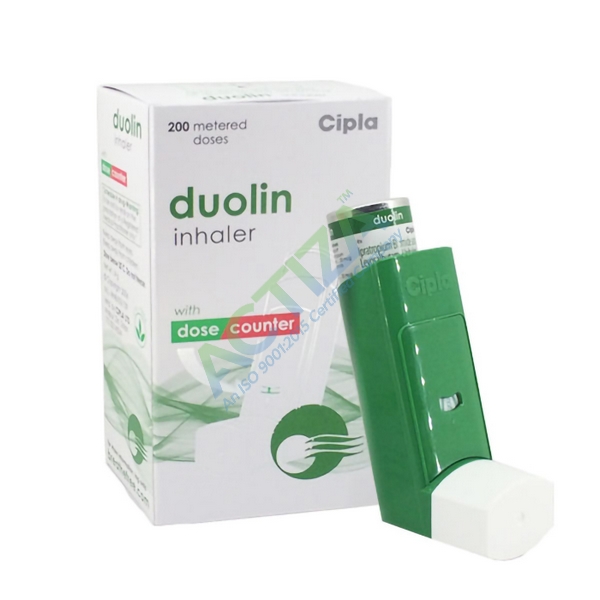
Duolin Inhaler (Levosalbutamol/Ipratropium)

Medically reviewed by Sanjay Gangani, B.Pharm, CMO & Pharmacist

Active Ingredient Levosalbutamol/Ipratropium
Indication Chronic obstructive pulmonary disorder (COPD)
Manufacturer Cipla Limited
Packaging 200 MDI in 1 Inhaler

Duolin Inhaler (Levosalbutamol/Ipratropium)

Pack Size Price Price/unit Quantity Add To Cart
1 Inhaler $20 $20.00/Pill
2 Inhaler/s $35 $17.50/Pill
3 Inhaler/s $49 $16.33/Pill

What is Duolin Inhaler?

  • Duolin is a prescription metered dose inhaler from Cipla.

  • Each puff delivers two different bronchodilators together.

  • Levosalbutamol 50 micrograms is a short-acting beta-2 agonist.

  • Ipratropium bromide 20 micrograms is a short-acting anticholinergic.

  • A canister contains 200 metered doses.

  • It uses a CFC-free propellant.

  • Cipla also makes a Duolin Rotacaps version for a dry powder device.

  • Salbutamol, known as albuterol in some countries, is a mixture of two mirror-image forms.

  • Only one of those two forms, the R-isomer, produces the bronchodilation.

  • Levosalbutamol is that active form isolated on its own.

  • The theory was that removing the inactive half would reduce side effects.

  • In practice the clinical advantage over ordinary salbutamol is debated.

  • Both work. Levosalbutamol is widely used in India.

What it is used for

  • Relieving wheeze, breathlessness and chest tightness.

  • Chronic obstructive pulmonary disease is the main indication.

  • Asthma, as a reliever alongside other treatment.

  • Prevention and treatment of bronchospasm in reversible airway disease.

  • It is not a steroid and contains no steroid.

  • It is not a preventer or controller inhaler.

  • It does not reduce airway inflammation.

  • It does not prevent asthma attacks from developing.

  • It is not a long-acting inhaler and does not last all day.

  • It is not a substitute for a steroid inhaler in asthma.

  • It does not treat chest infections.

How It Works (Mechanism of Action)

Levosalbutamol, the beta-2 agonist half

  • Airway muscle carries receptors called beta-2 receptors.

  • Levosalbutamol stimulates those receptors.

  • This raises a messenger called cyclic AMP inside the muscle cell.

  • Calcium levels inside the cell fall as a result.

  • Muscle needs calcium to contract, so it relaxes instead.

  • The airway widens and air moves more freely.

  • This begins within minutes, which is why it is a reliever.

  • Nerves release acetylcholine onto the airway muscle.

  • Acetylcholine binds muscarinic receptors and makes the muscle tighten.

  • That tightening is a constant background tone in the airways.

  • Ipratropium blocks those muscarinic receptors.

  • The background tightening signal is removed.

  • The airway relaxes further.

  • It also reduces mucus secretion in the airways.

Why combining them makes sense

  • The two act through completely separate receptor systems.

  • One stimulates relaxation, the other removes a constricting signal.

  • Together they open the airway more than either does alone.

  • This is particularly useful in COPD, where cholinergic tone is prominent.

  • Ipratropium is slower to start but lasts somewhat longer.

  • Levosalbutamol starts faster but fades sooner.

  • The combination therefore gives both speed and a slightly longer effect.

  • Neither reduces the inflammation inside the airway wall.

  • Neither reduces the swelling of the airway lining.

  • Neither prevents the next attack from building.

  • In asthma, inflammation is the disease. This treats its consequence.

  • That is why a steroid inhaler is the foundation of asthma treatment.

  • A reliever is what you use when the foundation is not holding.

Dosage Guide

A doctor sets this. The figures below reflect the usual labelling for this combination.

SituationDoseFrequencyNotes
Adults, usualTwo puffsUp to four times dailyAs prescribed, not as wanted
ChildrenAs prescribedAs prescribedA doctor must specify. Use a spacer.
Asthma, as relieverAs prescribedOnly when neededIf needed more than twice weekly, seek review
Asthma, alongsideNot applicableNot applicableA steroid inhaler should also be prescribed
Before exercise, if advisedAs prescribedShortly before activityOnly if your doctor has advised this
MaximumSet by the doctorDo not exceedExceeding it is a reason to seek help, not to continue
Missed doseTake when rememberedThen resumeNever double up. This is an as-needed medicine.

How to Use It

Priming a new inhaler

  • A new canister must be primed before the first use.

  • Shake it and fire a test spray into the air, away from your face.

  • Follow the number of test sprays your own leaflet specifies.

  • Prime it again if it has not been used for several days.

  • An unprimed inhaler delivers an unreliable first dose.

  • Shake the inhaler and fit it into the end of the spacer.

  • Breathe out gently, away from the spacer.

  • Seal your lips around the spacer mouthpiece.

  • Press the canister once to fire a dose into the chamber.

  • Breathe in and out slowly through the spacer four or five times.

  • Remove the spacer and wait thirty seconds before any second puff.

  • Shake again before that second puff.

Rinsing and cleaning

  • Rinse your mouth with water after use and spit it out.

  • This reduces dry mouth and throat irritation.

  • Wash the plastic actuator weekly in warm water and let it air dry.

  • Remove the metal canister first. Do not wash the canister.

  • Wash the spacer weekly in warm soapy water.

  • Let the spacer drip dry. Do not rub it with a cloth.

  • Rubbing creates static that attracts the medicine to the walls.

  • Write the date you started the canister on its side.

  • Work out how long 200 doses will last at your prescribed dose.

  • Order a replacement a week before that date.

  • Keep a spare reliever if your doctor agrees to one.

  • Never rely on a canister whose remaining contents are unknown.

Keeping the spray out of your eyes

  • This matters specifically because of the ipratropium component.

  • Ipratropium reaching the eye can raise pressure inside it.

  • In susceptible people this can trigger acute angle-closure glaucoma.

  • That is a sight-threatening emergency.

  • With an inhaler, seal your lips properly around the mouthpiece.

  • With a nebuliser mask, make sure it fits closely to the face.

  • Report eye pain, blurred vision or halos around lights immediately.

Precautions

Contraindications

  • Known hypersensitivity to levosalbutamol or salbutamol.

  • Known hypersensitivity to ipratropium or to atropine and related compounds.

  • Known hypersensitivity to any other ingredient in the inhaler.

Tell your doctor about

  • Glaucoma, particularly narrow-angle glaucoma.

  • Any eye condition, and whether you have had eye surgery.

  • An enlarged prostate or any difficulty passing urine.

  • Any bladder outlet obstruction.

  • Any heart condition, including rhythm problems and angina.

  • High blood pressure.

  • An overactive thyroid.

  • Diabetes, because beta agonists can raise blood sugar.

  • Low potassium levels, or medicines that lower them.

  • Seizures or epilepsy.

  • Pregnancy, planned pregnancy or breastfeeding.

  • Whether you have a preventer inhaler, and whether you use it.

  • How many reliever canisters you have used in the last year.

  • Every other medicine you take, including eye drops.

Practical daily points

  • Food and drink do not affect this inhaler.

  • Rinse your mouth after each use.

  • Mild hand tremor and a faster heartbeat after a dose are common and usually settle.

  • Report palpitations that persist or feel irregular.

  • Smoking undermines every part of asthma and COPD treatment.

  • Stopping smoking is the single most effective step in COPD.

  • Carry the reliever with you. It is useless in a drawer at home.

  • Make sure family members know where it is kept.

Before-use checklist

  • Do I have a prescription, and do I know my diagnosis?

  • Do I know whether this is for asthma or COPD?

  • If asthma, do I also have a steroid preventer inhaler?

  • Am I actually using that preventer every day?

  • How many reliever canisters have I used this year?

  • Do I need this more than twice a week?

  • Has my inhaler technique been checked by a professional?

  • Do I have a spacer, and do I use it?

  • Have I primed a new canister before first use?

  • Do I know how many doses are left?

  • Do I have a written asthma or COPD action plan?

  • Do I know the emergency signs in Section 8?

Side Effects

Common effects

  • Fine tremor, usually of the hands.

  • Headache.

  • Faster heartbeat or awareness of the heartbeat.

  • Dry mouth, mainly from the ipratropium.

  • Throat irritation or a cough just after inhaling.

  • A bitter or unusual taste.

  • Nervousness or feeling jittery.

  • Dizziness.

  • Most of these are dose-related and settle as the dose wears off.

Less common and serious effects

WhereWhat has been reported
AirwaysParadoxical bronchospasm, meaning worsening breathing after a dose
HeartPalpitations, irregular rhythm, chest pain, rarely more serious arrhythmias
EyesBlurred vision, eye pain, halos, raised eye pressure, acute angle-closure glaucoma
UrinaryDifficulty passing urine, urinary retention, particularly with prostate enlargement
Blood chemistryLow potassium, which can be significant at high doses
MetabolicRaised blood sugar, raised lactate at high doses
DigestiveNausea, vomiting, constipation, dry mouth
Nervous systemRestlessness, insomnia, rarely seizures
MusclesMuscle cramps
AllergyRash, hives, swelling of the face or throat, rarely anaphylaxis

Drug Interactions – Avoid With

SeveritySubstanceWhat happens
IMPORTANTBeta blockers, including eye drops such as timololThey oppose this inhaler directly and can trigger bronchospasm
CAUTIONWater tablets, especially loop and thiazide diureticsAdded risk of low potassium
CAUTIONCorticosteroid tabletsAdded risk of low potassium
CAUTIONTheophylline and aminophyllineAdded risk of low potassium and more side effects
CAUTIONDigoxinLow potassium increases digoxin toxicity risk
CAUTIONTricyclic antidepressants and MAOIsMay increase cardiovascular effects of the beta agonist
CAUTIONOther anticholinergic medicinesAdded dry mouth, urinary and eye effects
CAUTIONOther short-acting bronchodilator inhalersDuplicated dosing. Check what else you use.
MONITORDiabetes medicinesBeta agonists can raise blood sugar
  • The beta blocker interaction deserves emphasis.

  • It applies to tablets for blood pressure and heart conditions.

  • It also applies to beta blocker eye drops used for glaucoma.

  • Those eye drops are absorbed and can affect the airways.

  • Tell any eye specialist that you use an inhaler for your chest.

Emergency Warning Signs

Seek emergency care immediately if any of these occur.

Signs of a severe attack

  • Breathlessness so severe you cannot complete a sentence.

  • The reliever is not working, or wears off within an hour or two.

  • Needing the reliever more often than every four hours.

  • Blue or grey lips, tongue or fingertips.

  • Drowsiness, confusion or exhaustion while struggling to breathe.

  • A silent chest, meaning wheeze that has stopped while breathing is still hard.

  • That last sign is particularly serious, not reassuring.

  • Do not drive yourself. Call for help.

  • Breathing becomes worse immediately after a puff.

  • Increased wheeze or chest tightness within minutes of using it.

  • Stop the inhaler and get help at once.

Eye emergency

  • Sudden eye pain with a red eye.

  • Blurred vision or coloured halos around lights.

  • Headache with nausea alongside eye symptoms.

  • This may be acute angle-closure glaucoma and needs care within hours.

  • Chest pain or a pounding irregular heartbeat.

  • Fainting or near fainting.

  • Inability to pass urine.

  • Swelling of the face, lips, tongue or throat.

  • A widespread rash.

  • Severe muscle cramps or weakness.

Why Choose Duolin Inhaler

What holds up

  • Two bronchodilators acting through separate mechanisms in one device.

  • That combination opens airways more than either component alone.

  • Particularly well suited to COPD, where cholinergic tone matters.

  • Relief begins within minutes.

  • One inhaler instead of two improves adherence and simplifies carrying.

  • 200 doses per canister is a reasonable supply.

  • CFC-free propellant.

  • Compatible with a spacer, which the manufacturer specifically notes.

  • Cipla is named consistently across every source checked.

  • A rotacaps version exists for patients who prefer a dry powder device.

What must be said alongside that

  • It contains no steroid and does not treat airway inflammation.

  • In asthma it must not be the only treatment.

  • Guidance has advised against reliever-only asthma treatment since 2019.

  • Using three or more canisters a year is linked to more severe attacks.

  • Twelve or more a year is linked to increased risk of death.

  • Metered dose inhalers are used incorrectly by most patients without training.

  • There is no reliable way to tell when the canister is empty.

  • The ipratropium component carries a specific eye risk if sprayed carelessly.

Storage Instructions

  • Store below 30 °C.

  • Protect from direct sunlight and heat.

  • The canister is pressurised. Do not expose it to temperatures above 50 °C.

  • Do not puncture the canister under any circumstances.

  • Do not burn it or throw it into a fire, even when empty.

  • Do not leave it in a parked car. Indian summer car interiors far exceed safe limits.

  • Do not refrigerate or freeze. Cold reduces the dose delivered.

  • If the inhaler has been cold, warm it in your hands before use.

  • Keep the cap on the mouthpiece when not in use.

  • Check the mouthpiece is clear of dust or debris before each use.

  • Keep out of the reach of children.

  • Do not use after the printed expiry date.

  • Return used or expired canisters to a pharmacy.

  • Never share an inhaler with anyone else.

Sanjay Gangani

Sanjay Gangani

B.Pharm, CMO & Pharmacist

Licensed pharmacist (B.Pharm) with 12+ years in clinical pharmacy and patient care. Reviews every article for evidence-based accuracy before it is published on ACTIZA Store.

Reviews

There are no reviews yet.

Be the first to review “Duolin Inhaler (Levosalbutamol/Ipratropium)”

Your email address will not be published. Required fields are marked *

This site uses Akismet to reduce spam. Learn how your comment data is processed.

All Categories

Shopping Cart

0
×

Loading cart...