


Waking up with red, sticky, irritated eyes can be a pretty rough start. About 80% of acute conjunctivitis cases are viral the most common pathogen being adenovirus.
Adenoviruses are responsible for 65% to 90% of viral conjunctivitis cases[1]. These outbreaks affect schools, workplaces, and communities worldwide. They cause a lot of disruption.
Pink Eye can be a real pain. You might wake up with red, itchy eyes that feel sticky and don’t feel right. This eye condition is incredibly common worldwide but treatable.
Acute conjunctivitis is estimated to affect 20 million people per year in the United States alone[2]. Millions of people face this issue every year, so it’s pretty well-known to people of all ages.
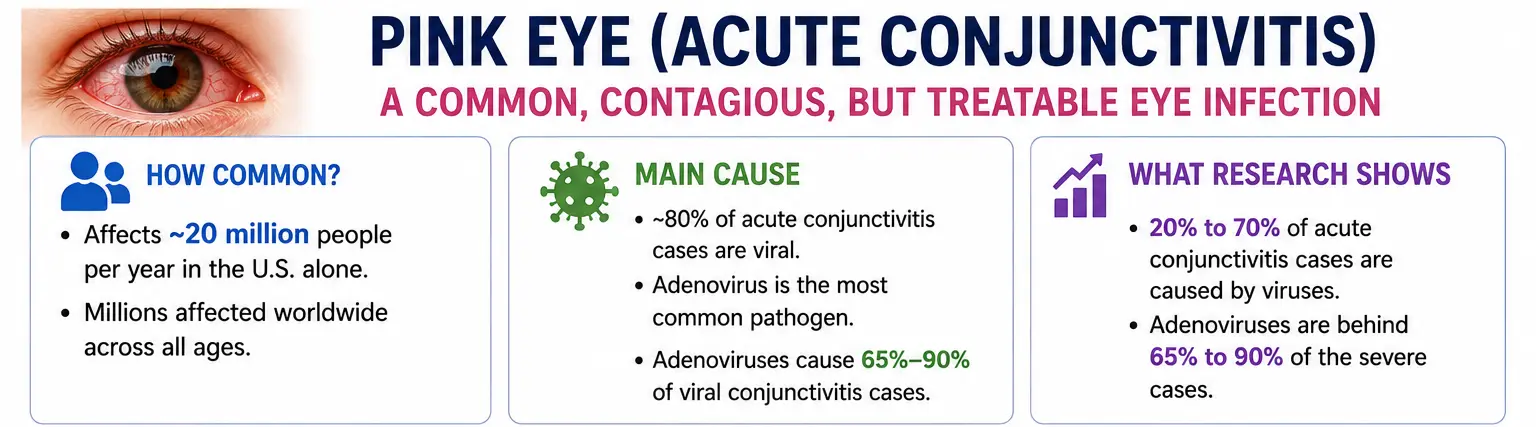
“Research shows that between 20% and 70% of acute conjunctivitis cases are caused by viruses. Adenoviruses are behind 65% to 90% of the really severe cases[3].”
It’s easy for the condition to spread. This makes it possible for outbreaks to hit whole schools, workplaces, and communities. In 2023, India, Pakistan, and Vietnam saw some major outbreaks in a single September day in Punjab, India, health officials tallied 13,000 new cases of pink eye, with over 86,000 cases recorded that month alone.
In Pakistan, the number of afflicted reached nearly 400,000 nationwide[4]. In North Central India, a multicentric study followed 920 patients (1,722 eyes) over one month. The most affected groups were hospital staff at 43% and school-going children at 31%[5].
What Is Pink Eye (Conjunctivitis)?
Conjunctivitis is basically what doctors call pink Eye. It’s basically when the conjunctiva gets swollen. This is the thin layer that covers the white part of your Eye and the inside of your eyelids.
The term “pink eye” comes from the fact that your Eye turns a pinkish-red color when the membrane swells up. It can affect one or both eyes. According to a multicentric study conducted in India in 2024, 94% of the cases involved both eyes[5].
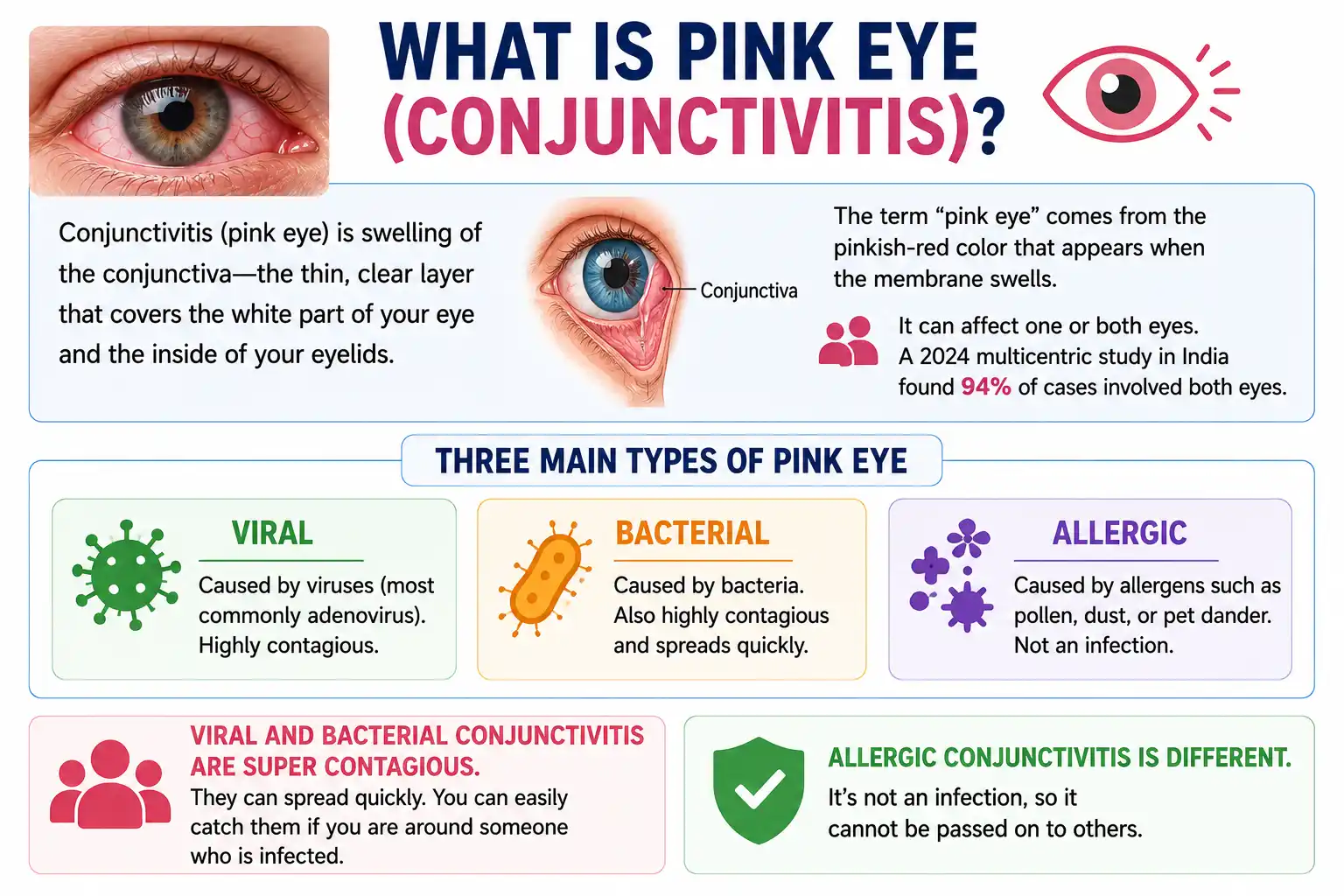
There are three main types of pink Eye. Each has its own set of causes and symptoms.
Viral and bacterial conjunctivitis are super contagious and can spread quick. You’re likely to catch them pretty easily if you’re around someone who’s infected a bit.
Allergic conjunctivitis is different from other types. It’s not an infection, so it can’t be passed on to others.
What Does Pink Eye Look Like? (All Types)
Type 1: Viral Conjunctivitis
When you’ve got viral pink Eye, the whites of your eyes usually turn pink or red. The eyes usually make a watery, clear discharge instead of thick mucus.
This can make them look always wet or teary. Swelling of the eyelids can be pretty mild. Usually, it starts in one Eye and then moves to the other, but sometimes both eyes get affected at the same time.
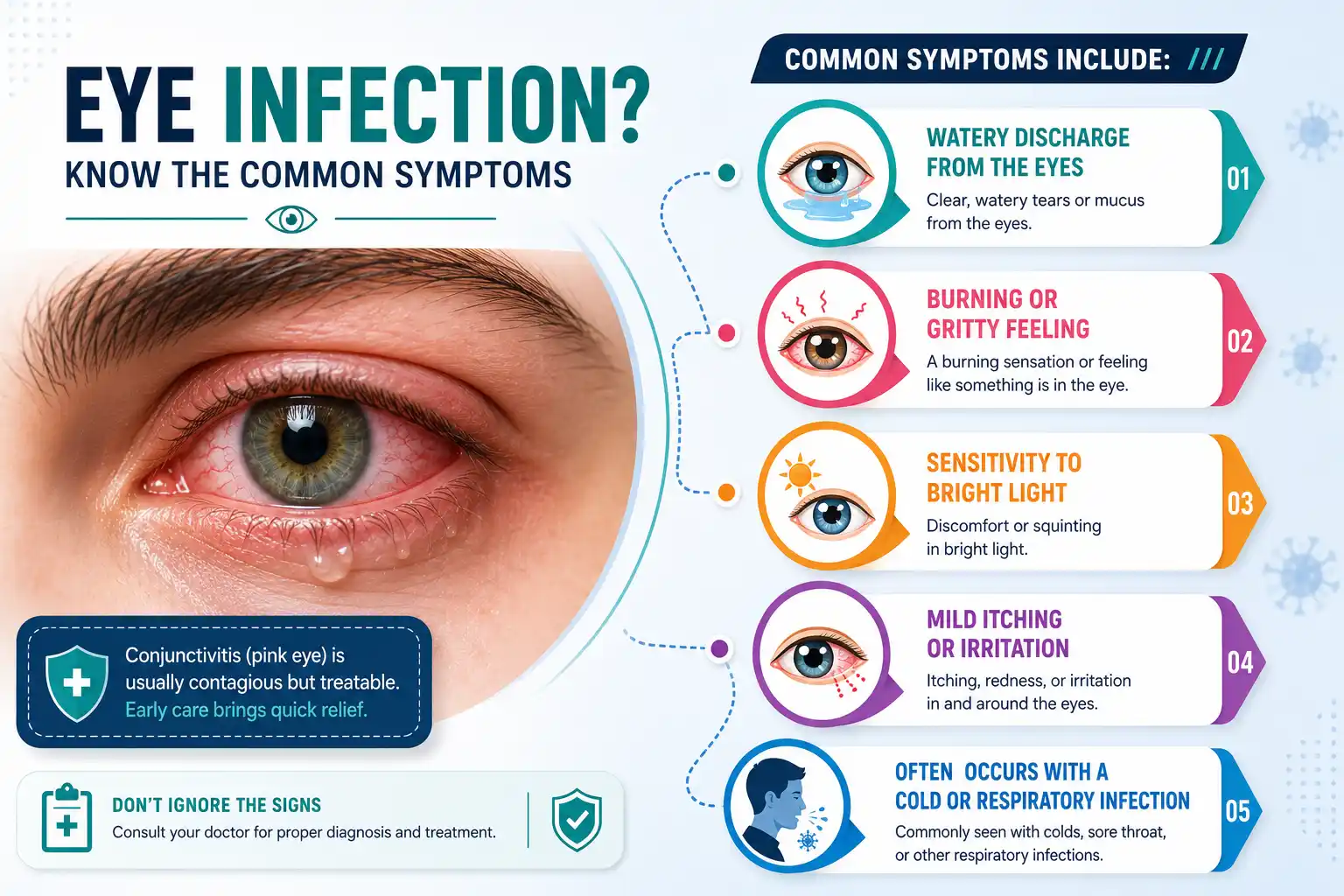
Common symptoms include:
Viral conjunctivitis is the top cause of infectious conjunctivitis these cases are mostly linked to adenoviruses, the same pathogens that often cause common colds[1].
Some viral infections, like herpes simplex and varicella-zoster, are simple, but that doesn’t mean they can’t be serious. Untreated, they can cause vision loss.
How Long Does Viral Pink Eye Last?
Most cases of viral pink Eye usually get better on their own within one to two weeks, and you probably won’t need treatment[1].
Is viral pink Eye contagious?
Yes, viral pink Eye is highly contagious. Some adenoviruses can live on surfaces for 30 days, spreading easily after just one fleeting rub of the eye with a contaminated hand[4]. It spreads through contact with infected eye secretions, coughing, sneezing, and sharing towels or using dirty hands.
Treatment
Most people don’t need antiviral meds. The infection generally clears up by itself. Artificial tears can help calm irritation. Cool compresses lessen redness and swelling. Antiviral eye medicines such as Acyclovir and Ganciclovir are meant for serious conditions, they treat herpes and varicella conjunctivitis[1].
Type 2: Bacterial Conjunctivitis
Bacterial conjunctivitis can lead to redness or a pinkish hue in your eyes. You may also observe a thick discharge that can be yellow, green, or white.
It’s common for eyelids to feel crusty and stick together after sleeping. Puffiness around the eyes is common and can affect one or both eyes.
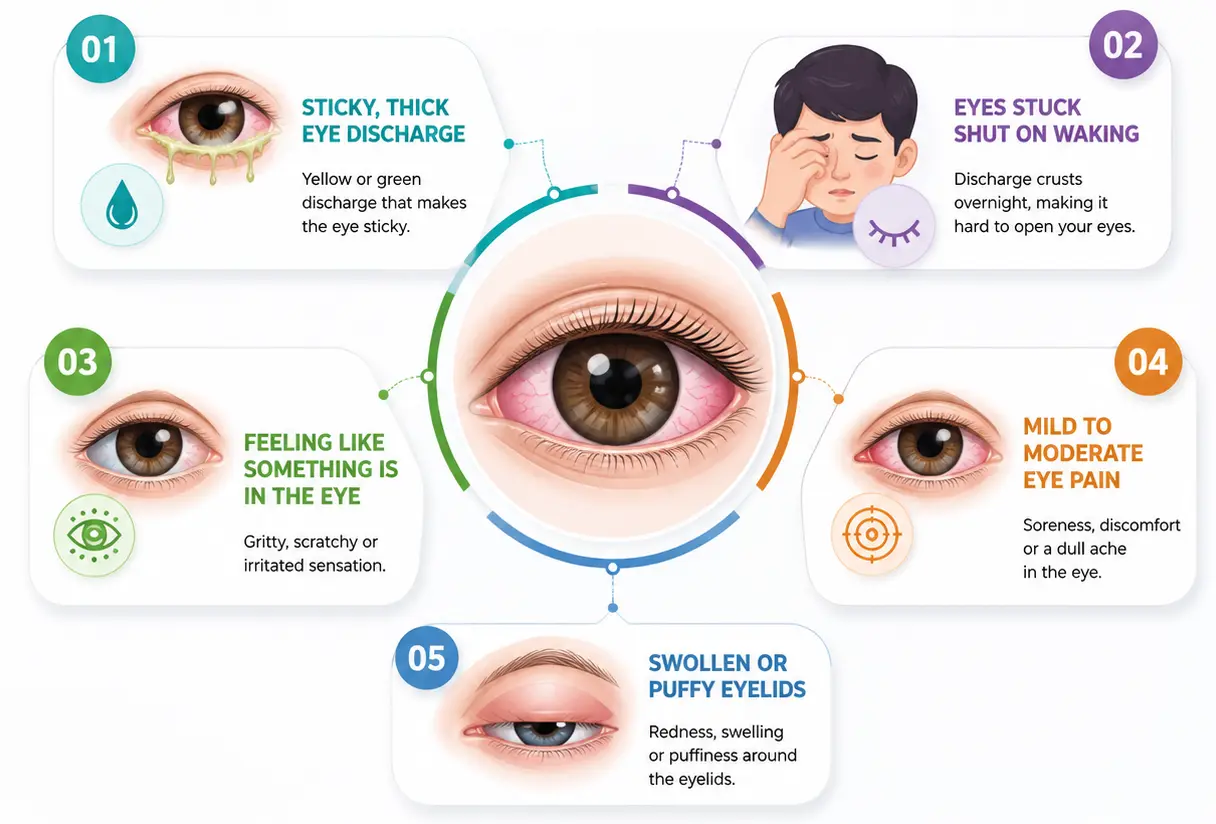
Common symptoms include:
To tell bacterial conjunctivitis from viral conjunctivitis, take a look at the discharge. It’s a good indicator. Bacterial infections tend to produce a thick discharge that’s pus-like. In contrast, viral infections usually result in a discharge that is more watery.
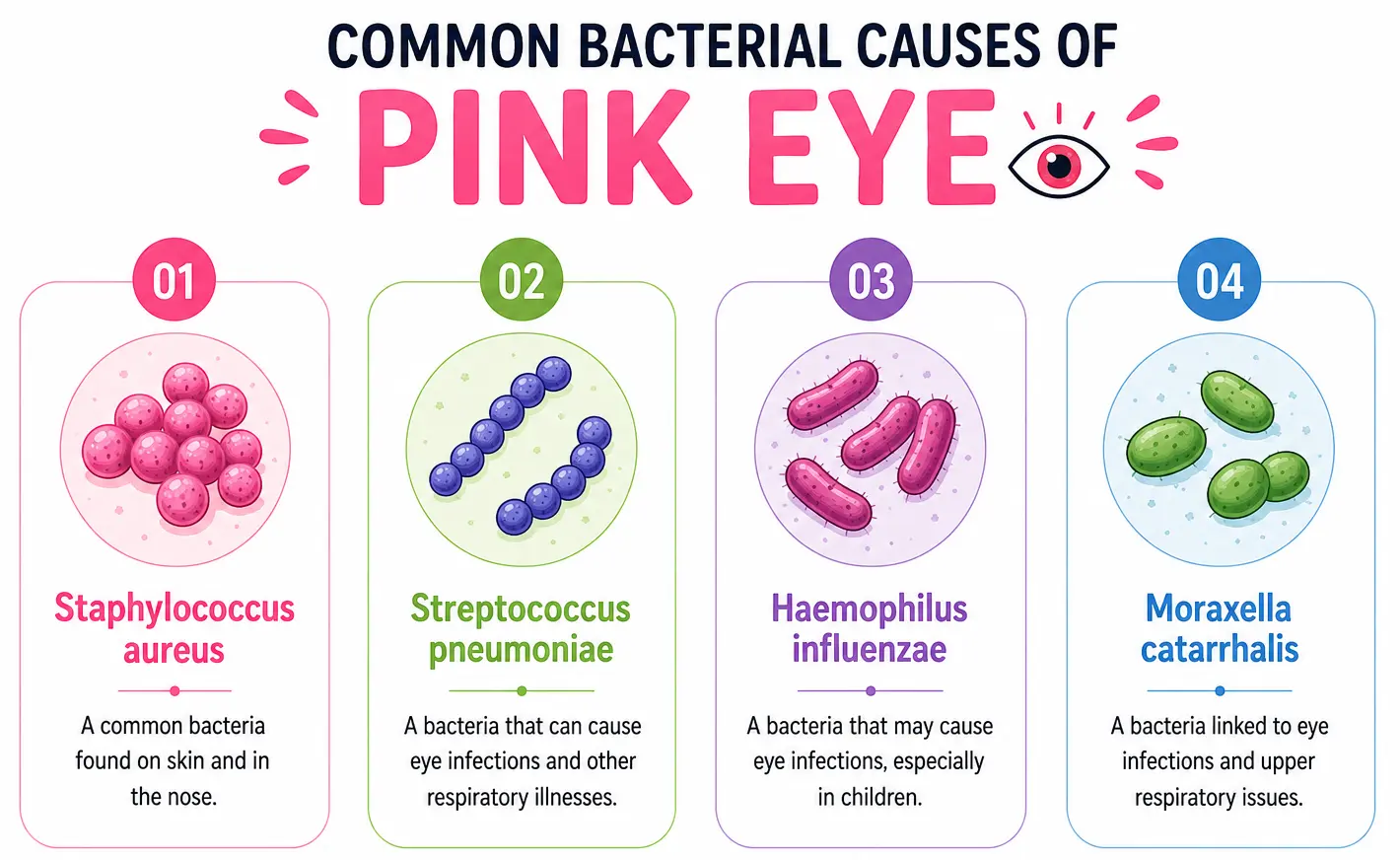
Bacteria that can cause pink Eye include:
How Long Does Bacterial Conjunctivitis Last?
It gets better in 1–2 weeks, with or without treatment. Antibiotics might speed up recovery and help prevent the infection from spreading to others[1].
Is Bacterial conjunctivitis contagious?
Bacterial conjunctivitis spreads easily. It spreads when you come into direct contact with infected eye discharge. It can spread through your hands, a contaminated towel, or a dirty surface.
Treatment
Treatment often means using antibiotic eye drops. You might also use ointments. Medicines include Ciprofloxacin, Tobramycin, Azithromycin, and Polymyxin B/Trimethoprim. Using warm compresses can be a nice way to soften and clear crusts from your eyelids gently. They also help keep your eyes clean as you recover.
Type 3: Allergic Conjunctivitis
Allergic conjunctivitis usually affects both eyes at the same time. The eyes often look a bit red and irritated. The eyelids are puffy and swollen with a clear discharge. This is different from bacterial conjunctivitis. Crusting is not common with this condition.
Common symptoms include:
People who have other allergies sometimes develop allergic conjunctivitis. This can include things like hay fever, asthma, or eczema. Allergens like pollen, pet dander, dust mites, and mold spores cause it.
How Long Does Allergic Conjunctivitis Last?
Symptoms can last as long as you’re exposed to the allergen. They generally start to feel better soon after the trigger is removed or treatment begins.
Is allergic conjunctivitis contagious?
Allergic conjunctivitis is not the same as viral or bacterial pink Eye. An infection doesn’t cause it, so it can’t spread from one person to another.
Treatment
The key step is to reduce or avoid exposure to the allergen that causes symptoms. Ketotifen, or Zaditor, is a type of antihistamine eye drop. It’s used to relieve itchiness and redness in the eyes. Mast cell stabilizer eye drops can help stop future flare-ups. Oral antihistamines, such as Cetirizine and Loratadine, can help. They calm allergy symptoms in your body. In bad cases, an eye doc might give you steroid eye drops for a little while.
Type 4: Chemical / Irritant Conjunctivitis
When chemicals or irritants cause conjunctivitis, it can make your eyes go red and get a bit sore. The eyes can get watery or sticky. Usually, they don’t crust over. This can happen to one Eye or to both of them.
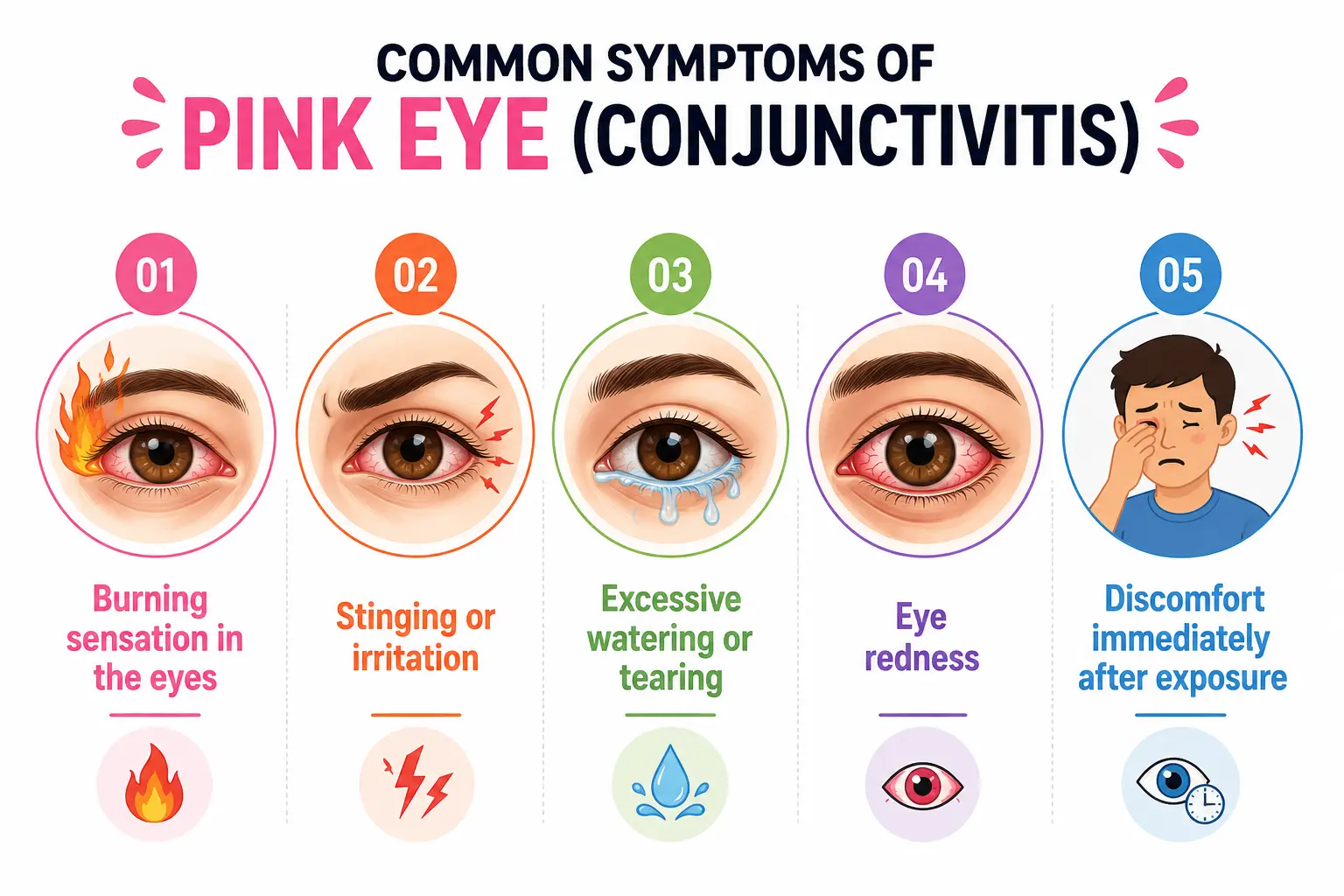
Common symptoms include:
An infection does not cause chemical or irritant conjunctivitis. Common triggers are chlorine from pools, smoke, cosmetics, cleaning products, and chemical spills.
How Long Does Chemical / Irritant Conjunctivitis Last?
Symptoms usually get better within a few hours. In some cases, it can take a day or two after the irritant has been removed.
Is chemical conjunctivitis contagious?
No, it can’t be passed from person to person. The cause is environmental exposure. It’s not due to bacteria, viruses, or allergens.
Treatment
Right away, flush the affected Eye with a lot of clean water. This will wash out the irritant. Artificial tears ease eye irritation and keep your eyes feeling comfortable as they heal. Most cases get better with basic care and avoiding triggers.
Type 5: Neonatal Conjunctivitis (Newborns)
Neonatal conjunctivitis is something that can happen to newborns in their first few weeks of life. It often makes the eyelids swell up. It can also lead to a pretty thick discharge in the eyes. One or both eyes may be affected.
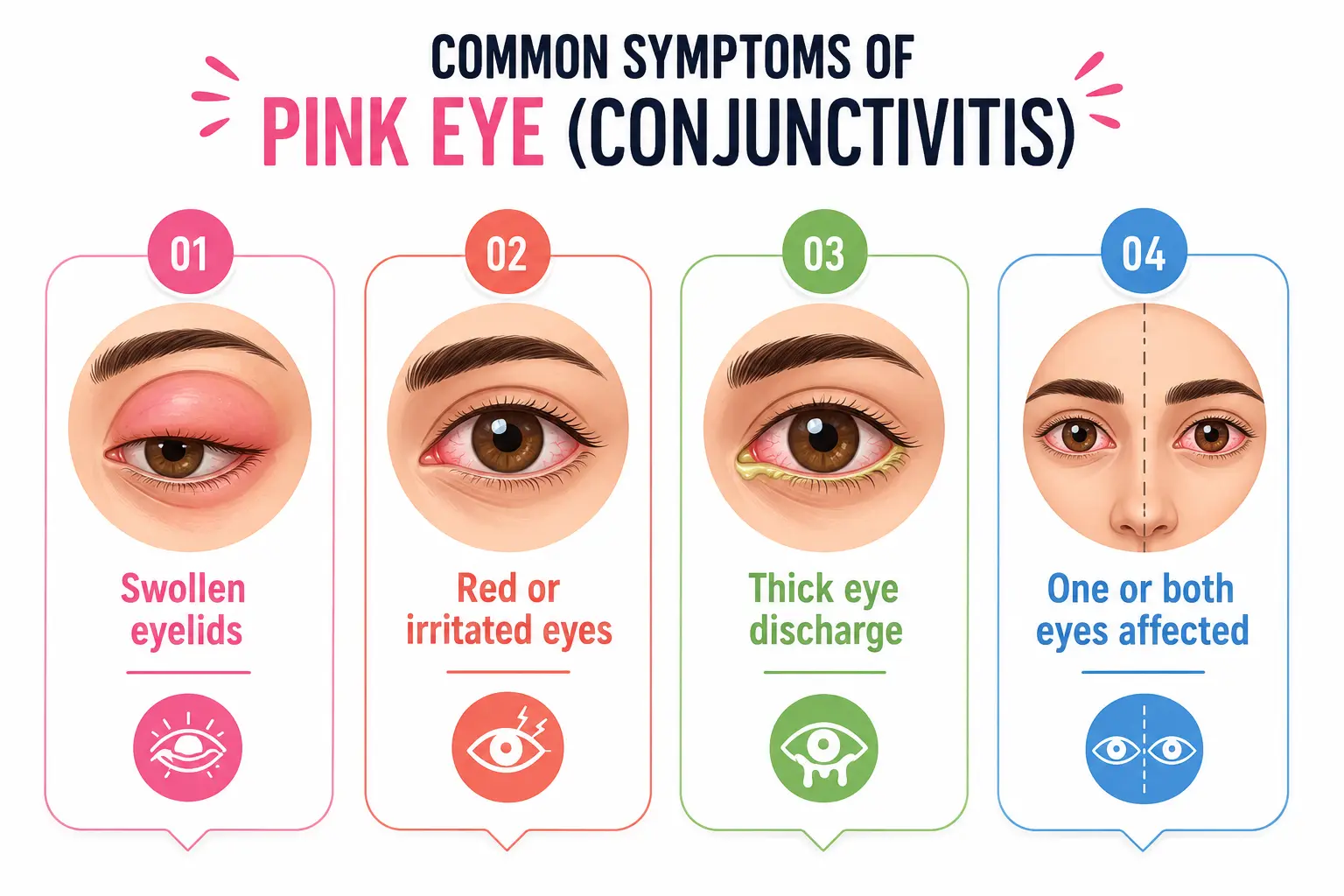
Common symptoms include:
Neonatal conjunctivitis can have several causes. It can come from bacterial infections. This includes gonorrhea and chlamydia.
These are passed through the birth canal during delivery. Viruses can set off the condition. Chemicals in some post-birth medications can irritate and cause it too.
Serious infections need quick treatment to protect the eyes. This helps save eyesight and avoid complications.
How Long Does Neonatal Conjunctivitis Last?
This condition needs immediate medical attention, so don’t delay. Parents shouldn’t wait around for symptoms to get better by themselves.
Is neonatal conjunctivitis contagious?
It all depends on what’s causing it. If it’s from bacteria or a virus, it can spread to others. It’s not contagious if caused by chemical irritation.
Treatment
If a newborn is suspected of having conjunctivitis, they should get a doctor’s checkup ASAP. Care for this might include antibiotic eye drops. Ointments are also an option. If the infection is from sexually transmitted bacteria, you need antibiotics. These are usually systemic. Ceftriaxone treats gonorrheal infections. For chlamydial infections, doctors use Azithromycin or Erythromycin. Getting treatment early is very important. It helps protect your vision and stops serious problems.
Common Daily-Life Causes of Pink Eye
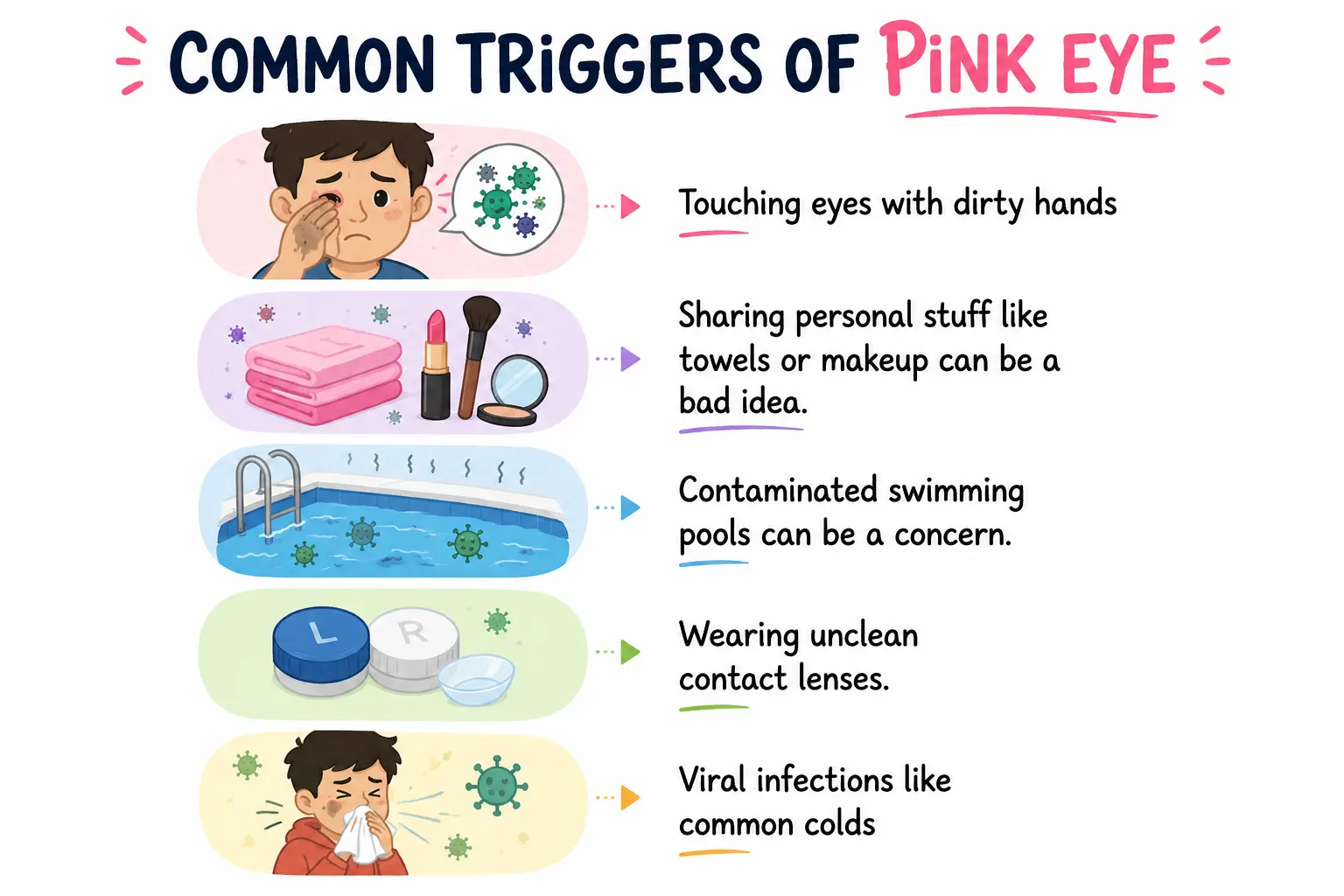
Pink Eye can happen from common activities we do every day. These activities may expose our eyes to germs, irritants, or allergens.
Common triggers of pink Eye
Complete Treatment & Medicine Guide
Category 1: Antibiotic Eye Drops & Ointments (Bacterial Pink Eye)
Mild bacterial cases generally heal well without antibiotics on their own. But antibiotics can shorten the illness and lower the chance of spreading it [1].
Antibiotic Eye Drops & Ointments include:
Category 2: Antiviral Eye Drops (Severe Viral / Herpes Conjunctivitis)
Viral conjunctivitis usually clears up on its own in one to two weeks without antiviral meds[1].
Antiviral Eye Drops include:
Category 3: Antihistamine & Mast Cell Stabilizer Eye Drops (Allergic)
These medicines are a big help with itching and redness. They cut down on watering and irritation caused by allergens too. Some common allergens are pollen, dust mites, pet dander, and makeup.
Medicines:
Category 4: Steroid Eye Drops (Severe Allergic / Inflammatory)
Steroid eye drops can be used for severe allergic conjunctivitis. They need a prescription and also regular checkups. This is important because these can raise IOP.
Medicines:
Category 5: Lubricating / Artificial Tears (All Types – Symptomatic Relief)
Artificial tears up to 10 times daily for comfort. Other lubricants also help to lubricate and comfort the eyes.
Medicines:
Category 6: Oral Medicines (Systemic Treatment When Needed)
You may need to take some oral medicines for pink Eye. There are different types of oral Medicines, including:
Oral Antihistamines (for allergic type):
Oral Antibiotics (for chlamydial conjunctivitis):
Oral Antivirals (for severe herpes conjunctivitis with systemic involvement):
Prevention – How to Avoid Pink Eye
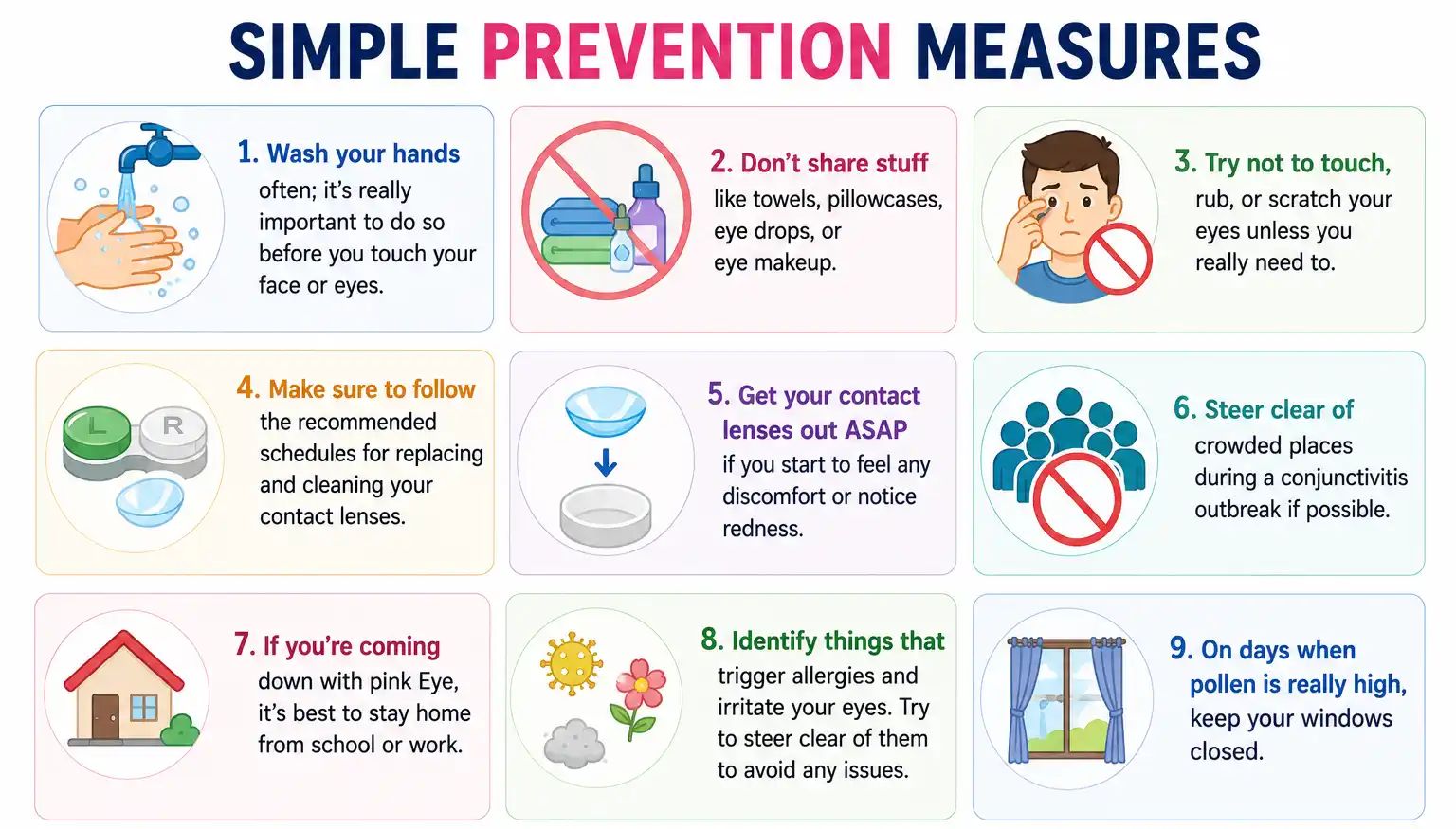
Keeping yourself clean and following some basic daily habits can really cut down on the risk of getting pink Eye. It’s super important to be extra careful during outbreaks and when allergies are bad.
Simple prevention measures
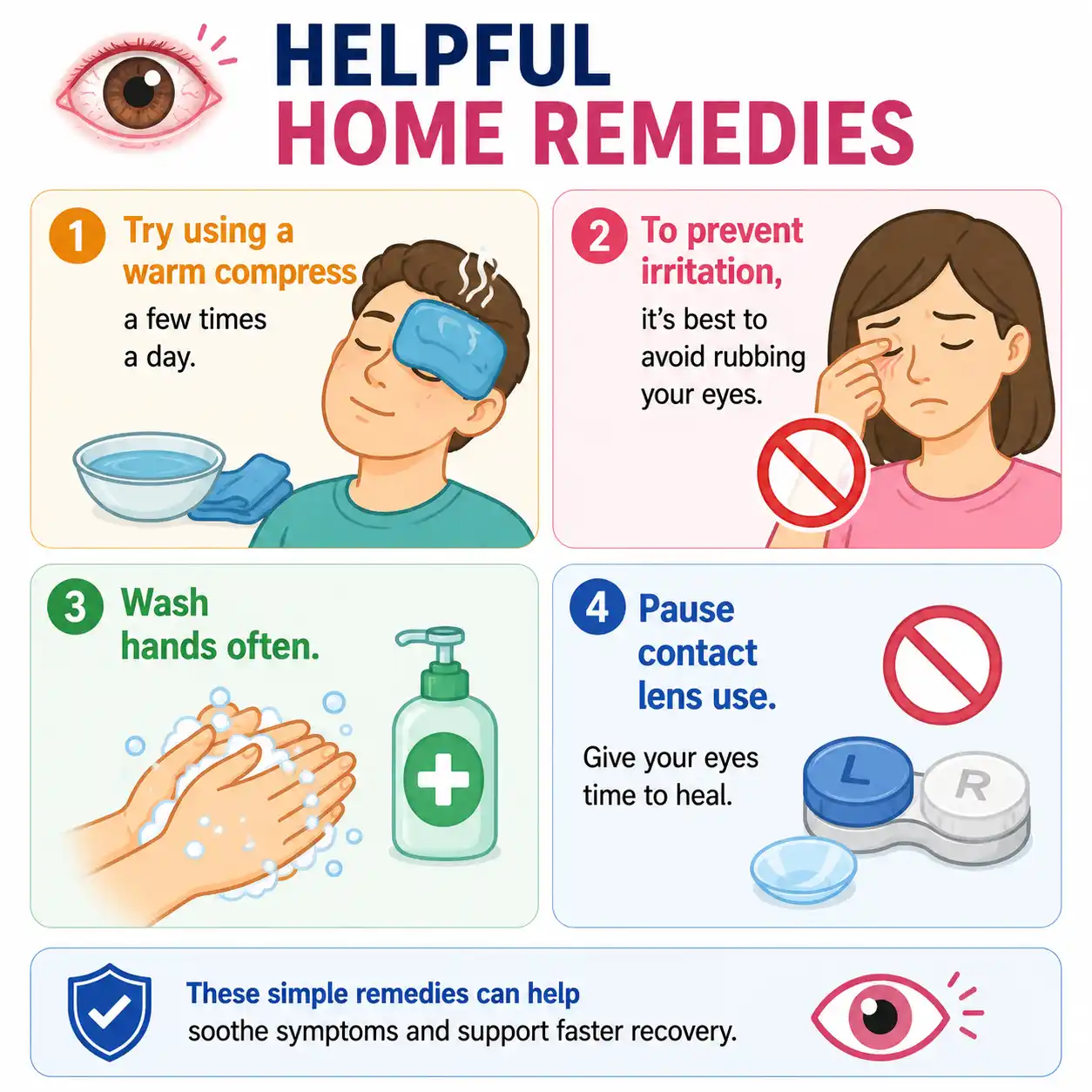
Home Remedies That Help
Simple home care can help with recovering from pink Eye. These remedies can help with symptoms, but they won’t get rid of the infection itself.
Helpful home remedies
When to See a Doctor Immediately
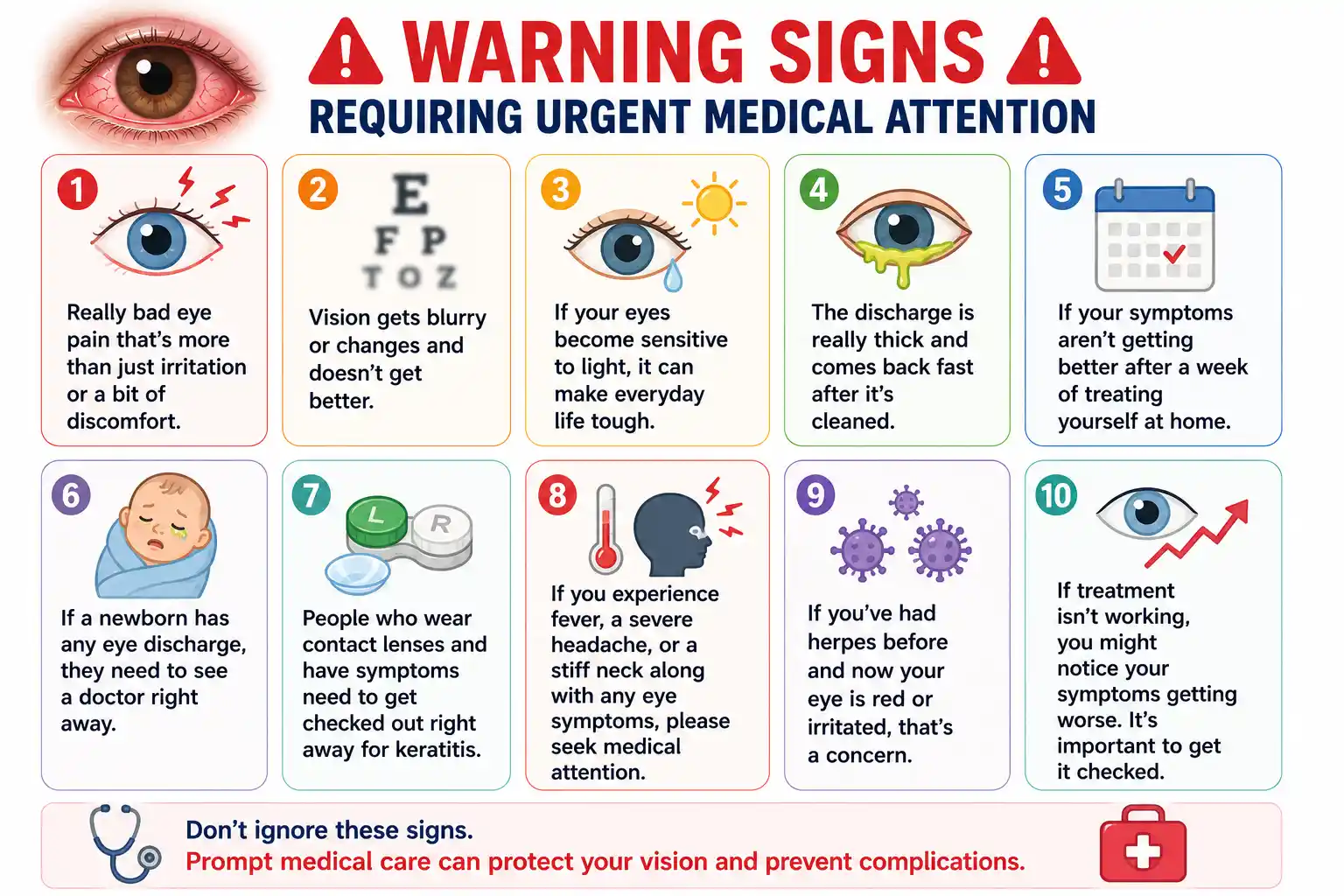
Pink Eye is usually not a big deal. But sometimes, certain symptoms can point to a more serious problem with your eyes.
Warning signs requiring urgent medical attention
Emergency Symptoms
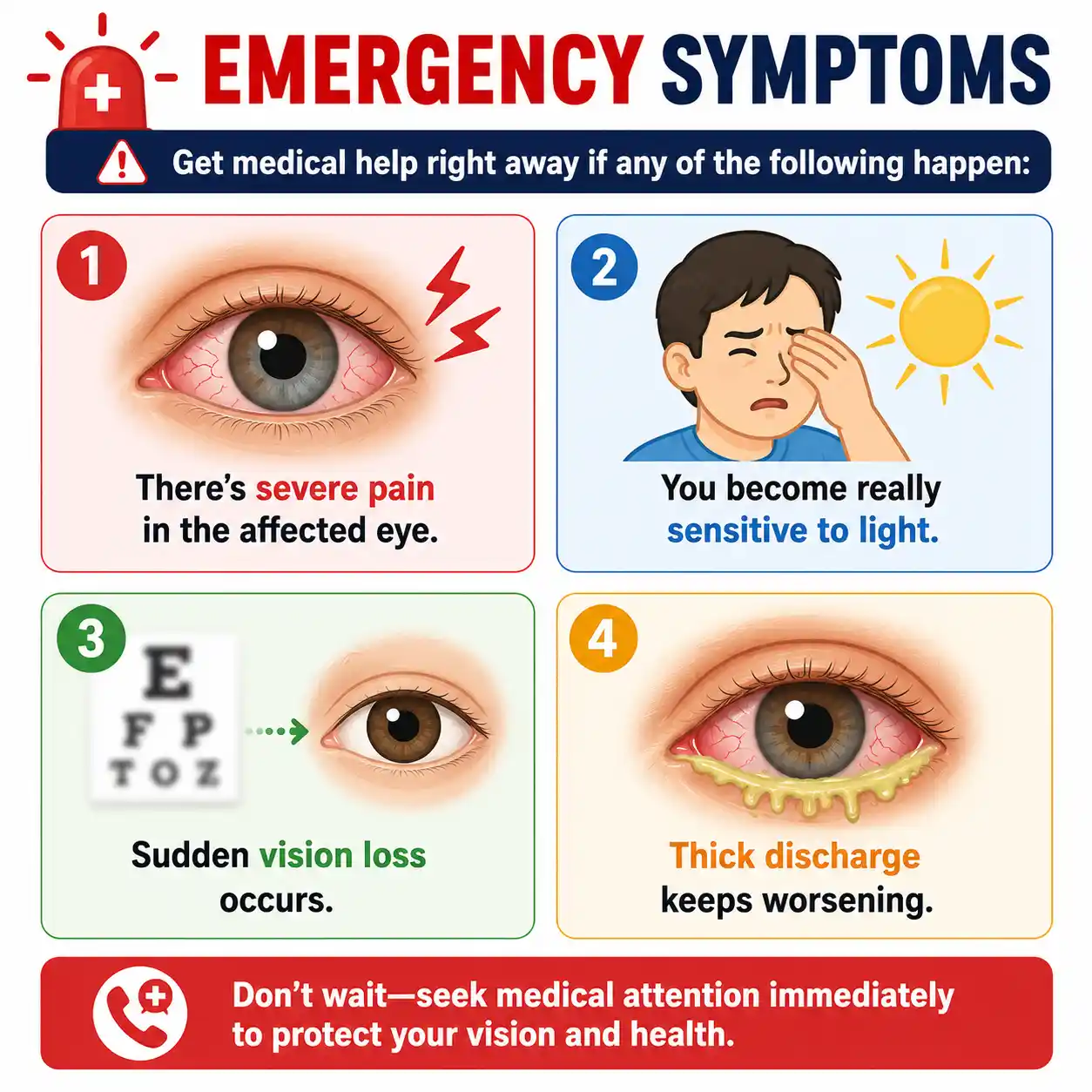
Get medical help right away if any of the following happen:
How Long Does Pink Eye Last?
The time to recover from pink Eye can vary based on the cause. Bacterial cases usually start to get better in just a few days, or at most, within two weeks.
On the other hand, viral pink Eye typically lasts anywhere from one to three weeks. It’s important to keep this in mind for proper care.
Is Pink Eye Contagious?
Yes, Viral and bacterial pink Eye can spread easily from person to person. It can spread through touch. If people touch each other, it can pass on. Shared items and dirty surfaces can also spread it.
Final Verdict
Pink Eye is a common eye condition that affects a lot of people worldwide. It can make your eyes red, itchy, and watery.
The cause can be viruses, bacteria, allergies, or irritants. Knowing the type is essential adenovirus alone accounts for up to 80% of all acute viral conjunctivitis cases[1] and picking the right treatment helps you recover faster while keeping others safe.
Most cases improve on their own with good hygiene and eye care. Severe pain, vision changes, or worsening discharge are signs you should see a doctor. Newborns with symptoms need immediate treatment.
Finding out about pink Eye early can speed up your healing. Using the right treatment protects your vision and helps prevent it from spreading.
FAQs
Q1:- What does pink Eye look like at the start?
Ans:- Pink Eye usually begins with redness in one Eye. The Eye can feel itchy or gritty, and it might get a bit irritated. You might also notice your Eye gets a bit puffy and watery. It may even spread to your other Eye.
Q2:- How do I know if I have viral or bacterial pink Eye?
Ans:- Viral pink Eye usually gives you a burning feeling and makes your eye water a lot. Bacterial pink Eye usually brings about a thick discharge yellow, white, or green. A doctor can confirm the exact cause.
Q3:- Can pink Eye go away without treatment?
Ans:- Yes, A lot of viral and mild bacterial cases tend to clear up by themselves. Symptoms usually improve after a few days, with full recovery in one to two weeks[1].
Q4:- What is the fastest way to cure pink Eye?
Ans:- The treatment depends on the cause. If bacterial, antibiotic eye drops can speed up recovery. Viral pink Eye usually clears up by itself cool compresses and artificial tears can make symptoms feel better[1].
Q5:- Is pink Eye contagious?
Ans:- Yes, viral and bacterial pink Eye spread quickly through eye secretions, dirty surfaces, and contaminated items. Allergic pink Eye isn’t contagious.
Q6:- How long does pink Eye last?
Ans:- It usually goes away on its own in one to two weeks. Viral pink Eye can last one to three weeks. Allergic pink Eye lasts as long as you’re exposed to the trigger[1].
Q7:- What Eye drops are best for pink Eye?
Ans:- It depends on the cause. Bacterial infections need antibiotic drops. Artificial tears help calm viral pink Eye. Antihistamine eye drops are the common choice for allergic conjunctivitis.
Q8:- Can allergies cause pink Eye?
Ans:- Yes, allergies can bring on pink Eye, especially during high pollen season. Allergic pink Eye isn’t contagious.
Q9:- Should I go to work/school with pink Eye?
Ans:- Viral and bacterial pink Eye can be easily passed to others. For everyone’s safety, stay home and follow your school or workplace rules.
Q10:- Can you get pink Eye from swimming pools?
Ans:- Yes, Pool chemicals can irritate eyes and cause redness. A poorly maintained pool can breed germs that cause conjunctivitis. Using swim goggles can help protect your eyes. protect your eyes while enjoying a swim.
- https://www.ncbi.nlm.nih.gov/books/NBK541034/
- https://pmc.ncbi.nlm.nih.gov/articles/PMC8763262/
- https://pmc.ncbi.nlm.nih.gov/articles/PMC5859447/
- https://www.sciencealert.com/a-pink-eye-epidemic-is-sweeping-parts-of-asia-infecting-thousands-a-day
- https://pmc.ncbi.nlm.nih.gov/articles/PMC11809833/