


What exactly happens in your body during epididymal Hypertension
Epididymal Hypertension, or “blue balls,” is pretty painful. It happens when you get really aroused but don’t actually have an orgasm. It’s a common experience, and that’s completely normal. Research confirms that 56% of males and 42% of females[1] have reported experiencing this phenomenon.The slang term “blue balls” was first used in the United States back in 1916[1].
When a guy gets aroused, his penis and the tissue around it fill up with more blood. This helps him get and maintain an erection. Blood flow out of the area is somewhat blocked venous outflow is restricted through compression of the emissary veins[1]. This leads to a buildup of pressure in the epididymis, which is the tube that’s located above each testicle.
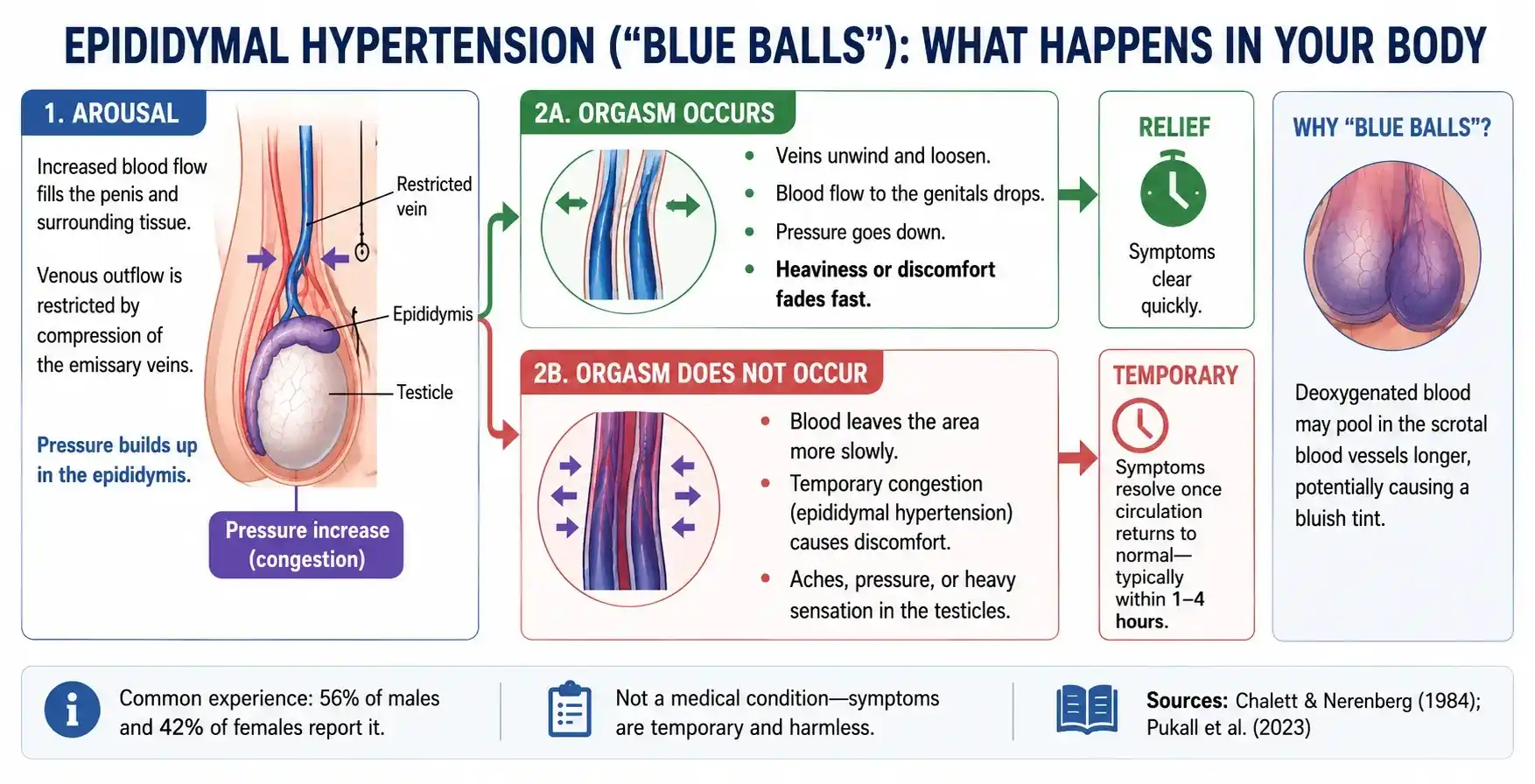
One theory says the nickname “blue balls” comes from deoxygenated blood. It stays in the scrotal blood vessels longer. This can make the skin look bluish[1]. There isn’t much scientific research out there on this topic. A clinical paper by Chalett & Nerenberg[3] looked into the condition originally. Then, a 2023 study in sexual medicine by Pukall et al[1]. took a closer look too.
Why the discomfort occurs in testicles and lower abdomen
When sexual arousal lasts without ending in ejaculation, it can cause swelling. This swelling happens in the genital area. The pressure buildup may cause mild discomfort in the testicles and nearby pelvic areas. These feelings can be uncomfortable, but they are usually safe.
The epididymis is a small, tube-like structure that sits above each testicle. Here, pressure builds up strongly. This often brings heaviness.
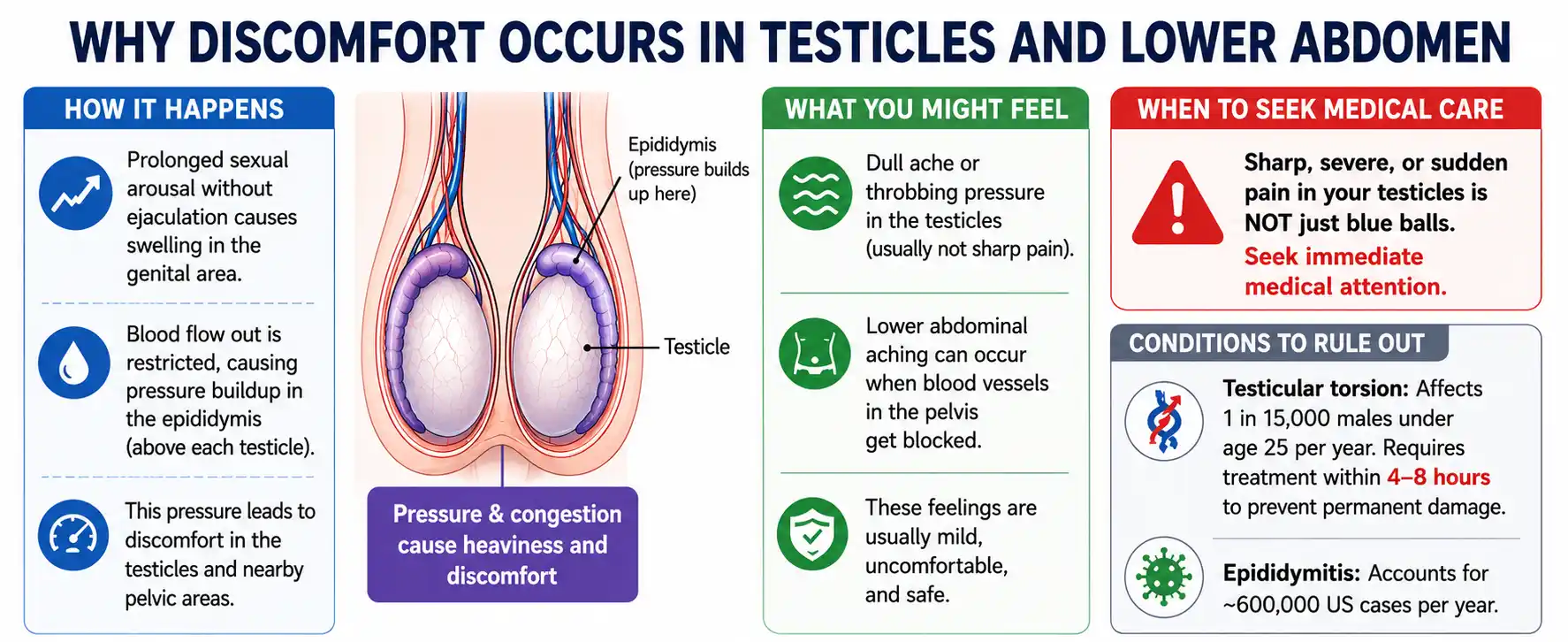
You might feel a dull ache or throbbing pressure. It’s not a sharp pain[2]. Lower abdominal aching happens when blood vessels in the pelvis get blocked.
This is basically down to the same issue with the blood vessels. If you’re experiencing sharp, severe, or sudden pain in your testicles, it’s not just blue balls. This kind of pain requires immediate medical attention.
Conditions to rule out include testicular torsion, which affects 1 in 15,000 males under age 25 per year[4] and requires treatment within 4-8 hours to prevent permanent damage[5] and epididymitis, which accounts for ~600,000 US cases per year[6].
How blood flow changes create the sensation
When people get turned on, blood flow to their private parts changes a lot. These temporary changes in blood vessels can explain the aching or pressure you feel. This is what happens when you’re aroused for too long without any release.
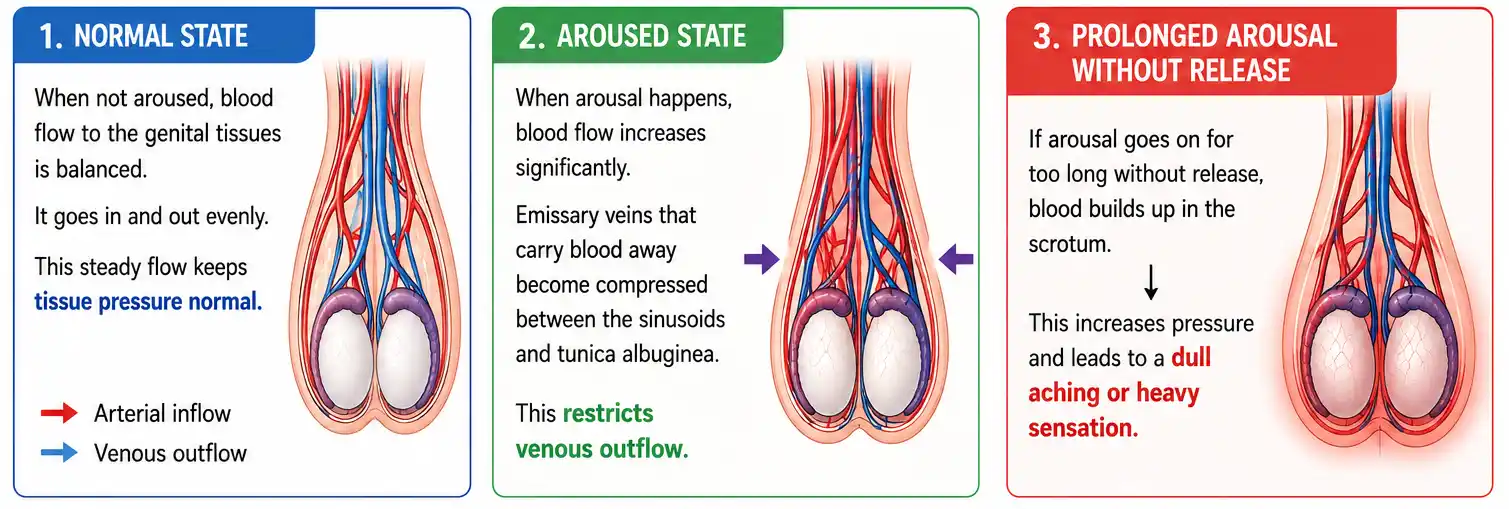
If arousal goes on for too long without a release, it can cause blood to build up in the scrotum. This buildup increases the pressure and leads to a dull aching or heavy sensation.
This process is completely safe. No tissue damage occurs, and it doesn’t have any long-term effects. Fertility is unaffected, and its effects are entirely temporary symptoms typically resolve within a few hours without any medical intervention[2].
This principle can also impact women. Swelling in the vulva and clitoris can be pretty uncomfortable. Sometimes, it’s referred to as “blue vulva” or “pink pelvis.” A 2023 study by Professor Caroline Pukall et al. involving 2,621 participants[1] looked at these vascular effects. It found that this issue is short-term and doesn’t pose a risk to your health.
Typical Duration and Timeline of Symptoms
It’s really important to know how long symptoms last. This helps separate short-term vascular pain from problems that need medical help.
Average time frame for mild cases to resolve naturally
The length of symptoms depends on how aroused a person is and their body’s unique response. Most cases sort themselves out in a few minutes to a few hours, with no need for any help[7]. A 2023 study[1] and Medical News Today (2024)[7] say that symptoms are temporary and go away on their own.
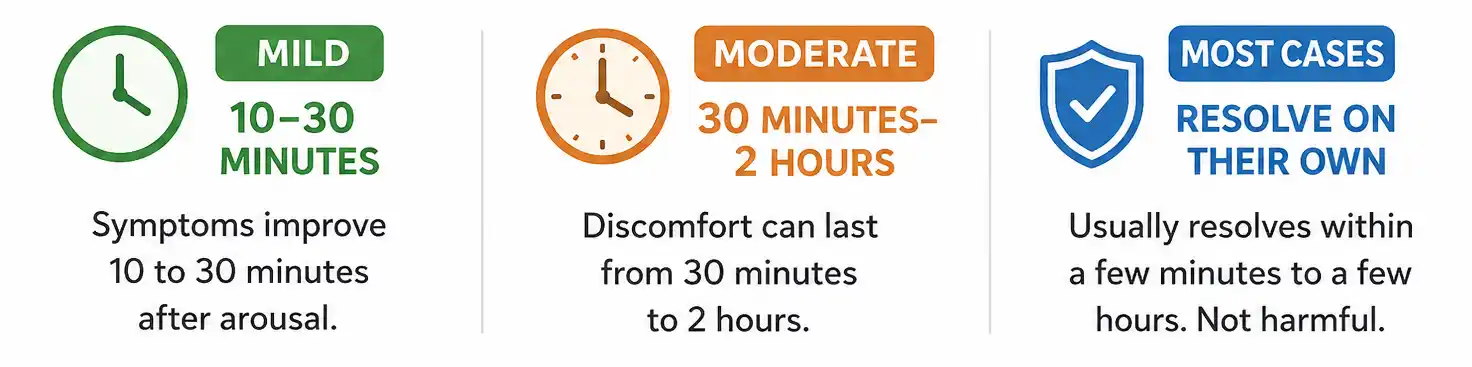
Typical resolution times by symptom severity:
Cleveland Clinic[8] confirms the condition is not a danger to health and should pass quickly relief is usually quick and the person feels fine again soon.
There aren’t any known cases where blue balls symptoms have lasted more than a few hours in people who are otherwise healthy. This means the condition is temporary and not harmful.
However, if pain is severe, sudden, or persists beyond a few hours, it may indicate a separate medical condition[7] such as testicular torsion, epididymitis, or varicocele and requires immediate medical evaluation.
Factors affecting symptom duration and recovery
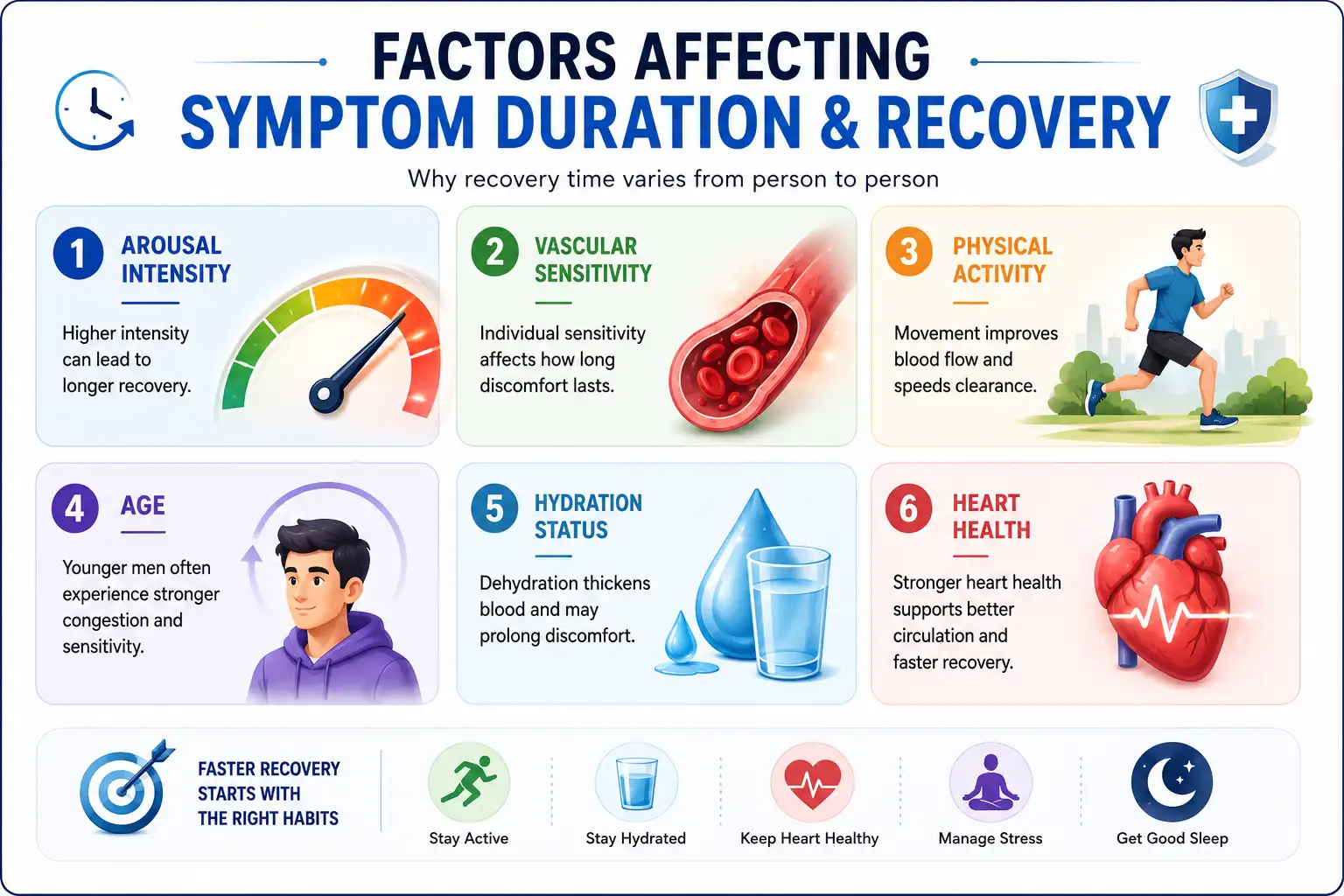
Many physical and body factors affect how fast vascular congestion clears. These differences show why how long symptoms last can vary from person to person.
Arousal Intensity
When arousal is more intense, it typically leads to greater vascular congestion. This can mean that recovery might take a bit longer. Most symptoms resolve within1-4 hours[2] without treatment.
Vascular Sensitivity
Some men often deal with more congestion in their blood vessels. This tends to make discomfort feel stronger and hang around longer. Individual sensitivity varies significantly based on personal anatomy and hormonal profile[2].
Physical Activity
Taking some time to move around can really boost blood flow. This usually helps in easing symptoms more quickly. Exercise increases cardiac output and promotes venous return both of which speed up clearance of vasocongestion[9].
Age
Younger guys tend to have a stronger response when it comes to blood flow. Epididymal hypertension is most common in teenagers and young adults due to higher testosterone levels and greater hormonal reactivity[2].This can make the sensations of congestion feel way more intense.
Hydration Status
Dehydration can slow down blood flow and affect how it’s distributed. Even mild dehydration raises whole blood viscosity making blood thicker and slower-flowing. A clinical study found that 2% body weight fluid loss through perspiration was sufficient to measurably raise blood viscosity[10]. This might make you feel a bit more uncomfortable for a while.
Heart Health
Having good circulation is important as it allows your blood to flow smoothly. Men with stronger cardiovascular fitness have higher cardiac output, better venous return, and more efficient microcirculation[11] making it easier to get rid of vascular congestion faster.
When symptoms indicate you should seek medical attention
Usually, epididymal hypertension resolves on its own without any medical intervention. However, certain symptoms may indicate a separate and potentially serious medical condition that requires immediate attention.
Contact a healthcare provider if you experience severe pain, swelling that does not go away, or symptoms that last more than 24 hours. Seek emergency medical attention immediately if you have sudden severe testicular pain, nausea, vomiting, or fever as these may indicate testicular torsion or infection rather than simple epididymal hypertension[2].
Why individual experiences vary significantly
People’s experiences with epididymal Hypertension can vary a lot. This is because there’s not much scientific research on the topic yet only 2 peer-reviewed studies have meaningfully examined the condition[3].Only a few clinical cases are documented in medical literature. This makes it hard to see a clear pattern of symptoms.
Pain is really personal and can differ a lot from one person to another. Being anxious about the condition can make the discomfort more unbearable[2]. Repeated episodes over time can make some people less sensitive. They may not feel the sensation as strongly.
Natural Methods to Relieve Discomfort Quickly
Physical activities that promote blood flow and relief
Basic physical steps can reduce vascular congestion. These steps also promote normal blood flow. These methods often ease discomfort naturally, so they don’t need medical treatment.
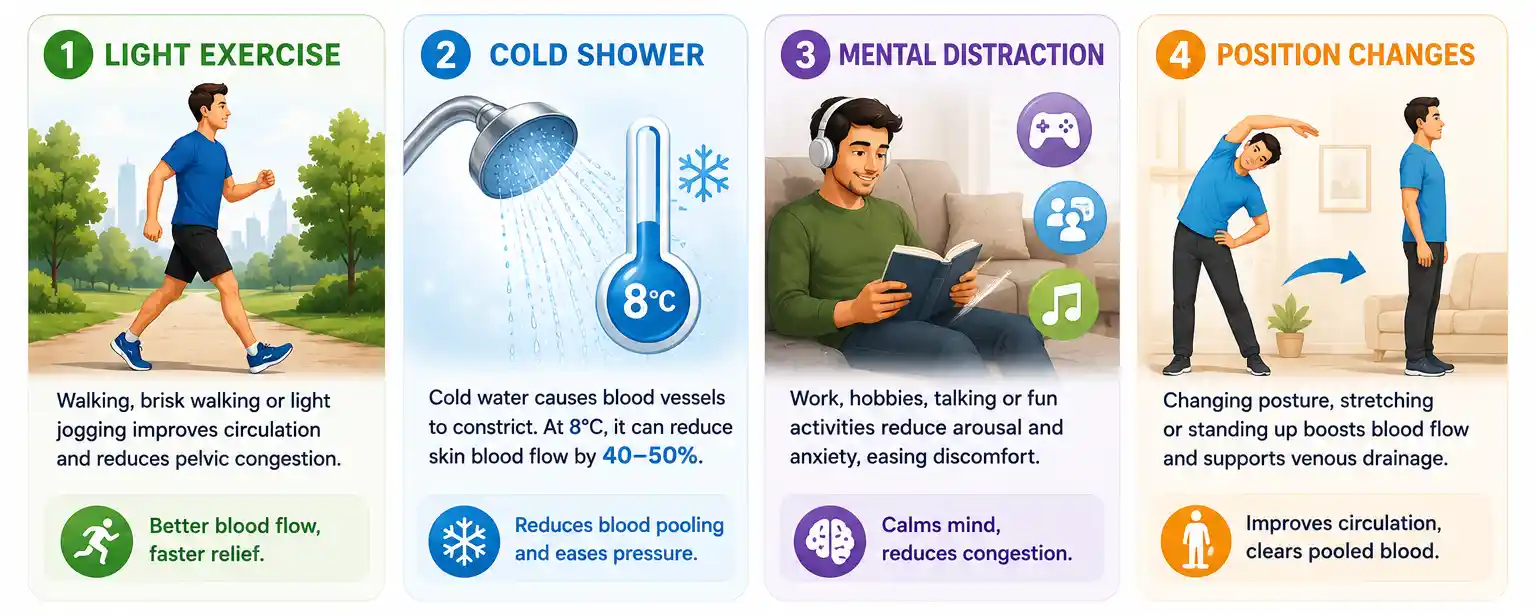
Light Exercise
Walking, brisk walking, or a light jog really gets blood flowing to the muscles you’re using. This helps cut down on pelvic congestion. Studies confirm that aerobic activity significantly improves peripheral circulation and reduces localized blood pooling[9]. It also gets rid of discomfort fast.
Cold Shower
When you’re exposed to cold water, your blood vessels constrict for a bit. A clinical study found that cold water immersion at 8°C produced 40-50% cutaneous vasoconstriction[12].This helps reduce blood pooling in the genital area and eases pressure sensations.
Mental Distraction
Doing work, hobbies, chatting with friends, or having fun can naturally reduce arousal. Anxiety can make discomfort feel worse[2] meaning mental distraction serves a dual purpose: reducing both the physiological congestion and the psychological amplification of pain. This can reduce congestion and discomfort.
Position Changes
Moving around, stretching, or standing up after lying down can be a great way to boost blood flow. Postural changes alter blood pressure gradients and support venous drainage in congested tissue[9]. This helps to clear out pooled blood more quickly.
Medications and Pain Relief
Although epididymal hypertension (blue balls) usually resolves on its own without treatment, some individuals may use over-the-counter pain relievers to reduce temporary discomfort.
Common options include Cipmol 650 mg (Paracetamol) and Brufen 600 Mg (Ibuprofen) . However, medication is rarely necessary because symptoms typically improve as arousal subsides or after orgasm.
There is no specific medication designed to treat or cure epididymal hypertension. Pain relievers only help manage temporary discomfort while normal blood circulation returns to the genital area.
If pain is severe, sudden, associated with swelling, redness, fever, nausea, or lasts longer than a few hours, medical evaluation is recommended to rule out other conditions such as Testicular Torsion or Epididymitis.
Cold therapy techniques for immediate comfort
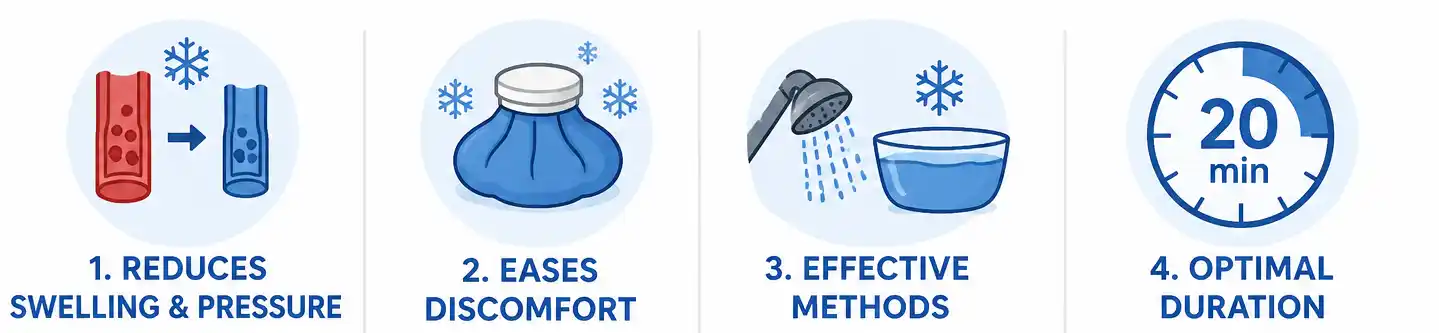
Cold therapy is a great way to ease pain. It works by cutting down blood flow to swollen areas. Local cold application induces vasoconstriction and lowers microcirculation by more than 60% an effect that can persist for up to 30 minutes after cessation of cooling[13].These techniques help by making blood vessels constrict. This reduces pressure in the affected area.
Cold therapy for symptom relief
Breathing exercises and relaxation methods that help
Relaxation techniques can help your body unwind when you feel tense. They calm your nervous system, helping your symptoms ease on their own.
Relaxation methods for reducing discomfort
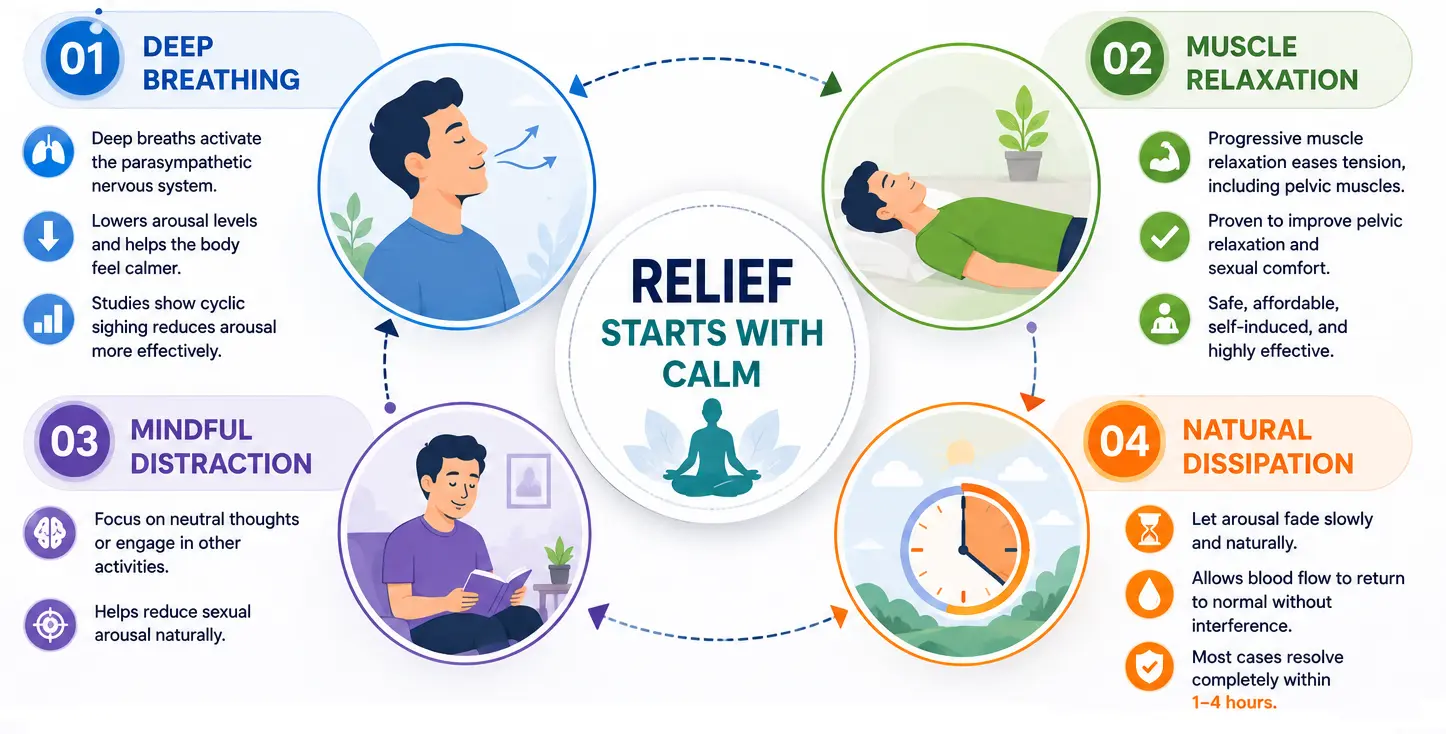
Deep Breathing
Taking deep breaths from the diaphragm stimulates the vagus nerve activating the parasympathetic nervous system[16]. This lowers arousal levels and helps the body feel calmer. A randomized controlled trial (Balban et al., Stanford, 2023) found that cyclic sighing produced significantly greater reduction in physiological arousal than mindfulness meditation (p < 0.05)[17].
Muscle Relaxation
Progressive muscle relaxation is a great way to ease tension in the body, including the pelvic muscles. A randomized controlled study confirmed PMR significantly improved pelvic muscle relaxation and sexual comfort[20]. PMR is accessible, affordable, self-induced, and has no adverse impacts[19]. It can really help reduce uncomfortable feelings.
Mindful Distraction
Thinking about neutral stuff or doing something else can bring down sexual arousal. It also helps your body clear up congestion on its own.
Natural Dissipation
Letting arousal fade slowly is really good for the body. It allows time for blood flow to get back to normal without any interference. Most cases resolve completely within 1-4 hours without any intervention[2].
Safe Sexual Solutions for Faster Resolution
How orgasm provides the most effective relief
Ejaculation with orgasm is usually the quickest way to relieve epididymal Hypertension. It is also considered the best method. During ejaculation, tonic-clonic contractions of pelvic musculature rapidly decompress engorged blood vessels[21] the genital area loses blood fast. This rapid loss of blood reduces pressure and eases discomfort.
Vascular congestion clears up fast after ejaculation. Relief usually kicks in within seconds to minutes after orgasm[21]. It’s not a justification to pressure, coerce, or manipulate someone into having sex. It’s all about respecting their wishes and boundaries.
Solo techniques when partnered options are not available
Masturbation is a safe and private way to help ease epididymal Hypertension. It is also a medically accepted practice. It causes orgasm and ejaculation. Research confirms that solitary sexual and nonsexual activities can help to alleviate the discomfort, and that this pain is not a valid reason to continue unwanted sexual activity[1].
Masturbation can be just as effective as partnered sex for easing symptoms. It’s important to remember that having blue balls isn’t a reason to pressure someone. You can always handle it on your own.
Communication strategies with your partner
Being able to talk things through helps partners understand that it’s okay to feel a bit uncomfortable sometimes. Being open like this helps keep respect and boundaries strong in a relationship.
A 2023 survey of 2,621 participants found that significantly more women than men reported being pressured into sexual acts due to a partner’s claim of blue balls[1]. Research shows that blue balls can sometimes create a feeling of pressure in relationships. This is not right and lacks medical proof.
It’s important to:
Prevention Strategies to Avoid Future Episodes
Recognizing early warning signs before discomfort peaks
Catching early symptoms can help you manage discomfort and prevent it from escalating. Being aware helps us move fast before things get really bad with vascular congestion.
Identifying symptoms before they worsen
Lifestyle adjustments that reduce frequency
Simple lifestyle habits can really help reduce vascular congestion. They can also cut the risk of discomfort coming back. Healthy habits can make a big difference in blood flow and stopping symptoms from happening.
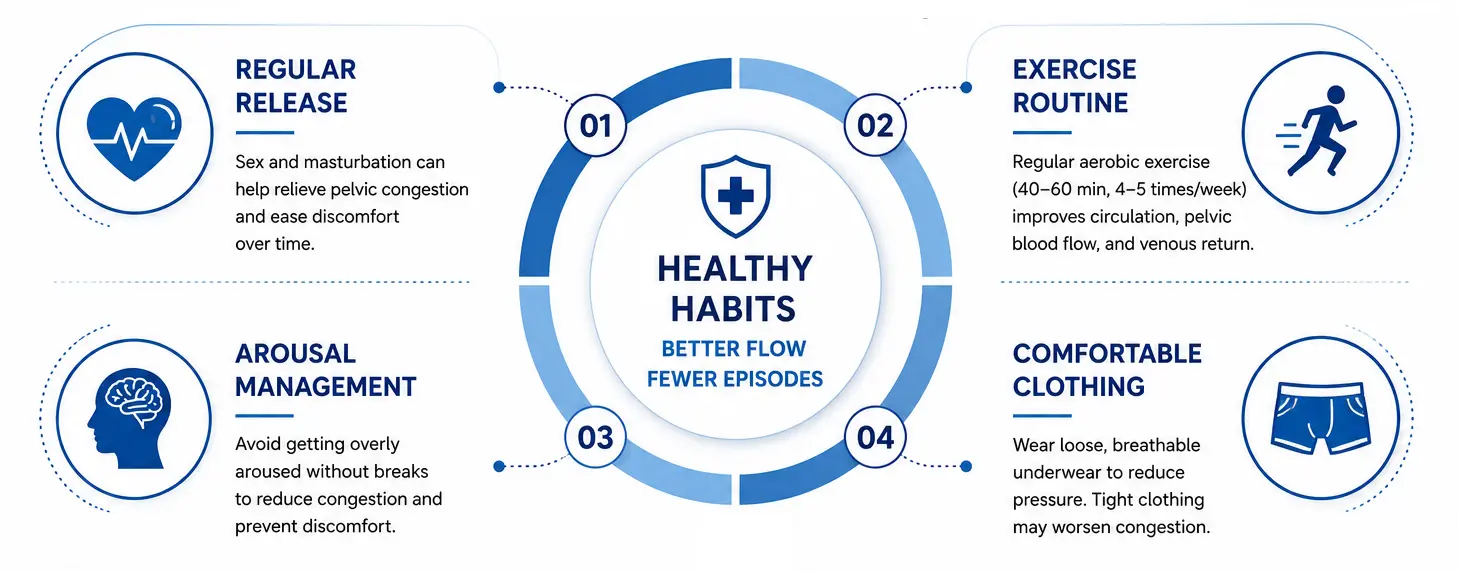
Habits that may reduce future episodes
Regular Release
Both sex and masturbation can be effective in relieving pelvic congestion. This can also help ease the discomfort over time.
Exercise Routine
Regular exercise does a lot of good for your heart. Regular aerobic exercise (40-60 min, 4-5 times/week) improves cardiovascular fitness, pelvic circulation, and venous return[11]. Plus, it helps get more blood flowing to the pelvis.
Arousal Management
Try not to get too worked up without a break. This can help cut down on congestion.
Comfortable Clothing
Wearing loose underwear can really take the pressure off. On the flip side, tight clothing might make congestion feel a bit worse.
Managing arousal levels during intimate situations
Talking to your partner about how fast or slow you’re going and how comfy you are can really help. It makes the experience fun and easy for everyone. Discussing what you like and don’t like helps prevent misunderstandings. This way, both partners can make choices that feel right for them.
Taking breaks during intimate moments can be a great idea. It can help ease vascular congestion. It can also stop discomfort from getting worse. Epididymal Hypertension is a typical bodily response. It doesn’t mean you’ve got a disease or an injury, or that your sexual health is poor. Your body’s just reacting naturally.
Building healthy sexual habits for long-term comfort
Sexual health is really important for your overall wellbeing. Taking care of it is a must, and it should never make you feel embarrassed or ashamed. Healthy habits help you feel comfortable. They also build confidence.
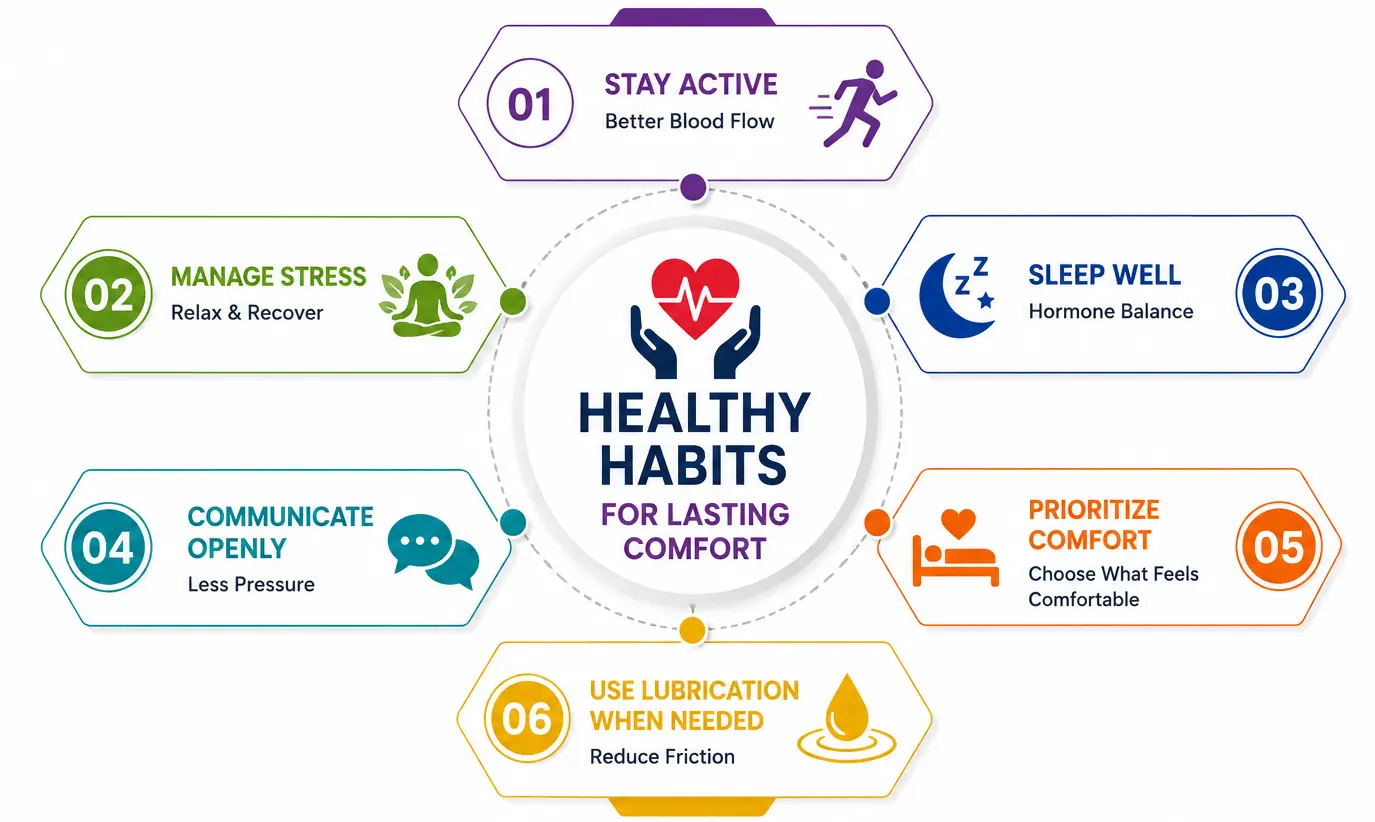
Healthy habits for lasting comfort
Stay Active
Staying active is wonderful for your heart. It boosts your circulation and helps you improve your stamina. This also means better blood flow throughout your body[9].
Manage Stress
Relaxation techniques can really help you relax every day. Daily breathing and PMR practices reduce cortisol levels and sympathetic nervous system overactivation[17][18]. Sleep is crucial, it keeps hormone levels healthy and improves wellbeing.
Communicate Openly
Talking openly about things like comfort, preferences, pacing, and intimacy can help build stronger relationships[1]. This kind of conversation can make a big difference. It also lowers stress and pressure.
Prioritize Comfort
Make sure to prioritize foreplay. If things get a bit dry, don’t hesitate to use some lubrication. Opt for positions that feel comfy and won’t put too much strain on your body.
See a urologist if you’ve got persistent or severe testicular pain. Regular check-ups are a smart choice. They can help spot any problems early.
You need to distinguish between normal epididymal Hypertension and actual health problems. It’s crucial to make this distinction to avoid mistaking one for the other. These include infections and torsion. There are other reasons for testicular pain. A doctor’s check-up is needed.
- https://pmc.ncbi.nlm.nih.gov/articles/PMC10155057/
- https://www.doctronic.ai/conditions/epididymal-hypertension/
- https://pubmed.ncbi.nlm.nih.gov/11015532/
- https://en.wikipedia.org/wiki/Testicular_torsion
- https://www.hims.com/blog/blue-balls
- https://www.webmd.com/men/what-is-epididymitis
- https://www.medicalnewstoday.com/articles/324870
- https://health.clevelandclinic.org/blue-balls
- https://www.heart.org/en/healthy-living/fitness/fitness-basics/why-is-physical-activity-so-important-for-health-and-wellbeing
- https://www.meridianvalleylab.com/dehydration-shown-to-increase-blood-viscosity/
- https://jack.health/blog/how-long-do-blue-balls-last/
- https://pubmed.ncbi.nlm.nih.gov/28100130/
- https://pmc.ncbi.nlm.nih.gov/articles/PMC3781860/
- https://ncbi.nlm.nih.gov/pmc/articles/PMC6917438
- https://www.sciencedirect.com/science/article/abs/pii/S009917672030060X
- https://pmc.ncbi.nlm.nih.gov/articles/PMC10622034/
- https://pmc.ncbi.nlm.nih.gov/articles/PMC9873947/
- https://pmc.ncbi.nlm.nih.gov/articles/PMC12366805/
- https://pmc.ncbi.nlm.nih.gov/articles/PMC10844009/
- https://www.sciencedirect.com/topics/agricultural-and-biological-sciences/vasocongestion
