


It’s 3:07 AM. The room is quiet, but your body isn’t, sheets damp from night sweats, mind suddenly alert, sleep nowhere in sight.
You glance at the clock and think: Will this ever end? Here’s the honest answer: sometimes it gets better with age. But that’s rare without the right help.
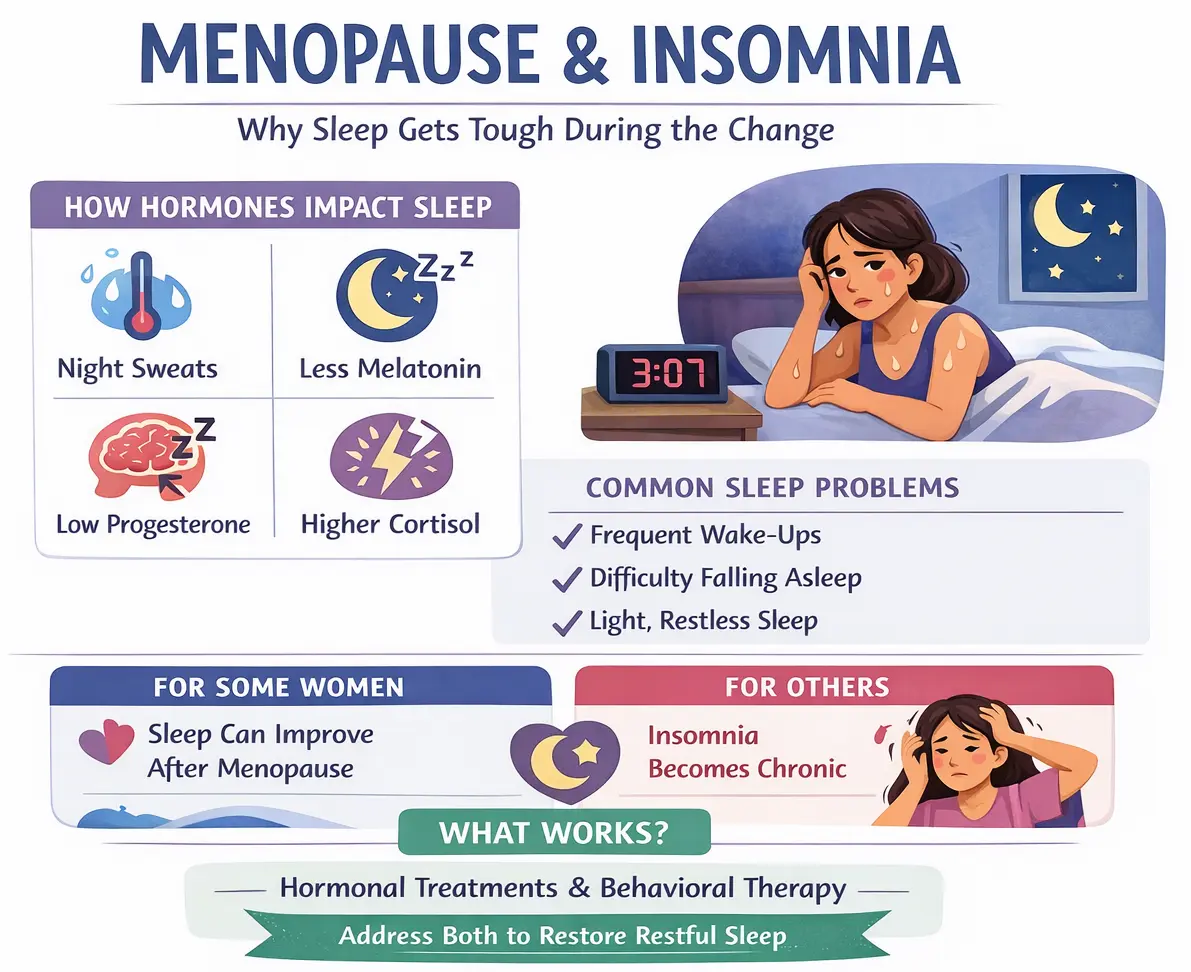
Menopause isn’t only about periods ending. It’s a complete hormonal change that impacts sleep regulation.
As estrogen and progesterone levels decline:
The result? Lighter sleep and waking up often can happen, even if you’ve never had sleep problems before.
It’s not just you. Studies show that 40-60% of women face major sleep problems during perimenopause and postmenopause. For many, it becomes one of the most frustrating and persistent symptoms.
Here’s where nuance matters:
Research shows that vasomotor symptoms, such as night sweats, might lessen over time. However, sleep disruptions can persist if left untreated.
Even if hot flashes improve, your brain might have already formed bad sleep habits.
Menopause insomnia can shift from hormonal issues to behavioral ones. So, just waiting it out won’t help. Menopause insomnia can get better with age, but it’s not guaranteed.
For many women, it only gets better when they tackle both hormonal and behavioral factors.
The good news? Once treated properly, sleep can return to being deep, consistent, and restorative again.
The Hidden Scale of Menopause-Related Insomnia
Menopause-related insomnia is more common than many think. It affects millions of women worldwide, making it a serious health issue.
Research shows that 40-60% of women face serious sleep problems during perimenopause and postmenopause. These problems include difficulty falling asleep and frequent nighttime waking.
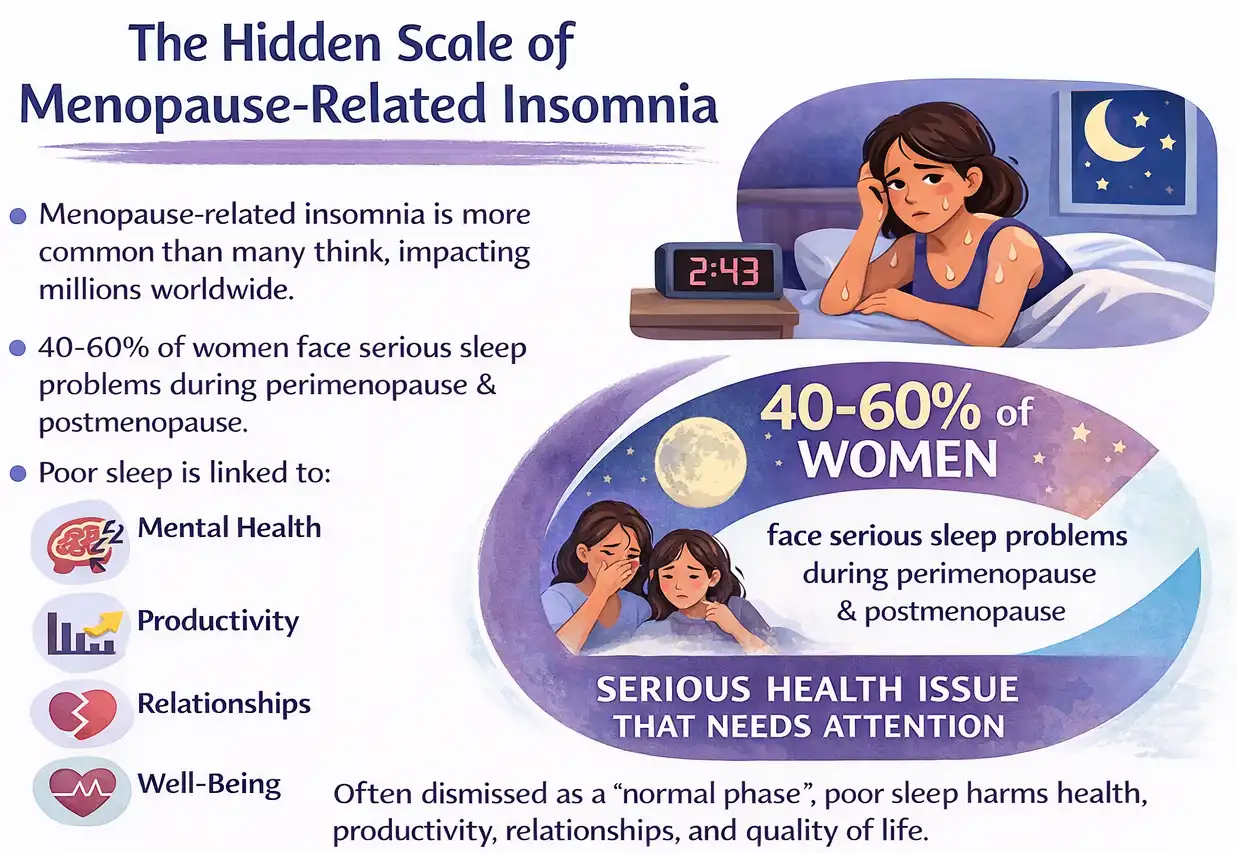
It’s worrying that these disruptions are often seen as just a “normal phase.” This leaves many women untreated and tired. In many places, the trend is clear: hormones decline, sleep worsens, and quality of life declines.
Poor sleep affects more than rest. It harms mental health, productivity, relationships, and long-term well-being. This serious issue often goes unnoticed, so it needs attention and proper care.
What Counts as Menopause Insomnia? (Clinical Definition)
Menopause insomnia goes beyond the occasional restless night, it meets clear clinical criteria.
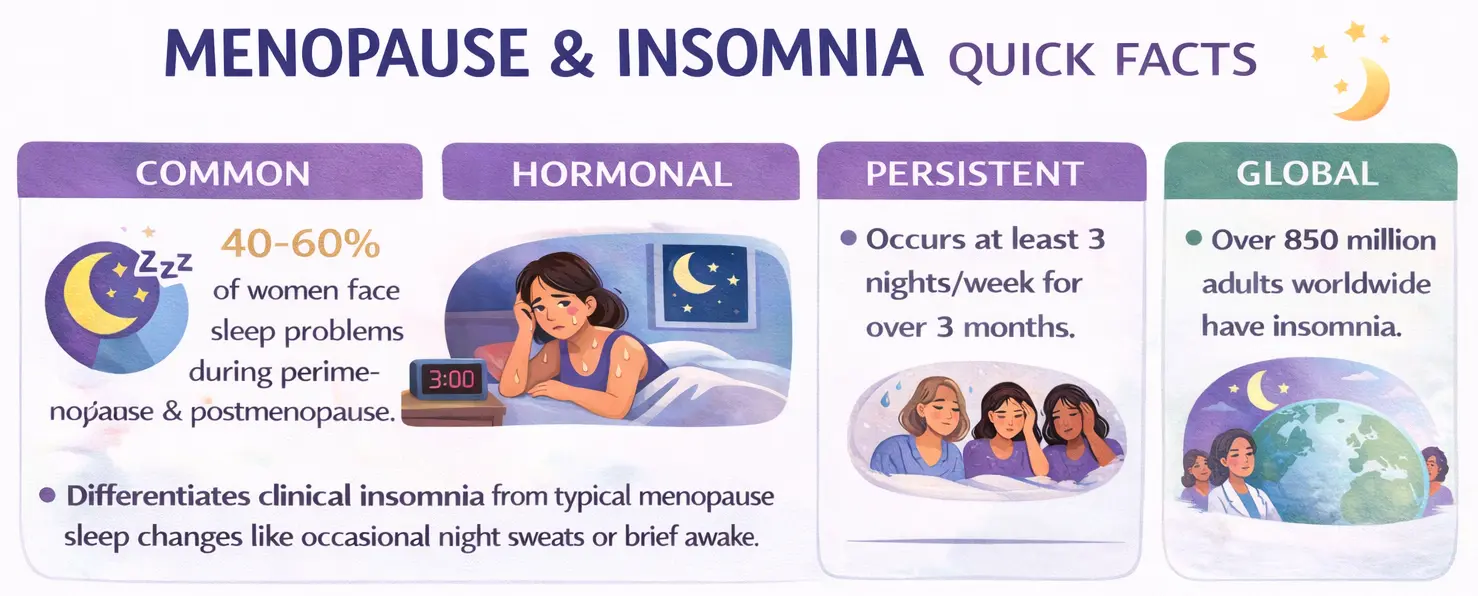
Insomnia, according to the DSM-5, is trouble falling asleep, staying asleep, or waking up too early. This must happen at least three nights a week for over three months.
It’s key to differentiate this from typical menopause sleep changes. These include occasional night sweats or brief awakenings.
Clinical insomnia is more persistent, disruptive, and doesn’t resolve on its own. Research shows that about 26% of perimenopausal women have chronic insomnia. This means, for many, it’s not a phase. It’s a diagnosable and treatable condition.
How Many Women Are Affected Globally?
Insomnia is a big global health problem. About 852 million adults, or 16.2% of the population, are affected. Women are at a much higher risk. Studies show they are about 1.5 times more likely to have insomnia than men.
This gap grows larger in midlife. Hormonal changes make sleep disruption worse. The issue will likely grow. By 2030, more than 1.2 billion women will be 50 or older.
This age is strongly linked to sleep problems related to menopause. Menopause insomnia isn’t common. It’s becoming a growing global issue that will affect millions more in the years ahead.
Why Menopause Insomnia Doesn’t Just “Burn Out” on Its Own
Menopause insomnia isn’t just a short-term issue that goes away. It changes over time. Menopause brings new biological changes that can worsen sleep issues. That’s why just waiting for things to get better usually doesn’t help.
Phase 1 – Perimenopause: The Storm (Mid-40s to ~51)
Perimenopause is often the most disruptive phase for sleep. Sharp hormonal fluctuations drive this. As oestrogen levels fall, the hypothalamus, which controls temperature regulation, becomes more sensitive.
This leads to hot flashes. New research shows that the brain activity causing hot flashes can also wake you up.
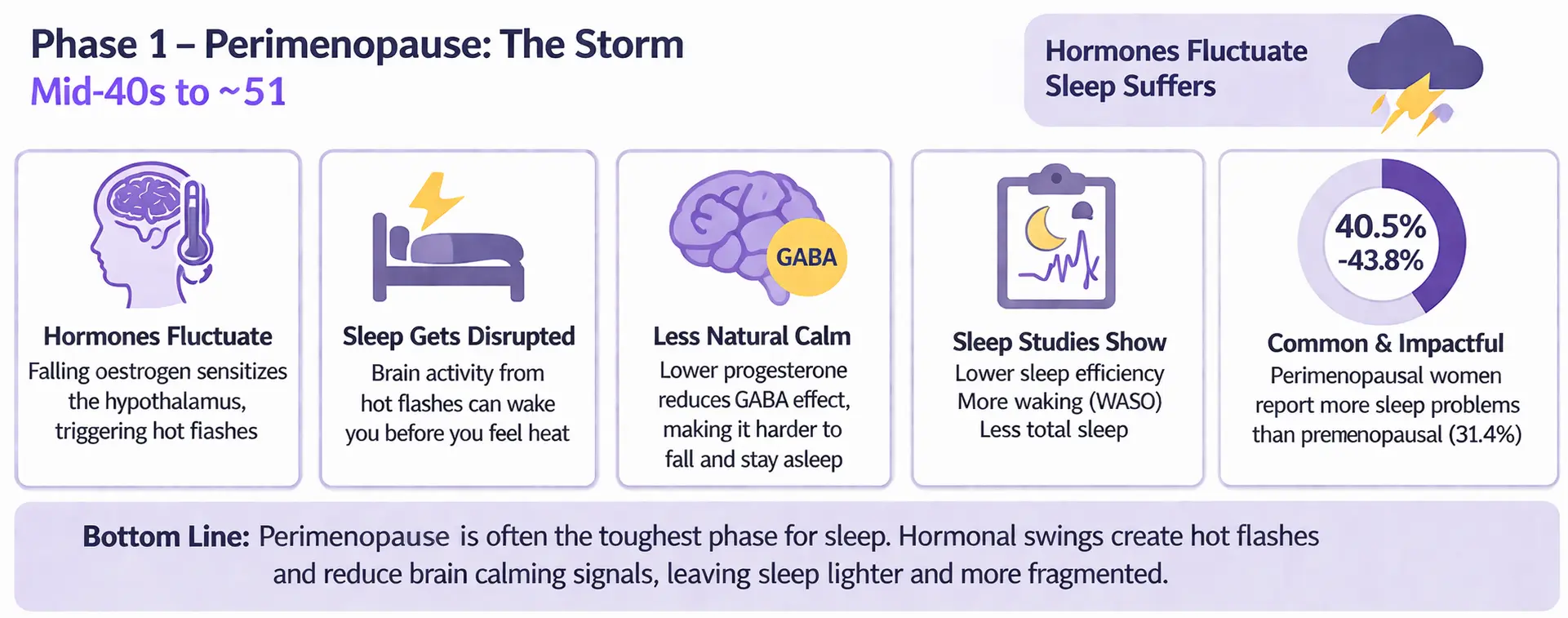
This means women might wake up even before they feel the heat. As progesterone decreases, it loses its calming effect on GABA receptors. This makes it harder to fall asleep and stay asleep.
Objective sleep studies (polysomnography) show clear effects. Women in this phase have lower sleep efficiency. They also wake more after sleep onset (WASO) and get less total sleep than those without insomnia.
This isn’t rare. Data shows that about 40.5% to 43.8% of perimenopausal women struggle with sleep problems. In contrast, only 31.4% of premenopausal women report the same. This highlights how much this phase affects sleep.
Phase 2 – Does Sleep Improve After Menopause? What the Research Shows
Research shows a mixed reality. The SWAN (Study of Women’s Health Across the Nation) shows that many women’s sleep can improve after menopause. This is especially true if night sweats and hot flashes were the main issues. As these symptoms decline, sleep can become less disrupted.
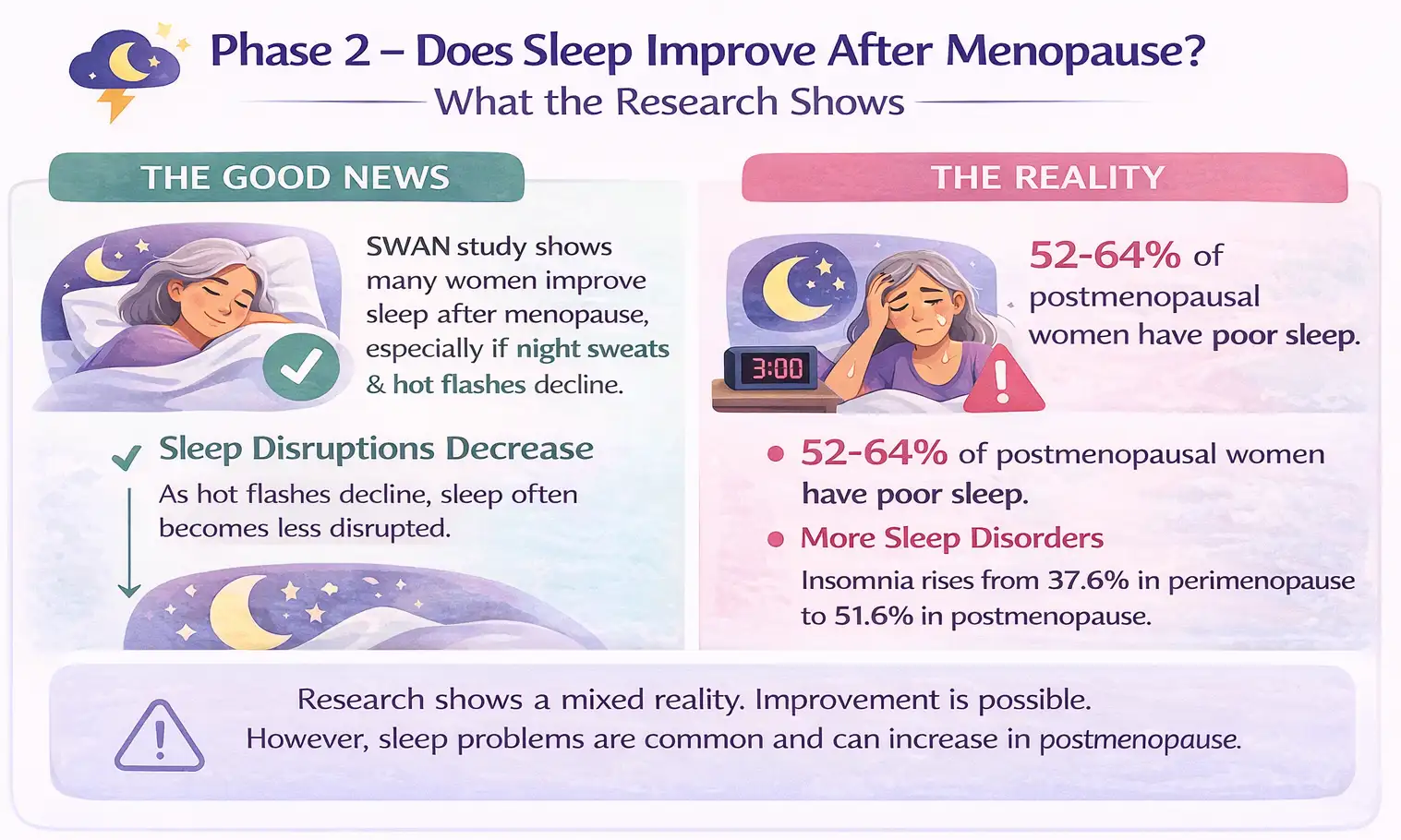
However, improvement is far from universal. Studies show that 52-64% of postmenopausal women have poor sleep. Sleep disorders can increase too. Insomnia rises from 37.6% in perimenopause to 51.6% in postmenopause.
Phase 3 – New Sleep Disruptors That Emerge in Postmenopause
Even after hormones settle, sleep doesn’t automatically reset. In postmenopause, new disruptors emerge. These issues include lower melatonin levels and higher nighttime cortisol levels. They also include a greater risk of sleep apnea or restless legs.
Poor sleep habits and increased sleep anxiety can keep the cycle going. New biological and behavioral factors can still interrupt deep, restorative sleep, even after the original hormonal triggers fade.
Sleep Apnoea – The Silent Epidemic in Postmenopausal Women
After menopause, the risk of obstructive sleep apnoea (OSA) increases significantly. Women are now 2-3 times more likely to develop it than before menopause.
Prevalence rises from about 9% before menopause to 23-47% afterward. This makes it a key yet often-ignored cause of poor sleep. OSA is often “silent” in women. Instead of loud snoring, they may experience insomnia, fatigue, or frequent awakenings. This can lead to missed diagnoses.
Many women struggle with sleep. They often don’t know that a breathing disorder is making it worse.
Restless Legs Syndrome (RLS)
Restless Legs Syndrome is very common after menopause. Studies show that up to 53.1% of women experience it. This makes it one of the most common sleep problems during this time.
It creates a strong urge to move the legs. This often gets worse at night, making it hard to fall asleep.
A key factor is iron deficiency. This can happen after years of heavy periods during perimenopause. Even after hormones stabilize, this ongoing deficiency and sensitivity can still disrupt sleep.
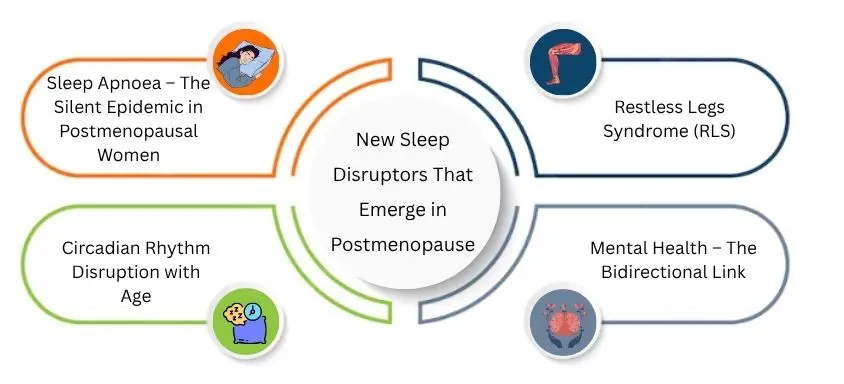
Circadian Rhythm Disruption with Age
Melatonin production naturally declines with age. This weakens the body’s sleep-wake cycle, making sleep lighter and easier to disrupt. The circadian rhythm shifts forward. This means sleep pressure rises earlier in the evening. So, people wake up earlier in the morning.
This “advanced sleep phase” can make women feel tired early in the evening. However, they still wake up too soon. This reduces both sleep duration and quality.
Mental Health – The Bidirectional Link
Mental health plays a powerful and often overlooked role in menopause-related insomnia. Research shows that anxiety is the second biggest predictor of sleep issues (AOR = 2.1). Vasomotor symptoms, like hot flashes, are the strongest predictor (AOR = 2.8).
Insomnia and depression affect each other. Poor sleep raises the chance of depression, and depression worsens sleep.
This creates a cycle where both conditions support each other. This makes recovery harder without specific help.
Long-Term Health Consequences of Untreated Menopause Insomnia
Chronic insomnia linked to menopause isn’t just about being tired. It can also have serious long-term health effects. Poor sleep can lead to serious health issues. This increases the risk of heart disease, weight gain, insulin resistance, and cognitive decline.
It also greatly raises the chances of depression and anxiety. Plus, it hurts memory, focus, and everyday activities.
Untreated insomnia can lower your quality of life and speed up aging. So, early and targeted treatment is essential, not optional.
Proven Treatments for Menopause Insomnia – What the Evidence Says
Menopause insomnia requires targeted, evidence-based treatment-not generic sleep advice. Research shows that the best approaches target key drivers.
These include hormonal changes, brain hyperarousal, and secondary sleep disorders. Below are the most validated options, backed by clinical studies and global guidelines.
1. Cognitive Behavioural Therapy for Insomnia (CBT-I) – First-Line Gold Standard
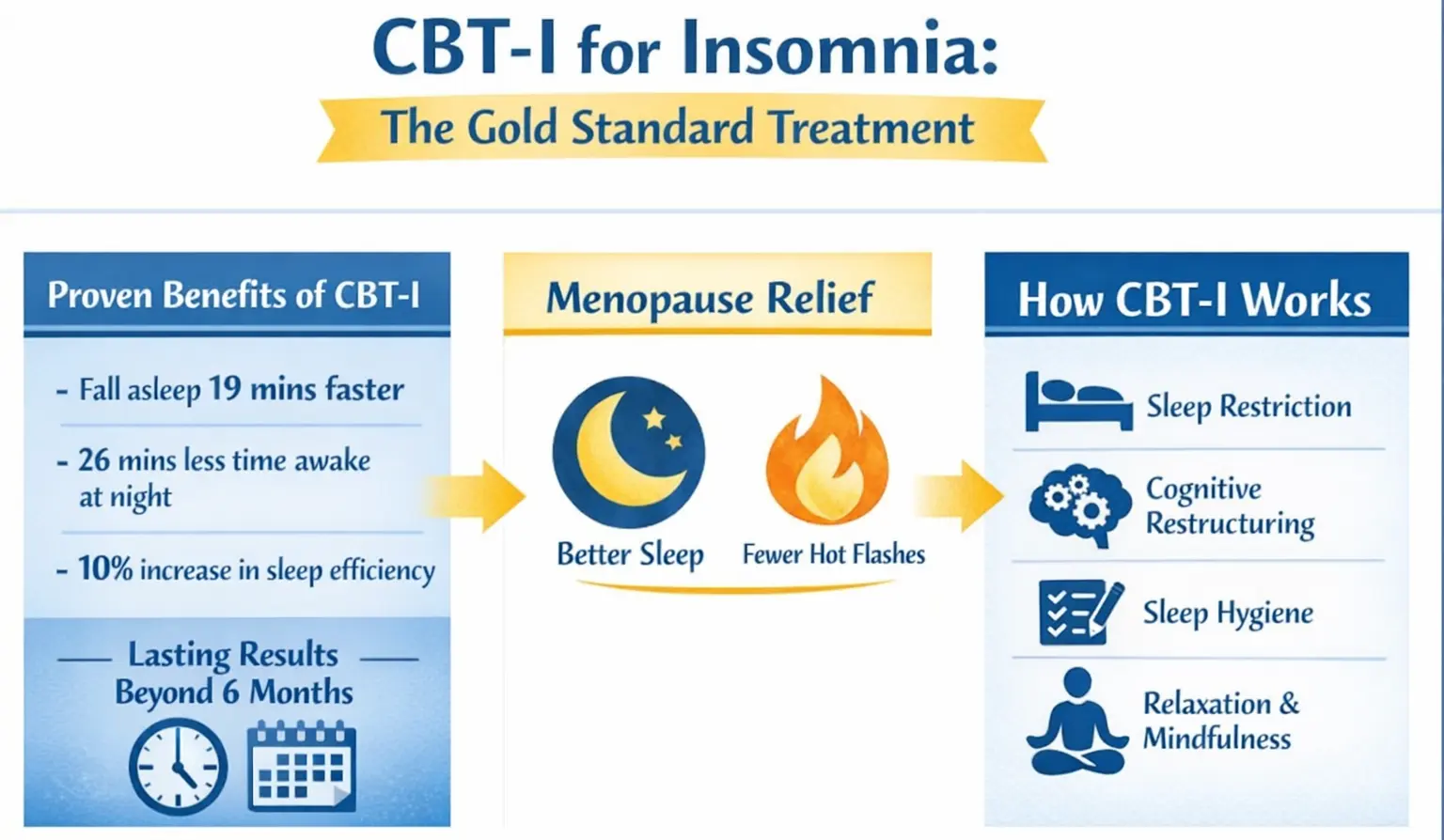
CBT-I is the first-line treatment recommended by major organizations like NAMS, IMS, RANZCOG, SOGC, and NICE (UK). A meta-analysis of 20 randomized controlled trials showed that CBT-I can help.
It reduces sleep latency by about 19 minutes. It also reduces wake after sleep onset (WASO) by about 26 minutes. Plus, it boosts sleep efficiency by about 10%. Unlike medication, its benefits last up to 6 months or longer after treatment ends.
It’s effective in many formats: in-person, phone, and digital. This makes it easy for everyone to access. The MENOS 1 and MENOS 2 trials showed that CBT-I helps with insomnia and reduces hot flashes.
This means it tackles two main menopause symptoms at once. This dual benefit makes it the most comprehensive and sustainable treatment option.
How CBT-I Works (Techniques)
CBT-I uses structured techniques to retrain sleep patterns. Sleep restriction therapy increases sleep pressure. Meanwhile, stimulus control connects the bed only with sleep.
Cognitive restructuring helps change negative thoughts, such as “I’ll never sleep.” Sleep hygiene education also improves daily habits.
Relaxation and mindfulness techniques help lower nighttime arousal. This makes it easier for the brain to transition into sleep.
2. Hormone Therapy (MHT/HRT) – Most Effective When Hot Flashes Drive Insomnia
Menopausal Hormone Therapy helps with insomnia caused by vasomotor symptoms like hot flashes and night sweats.
Research shows that oestrogen with progestogen boosts sleep quality. This is especially true for women with symptoms. Micronized progesterone has an extra benefit.
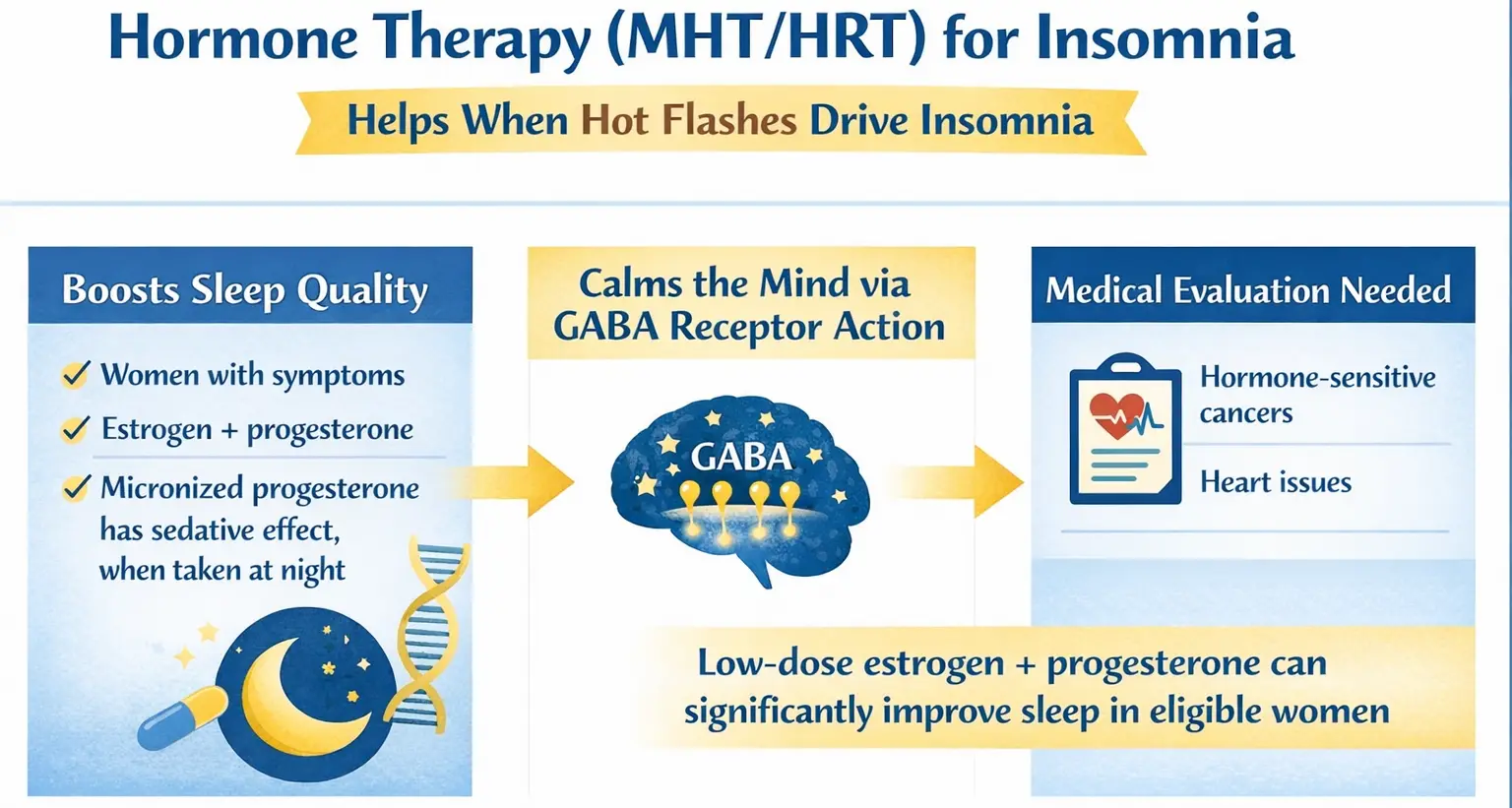
It works on GABA receptors in the brain, promoting a natural sedative effect when taken at night.
The Menopause Society and the IMS 2024 White Paper state that low-dose estrogen and progesterone can significantly enhance sleep for eligible individuals.
MHT isn’t right for everyone. It’s especially risky for women with hormone-sensitive cancers or some heart issues. So, a thorough medical evaluation is key.
3. Non-Hormonal Pharmacological Options
For women who can’t or don’t want to use hormone therapy, there are several non-hormonal options available.
SSRIs and SNRIs such as paroxetine, venlafaxine, and desvenlafaxine can reduce hot flash frequency. They also provide some sleep improvement.
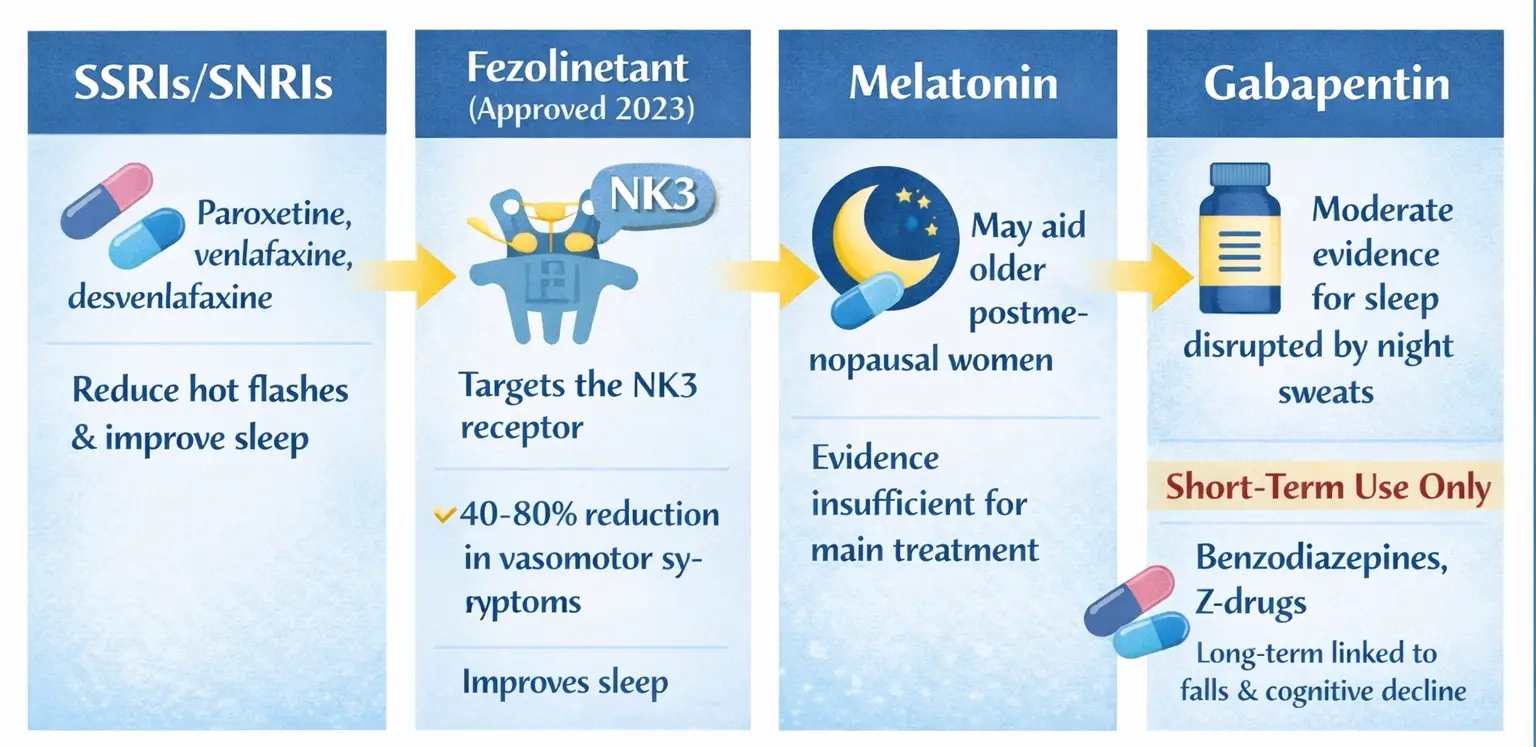
A newer option, fezolinetant (approved in 2023), targets the NK3 receptor. It shows a 40-80% reduction in vasomotor symptoms and also improves sleep.
Melatonin might aid older postmenopausal women, especially with circadian rhythm changes. However, major sleep societies find the evidence insufficient to support it as a main treatment.
Gabapentin has moderate evidence for improving sleep disrupted by night sweats. Sedative-hypnotics, like benzodiazepines and Z-drugs, should be for short-term use only. Long-term use in women over 50 is linked to falls, fractures, and cognitive decline.
4. Treating Secondary Sleep Disorders – The Missed Step
A key step is to find and treat underlying conditions that can mimic or worsen insomnia.
Sleep apnoea should be checked with a home sleep study. Using CPAP can greatly improve or even fix sleep problems. Restless legs syndrome often needs a check of iron levels. If there’s a deficiency, simple iron supplements can work well.

Other factors, such as thyroid problems detected through TSH testing, can significantly affect sleep. The good news is that treatment can help fix this.
Manage depression and anxiety with insomnia. Treating oneself alone often means you won’t fully recover.
The Honest Answer: So, Does Menopause Insomnia Get Better with Age?
The most accurate answer, based on large studies like SWAN, is: it depends on the cause and what you do about it. Menopause insomnia isn’t the same for everyone. It has a few clear patterns, but results differ.
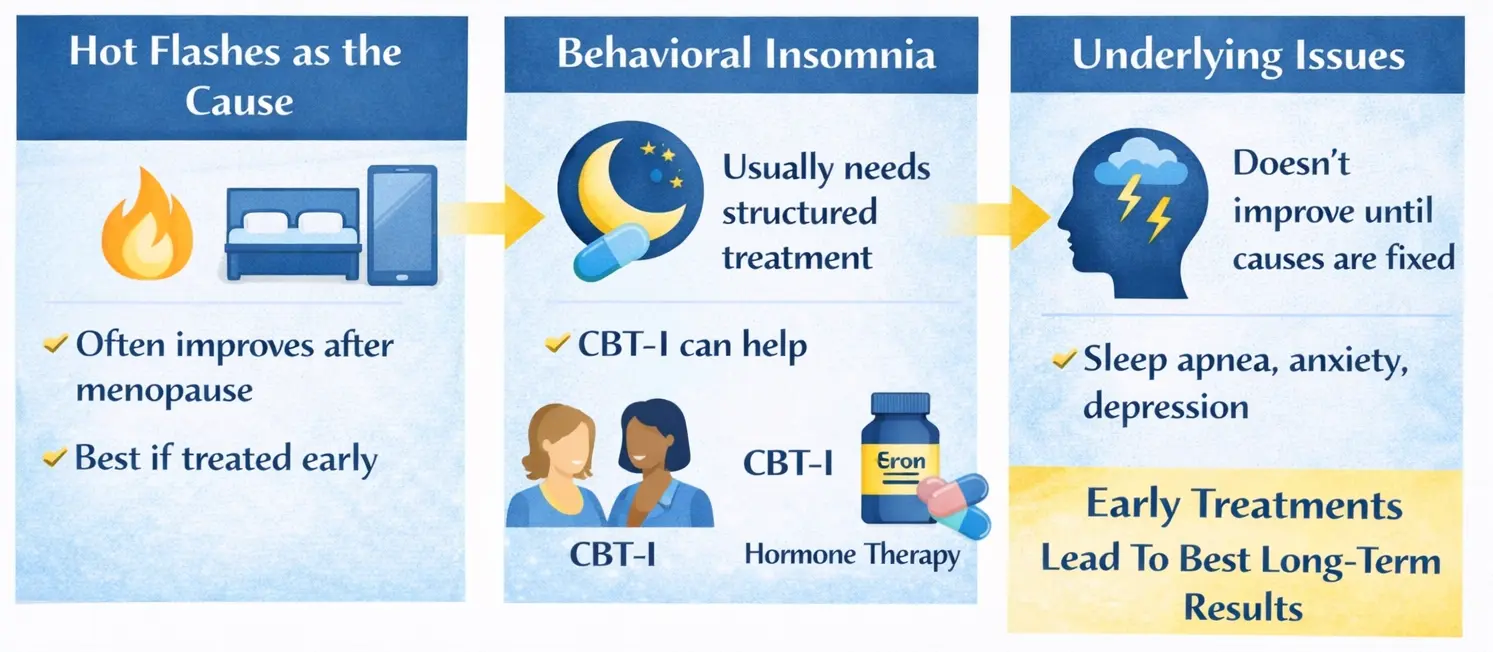
If hot flashes cause sleep problems, they usually improve after menopause. This is especially true if treated early.
When insomnia is behavioral, such as poor sleep habits or staying up too late, it often won’t improve on its own. It usually needs structured treatment, such as CBT-I.
Underlying issues, like sleep apnea or untreated anxiety and depression, can worsen sleep. It usually won’t improve until the root causes are addressed. Women who receive early treatments, such as CBT-I and hormone therapy, often achieve the best long-term results.
When Should You See a Doctor About Menopause Insomnia?
Many women delay seeking help, often waiting 6 months or more, assuming sleep will improve on its own. Menopause insomnia is treatable. Knowing when to take action helps. If sleep issues keep happening and impact your daily life, it’s time to get evaluated instead of waiting.
Red Flags – See a Doctor If You Have:
If you have sleep issues for more than 3 months, or wake up 3 or more nights a week and can’t fall back asleep, you should get help.
Daytime impact is another key sign such as fatigue affecting work, relationships, or even driving safety. Warning signs are a worsening mood, more anxiety, and relying on alcohol or sleep aids.
If a partner hears snoring or gasping, or sees pauses in breathing, it could mean a sleep disorder. One example is sleep apnea. This needs medical attention.
What to Ask Your Doctor
Be specific during your appointment. Ask about CBT-I programs, whether in-person or online. This is the best long-term treatment. Request a sleep study if there’s any suspicion of sleep apnoea.
Menopausal hormone therapy (MHT) might help with more than just hot flashes. It could also improve sleep. Many women experience sleep issues during menopause.
Hormonal changes can disrupt sleep patterns. MHT may balance these hormones and lead to better rest.
Studies show mixed results. Some women report improved sleep quality with MHT. Others see little change. It’s important to talk to a doctor about risks and benefits. Overall, MHT could be a helpful option for sleep issues during menopause.
It’s helpful to request blood tests. Check iron levels (ferritin), thyroid function, and hormonal markers, such as FSH.
What to Bring to the Appointment
Preparation helps your doctor understand the full picture. Keep a 2-week sleep diary noting bedtime, wake time, sleep quality, and any night sweats.
Bring a list of all medications and supplements you’re taking. Track daytime symptoms like fatigue, poor concentration, and mood changes. These are important for diagnosis and treatment.
Key Takeaways
Menopause-related sleep disturbance affects 40-60% of women. That’s much higher than the global average of 16.2%.
Research, such as the SWAN study, shows that sleep may improve after menopause. This improvement mainly occurs when hot flashes disrupt sleep and are treated well.
New issues often arise. These include sleep apnea, restless legs syndrome, and circadian rhythm disturbances. Each needs its own management.
CBT-I is the gold standard for treatment. Its benefits last 6 months or longer. Micronized progesterone, a body-identical MHT, also helps sleep.
It balances hormones and calms the brain. Risk factors are important. Women with anxiety are 2.1 times more likely to have insomnia. Those with vasomotor symptoms are 2.8 times more likely to face the same issue.
FAQ
Q1. Does menopause insomnia get better after menopause?
Ans:- For some women, sleep gets better after menopause. This is especially true if hot flashes and night sweats were the main issues. However, studies show that over half (52-64%) still struggle with poor sleep. It mostly depends on the root cause and whether treatment began early.
Q2. How long does menopause insomnia last?
Ans:- Menopause-related insomnia can last during the menopausal transition. This phase usually lasts 4 to 10 years. Some people still struggle with sleep issues after menopause. This is especially true for those with conditions like sleep apnea or restless legs syndrome that aren’t managed well.
Q3. What is the most effective treatment for menopause insomnia?
Ans:- The best treatment for insomnia is Cognitive Behavioural Therapy (CBT-I). It’s the first choice recommended worldwide. When hot flashes disrupt sleep, menopausal hormone therapy (MHT) can help. Taking micronized progesterone at night improves sleep quality and controls symptoms.
Q4. Can menopause cause permanent insomnia?
Ans:- Menopause itself does not usually lead to permanent insomnia. If you ignore sleep problems, they can become a habit. Your brain starts to associate bedtime with wakefulness or stress. This pattern can last even after hormonal shifts. However, therapies like CBT-I work well to reverse it.
Q5. Is it normal to wake up every night during menopause?
Ans:- Frequent night waking is common during menopause, but it shouldn’t be dismissed as “normal.” Waking up several times each night, many nights a week, for months, counts as clinical insomnia. With proper diagnosis and treatment, consistent and restful sleep can be restored.