It is not a treatment for breast cancer in any general sense.
It is not interchangeable with estradiol tablets.
It is not a medicine to take without medical supervision.
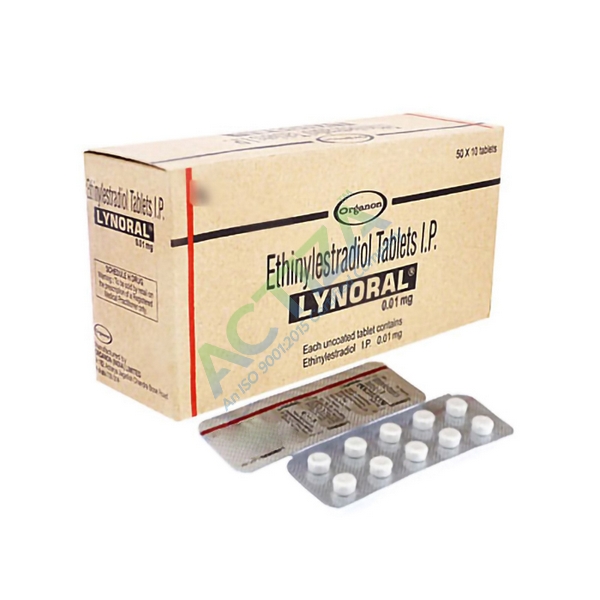
0.05 mg is five times the dose of 0.01 mg.
50 micrograms of ethinylestradiol is a high oestrogen dose by modern standards.
Modern combined contraceptive pills typically use 20 to 35 micrograms.
Higher oestrogen doses carry higher clot risk.
The strengths are not interchangeable and must not be substituted.
Check which strength the prescription specifies before dispatch.
How It Works (Mechanism of Action)
Oestrogen receptors are present in many tissues throughout the body.
They are found in the womb, breasts, vagina, bones, liver and blood vessels.
Ethinylestradiol binds those receptors in place of natural oestrogen.
The receptor complex then switches particular genes on or off.
In the womb lining, the result is growth and thickening.
In bone, the result is reduced bone breakdown.
In the brain, the result includes relief of hot flushes.
In the liver, the result includes changes to clotting proteins.
Natural estradiol is largely broken down as it passes through the liver.
The ethinyl group on ethinylestradiol prevents much of that breakdown.
More of the drug survives, which is why it works well as a tablet.
But it also means the liver is exposed to a strong oestrogen signal.
The liver responds by altering production of clotting factors.
Protein S and antithrombin fall. Resistance to activated protein C rises.
All three changes favour clot formation.
This is the pharmacological basis for the clotting risk.
Comparing the two oestrogens
Property
Ethinylestradiol
17-beta-estradiol
Source
Synthetic modification
Identical to the body’s own oestrogen
Survives the liver
Yes, extensively
Largely broken down
Hepatic clotting effects
Potent
Considerably weaker
Main modern role
The oestrogen in combined contraceptives
Hormone replacement therapy
Position in hormone therapy
Largely abandoned
The current standard
Transdermal option
Not used this way
Available, and lowest clot risk
That table is the single most useful thing a customer can take from this page. If an oestrogen is needed, the choice of which oestrogen is a real clinical decision with real consequences.
Dosage Guide
A doctor must prescribe and set this. Dosing depends entirely on the condition being treated.
Situation
Approach
Progestogen needed?
Notes
Woman with a uterus, any oestrogen use
As prescribed
YES, always
Protects the womb lining
Woman after hysterectomy
As prescribed
No
No endometrium to protect
Female hypogonadism
Specialist regimen
Yes if uterus present
Long-term endocrine supervision
Menopausal symptoms
Lowest effective dose
Yes if uterus present
Shortest duration consistent with goals
Palliative oncology use
Specialist only
Not applicable
An oncology decision, not a pharmacy one
Contraception
Not applicable
Not applicable
This is not a contraceptive
Pregnancy
Contraindicated
Not applicable
Stop immediately if pregnancy occurs
Review interval
At least annually
Not applicable
Benefit and risk reassessed each time
How to Take It
Confirm with a doctor which strength you have been prescribed.
Confirm whether you also need a progestogen.
Take one tablet daily, or as specifically directed.
Swallow it whole with water.
It may be taken with or without food.
Take it at the same time each day.
Do not stop or change the dose without medical advice.
Attend every review appointment.
What to report, and when
Any vaginal bleeding that is unexpected, heavy or prolonged.
Any bleeding after the menopause.
Any new breast lump.
Breakthrough bleeding that persists beyond the first few months.
These need investigation rather than reassurance.
Unexplained bleeding is the main early warning of endometrial change.
Smoking, particularly from age 35 onwards.
Long periods of immobility, including long flights.
Major surgery, especially with prolonged bed rest.
Significant overweight.
Dehydration
A personal or family history of clots.
Tell your doctor before any planned surgery.
Oestrogen is usually stopped several weeks beforehand.
Precautions
Contraindications
Known or suspected pregnancy.
Breastfeeding.
Known, suspected or past breast cancer.
Any known or suspected oestrogen-dependent tumour.
Undiagnosed abnormal genital bleeding.
Current or past deep vein thrombosis or pulmonary embolism.
Current or past arterial clotting disease, including stroke and heart attack.
Known inherited clotting disorder.
Active liver disease, or liver function that has not returned to normal.
Known hypersensitivity to ethinylestradiol or any excipient.
Porphyria.
Tell your doctor about
Whether you still have a uterus.
Whether you have been prescribed a progestogen alongside this.
Any personal or family history of blood clots.
Any personal or family history of breast cancer.
Any liver or gallbladder disease.
High blood pressure.
Diabetes.
Raised triglycerides, because of pancreatitis risk.
Migraine, particularly migraine with aura.
Epilepsy or asthma, which oestrogen can aggravate.
Fibroids or endometriosis, which oestrogen can stimulate.
Lupus.
Thyroid problems, since oestrogen alters thyroid test results.
Whether you smoke, and your age.
Any planned surgery or period of immobility.
Every other medicine you take, including herbal products.
Food, drink and daily life
No specific food restriction applies.
Take it consistently with respect to meals.
Grapefruit juice can raise oestrogen levels. Avoid large amounts.
Licensed pharmacist (B.Pharm) with 12+ years in clinical pharmacy and patient care. Reviews every article for evidence-based accuracy before it is published on ACTIZA Store.
Reviews
There are no reviews yet.
Be the first to review “Lynoral Tablet (Ethinyl Estradiol)” Cancel reply



Reviews
There are no reviews yet.