
Sorry, nothing in cart.

Introduction: India – The Pharmacy of the World
India is widely known as the “Pharmacy of the World” due to its significant role in supplying medicines globally.
The country is a major producer of generic drugs, helping provide affordable treatments to patients worldwide.
Many international patients and healthcare providers trust Indian pharmaceutical products because of their high quality, strict manufacturing standards, and cost-effectiveness.
In the last ten years, India’s pharmaceutical exports have shown consistent growth. They now reach markets in North America, Europe, Africa, and Asia.
Healthcare costs are rising worldwide. Because of this, many people want affordable and reliable medications from India. This makes India an important partner in improving access to treatment globally.
Millions of patients around the world buy medicines from India. They find them more affordable and still meet quality standards. Patients in the U.S., UAE, and Singapore rely on Indian pharmaceutical suppliers. They seek treatments that are often costly or hard to find at home.
India is now a key player in global healthcare. It supplies certified, accessible medicines to patients, pharmacies, and distributors worldwide.
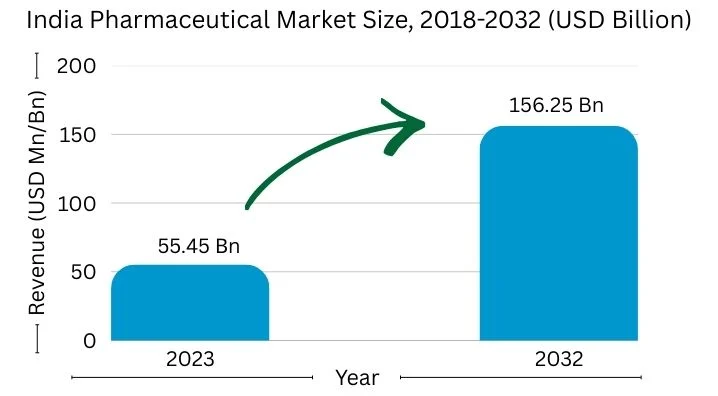
The chart shows the market size will grow from about $55.45 billion in 2023 to around $156.25 billion by 2032. This means a compound annual growth rate (CAGR) of about 12.2%.
This growth shows a rising global need for Indian medicines. It also highlights expanding pharmaceutical production and growing exports to international markets.
India Pharma – Key Facts at a Glance (2025-2026)
India plays a key role in global healthcare. It supplies about 20% of the world’s generic medicines. Also, it is the largest producer of vaccines worldwide. The country’s pharmaceutical sector has over 10,000 manufacturing facilities. It produces many types of medicines that meet global quality standards.
Indian pharmaceutical companies export to over 200 countries. This makes India a trusted supplier of medicines worldwide.
Key export destinations include:
This shows the rising global demand for affordable, reliable treatments made in India.
The country exported more than USD 30.47 billion in medicines in FY 2024–25. This shows steady growth in global demand.
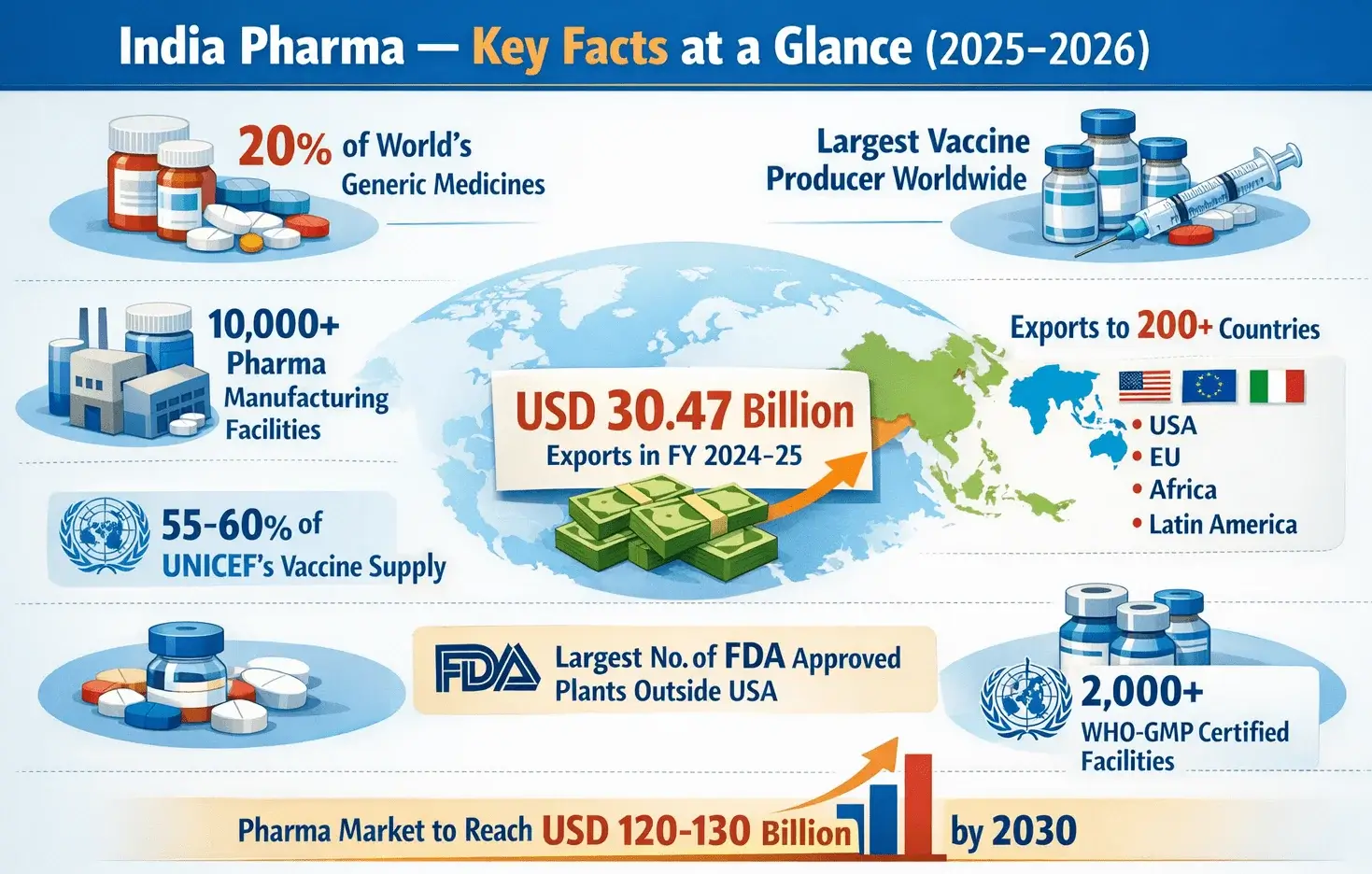
It also provides 55–60% of the vaccines given out by UNICEF. This shows India’s important role in global healthcare.
India has the most FDA-approved plants outside the U.S. It also has over 2,000 WHO-GMP certified facilities. These ensure high-quality production standards.
The pharmaceutical market in India is set to grow significantly. It could hit USD 120–130 billion by 2030. This growth is due to rising exports and increased global trust in Indian medicines.
Massive Cost Savings – Why Medicines from India Are Up to 99% Cheaper
One big reason patients choose Indian medicines is the lower cost compared to the West. Many treatments in India can cost 90–99% less than similar branded medicines in the U.S. or Europe. This makes life-saving therapies much more accessible.
Lower prices happen mainly because Indian drug companies focus on generics. They produce in bulk and spend less on research and development than brand-name makers.
Medications for cancer, diabetes, heart disease, and rare disorders often cost much less than in the West. For patients with long-term or rare diseases, this price difference helps. It makes treatment more affordable. It can also greatly improve access to essential healthcare.
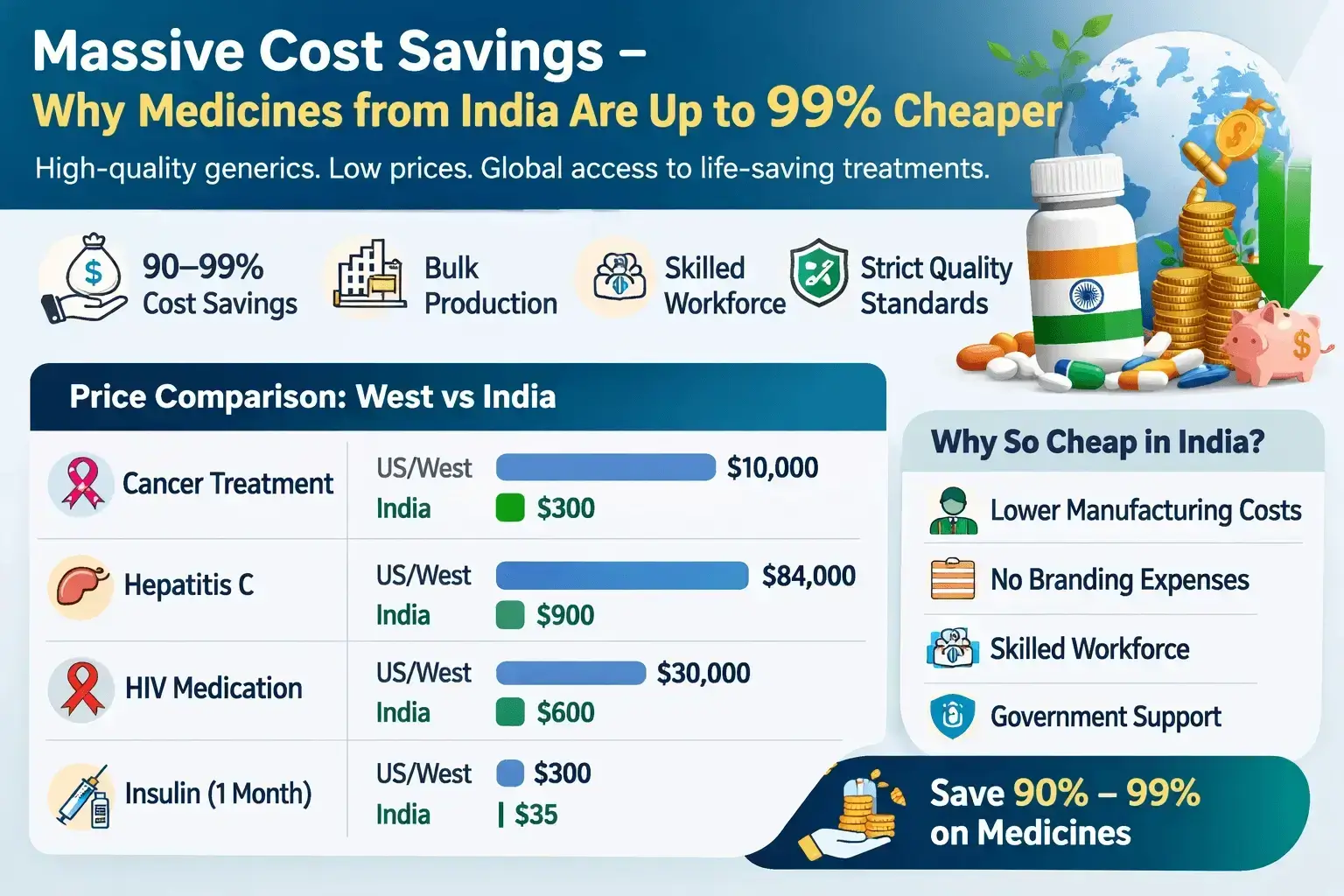
Generic drugs from India often cost much less than brand-name medicines in the U.S., U.K., Canada, and Australia.
A comparison chart shows examples like cancer, hepatitis C, HIV, and insulin treatments. Patients can save about 90% to nearly 99% by buying medicines from India.
These lower prices are not due to lower quality. These results come from lower manufacturing costs. They have a skilled workforce. They use quality raw materials. They also have strong healthcare policies.
India’s strong production helps its pharmaceutical industry. This allows the country to offer high-quality medicines for lower prices. This helps patients around the world get treatment. It’s especially good for those with long-term or serious illnesses.
International Quality Certifications – WHO, FDA, GMP and More
Globally, people trust India’s pharmaceutical sector. It maintains this trust by sticking to strict international quality standards.
Many Indian manufacturing plants hold approvals from major international regulatory organizations.
This means that they produce medicines in safe and regulated environments.
These approvals confirm that Indian facilities meet strict testing and safety standards. This ensures they can provide high-quality medicines to regulated markets around the world.
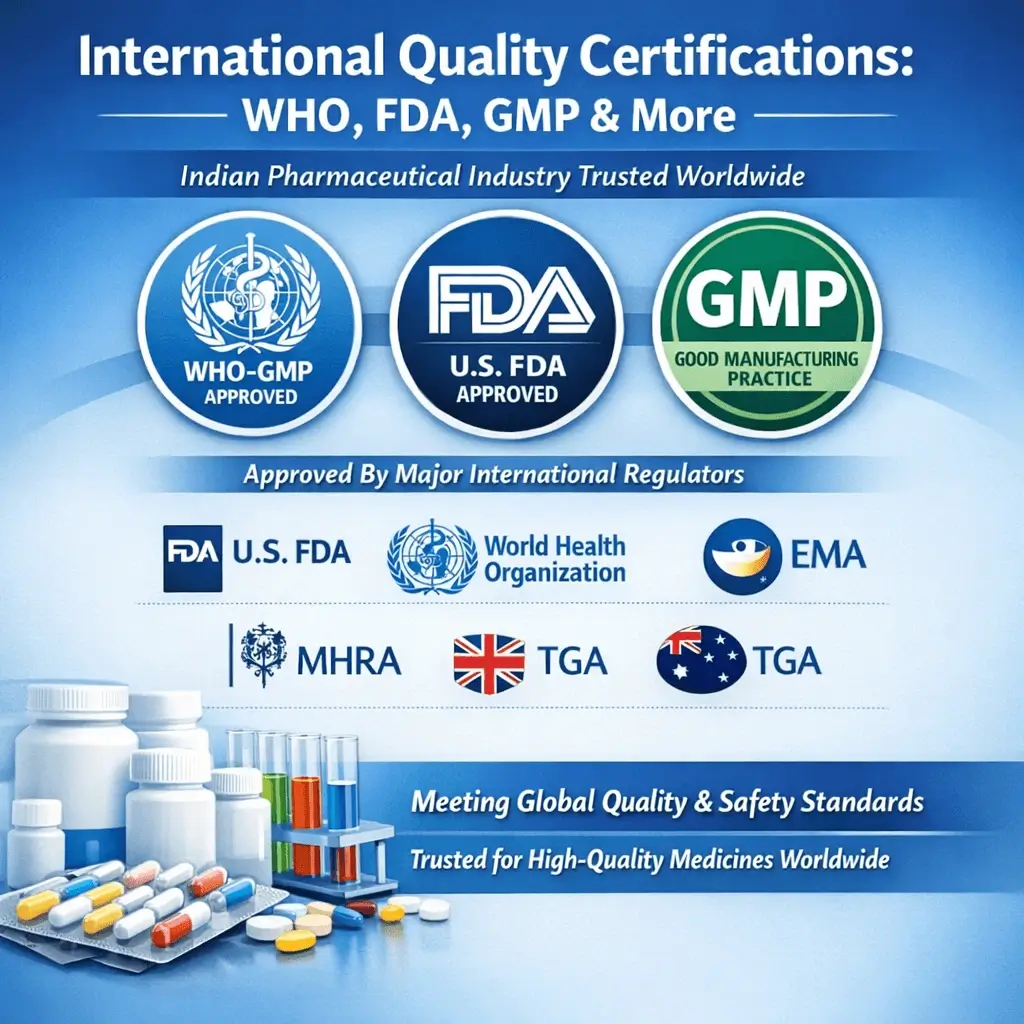
Pharmaceutical manufacturers in India have to follow strict rules. These rules come from the Central Drugs Standard Control Organisation. This ensures they meet global manufacturing standards. Many Indian pharmaceutical facilities are approved by key international regulators.
These regulators are:
These certifications prove that Indian medicines meet high safety standards. They also ensure quality at an international level. They align with the requirements of major healthcare markets around the world.
India’s Regulatory Strength – Data-Proof (2025)
India’s pharmaceutical sector has a robust regulatory system. This system ensures high-quality medicine for global markets. The country has the most FDA-approved manufacturing plants outside the U.S. This shows it meets high standards. It also follows strict international guidelines.
The Central Drugs Standard Control Organisation oversees drug safety and compliance. Many facilities follow World Health Organization GMP guidelines. They also use export quality monitoring systems. This helps ensure reliable medicines for global markets.
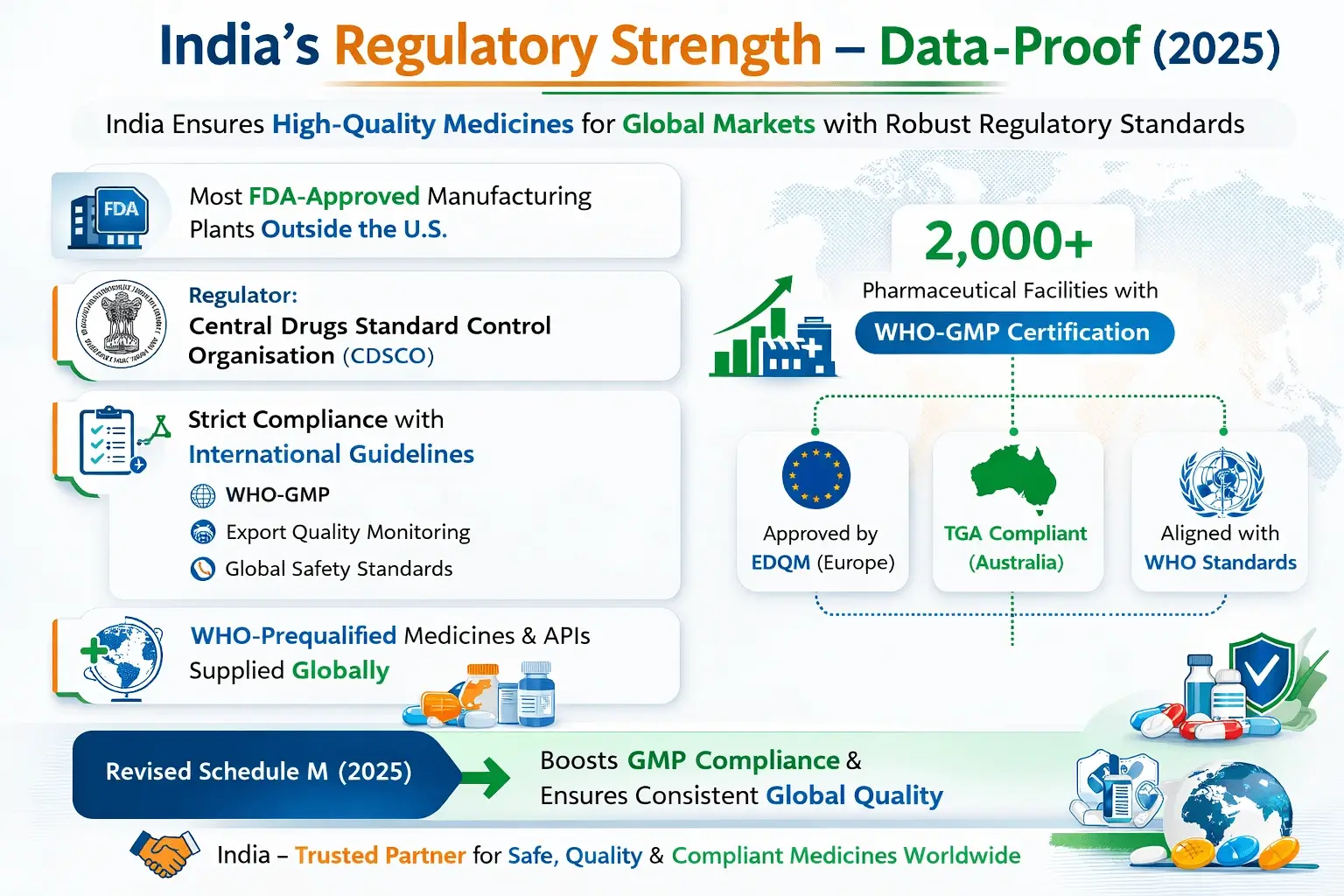
More than 2,000 pharmaceutical facilities have WHO-GMP certification. Many of these plants are approved by the European Directorate for the Quality of Medicines (EDQM). They also follow Australia’s Therapeutic Goods Administration (TGA) guidelines.
India also provides many WHO-prequalified medicines and APIs for global health programs.
Updated rules, like Revised Schedule M (2025), boost GMP compliance for all manufacturers. This helps ensure medicine quality remains consistent in global markets.
India Supplies the Same Active Ingredients as Branded Drugs
APIs are the main components responsible for the therapeutic effect of a medicine. Generic medicines from India have the same active ingredients. They also match the strength and dosage of branded ones.
These medicines must meet strict bioequivalence standards. This ensures that the generic version works in the body like the original drug.
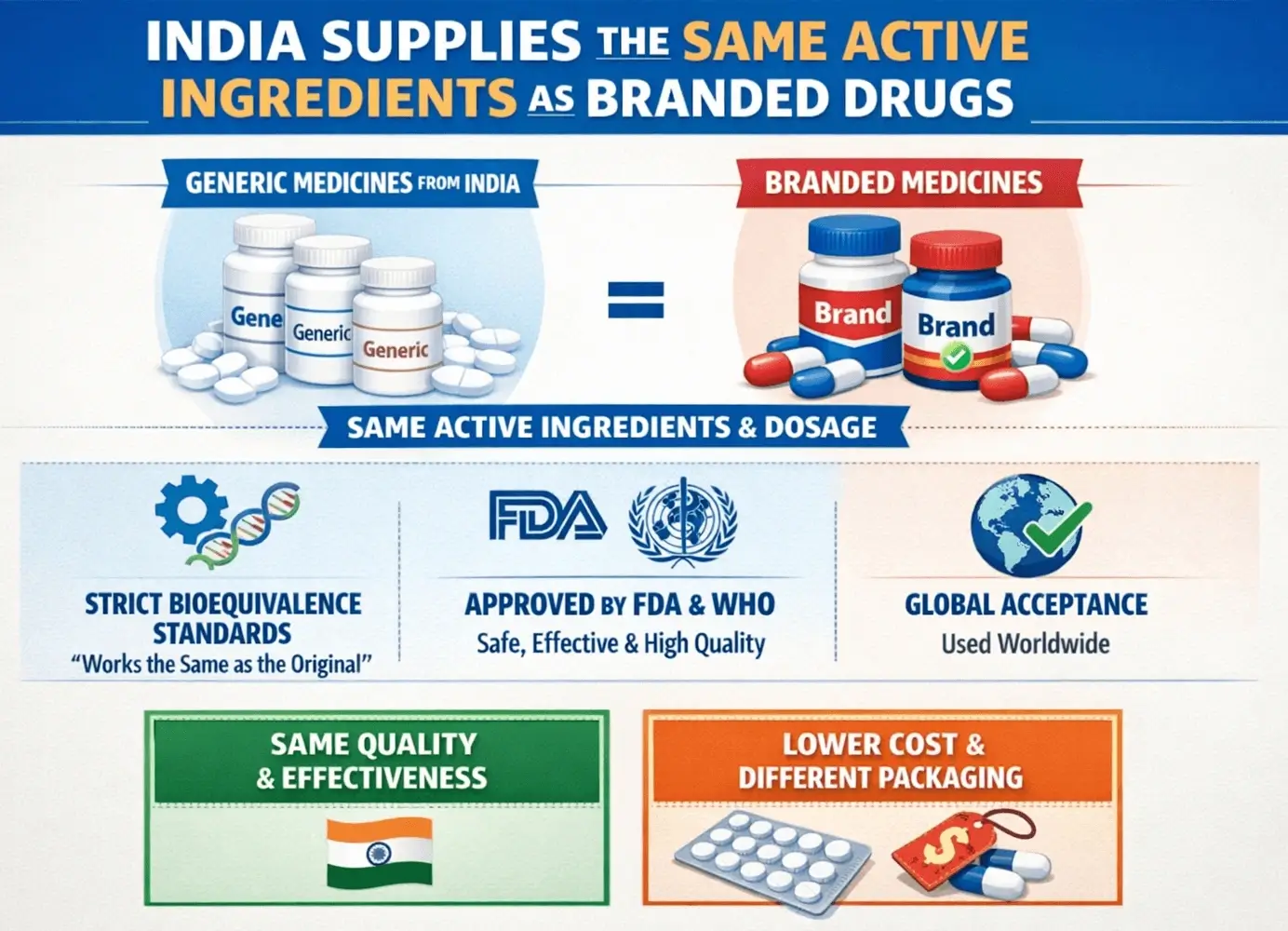
The FDA and WHO approve these drugs. This means they are safe, effective, and high quality worldwide.
Generic medicines from India contain the same active ingredients and dosage strength as branded medicines used in Western countries.
The difference, however, lies mainly in branding, packaging, and price.
Access to Life-Saving Medicines Not Available Locally
Pharmaceutical suppliers in India make treatments for rare diseases. They also produce cancer therapies, antiviral drugs, and other specialized medications. These medications are often hard to find in areas with limited healthcare.
Patients and healthcare providers worldwide count on India for essential treatments. This is especially true when local options are unavailable or too costly.
Compassionate supply programs help get critical medicines to patients. These patients often need them fast. International distribution networks play a key role in this process.
India helps close the global healthcare gap by offering life-saving specialty medicines. These include treatments for oncology, HIV, and rare diseases. Often, these medicines are hard to find, delayed, or too expensive in local markets.
Patients in countries like the Philippines and Lithuania depend on India’s wide range of treatments. This includes advanced biologics, heart medications, pediatric formulations, and orphan drugs.
Indian pharma makes complex generics at scale. This keeps vital treatments available for patients when local healthcare can’t meet their needs.
Reliable Global Shipping and Cold Chain Integrity
Many companies team up with trusted international couriers. They ensure medicines are delivered safely to various countries.
Cold chain logistics are important for temperature-sensitive products. They ensure that medicines remain stable during transportation.
Temperature-controlled storage also helps maintain medicine stability during transportation.
Suppliers use secure packaging and proper documents. They also rely on real-time tracking systems to protect products and monitor shipments.
Organized logistics networks ensure the timely delivery of medicines worldwide.
They also maintain the quality and safety of these products.

India gained global recognition in the early 2000s when Indian pharmaceutical manufacturers introduced highly affordable HIV treatments for developing countries.
This development challenged high global medicine prices and positioned India as a trusted supplier of affordable treatments.
Over the decades, India has built global trust. It did this by following strict US FDA and WHO manufacturing standards. This effort made India a key vaccine provider during the pandemic.
Today, India reaches over 200 countries. Smart trade deals helped. A focus on quality manufacturing did too. The 2025 Revised Schedule M was key in making this happen.
Exports are set to reach a record $30.47 billion in 2026. The sector has changed from a local manufacturer to a vital part of global healthcare.
Government Support and Export Infrastructure
Government policies and industry organisations strongly support India’s pharmaceutical export growth.
The Pharmaceuticals Export Promotion Council of India helps promote Indian medicines worldwide. They also support exporters with regulatory guidance.
The Government of India aims to improve pharmaceutical manufacturing. They are also focusing on enhancing export infrastructure and establishing international trade partnerships.
Strong logistics and clear rules help Indian pharmaceutical companies. They send medicines safely and reliably to countries around the world.
The Indian government turned its pharmaceutical sector into a global leader. This happened through big investments and smart policies.
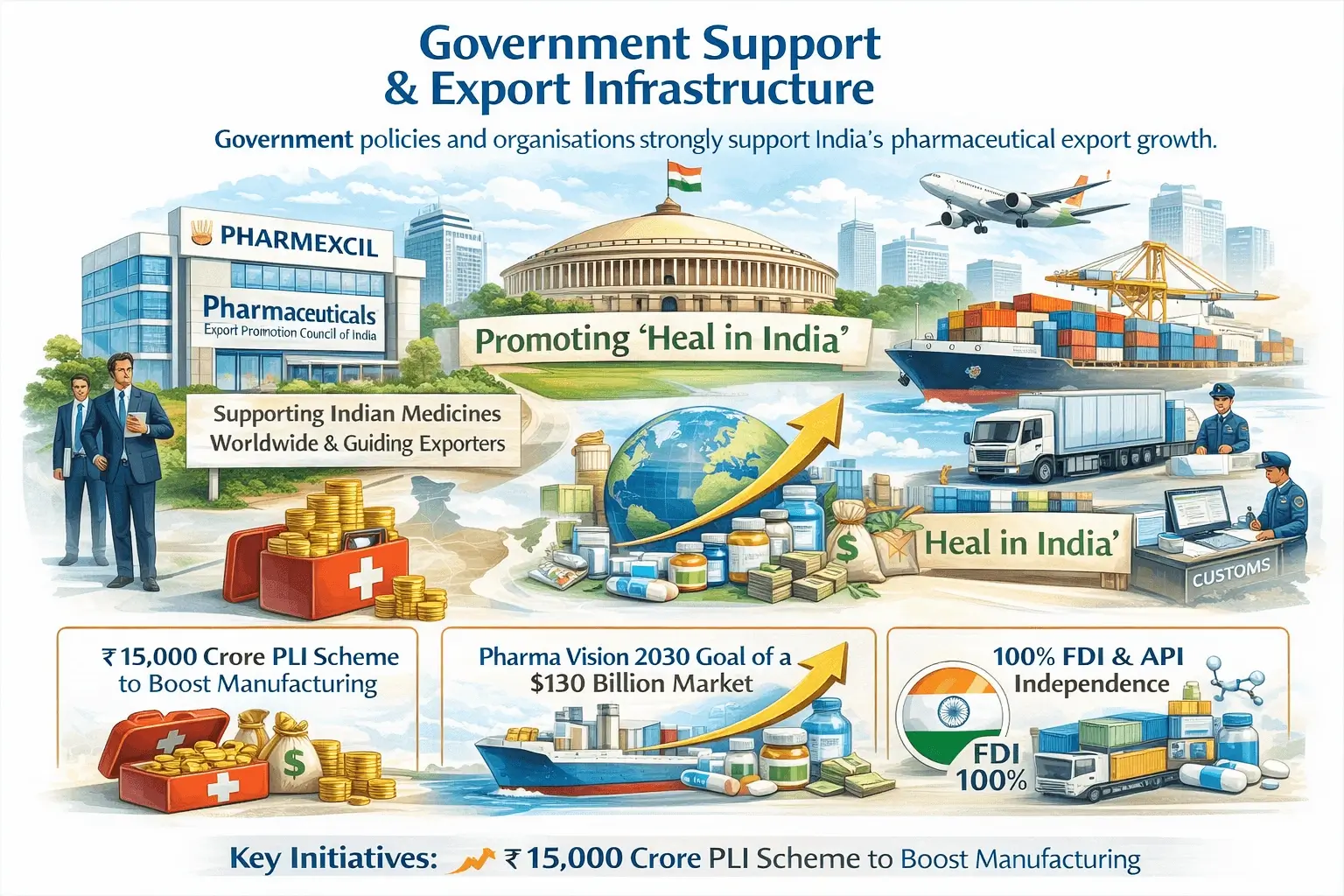
Key initiatives are:
India allows 100% FDI and promotes API independence. This has created a self-sufficient system with thousands of manufacturers ready for export.
The Numbers Don’t Lie: Global Trust in Indian Medicine Suppliers
Indian pharmaceutical exports are worth billions each year. They supply medicines to over 200 countries around the globe.
The country has a big share of the global generic medicine market. It offers affordable treatments to healthcare systems around the world.
Collaborating with international healthcare groups and pharmaceutical firms boosts India’s role. It makes India a trusted partner in improving global access to medicines.
Why Choose Actiza Pharmacy- Your Trusted India-Based Supplier
Actiza Pharmacy has built a strong reputation as a reliable supplier of high-quality medicines to customers across the world.
The company has extensive experience in global pharmaceutical distribution. It maintains strict quality standards. It only sources medicines from verified and certified manufacturers.
Actiza provides a broad range of specialty medicines. These include treatments for chronic and complex health issues.
The company has secure ordering, reliable shipping worldwide, and helpful customer support. It’s easy and reliable for pharmacies, distributors, and patients worldwide to get medicines from India.
Frequently Asked Questions (FAQ)
Q1:Is it legal to buy medicine from India as an international patient?
Ans:- In many countries, patients can bring in medicines for personal use. This is allowed in small amounts, especially with a valid prescription. Regulations vary by country. So, check local import rules before ordering medicines from India.
Q2: Are Indian generic medicines as effective as branded medicines?
Ans:- Yes, generic medicines made in India have the same active ingredients. They must also meet strict quality and bioequivalence standards. Many products receive approval from global agencies, such as the U.S. Food and Drug Administration. They also follow guidelines from the World Health Organization. This ensures they are as safe and effective as branded medicines.
Q3: How much can I save buying medicines from India compared to my local pharmacy?
Ans:- Patients can save 50% to over 90% on medication. This depends on the specific drug and compares to prices in many Western countries. Lower manufacturing costs and large-scale generic production make these savings possible.
Q4: How do I know the medicines I receive are genuine and not counterfeit?
Ans:- Buy medicines from trusted suppliers. They should work with certified manufacturers to ensure authenticity. Trusted companies use proper packaging, batch numbers, and quality certifications. This helps prove their products are authentic.
Q5: How long does delivery take to my country?
Ans:- Delivery time depends on where it’s going and how it’s shipped. International shipments from India usually take 7 to 15 business days. This is true for reliable couriers.
Q6: Which countries do reputable Indian medicine suppliers typically ship to?
Ans:- Pharmaceutical exporters often send medicines to many regions. These include the United States, the United Kingdom, Europe, and Australia. They also ship to the Middle East, Africa, and various Asian countries. This depends on local rules and import policies.