


Why Nitric Oxide Is Critical for Men’s Health – And What Happens When It Drops
Nitric oxide, or NO, is really important for sending signals in the human body. This gas is small and unstable. It forms in the inner layer of blood vessels, known as the endothelium.
This gas plays a key role in many systems that affect men’s energy levels. It helps with a range of things, including cardiovascular health, blood pressure, and erectile function. It supports muscle and brain function and boosts your immune response.
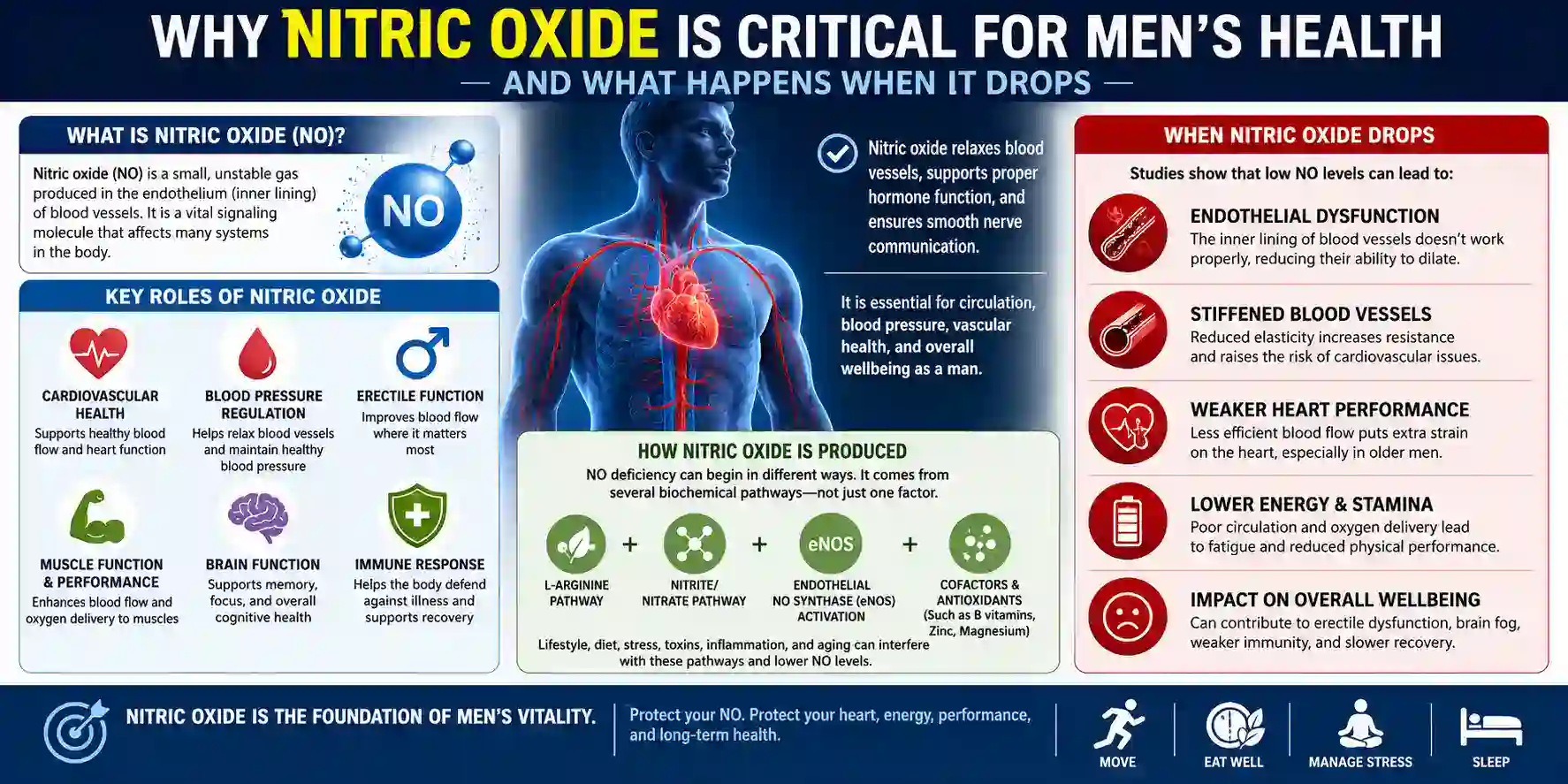
Nitric oxide plays a big role in our body. It relaxes blood vessels, helping hormones work as they should, and it also makes nerve communication much smoother.
Studies show that low NO levels can be bad for your health. This can lead to endothelial dysfunction. It also stiffens blood vessels and weakens heart performance in older men.
Nitric oxide deficiency can begin in different ways. It comes from several biochemical pathways. It isn’t caused by just one factor.
NO helps with circulation, blood pressure, and vascular health. Lower levels have a big impact on your heart, energy, and overall wellbeing as a man. This can add up over time.
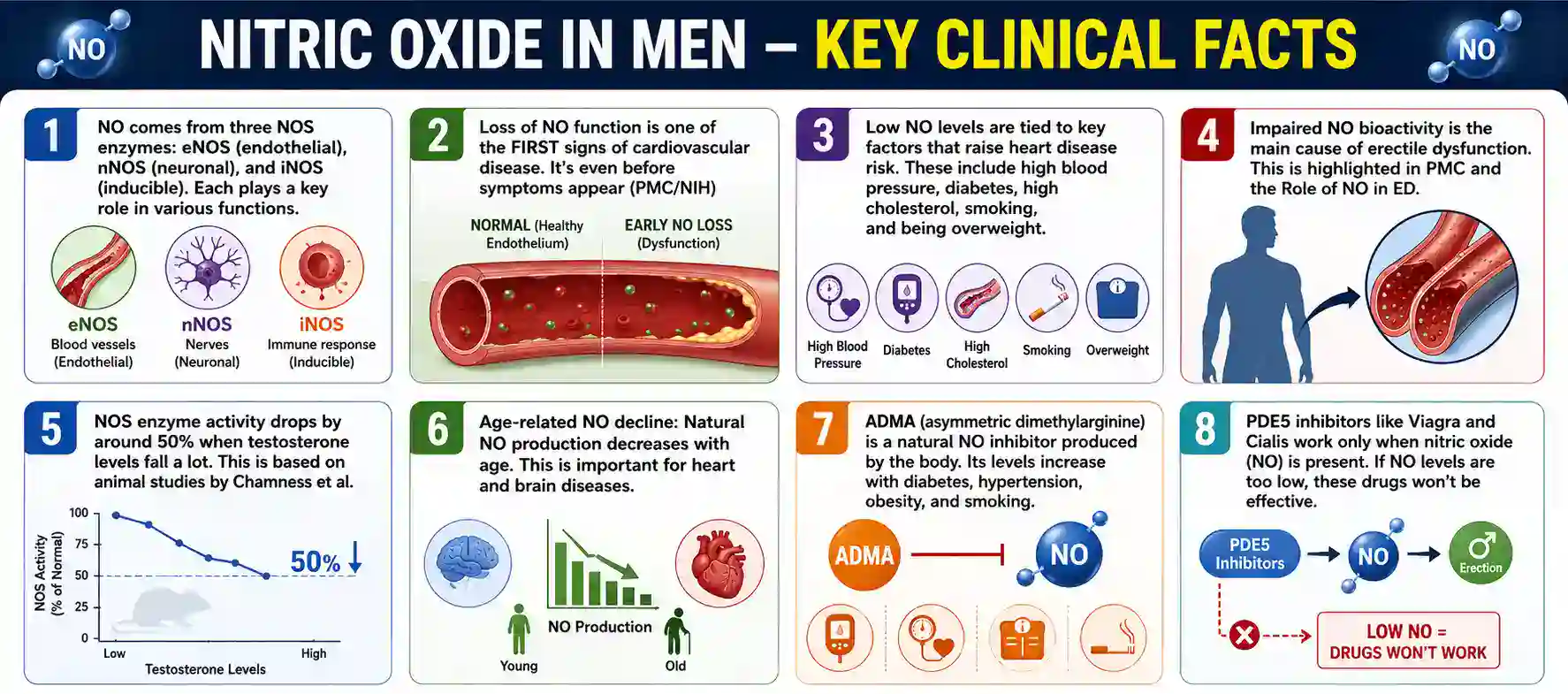
Nitric Oxide in Men – Key Clinical Facts
How Nitric Oxide Is Produced in the Body – The Biochemistry
Nitric oxide is produced naturally in our bodies. It helps with blood flow, nerve signaling, and muscle relaxation. The following explains the two major pathways of NO production.
Pathway 1 – The L-Arginine/NOS Pathway (Primary)
This is the main way nitric oxide is made in blood vessels and nerves. The following shows the full step-by-step biochemical process.
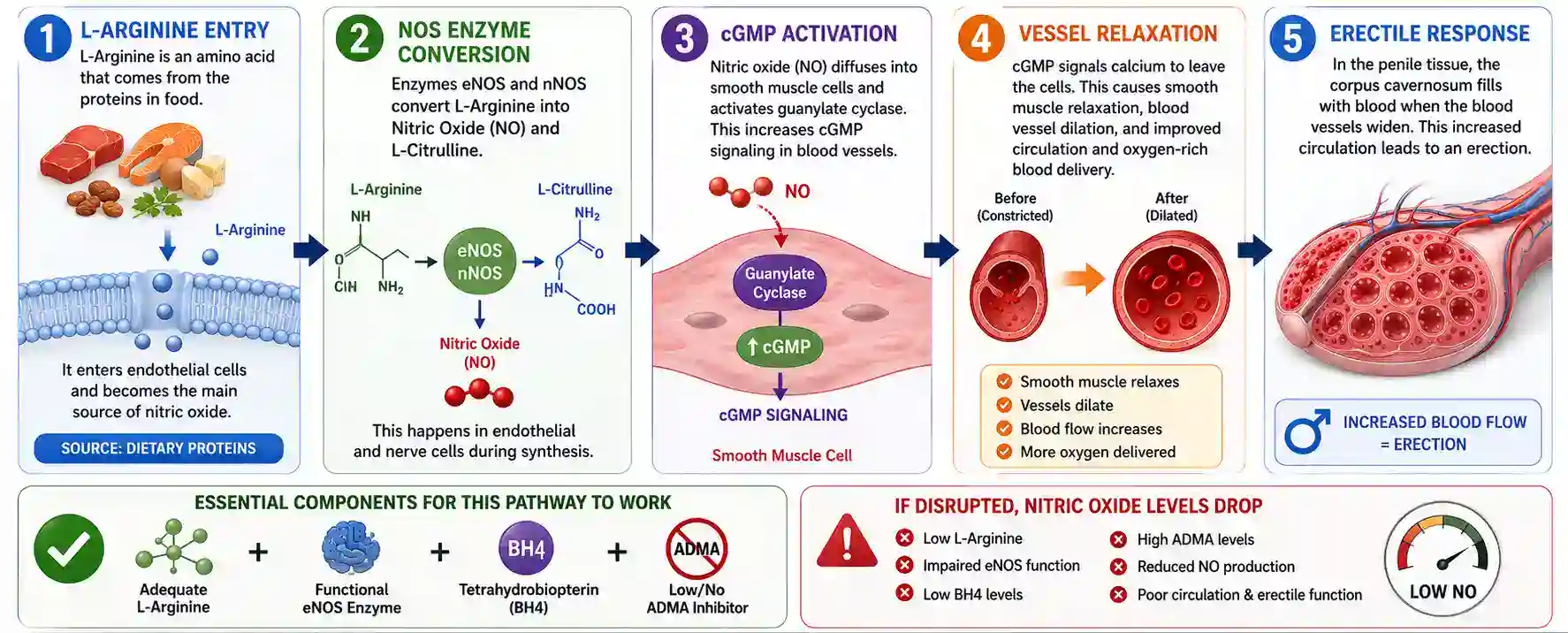
Step 1 – L-Arginine Entry
L-Arginine is an amino acid that comes from the proteins in food. It enters endothelial cells. It then becomes the main source of nitric oxide.
Step 2 – NOS Enzyme Conversion
Enzymes eNOS and nNOS turn L-Arginine into Nitric Oxide. They also produce L-Citrulline. This happens in endothelial and nerve cells. It occurs during synthesis.
Step 3 – cGMP Activation
Nitric oxide moves into smooth muscle cells. It then activates guanylate cyclase. This increases cGMP signaling in blood vessels.
Step 4 – Vessel Relaxation
cGMP signals calcium to leave the cells. This makes smooth muscle relax. As a result, blood vessels dilate. This improves circulation and helps deliver oxygen-rich blood.
Step 5 – Erectile Response
In the penile tissue, the corpus cavernosum fills with blood when the blood vessels widen. This increased circulation leads to an erection.
To work, this pathway requires some essential components. It needs enough L-Arginine, a working eNOS enzyme, and tetrahydrobiopterin (BH4). Also, it must not have an ADMA inhibitor. If disrupted, nitric oxide levels drop.
Pathway 2 – The Nitrate-Nitrite-NO Pathway (Secondary/Dietary)
This pathway mainly uses the nitrates you get from your food. You’ll find these in vegetables like Beetroot and leafy greens.
After you eat, oral bacteria break down nitrates into nitrites. They then change into nitric oxide in your stomach and blood. This pathway is very helpful when oxygen levels drop or nitric oxide synthase activity decreases.
Research shows that this pathway may help widen blood vessels. It can boost your workouts, get your blood pumping, and help with erectile problems.
Studies on beetroot juice showed higher plasma nitrite levels after intake. This means more nitric oxide is available.
L-citrulline is useful. It acts as a building block for L-arginine. This helps make nitric oxide using NO synthase reactions later on.
10 Major Causes of Low Nitric Oxide in Men – Clinical Evidence
Nitric oxide levels may be lower due to a mix of biological and lifestyle factors. It’s important to consider how these elements can affect our health. Below are the leading medically studied causes.
Cause 1 – Aging: The Most Universal Driver
As we age, our bodies produce less nitric oxide. Researchers say this drop can cause various health issues in older people. Research indicates that a decline in nitric oxide function can be an early sign of disease.
This change often suggests that a disease may be developing. Declining NO occurs when the L-arginine pathway is less active. eNOS expression is also lower.
This means the whole process is slowed down. This limits the amount of nitric oxide the endothelium can make.
When nitric oxide levels drop, it can lead to issues with blood vessel linings. This makes the vessels stiffer. This can also affect how well the heart works.
These are key signs of cardiovascular aging. Researchers found several reasons for this decline. These factors are lower eNOS expression, more reactive oxygen species, and higher ADMA levels. This all adds up to less nitric oxide being available. Making it less available creates scarcity.
Cause 2 – Low Testosterone (Hypogonadism)
Studies showed that castrated rats had a 50% drop in NOS enzyme activity. Testosterone replacement might stop this decline or even reverse it.
In older men, testosterone levels tend to drop off after they hit 50. Around the same time, SHBG levels go up.
This leads to lower free testosterone and reduced eNOS and NOS activity. So, less nitric oxide is produced in endothelial tissues.
Testosterone deficiency can impair blood vessel function. It also disrupts the NO/cGMP pathway, which doesn’t work as well as it should.
This can lead to some issues. This raises the chances of erectile dysfunction. It also increases the risk of heart disease in men with late-onset hypogonadism.
Testosterone replacement therapy can cut oxidative stress. It also helps blood vessels. This can really make a difference in overall health.
Cause 3 – Diabetes Mellitus: A Triple Hit on NO
Diabetes has a big impact on how the body produces nitric oxide. This occurs due to oxidative stress, blood vessel damage, and increased NO inhibitors. These factors harm circulation. Below are the three major damaging mechanisms.
Hyperglycaemia Damage
High blood sugar levels significantly increase mitochondrial ROS. This quickly breaks down nitric oxide. Then, it disrupts normal vascular signaling.
Endothelial Dysfunction
Diabetes harms endothelial cells. This leads to eNOS uncoupling. As a result, harmful superoxide is made instead of protective nitric oxide.
Elevated ADMA Levels
Diabetes increases ADMA levels. This blocks eNOS activity. Nitric oxide production drops. This makes endothelial dysfunction worse.
Cause 4 – Smoking: Direct Chemical Attack on eNOS
Smoking directly harms the endothelium. It also lowers nitric oxide production. Smoking hurts eNOS activity. It also raises harmful oxygen radicals.
Reduced nitric oxide makes blood vessels relax less. This raises resistance and increases the risk of clot formation. Smoking affects blood vessels negatively.
This can lead to problems like coronary artery disease, reduced circulation, and erectile issues. So, everything’s pretty much connected. Low nitric oxide can trigger problems like this.
Cause 5 – ADMA Elevation: The Body’s Own NO Blocker
ADMA is a natural compound that inhibits nitric oxide production. It stops eNOS from working properly in blood vessels.
Even a tiny increase in ADMA can bring down nitric oxide production. That’s a problem because it weakens the function of endothelial cells.

Higher ADMA levels are seen in:
Research says ADMA is a pretty good indicator of heart problems. It’s actually more reliable than the usual risk factors we look at.
Cause 6 – Hypertension (High Blood Pressure)
Research shows that a lack of nitric oxide is a key cause of hypertension. Nitric oxide makes blood vessels relax. It also helps control their tone.
Reduced nitric oxide production causes problems with the endothelium. This means vascular resistance goes up. This makes blood pressure harder to control.
Hypertension is closely tied to the endothelium’s ability to relax. The endothelium plays a big role in relaxation. It helps keep your blood vessels healthy.
This impacts the eNOS-NO mechanism. Research shows that stopping nitric oxide loss can help. Boosting nitric oxide production may help lower blood pressure. It can also support heart health.
Cause 7 – Obesity and Metabolic Syndrome
Obesity and metabolic syndrome aren’t great for nitric oxide levels. This occurs due to changes in the blood vessels. These changes damage endothelial function. They make it harder for blood vessels to relax.

These effects include:
Obesity impacts how blood vessels widen and how blood flows. It disrupts the NO signaling pathway, which is crucial for these functions.
Insulin resistance and diabetes can make problems worse. This is especially true for people with problems related to obesity and their blood vessels.
This can cause blood vessels to become stiffer, leading to circulation issues. It also increases long-term cardiovascular risk.
Cause 8 – Poor Diet: Insufficient Nitrate and L-Arginine Intake
Poor dietary habits can lower nitric oxide production. The quality of your diet greatly affects how your body makes and keeps NO.
Dietary factors that support nitric oxide include:
| Dietary Factor | Effect on NO | Top Food Sources |
|---|---|---|
| Nitrate-rich vegetables | Converts to NO via oral bacteria pathway | Beetroot, spinach, celery, arugula, lettuce, watercress, coriander |
| L-Arginine (direct NOS substrate) | Directly used by eNOS to synthesise NO | Red meat, poultry, fish, dairy, pumpkin seeds, walnuts |
| L-Citrulline (L-Arginine precursor) | Converts to L-Arginine → more efficient NO boost than direct arginine | Watermelon (highest), cucumber, squash, pumpkin |
| Antioxidants (vitamins C, E, polyphenols) | Protect existing NO from ROS destruction | Berries, dark chocolate, citrus, green tea, olive oil |
| High-fat, high-sugar ultra-processed food | Increases oxidative stress → destroys NO | Avoid: fried foods, refined sugars, seed oils |
| High dietary salt | Reduces eNOS expression and activity | Reduce processed food, cured meats, packaged snacks |
| Antibacterial mouthwash / antibiotics | Kills oral bacteria that convert nitrate → NO | Use minimally; preserve oral microbiome |
Cause 9 – Physical Inactivity
Not exercising enough reduces the amount of nitric oxide the body produces. Regular movement is important. It helps keep blood vessels healthy.
When we don’t move around much, our blood vessels don’t function properly. Exercise boosts blood flow and shear stress on artery walls. This tells endothelial cells to make more NO. This helps keep circulation healthy.
Lack of physical activity can lead to oxidative stress. This stress harms nitric oxide due to reactive oxygen species. This damage stops it from working properly.
Low NO levels can cause erectile dysfunction. They can also lead to high blood pressure, fatigue, low stamina, and slower recovery.
Engaging in walking, cycling, and yoga can improve endothelial function and blood flow. These activities are enjoyable and good for your health.
Cause 10 – Oxidative Stress: Destroying NO Faster Than It Is Made
Oxidative stress lowers nitric oxide levels. It breaks down NO faster than the body can produce it. Reactive oxygen species, or ROS, are bad news.
They harm the cells that line blood vessels and can impair their function. This damage can lead to some serious issues. This results in poor circulation and less vascular flexibility.
Nitric oxide deficiency happens when the body makes less NO and uses more of it. ADMA, superoxide, and peroxynitrite stop NO from working.
Endothelial dysfunction is an important factor that connects these harmful pathways.
Additional Causes Worth Noting
Some lesser-known factors can impact your nitric oxide levels. Lesser-known factors can also affect outcomes.
Hidden Nitric Oxide Disruptors include:
| Cause | Mechanism | Key Note |
|---|---|---|
| Chronic alcohol consumption | Reduces eNOS expression; increases ROS | Even moderate chronic intake impairs endothelial function |
| High salt diet | Directly reduces eNOS expression and activity | Common in Western diet; underappreciated NO driver |
| Hyperhomocysteinaemia | Impairs eNOS function; increases oxidative stress | Elevated in B12/folate deficiency – check in men >50 |
| Hypercholesterolaemia | oxLDL inhibits eNOS via caveolin; ADMA elevation | LDL oxidation directly blocks NO signalling cascade |
| Chronic kidney disease | ADMA accumulation (impaired renal clearance) | ADMA normally excreted by kidneys – CKD causes dangerous accumulation |
| Sleep apnoea (OSA) | Intermittent hypoxia → ROS → NO destruction; ADMA elevation | Common in obese men; often undiagnosed; measurably lowers NO |
| BH4 deficiency | eNOS uncoupling – produces superoxide instead of NO | Tetrahydrobiopterin is essential eNOS cofactor |
| Chronic psychological stress | Cortisol → sympathetic activation → vasoconstriction; reduces NO | Stress-related ED mechanism confirmed in PMC 2023 |
Signs and Symptoms of Low Nitric Oxide in Men
Low nitric oxide levels aren’t good for circulation. It can cause low energy, some sexual health issues, and problems with metabolism. Symptoms often develop slowly and go unnoticed.
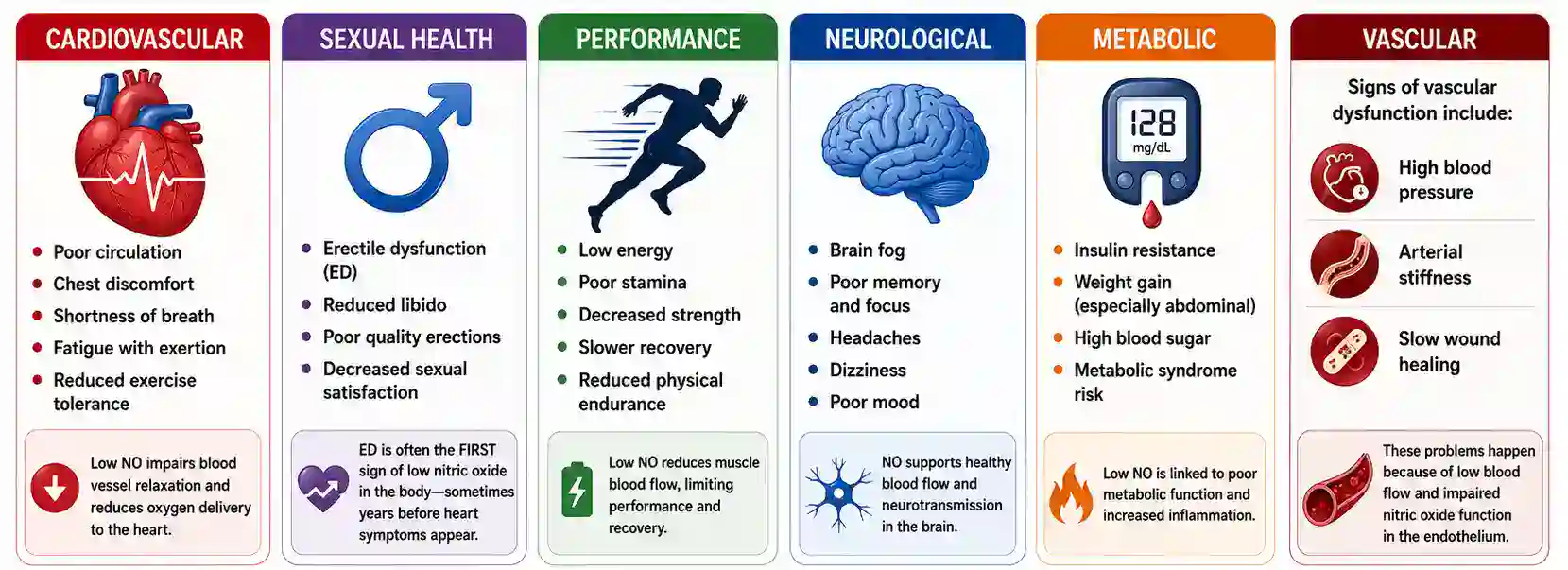
Common Symptoms of Nitric Oxide Deficiency
Cardiovascular
Low nitric oxide levels can cause a few issues. You might get high blood pressure, feel cold in your hands and feet, and struggle to exercise. Blood vessels can’t relax properly, which causes this.
Sexual Health
Erectile dysfunction can mean you have low nitric oxide levels. This can also mean your erections are inconsistent. Low libido and poor blood flow in the penis can also point to vascular issues in men.
Performance
Men with low NO levels may notice less gym pump. They may not be able to keep going for as long, and their stamina might be lower. Muscle fatigue can also set in. Recovery after workouts may be slower, too.
Neurological
Nitric oxide plays a role in neurotransmission. If you’ve got low levels, it can lead to brain fog. This can also make concentrating a real challenge. Memory and mood can weaken throughout the day.
Metabolic
Lower levels of nitric oxide can mess with how your body processes glucose. This could raise your risk of insulin resistance. It affects energy balance, metabolic health, and long-term heart function in men.
Vascular
Signs of vascular dysfunction include:
These problems happen because of low blood flow. They also relate to how nitric oxide works in the endothelium. It’s mainly about blood flow and nitric oxide not working right.
Erectile dysfunction is often the first sign of low nitric oxide in the body. It can show up before any heart-related symptoms. For a lot of guys, ED can be a red flag for heart disease down the line.
The Connection Between Low NO and Erectile Dysfunction – The Mechanism
When someone becomes aroused, nerves and cells in the corpus cavernosum release nitric oxide. This occurs through the action of NANC nerves and endothelial cells.
NO turns on guanylate cyclase. This raises cGMP levels in smooth muscle cells. This causes calcium efflux, allowing the corpus cavernosum to relax.
When the big arteries open up, blood rushes into the penis. This creates and keeps an erection.
PDE5 enzymes usually cut down cGMP, and that stops the erection. PDE5 inhibitors like Sildenafil and Tadalafil block PDE5.
This keeps cGMP active longer, which helps prolong erections. These medications still need decent levels of nitric oxide to work properly. If NO production is low, PDE5 inhibitors don’t work well.
How to Restore Nitric Oxide Levels in Men – Evidence-Based Strategies
You can boost your nitric oxide levels in a few different ways.
Here are Evidence-Based Ways to Increase Nitric Oxide:
1. Diet – Nitrate-Rich Foods and L-Arginine Sources
Eating foods high in natural nitrates helps the body make more nitric oxide. This happens through NOS-dependent pathways and nitrate conversion.
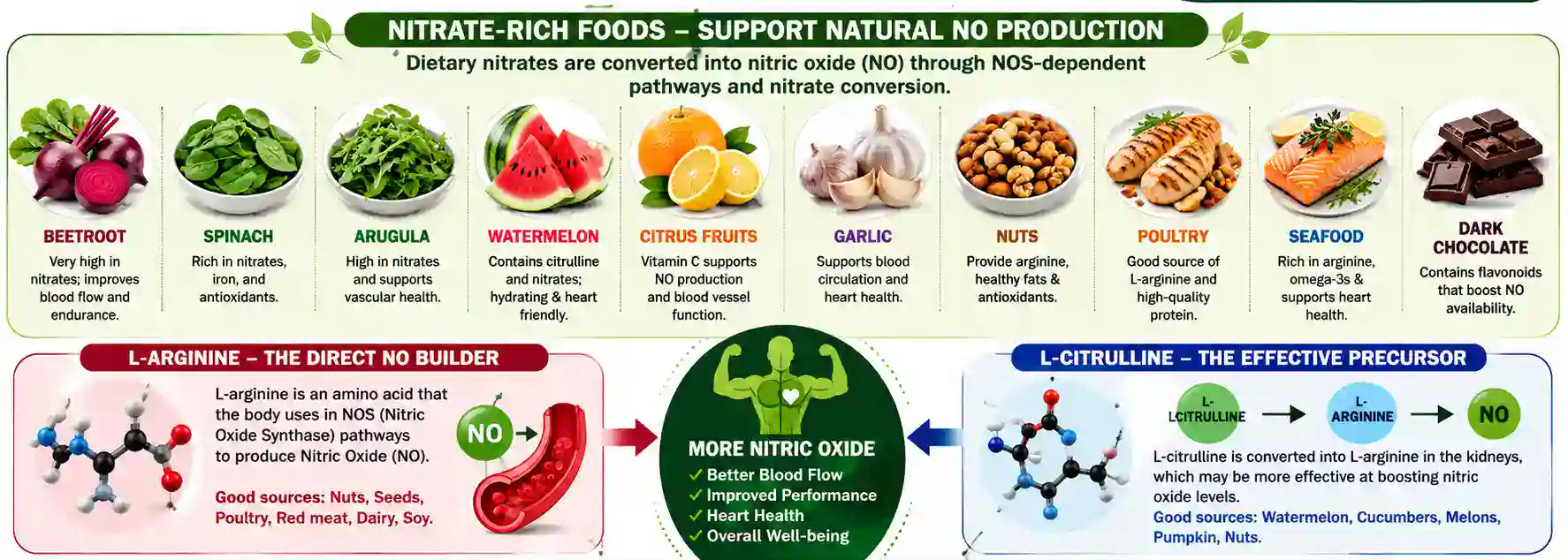
Below are the foods that support NO production:–
L-arginine directly helps produce NO. L-citrulline turns into arginine and may be more effective at boosting nitric oxide levels.
2. Exercise – The Most Powerful eNOS Stimulator
Exercise positively affects endothelial nitric oxide synthase (eNOS). This can lead to some significant benefits.
This helps blood vessels naturally produce more nitric oxide. Activities such as walking, cycling, and training improve blood circulation and oxygen supply.
Yoga and aerobic exercise are also great for this. They can help you build stamina, recover faster, and even improve your endothelial health.
Physical activity reduces oxidative stress. This stuff helps with blood pressure, keeps your blood vessels flexible, and it can even help with erectile issues in guys.
3. Supplements – L-Citrulline, L-Arginine, Beetroot
| Supplement | Mechanism | Dosing (Research-Based) | Evidence Level |
|---|---|---|---|
| L-Citrulline (most effective) | Converts to L-Arginine in kidneys → more efficiently raises plasma arginine than arginine itself | 2.4-6g/day (maintenance) | 6–8g ~1hr before exercise | Strong – multiple RCTs |
| L-Arginine | Direct substrate for eNOS → synthesises NO | 3–6g pre-workout; 15–18g/day in divided doses | >10g at once causes GI upset | Moderate – works in those with functional eNOS |
| L-Citrulline + L-Arginine (combination) | Synergistic: combination more effective than either alone (2022 review) | Combination formulas preferred over single ingredient | Good – 2022 review confirmed superiority |
| Beetroot juice / powder | Dietary nitrate → nitrite → NO via oral bacteria pathway | Evidence-based: regular consumption; significant plasma nitrite increase | Strong – multiple studies |
| Pycnogenol (pine bark) | eNOS co-factor support; antioxidant (protects NO from ROS) | Often combined with L-arginine for ED; combination > either alone | Moderate – mostly studied with L-arginine |
| Antioxidants (Vitamin C, E, polyphenols) | Protect NO from ROS destruction; prevent eNOS uncoupling | Vitamin C 500mg–1g/day; Vitamin E 200–400IU/day; consume via diet ideally | Moderate |
4. Lifestyle – Addressing the Root Causes
Healthy daily habits help maintain nitric oxide levels. They also boost the health of your blood vessels over time.
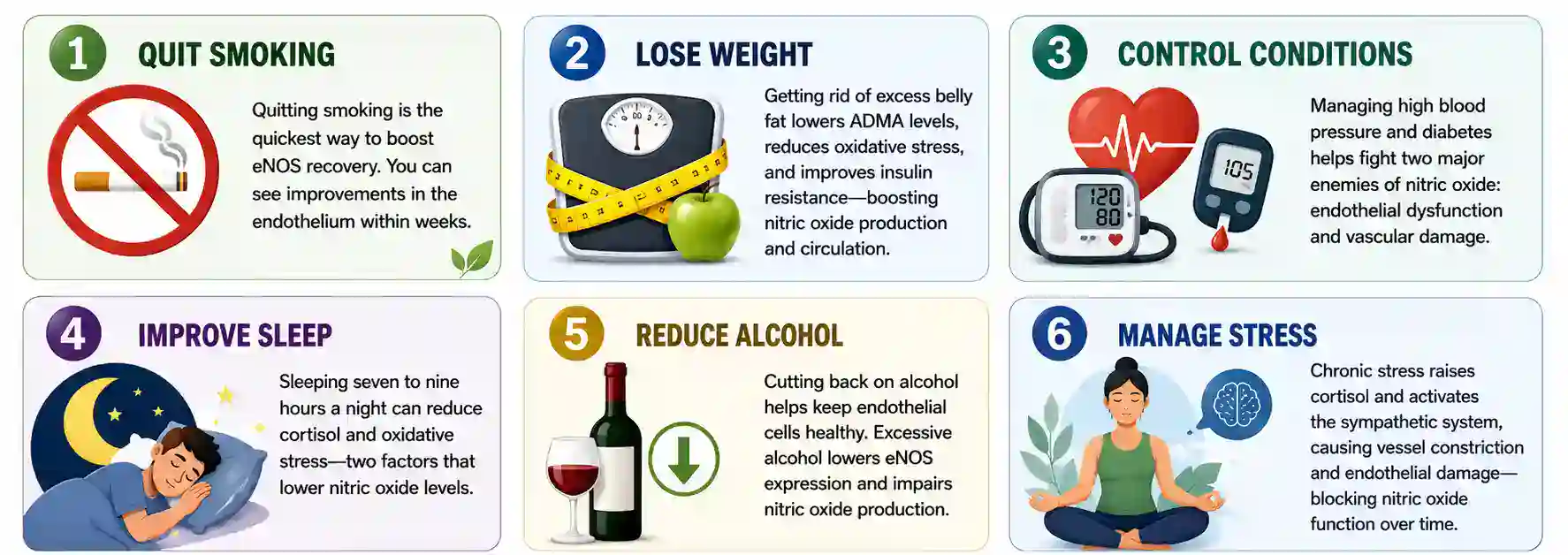
To feel your best, it’s important to follow healthy lifestyle habits such as:
Quit Smoking
Quitting smoking is the quickest way to boost eNOS recovery. You can see improvements in the endothelium within weeks.
Lose Weight
Getting rid of excess belly fat has significant benefits. It lowers ADMA levels, reduces oxidative stress, and reduces insulin resistance. These changes help boost nitric oxide production and circulation.
Control Conditions
Managing high blood pressure and diabetes helps with two big problems. These problems destroy nitric oxide. They are linked to endothelial dysfunction and vascular damage.
Improve Sleep
Sleeping seven to nine hours a night can really help reduce Cortisol and oxidative stress. High Cortisol and oxidative stress can lower nitric oxide levels.
Reduce Alcohol
Cutting back on alcohol helps keep endothelial cells healthy. Drinking too much alcohol over time lowers eNOS expression and messes with nitric oxide production.
Manage Stress
Chronic stress raises cortisol levels and activates the sympathetic system. This causes blood vessels to constrict and damages the endothelium. Over time, it stops nitric oxide from working properly.
5. Medical Treatments – When Lifestyle Is Not Enough
Medical treatment can boost nitric oxide function. This is important when lifestyle changes aren’t enough. These therapies aim to balance hormones.
Medical Approaches for Nitric Oxide Support
TRT Support
When a man’s testosterone levels are low, replacement therapy can help. It can help the body produce nitric oxide again. This may boost eNOS activity and improve erectile function. That’s a big plus for men who have been struggling with it.
PDE5 Therapy
Sildenafil and Tadalafil enhance nitric oxide’s effects on cGMP. They’re most effective when used with methods that naturally increase nitric oxide production.
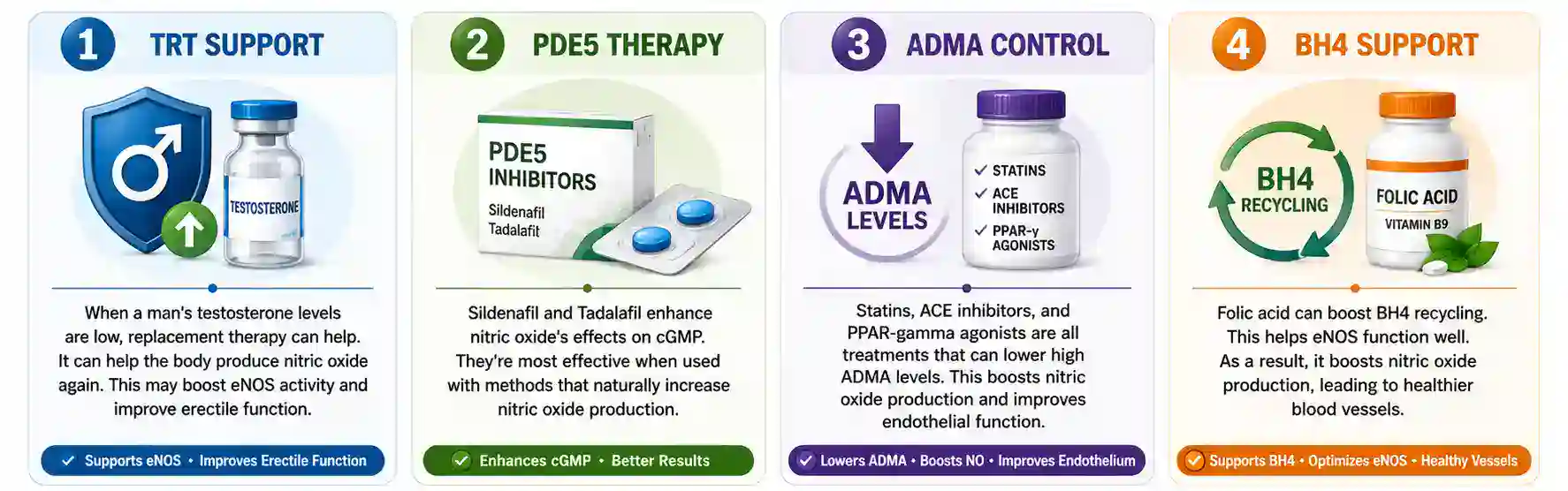
ADMA Control
Statins, ACE inhibitors, and PPAR-gamma agonists are all treatments that can lower high ADMA levels. This boosts nitric oxide production and improves endothelial function.
BH4 Support
Folic acid can boost BH4 recycling. This helps eNOS function well. As a result, it boosts nitric oxide production, leading to healthier blood vessels.
Medical therapies should go hand in hand with healthy habits for better long-term results. Actiza Pharmaceutical offers PDE5 inhibitors worldwide at lower prices than branded versions. If you’ve got a valid prescription from a doctor, you can get them.
Conclusion – Low NO Is a Systemic Problem With Systemic Solutions
Low nitric oxide isn’t just a worry for blood vessels; it affects the whole body, too. NO helps manage your blood pressure, aids erectile function, and supports heart health. It’s also important for your muscles and brain to work properly.
Key causes are:
Restoring healthy nitric oxide (NO) levels takes time and effort. It needs long-term lifestyle changes, good nutrition, and medical support.
FAQ
Q1: What are the first signs of low nitric oxide in men?
Ans:- Early signs of low nitric oxide in men may include erectile dysfunction, high blood pressure, low exercise stamina, slow recovery, cold extremities, and brain fog. Because nitric oxide supports healthy blood flow, ED can be an early warning sign of vascular problems.
Q2: Does Viagra stop working when nitric oxide is too low?
Ans:- PDE5 inhibitors like Sildenafil and Tadalafil work by boosting the nitric oxide (NO) signal, not replacing it. They block the enzyme that breaks down cGMP, the messenger activated by NO. If NO levels become too low, there may not be enough signal for these medications to amplify, which is why some men respond less effectively and may need to address the underlying cause of low NO production.
Q3: Is L-citrulline or L-arginine better for increasing nitric oxide?
Ans:- L-citrulline may boost nitric oxide more effectively than L-arginine because it is better absorbed and converted into L-arginine in the kidneys. Studies show it can improve NO levels, exercise performance, and may help erectile dysfunction, especially when combined with L-arginine.
Q4: Can low testosterone cause low nitric oxide?
Ans:- Low testosterone can reduce nitric oxide production by lowering eNOS activity, which may affect erectile function and blood flow. Supporting healthy testosterone levels can help improve NO production and vascular health.
Q5: Does diabetes permanently damage nitric oxide production?
Ans:- Uncontrolled diabetes can damage nitric oxide production by harming the blood vessel lining. While some damage may be lasting, good blood sugar control, exercise, weight management, and proper treatment can still improve NO function and vascular health.
Q6: How quickly does nitric oxide improve with lifestyle changes?
Ans:- Nitric oxide can improve quickly with lifestyle changes exercise and quitting smoking may help within weeks, and beetroot juice can work within hours. Long-term improvements like weight loss or diabetes control usually take a few months.