

Loading cart...
Bimatoprost 3 ml (Bimatoprost)
Medically reviewed by Sanjay Gangani, B.Pharm, CMO & Pharmacist
| Indication | Eyelashes Growth, Glaucoma, Ocular Hypertension |
|---|---|
| Manufacturer | Actiza Pharmaceutical Pvt. Ltd. |
| Strength:- | 3ml |
| Packaging | 3ml in bottle |
| Active Ingredient | Bimatoprost |
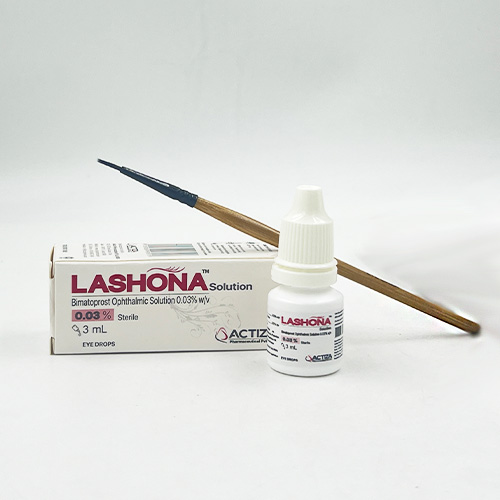
Bimatoprost 3 ml (Bimatoprost) | ||||
|---|---|---|---|---|
| Pack Size | Price | Quantity | Add To Cart | |
| 1 Bottle/s | $15 | |||
| 3 Bottle/s | $39 | |||
| 6 Bottle/s | $70 | |||
| 12 Bottle/s | $130 | |||
| 24 Bottle/s | $230 | |||
What is Bimatoprost?
- Bimatoprost is a structural prostaglandin analogue.
- It is supplied as an ophthalmic solution, in 0.01% and 0.03% strengths.
- It is indicated for the reduction of elevated intraocular pressure in patients with open-angle glaucoma or ocular hypertension.
- The reference glaucoma product is LUMIGAN.
- The same molecule at 0.03% is approved separately as LATISSE for eyelash hypotrichosis.
- It is used once daily, in the evening.
- It contains benzalkonium chloride as a preservative.
- After opening, it can be used until the expiration date on the bottle a point of difference from many eye drops, though confirm this for your specific product.
- It is a prescription-only medicine.
Why eye pressure matters: raised intraocular pressure damages the optic nerve over time, causing irreversible loss of peripheral vision. Glaucoma is usually symptomless until damage is advanced, which is why treatment continues indefinitely and why adherence matters so much.
How It Works (Mechanism of Action)
- The eye continuously produces a fluid called aqueous humour.
- That fluid drains out through two routes the trabecular meshwork and the uveoscleral pathway.
- If drainage does not keep up with production, pressure inside the eye rises.
- Bimatoprost is a prostaglandin analogue that increases outflow of aqueous humour, chiefly through the uveoscleral route.
- More fluid leaves the eye, and intraocular pressure falls.
- Lower pressure reduces ongoing damage to the optic nerve.
Why it does not restore lost vision: bimatoprost prevents further damage. Vision already lost to glaucoma does not return. That is why early detection and continuous treatment matter.
Why it changes iris colour: bimatoprost increases melanin content within the melanocytes of the iris. It does not increase the number of melanocytes, and it does not affect iris nevi or freckles.
Why it grows eyelashes: the same prostaglandin activity increases the percentage of hairs in the anagen, or growth, phase, and extends its duration more lashes growing, for longer.
Dosage Guide
| Point | Guidance |
|---|---|
| Dose | One drop in the affected eye |
| Frequency | Once daily |
| Timing | In the evening |
| Maximum | Never more than once daily – more frequent use reduces the pressure-lowering effect |
| Both eyes | Treat both only if both are affected and prescribed |
| Single-eye treatment | May lead to a visible difference in appearance between the eyes |
| Other eye drops | Wait at least 5 minutes between different drops |
| Contact lenses | Remove first; reinsert 15 minutes afterwards |
| Duration | Long-term – glaucoma treatment is continuous |
| Missed dose | Resume at the next evening dose; do not double up |
| After opening | Can be used until the expiration date on the bottle for the reference product; confirm for yours |
Do not stop without speaking to your doctor. Eye pressure will rise again, and the damage that follows is irreversible.
How to Use It
- Wash your hands thoroughly.
- Remove contact lenses.
- Tilt your head back and look up.
- Gently pull down the lower eyelid to form a pocket.
- Hold the bottle above the eye without touching it, and squeeze one drop into the pocket.
- Close the eye gently for about a minute.
- Press lightly on the inner corner of the eye near the nose for one to two minutes. This reduces drainage into the bloodstream and improves how much stays in the eye.
- Wipe away any excess solution from the skin — this reduces the risk of eyelid darkening and unwanted hair growth.
- Replace the cap immediately.
- Wash your hands again.
- Wait 15 minutes before reinserting contact lenses.
- Wait at least 5 minutes before using any other eye drop.
- Use it once daily in the evening, at the same time.
- Never use it more than once a day.
- Do not share the bottle with anyone.
Precautions
Do Not Use If You
- Are hypersensitive to bimatoprost or to any of the ingredients.
- Have an active eye infection, unless your doctor advises otherwise.
Tell Your Doctor Before Using If You
- Wear contact lenses.
- Have light-coloured eyes the pigmentation change is more visible.
- Will be treating only one eye asymmetry may develop.
- Have had eye surgery, particularly cataract surgery.
- Have a torn posterior lens capsule, or are aphakic or pseudophakic risk of macular oedema.
- Have a history of macular oedema.
- Have uveitis or any inflammatory eye condition.
- Have had herpes infection of the eye.
- Have dry eyes, or react to preserved drops.
- Have liver disease though in patients with a history of mild liver disease or abnormal ALT, AST or bilirubin at baseline, bimatoprost had no adverse reactions on liver function over 24 months.
- Are pregnant, might be, or are breastfeeding.
- Use any other eye drops.
Practical Precautions
| Item | Consideration |
|---|---|
| Iris pigmentation | Likely permanent; examine regularly if it develops |
| Eyelid darkening | May be reversible after stopping |
| Eyelash changes | Length, thickness, colour, number and direction |
| Unwanted hair growth | Wipe away excess solution from skin |
| Contact lenses | Remove; reinsert after 15 minutes |
| More than once daily | Reduces effectiveness |
| Macular oedema | Reported, particularly in aphakic or pseudophakic patients with a torn posterior lens capsule |
| Driving | Vision may blur briefly after instillation |
| Dropper hygiene | Do not touch the eye or any surface |
| Single-eye use | Visible asymmetry possible |
Side Effects
| Side Effect | Notes |
|---|---|
| Conjunctival hyperaemia (red eye) | The most common effect with this drug class |
| Eye itching (ocular pruritus) | Common |
| Growth of eyelashes | Common; may be welcome or unwelcome |
| Skin darkening around the eye | May be reversible after stopping |
| Iris hyperpigmentation | Likely permanent – 1.5% at 12 months |
| Blepharal (eyelid) pigmentation | Reported |
| Dry eye sensation | Reported |
| Burning or stinging on instillation | Common; usually brief |
| Foreign body sensation | Reported |
| Eye pain | Report – see section 7 |
| Blurred vision | Briefly after instillation |
| Headache | Reported |
| Macular oedema, including cystoid macular oedema | Reported – see section 7 |
| Deepening of the eyelid groove | A recognised prostaglandin class effect |
| Unwanted hair growth on skin | Wipe away excess |
Conjunctival redness is the commonest reason people stop prostaglandin drops. It often settles over the first weeks. Tell your doctor rather than stopping on your own eye pressure will rise again if treatment stops.
When to Seek Medical Advice
Contact your doctor promptly if you develop:
- Eye pain not irritation, but genuine pain.
- Any change or loss of vision.
- Blurred or distorted central vision, which may indicate macular oedema.
- Increasing redness that does not settle.
- Light sensitivity.
- Thick discharge, suggesting infection.
- A noticeable change in your eye colour.
- Marked darkening of the eyelid skin.
- Swelling of the eyelid or around the eye.
- Any new eye symptom after eye surgery.
versible, and alternatives exist the conversation is about switching, not simply stopping.
Storage Instructions
- Store as directed on the pack, typically below 25°C.
- Keep the bottle tightly closed.
- Protect from direct sunlight.
- Do not freeze.
- Do not touch the dropper tip to the eye or any surface.
- Keep out of the sight and reach of children.
- Check the expiry date before use.
- Do not use after the expiry date.
- For the reference product, the solution can be used until the expiration date after opening — confirm the in-use shelf life stated on your pack.
- Never share an eye drop bottle with anyone else.
- Return unused drops to a pharmacy for disposal.
Medical Disclaimer:
This content is for informational purposes only and is not a substitute for medical advice. Bimatoprost ophthalmic solution is a prescription eye medication used to reduce elevated intraocular pressure in patients with open-angle glaucoma or ocular hypertension. The usual dosage is one drop in the affected eye once daily in the evening. Possible side effects include darkening of the iris and eyelid skin, increased eyelash growth, and, rarely, macular oedema. Remove contact lenses before use and reinsert them after 15 minutes. Use only as prescribed and attend regular eye check-ups. Do not stop treatment without consulting your ophthalmologist.

B.Pharm, CMO & Pharmacist
Licensed pharmacist (B.Pharm) with 12+ years in clinical pharmacy and patient care. Reviews every article for evidence-based accuracy before it is published on ACTIZA Store.
Reviews
There are no reviews yet.