Tamoxican 20 mg (Tamoxifen) Medically reviewed by Sanjay Gangani, B.Pharm, CMO & Pharmacist
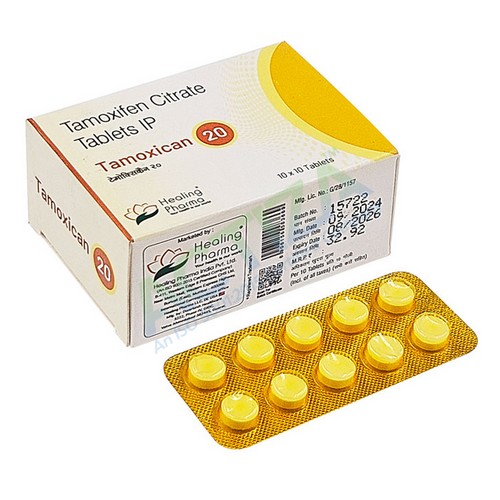
Active Ingredient Tamoxifen Indication Breast cancer Manufacturer Healing Pharma, India Strength:- 20mg Packaging 10 Tablets in Strip Country of Origin India Dosage Form:- Tablet
INQUIRE ABOUT Tamoxican 20 mg (Tamoxifen)
What is Tamoxican 20 mg? Tamoxican 20 is sold as a tamoxifen citrate tablet.
Each tablet is stated to contain Tamoxican 10 mg .
Tamoxifen is a selective oestrogen receptor modulator.
That group is often shortened to SERM.
No source found names the manufacturer of Tamoxican.
Breast cancer , as the main licensed use.
It is used where the cancer responds to oestrogen.
It is used after surgery to reduce the risk of return.
It is also used to reduce risk in some high-risk women.
How long treatment usually lasts: Courses of five years were the original standard.
A ten-year course is now recommended in many cases.
A clinical reference notes the benefits still outweigh the risks.
Only an oncologist decides the length of treatment.
This is a cancer medicine, not a general hormone tablet.
It must be started and supervised by a specialist.
How Tamoxifen Works (Mechanism of Action) Some breast cancers grow when oestrogen reaches their cells.
Oestrogen acts by attaching to receptors on those cells.
Cytotam 20 Mg attaches to the same receptors instead.
Oestrogen is blocked, so the cancer’s growth signal is cut off.
In breast tissue it blocks oestrogen’s effect.
In the womb lining it can act like oestrogen instead.
That oestrogen-like effect explains the womb cancer risk.
In bone it helps maintain mineral density.
It also improves the blood fat profile.
Tamoxifen is converted in the liver to an active form.
That active form is called endoxifen.
The enzyme CYP2D6 carries out that conversion.
Medicines that block CYP2D6 reduce endoxifen levels.
Reductions of 65% to 75% have been reported.
Dosage Guide Doses below come from approved tamoxifen labelling.
Situation Labelled Dose Timing Key Note Adults, including elderly 20 mg to 40 mg daily Once daily or split in two This tablet is the lower figure Breast cancer treatment 10 mg to 20 mg twice daily As prescribed Per a clinical reference Reducing breast cancer risk 20 mg daily Once daily Commonly for five years Course length Five to ten years Continuous Decided by the oncologist How to swallow it Whole, with water With or without food Do not crush or chew Timing each day The same time daily Every day Helps keep levels steady Before prolonged immobility Stop 72 hours beforehand As advised Reduces clot risk Around surgery Discuss with the oncologist In advance Clot risk is considered Children Not established Not applicable Not a paediatric medicine Missed dose Take it when remembered Skip if nearly due Never double up
How to read this table:
The 20 mg tablet matches the lowest daily dose in the range.
Some regimens use 20 mg twice daily instead.
Your oncologist sets both the dose and the duration.
Never change either without specialist advice.
How to Take Tamoxifen Swallow the tablet whole with a glass of water.
Do not crush or chew it.
It can be taken with or without food.
Take it at about the same time every day.
Keep taking it for the full course prescribed.
Do not stop it because you feel well.
Attend all follow-up and gynaecological appointments.
Tell every doctor and dentist that you take Caditam 10 mg .
Any abnormal vaginal bleeding or discharge.
Pelvic pain or pressure.
Painful swelling in one leg.
Sudden breathlessness or chest pain.
Any change in vision.
Tamoxifen must not be taken during pregnancy.
Non-hormonal contraception is advised during treatment.
Hormonal contraceptives may reduce each other’s effect.
Precautions Do Not Use Tamoxifen If You: Are allergic to tamoxifen or any tablet ingredient.
Are pregnant.
A history of blood clots in the veins.
A previous stroke or mini-stroke.
A period of prolonged immobility ahead.
Surgery planned in the near future.
Tell Your Doctor Before Use If You Have: Any history of blood clots.
Raised blood triglyceride levels.
Any liver problem.
Hereditary angioedema .
Cataract or any eye condition.
Low blood counts, or you take blood thinners.
Lactose intolerance, as some tablets contain lactose.
Any plan to become pregnant.
All other medicines, including antidepressants.
Effects to Expect and Discuss Periods stop in some women who have not yet reached menopause.
Bone density can fall in women before the menopause.
Advice on protecting bone health should be given.
Cysts on the ovaries have occasionally been reported.
Hot flushes are among the most common effects.
Before-Use Checklist Has an oncologist prescribed this medicine and dose?
Do you know how long the course is meant to last?
Have you ever had a blood clot or a stroke?
Is any surgery or long journey planned?
Could you be pregnant?
Do you take paroxetine, fluoxetine or bupropion?
Do you take warfarin or another blood thinner?
Do you know to report vaginal bleeding at once?
Are gynaecological check-ups arranged?
Side Effects Effects reported in approved tamoxifen labelling:
Side Effect Category What It Feels Like What to Do Hot flushes Common Sudden warmth and sweating Common; discuss if severe Nausea Common Queasy stomach Report if persistent Fatigue Common Tiredness Report if marked Vaginal dryness or discharge Common Discomfort, altered discharge Report any unusual discharge Irregular or absent periods Common Cycles change or stop Expected in some women Mood changes Common Low or variable mood Tell your doctor Fluid retention Reported Swollen ankles or hands Report if marked Changes in womb lining Serious Often bleeding is the first sign Report bleeding at once Cancer of the womb lining Serious Abnormal bleeding Urgent investigation needed Uterine sarcoma Serious, rarer Abnormal bleeding or pain Urgent investigation needed Blood clot in a vein or lung Serious Leg swelling, chest pain Emergency — call for help Stroke Serious One-sided weakness, speech trouble Emergency — call for help Reduced bone density In premenopausal women No early symptoms Bone health advice needed Cataract or visual change Reported Blurred or reduced vision Needs an eye assessment Pancreatitis Rare Severe upper abdominal pain Emergency – seek care Interstitial pneumonitis Very rare Breathlessness, dry cough Seek urgent assessment Severe skin reactions Reported Blistering or peeling rash Emergency – stop and seek care
The risks in numbers, from a clinical reference:
Blood clots affect about 4 women per 1,000 over five years.
Womb cancer affects about 4 women per 1,000 over five years.
The womb cancer risk applies mainly after the menopause.
Relative risk is about 2 times after two to five years of use.
It rises to about 6.9 times after five years or more.
Even so, the reference says benefits outweigh those risks.
That judgement belongs to the treating oncologist.
Stevens-Johnson syndrome has been reported with tamoxifen.
So has toxic epidermal necrolysis.
Both can be life-threatening and need urgent care.
Drug Interactions Paroxetine and fluoxetine, both antidepressants.
Bupropion, used for depression and smoking cessation.
Quinidine and cinacalcet.
These should be avoided during treatment where possible.
Some studies link them to a higher risk of cancer returning.
Moderate blockers such as sertraline, citalopram and haloperidol.
Alternative medicines should be considered.
Other important combinations: Warfarin and similar blood thinners, whose effect can increase.
Clotting tests need careful monitoring.
Chemotherapy, which raises the risk of blood clots further.
Clot prevention may be considered during chemotherapy.
Oestrogens and hormonal contraceptives, which may reduce the effect.
Rifampicin, which lowers tamoxifen blood levels.
Anastrozole or letrozole, which should not be combined with it.
Medicines that prolong the QT interval.
Emergency Warning Signs – Seek Medical Help Seek urgent medical care if you have:
Painful swelling in one leg.
Sudden chest pain or breathlessness.
Sudden weakness on one side, or difficulty speaking.
Severe upper abdominal pain.
A blistering or peeling skin rash.
Swelling of the face, lips or throat.
Any abnormal vaginal bleeding.
Unusual vaginal discharge.
Pelvic pain or pressure.
Changes in your vision.
Unusual bruising or bleeding.
The labels single out vaginal bleeding for prompt investigation.
That applies during treatment and after it ends.
It can be the first sign of a change in the womb lining.
Why Tamoxifen Is Prescribed Benefits when clinically appropriate:
It reduces the risk of breast cancer returning after surgery.
It treats breast cancer that responds to oestrogen.
It reduces breast cancer risk in some high-risk women.
Extending treatment from five to ten years adds further benefit.
It helps maintain bone density after the menopause.
It is taken as a single daily tablet in many regimens.
It is inexpensive compared with many cancer medicines.
Honest balance for the buyer:
It raises the risk of womb cancer and blood clots.
Hot flushes and mood changes are common and persistent.
Treatment often lasts five to ten years.
Some common antidepressants interfere with it.
It must not be used in pregnancy.
It requires specialist supervision throughout.
The manufacturer of this particular brand is unconfirmed.
Storage Instructions Store in a cool, dry place, per one trade listing.
Keep the tablets in their strip until use.
Protect them from direct sunlight and moisture.
Keep out of the sight and reach of children.
Check the expiry date before use.
Follow the storage statement on your own pack.
Return unused tablets to a pharmacy take-back scheme.
Sanjay Gangani
B.Pharm, CMO & Pharmacist
Licensed pharmacist (B.Pharm) with 12+ years in clinical pharmacy and patient care. Reviews every article for evidence-based accuracy before it is published on ACTIZA Store.



Reviews
There are no reviews yet.