Fenza Vaginal Capsule (Fenticonazole) Medically reviewed by Sanjay Gangani, B.Pharm, CMO & Pharmacist
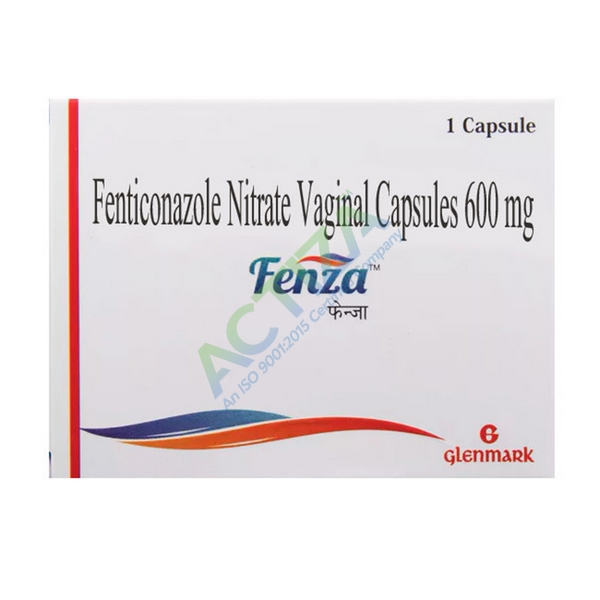
Active Ingredient Fenticonazole Indication used in the treatment of fungal infections of vagina Packaging 1 Vaginal Capsule in 1 packet Manufacturer Glenmark Pharmaceuticals Ltd.
INQUIRE ABOUT Fenza Vaginal Capsule (Fenticonazole)
What is Fenza Vaginal Capsule? Fenza is a soft capsule inserted into the vagina.
Each capsule contains 600 mg of fenticonazole nitrate.
It is made by Glenmark Pharmaceuticals Ltd. in Mumbai.
Fenticonazole is an imidazole antifungal.
It treats vaginal yeast infection, also called vulvovaginal candidiasis.
That infection is usually caused by the yeast Candida.
Symptoms include itching, irritation, burning and white discharge.
European labels also cover infection of the cervix.
They include cases where some bacteria have also taken hold.
It works locally in the vagina.
It is for vaginal use only and must never be swallowed.
Fenza Cream yeast infection is not considered a sexually transmitted infection.
Glenmark also makes Fenza 2% vaginal cream, a different product.
How Fenza Works (Mechanism of Action) The action happens in five simple steps:
Yeast cells are surrounded by a protective membrane.
They need a substance called ergosterol to build it.
Fenticonazole blocks the production of ergosterol.
The membrane becomes damaged and leaky.
The yeast stops growing and is cleared.
A single capsule is usually enough for one episode.
The capsule releases the medicine inside the vagina.
If symptoms last beyond a week, see a doctor.
Dosage Guide The regimen below comes from European product information.
Situation Dose Timing Key Note Women aged 16 and over One 600 mg capsule Once, at bedtime Inserted deep into the vagina Recurrent or resistant infection A second 600 mg capsule After 3 days Only as your doctor advises Persistent symptoms Repeat once After 3 days Per Austrian labelling Under 16 years Not established Not applicable No data available Women over 60, first episode Consult a doctor first Before use Per European labelling During a period Labels differ Ask your doctor See the note below Pregnancy or breastfeeding Labels differ Ask your doctor See Section 5
A note on periods:
French labelling says not to interrupt treatment during a period.
One Indian listing for Fenza cream says to avoid use during a period.
Follow your doctor’s advice on timing.
How to Use Fenza Wash your hands before and after use.
Wash the genital area with a neutral or alkaline soap.
Lie on your back with your knees bent.
Insert the capsule as deep into the vagina as is comfortable.
Do this at bedtime, as the labels direct.
Do not swallow the capsule.
Do not use tampons, douches or spermicides during treatment.
Do not use other vaginal products at the same time.
Do not use latex condoms or diaphragms during treatment.
Avoid unprotected sex during treatment and for two days after.
Wear cotton underwear and avoid vaginal douching.
Avoid acidic soaps, which can encourage yeast growth.
A sexual partner may need treatment at the same time.
Precautions Contraindications in European Labelling Allergy to fenticonazole or any other imidazole antifungal.
Allergy to any capsule ingredient.
Soya or peanut allergy, where the capsule contains soya lecithin.
Use with latex condoms or diaphragms.
French labelling also lists pregnancy and breastfeeding.
Use in males.
Use under 16 years of age.
The Indian listing names only allergy to fenticonazole.
Whether Fenza contains soya lecithin was not confirmed.
When to See a Doctor Rather Than Self-Treat It is your first vaginal yeast infection.
You have had more than two infections in six months.
You have abnormal or irregular vaginal bleeding.
You have discharge with blood in it.
You have sores, ulcers or blisters on the vulva or vagina.
You have pain in the lower abdomen or pain passing urine.
You are pregnant, breastfeeding or over 60.
You have diabetes or a weakened immune system.
Symptoms have not improved within a week.
Pregnancy and Breastfeeding French labelling lists pregnancy and breastfeeding as contraindications.
An Indian listing says use in pregnancy only if prescribed.
That listing also says not to use an applicator when pregnant.
Always discuss use in pregnancy or breastfeeding with your doctor.
Before-Use Checklist Has a doctor confirmed a vaginal yeast infection?
Do you have a soya or peanut allergy?
Have you checked the Fenza pack’s ingredient list?
Are you allergic to any imidazole antifungal?
Are you pregnant or breastfeeding?
Are you aged 16 or over?
Do you know not to rely on latex condoms during treatment?
Do you know to see a doctor if not better in a week?
Side Effects Side effects are usually local and short-lived.
Side Effect Frequency What It Feels Like What to Do Mild burning on insertion Common Slight burning in the vagina Usually passes quickly Local irritation Less common Soreness or discomfort Report if persistent Itching or redness Less common Itchy or red vulval skin Report if worsening Skin rash Uncommon Rash around the area Stop and consult your doctor Allergic reaction Rare Swelling, hives or breathing difficulty Emergency — seek urgent care
Interactions and Product Compatibility Latex condoms or latex diaphragms.
Spermicides .
Tampons.
Vaginal douches.
The capsule can reduce the effectiveness of latex contraceptives.
French labelling warns of a risk of the latex splitting.
That could lead to pregnancy or a sexual infection.
Spermicides and douches may interfere with treatment.
Tell your doctor about any other medicines you use.
Warning Signs – Seek Medical Help Seek urgent medical help if you have:
Swelling of the face, lips, tongue or throat.
Difficulty breathing or widespread hives.
No improvement within a week.
Abnormal vaginal bleeding or bloodstained discharge.
Sores, ulcers or blisters on the vulva or vagina.
Lower abdominal pain or pain passing urine.
Fever or a foul-smelling discharge.
Rash, redness or irritation that worsens with treatment.
More than two infections in six months.
Why Choose Fenza Vaginal Capsule? Benefits when clinically appropriate:
A single capsule usually treats one episode.
It acts locally, where the infection is.
European labels also cover some bacterial superinfection.
It is used once, at bedtime.
Glenmark is a large, established manufacturer.
Honest balance for the buyer:
It must not be used with latex condoms or diaphragms.
The European version is unsuitable with soya or peanut allergy.
It is not licensed for trichomoniasis or other infections.
Recurrent infection needs a doctor’s assessment.
Fenza is the most expensive of 15 listed same-composition brands.
Cheaper fenticonazole 600 mg capsules are widely available.
Storage Instructions Store in a cool, dry place away from direct heat.
Keep the capsule in its blister until use.
Do not use a capsule that is damaged or leaking.
Keep out of sight and reach of children.
Check the expiry date before use.
Follow the storage statement on the pack.
Sanjay Gangani
B.Pharm, CMO & Pharmacist
Licensed pharmacist (B.Pharm) with 12+ years in clinical pharmacy and patient care. Reviews every article for evidence-based accuracy before it is published on ACTIZA Store.



Reviews
There are no reviews yet.