...

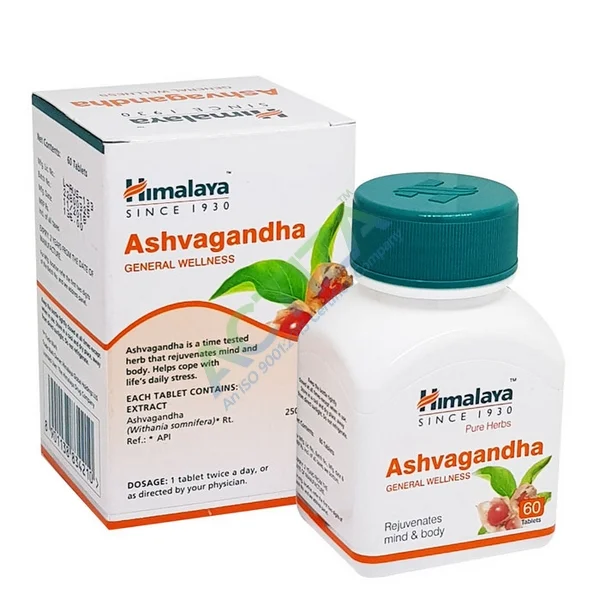
Ashwagandha

Medically reviewed by Sanjay Gangani, B.Pharm, CMO & Pharmacist

Active Ingredient Ashvagandha
Indication Increase the immunity, Natural stress reliever
Manufacturer Himalaya Drug Company
Strength:- 250mg
Packaging 60 Tablets in bottle

Ashwagandha

Pack Size Price Price/unit Quantity Add To Cart
60 Tablet/s $8 $0.13/Pill
120 Tablet/s $11 $0.09/Pill
240 Tablet/s $20 $0.08/Pill

What Ashwagandha Is

  • Ashwagandha is a herb, not a licensed medicine.

  • Its botanical name is Withania somnifera.

  • It has centuries of recorded use in Ayurvedic medicine.

  • It is sold worldwide as a food supplement.

  • It is widely marketed in Western countries.

What it is commonly marketed for:

  • Stress and general wellbeing.

  • Sleep, which its botanical name alludes to.

  • Energy and physical performance.

  • Those are supplement claims, not approved indications.

  • No brand, strength or form was specified in the request.

  • Products vary widely in extract and dose.

  • What does not vary is the regulatory position.

  • That position is what a retailer most needs to know.

The Australian Regulator’s Position

Two advisories, two years apart.

PointWhat Was Reported
First advisoryIssued in 2024, after a safety review
What prompted itA 2021 report of serious liver injury
Reports at that stageSeven with enough information to assess
Of thoseFour had no other likely contributing ingredient
Hospitalisations thenFour cases
Second advisoryIssued in 2026
Further reports sinceFour more possible liver injuries
Total possible casesEleven
No other ingredient involvedSix of the eleven
Of those sixTwo required hospitalisation
Most serious outcomeOne liver transplant
The regulator’s wordingA very rare risk, but a potential one

What the regulator said it would do:

  • It will continue to assess emerging evidence.

  • It will decide whether regulatory action is necessary.

  • One report suggests a liver warning statement may follow.

  • That would attach to products containing the ingredient.

  • It highlighted the risks of unregulated overseas products.

  • It also noted sudden and potentially severe gut symptoms.

The European Position

Several authorities have acted since 2023.

  • Denmark banned ashwagandha, per two independent sources.

  • Germany’s risk assessment body issued a notification.

  • That notification is dated 10 September 2024.

  • It describes supplements with potential health risks.

  • German authorities renewed a warning in September 2024.

The Dutch pharmacovigilance picture:

  • Its centre received eight reports since September 2023.

  • That was after it first warned of the risk.

  • In seven of the eight, the product contained ashwagandha only.

  • It published an update on liver toxicity in July 2025.

  • Various reports of liver damage appear in the literature.

  • They include acute liver failure requiring a transplant.

  • A World Health Organization database lists twenty-one reports.

  • Those concern hepatobiliary events with Withania somnifera.

The Case for the Other Side

The warnings are genuinely disputed, and the page says so.

  • Industry and research stakeholders call them unwarranted.

  • They say the safety concerns cited are misplaced.

  • One review of the underlying reports found no credible signal.

  • Its authors concluded no warning could be based on them.

On the pregnancy question specifically:

  • A regulatory document cited a historical abortifacient use.

  • An American herbal body rejected that in July 2024.

  • It stated unequivocally that there is no abortion risk.

  • Herbalists note most traditional texts do not mention it.

  • Its president still advised caution in pregnancy generally.

  • A 2026 literature review summarises recent trials.

  • It reports liver function unaffected in those trials.

  • It reports kidney and thyroid function unaffected too.

  • It notes regulators have not been reassured by that.

  • The Ministry of AYUSH released a safety dossier in 2024.

  • It did so following the concerns raised in Europe.

How to Read Two Opposing Positions

  • Liver injury from herbs is usually idiosyncratic.

  • That means it affects a small and unpredictable minority.

  • A clinical trial of a few hundred people may miss it.

  • Reports collected across millions of users may catch it.

  • So trials showing no effect and case reports can coexist.

  • The risk is described by every regulator as very rare.

  • The consequence in the worst case was a transplant.

  • A buyer deserves to know both parts of that.

  • Supplements vary in extract, strength and purity.

  • Some reported cases involved multiple ingredients.

  • The Australian regulator highlighted unregulated products.

  • Product quality is part of the safety question.

What a Listing Should Carry

Who Should Avoid It

  • Pregnant women.

  • Breastfeeding women.

  • Children.

  • Anyone with a history of liver disease.

  • Those four come from the German risk assessment body.

  • Anyone taking thyroid medication.

  • Anyone taking sedatives or sleep medication.

  • Anyone taking medicines that suppress the immune system.

  • Anyone already taking several supplements.

  • Anyone due to have surgery.

Signs to Stop and Seek Help

  • Yellowing of the skin or the whites of the eyes.

  • Dark urine, or unusually pale stools.

  • Pain over the upper right abdomen.

  • Unexplained or worsening tiredness.

  • Loss of appetite with nausea.

  • Itching without a rash.

  • They are the usual presentation of liver injury.

  • Reported cases included hospitalisation and transplant.

  • Early recognition is what limits the outcome.

  • Tell the doctor exactly which supplement was taken.

Practical Points

  • Sudden severe gut symptoms were also reported.

  • Take it for a defined period, not indefinitely.

  • Do not take several herbal products at once.

  • Tell your doctor you are taking it.

  • Keep the pack so the product can be identified.

  • Report any reaction to the national system.

An Honest Assessment for the Retailer

What can fairly be said:

  • Ashwagandha has centuries of traditional use.

  • It is lawfully sold as a supplement in most markets.

  • Clinical trials have not found liver harm.

  • Industry and herbalist bodies dispute the warnings.

  • Every regulator describes the risk as very rare.

  • India’s own authorities have published a safety dossier.

  • One European country has banned it.

  • Germany’s risk body names four groups who should avoid it.

  • Australia has issued two safety advisories.

  • Eleven possible liver injury cases are on its record.

  • One of those required a liver transplant.

  • A German drug bulletin advises against use outright.

  • A listing that omits all of this is not complete.

Sanjay Gangani

Sanjay Gangani

B.Pharm, CMO & Pharmacist

Licensed pharmacist (B.Pharm) with 12+ years in clinical pharmacy and patient care. Reviews every article for evidence-based accuracy before it is published on ACTIZA Store.

Reviews

There are no reviews yet.

Be the first to review “Ashwagandha”

Your email address will not be published. Required fields are marked *

This site uses Akismet to reduce spam. Learn how your comment data is processed.

All Categories

Shopping Cart

0
×

Loading cart...